
The Chemistry of Fat Washing: How Bartenders Extract Flavor from Bacon and Butter
By leveraging the unique chemical properties of alcohol, mixologists use a technique called fat washing to infuse spirits with savory flavors and silky textures.
By Factlen Editorial Team
- Culinary Mixologists
- Focus on how fat washing bridges the kitchen and the bar, prioritizing savory umami flavors and complex mouthfeel.
- Beverage Scientists
- Examine the molecular mechanics of the technique, focusing on ethanol polarity and liquid-liquid extraction.
- Home Bartenders
- Value the accessibility of the technique, emphasizing practical ratios, freezing methods, and easy-to-source ingredients.
What's not represented
- · Vegan mixologists adapting the technique with plant-based lipids
- · Cardiologists viewing the health impacts of trace saturated fats in alcohol
Why this matters
Understanding the science behind fat washing demystifies high-end mixology, empowering home bartenders to experiment with complex, savory flavor profiles using basic kitchen equipment.
Key points
- Fat washing is a technique that infuses spirits with the flavor and texture of fats without leaving them greasy.
- The process relies on ethanol's dual polarity, which allows it to act as a solvent for both water-soluble and fat-soluble compounds.
- Freezing the infused mixture solidifies the fat, allowing it to be easily skimmed and strained from the liquid alcohol.
- The technique originated in the perfume industry before being adapted by molecular gastronomy chefs and modern mixologists.
- Fat washing is a key driver of the 'umami cocktail' trend, adding savory depth and a silky mouthfeel to drinks.
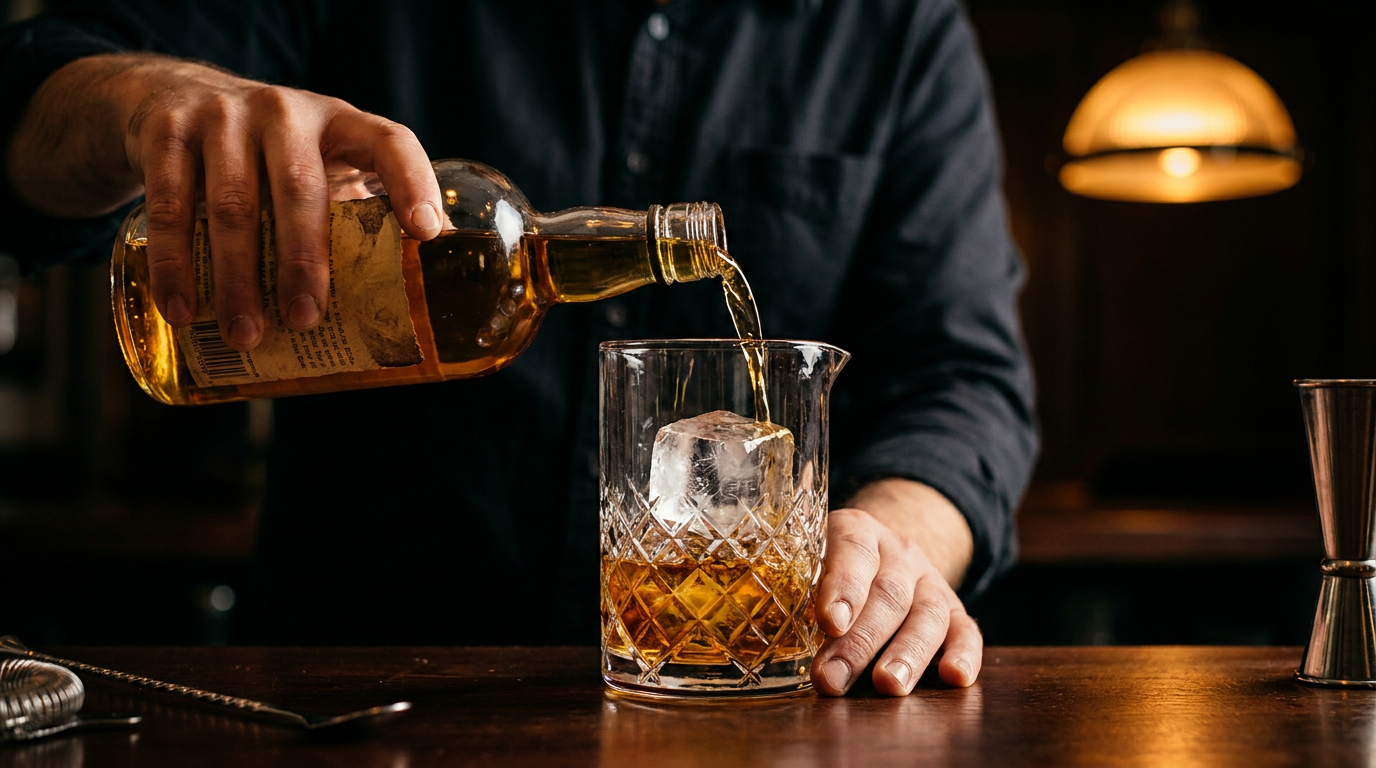
The modern cocktail renaissance has produced countless innovations, but few are as transformative as a technique that sounds like a laundry error. When a patron orders a Benton’s Old Fashioned—a modern classic that blends bourbon with the smoky, savory essence of bacon—they are experiencing a chemical marvel.[1]
This sensory experience is the result of "fat washing," a culinary process that infuses spirits with the complex flavors of fats without leaving the final beverage greasy.[6]
While the technique is now ubiquitous in high-end cocktail bars, its origins trace back to the mid-2000s New York City bar scene. The popularization of fat washing is widely credited to bartender Don Lee, who debuted the Benton’s Old Fashioned at the speakeasy Please Don't Tell (PDT) around 2007.[1]
Lee’s creation was a massive success, but he did not invent the underlying chemistry. He learned the technique from Eben Freeman, a pioneering bartender at the molecular gastronomy restaurant WD-50, who was known for creating a brown-butter-washed rum.[1]
The lineage extends even further into the kitchen. Freeman was inspired by WD-50’s pastry chef, Sam Mason, who had adapted the method from the perfume industry. For centuries, perfumers have used fats to extract delicate, volatile aromatic compounds from flowers—a process known as enfleurage.[1][4]

To understand why fat washing works in a cocktail glass, one must look at the unique chemical structure of ethanol, the type of alcohol found in spirits.[3]
Ethanol molecules possess a dual nature. They have a polar, hydrophilic (water-loving) end, and a non-polar, hydrophobic (oil-loving) end.[3]
Because of this structure, alcohol acts as a highly effective, versatile solvent. It can dissolve both water-soluble flavors, such as the tartness of lemon juice, and fat-soluble flavors, such as the smoky phenols in bacon or the rich lipids in brown butter.[3]

In industrial chemistry, this process is referred to as "liquid-liquid extraction." It is the same fundamental mechanism used to decaffeinate coffee, recover vitamins, and separate fragrances in the cosmetics industry.[3]
Executing a fat wash begins with selecting a fat—common choices include butter, bacon grease, coconut oil, or sesame oil—and heating it until it melts into a liquid state.[6]
The liquid fat is then poured into a spirit, usually at room temperature. The mixture is agitated, either by shaking or stirring, to maximize the surface area between the oil droplets and the alcohol.[3]
The liquid fat is then poured into a spirit, usually at room temperature.
During this infusion period, which can last anywhere from a few hours to a few days, the ethanol actively extracts the aromatic compounds from the fat.[4]
The critical next step relies on thermodynamics. The infused mixture is placed in a freezer. Because alcohol has a significantly lower freezing point than water or culinary fats, the spirit remains liquid while the fat solidifies.[2]
The fat forms a hard, opaque puck at the top of the container. This solid layer is skimmed off, and the remaining liquid is passed through a fine-mesh sieve or a coffee filter to remove any lingering particulates.[2]

What remains is a clarified spirit. It looks identical to the original liquor, but it now carries the deep, savory flavor profile of the chosen fat.[4]
Beyond flavor, fat washing fundamentally alters the mouthfeel of the spirit. Trace amounts of microscopic oils remain suspended in the alcohol, giving the liquid a silky, velvety texture that coats the palate.[6]
This textural enhancement is a key driver behind the modern "umami cocktail" trend. As consumer palates shift away from overly sweet, syrup-heavy drinks, bartenders are utilizing fat-washed spirits, MSG, and mushroom distillates to build savory, full-bodied flavor profiles.[6]
For those attempting the technique, precision matters. Beverage experts recommend specific ratios to avoid overpowering the spirit: roughly four ounces of strong-flavored fats, like bacon, per 750-milliliter bottle, and up to eight ounces for milder fats like butter or olive oil.[1][7]

The alcohol by volume (ABV) of the base spirit also dictates the extraction efficiency. Higher-proof spirits, such as a 100-proof bourbon, will extract and hold onto flavor compounds more effectively than an 80-proof alternative.[4]
Ultimately, fat washing bridges the gap between the kitchen and the bar. By harnessing basic principles of chemistry, mixologists have unlocked a new dimension of flavor, proving that the most complex cocktail innovations often rely on the simplest scientific truths.[8]
How we got here
18th & 19th Centuries
The perfume industry utilizes 'enfleurage,' using fats to extract delicate aromatic compounds from flowers.
Early 2000s
Pastry chef Sam Mason and bartender Eben Freeman experiment with fat extraction techniques at the molecular gastronomy restaurant WD-50.
2007
Bartender Don Lee debuts the Benton's Old Fashioned at Please Don't Tell (PDT), popularizing bacon-washed bourbon.
2020s
Fat washing becomes a staple of the 'umami cocktail' trend, moving beyond animal fats to include coconut oil, sesame oil, and brown butter.
Viewpoints in depth
Culinary Mixologists
Focus on how fat washing bridges the kitchen and the bar.
For culinary-focused bartenders, fat washing is less about the novelty of the chemistry and more about expanding the cocktail flavor palette. By treating spirits like a chef treats a broth, they can introduce savory, umami-rich profiles—such as roasted sesame, browned butter, or smoked meats—that were previously impossible to achieve with standard syrups and juices. This camp views fat washing as a critical tool in moving cocktail culture away from pure sweetness and toward balanced, food-like complexity.
Beverage Scientists
Examine the molecular mechanics of the technique.
From a scientific perspective, fat washing is a textbook example of liquid-liquid extraction. Experts in this camp focus on the dual polarity of the ethanol molecule, which allows it to act as a universal solvent for both water-soluble and fat-soluble compounds. They emphasize that the efficiency of the wash is dictated by variables like the spirit's alcohol by volume (ABV), the surface area of the fat droplets during agitation, and the specific freezing points of the lipids involved.
Home Bartenders
Value the accessibility and practical application of the technique.
For cocktail enthusiasts making drinks at home, the appeal of fat washing lies in its low barrier to entry. Unlike other molecular gastronomy techniques that require centrifuges or liquid nitrogen, fat washing requires only a freezer, a mason jar, and a coffee filter. This camp focuses on practical advice, such as optimal fat-to-spirit ratios (e.g., 4 ounces of strong fat per bottle) and troubleshooting tips for achieving a perfectly clear, non-greasy final product.
What we don't know
- The exact saturation point at which a spirit can no longer absorb additional flavor compounds from a given fat.
- The precise shelf life of spirits washed with highly perishable animal fats when stored at room temperature.
- How emerging synthetic fats will interact with ethanol extraction compared to traditional animal lipids.
Key terms
- Fat Washing
- A culinary technique used to infuse spirits with the flavor and texture of fats by mixing, freezing, and straining the liquid.
- Liquid-Liquid Extraction
- A chemical process that transfers a solute from one solvent to another, used in both industrial chemistry and cocktail fat washing.
- Hydrophilic
- Molecules that are attracted to water; the polar end of an ethanol molecule.
- Hydrophobic
- Molecules that repel water and attract oils; the non-polar end of an ethanol molecule.
- Umami
- The fifth basic taste, characterized by a deep, savory flavor profile often found in meats, mushrooms, and fermented foods.
Frequently asked
Can I use any type of fat for fat washing?
Yes, bartenders use a wide variety of fats, including bacon grease, brown butter, coconut oil, sesame oil, and even peanut butter.
Does fat washing make the cocktail greasy?
No. Because the mixture is frozen and the solid fat is strained out, the resulting spirit is clear, though it retains a silky, velvety mouthfeel.
Do fat-washed spirits need to be refrigerated?
While the alcohol acts as a preservative, spirits washed with highly perishable animal fats or dairy are often kept refrigerated to ensure long-term freshness.
What kind of alcohol works best for fat washing?
Higher-proof spirits (above 40% ABV) are generally preferred, as the higher alcohol content more efficiently extracts and holds onto the fat's flavor compounds.
Sources
Source coverage
8 outlets
3 viewpoints surfaced








[1]Bottle RaidersCulinary Mixologists
The History and Process of Fat Washing
Read on Bottle Raiders →[2]Difford's GuideHome Bartenders
Fat-washing - How to fat-wash spirits
Read on Difford's Guide →[3]COMSOLBeverage Scientists
Fat-Washing Cocktails on an Industrial Scale
Read on COMSOL →[4]Food & Hotel AsiaHome Bartenders
Fat Washing Spirits: The Science Behind the Flavor
Read on Food & Hotel Asia →[5]Culture Cheese MagazineCulinary Mixologists
The Science of Fat-Washing Cocktails
Read on Culture Cheese Magazine →[6]The BarCulinary Mixologists
What Is Fat Washing? A Guide to Fat-Washing Spirits at Home
Read on The Bar →[7]GastropodBeverage Scientists
Cocktail Hour: The Science and History of the American Cocktail
Read on Gastropod →[8]Factlen Editorial TeamHome Bartenders
Synthesis by Factlen editorial team
Read on Factlen Editorial Team →
Every angle. Every day.
Get food drink stories with full source coverage and perspective breakdowns delivered to your inbox.