
The Abundance Agenda: Inside the Movement to Build Our Way Out of Scarcity
A rising intellectual framework argues that solving America's biggest crises requires a massive expansion of housing, clean energy, and infrastructure—and a radical rethink of how government builds.
By Factlen Editorial Team
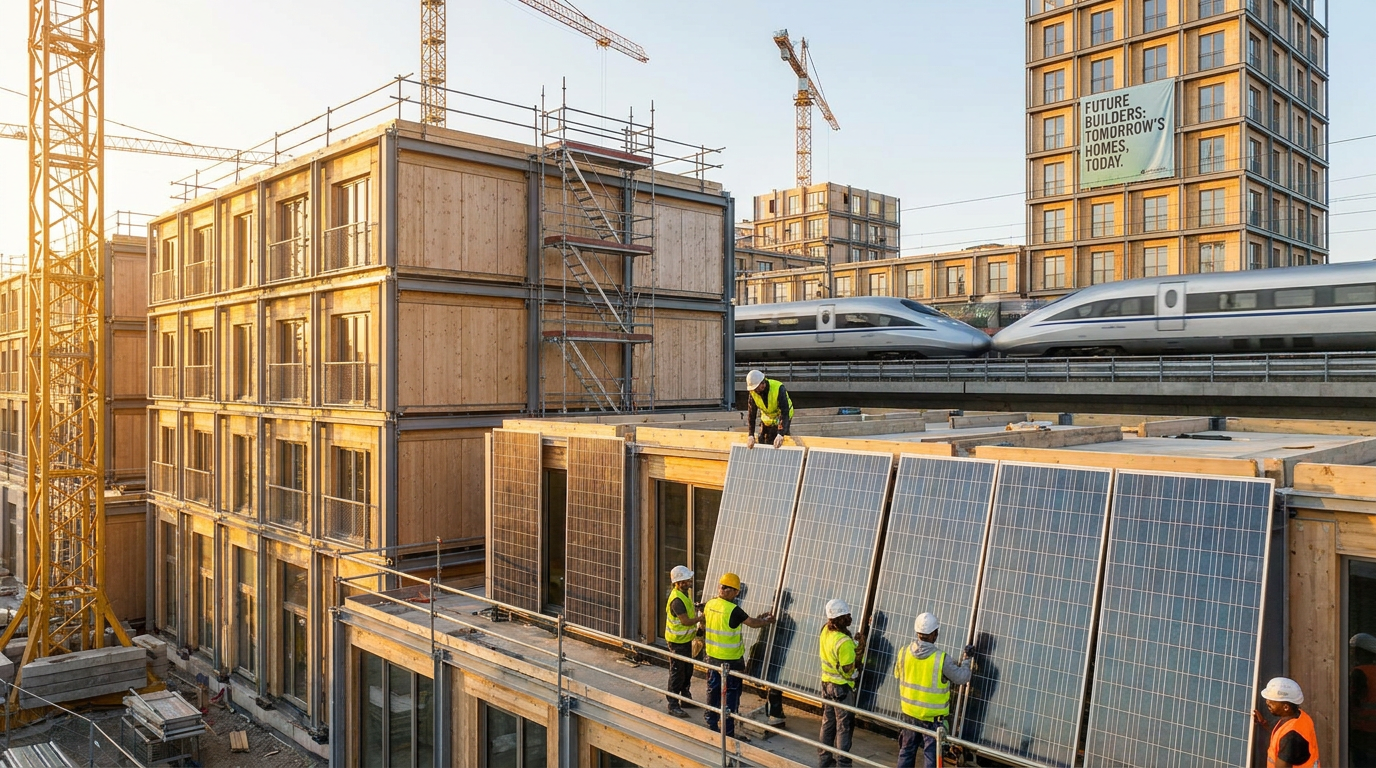
- Supply-Side Progressives
- Focus on removing regulatory barriers to build housing, energy, and infrastructure.
- Traditional Progressives
- Emphasize that new construction must include strong worker protections and equitable distribution.
- Market Conservatives
- Support deregulation but remain skeptical of the left's ability to execute it.
- Policy Analysts
- Evaluate the movement's viability, geographic impact, and structural mechanics.
What's not represented
- · Local zoning board members
- · Environmental conservationists focused on local habitats
Why this matters
If the 'abundance' framework takes hold in policy circles, it could fundamentally reshape zoning laws, environmental regulations, and infrastructure spending. For the average citizen, this translates directly into the future cost of rent, the speed of the green energy transition, and the efficiency of local transit.
Key points
- A rising intellectual movement called the 'abundance agenda' argues that America's biggest crises stem from an inability to build.
- Proponents argue that decades of progressive policy have subsidized demand while creating regulatory labyrinths that restrict supply.
- The movement advocates for sweeping zoning and permitting reforms to unleash the construction of housing, clean energy, and infrastructure.
- Critics on the left warn that deregulation could empower corporate monopolies and undermine labor standards.
- Market conservatives agree with the need to deregulate but doubt the progressive coalition's willingness to dismantle the administrative state.
For decades, the defining debate in American politics has centered on how to divide the economic pie. Politicians and policymakers have argued endlessly over taxation, wealth redistribution, and the social safety net. But a rising intellectual movement is asking a fundamentally different question: Why have we forgotten how to bake a bigger pie in the first place? This shift in perspective marks a departure from the traditional political battles of the late twentieth century, focusing instead on the physical reality of what the nation produces. By examining the root causes of modern shortages, these thinkers are attempting to reframe the national conversation around growth, capacity, and the tangible construction of a better future.[1]
Dubbed the 'Abundance Agenda' or 'Supply-Side Progressivism,' this framework argues that America's most acute crises—from crushing housing costs to the sluggish green energy transition—are rooted in a self-imposed inability to build. The movement, which has been simmering in policy blogs and think tanks for years, gained mainstream velocity with the 2025 publication of Abundance: On the Future of Growth, a bestselling manifesto by journalists Ezra Klein and Derek Thompson. Their work synthesizes years of frustration among center-left analysts who watched well-funded government initiatives repeatedly fail to deliver physical results. The agenda proposes that true equity cannot be achieved simply by handing out subsidies in a world of artificial scarcity; it requires a massive, unencumbered expansion of essential goods.[1][2]
The core diagnosis of the abundance faction is that scarcity is largely a policy choice rather than an inevitable economic reality. For the past half-century, they argue, progressive governance has focused heavily on subsidizing demand—giving people money, tax credits, or vouchers to afford rent, healthcare, or higher education. Simultaneously, however, governments at all levels have erected complex regulatory labyrinths that restrict the supply of those exact goods. This mismatch between boosting demand and constraining supply is viewed as the fundamental error of modern policymaking, leading to a society where essential services become luxury items, regardless of how much money the government pumps into the system.[3][4]
This dynamic creates what critics within the movement call 'cost-disease socialism.' When the government heavily subsidizes a good but makes it nearly impossible to build more of it, the result is not broader access, but spiraling inflation that eats up the subsidy. The abundance agenda proposes a radical pivot: instead of just helping people pay exorbitant prices, the state must aggressively dismantle the barriers that keep supply artificially low. By shifting the focus from the demand side of the ledger to the supply side, proponents argue that the government can naturally lower the cost of living, making subsidies less necessary and allowing public funds to stretch much further.[1][5]

Housing serves as the movement's most visible and contentious battleground. In high-demand cities across the country, restrictive local zoning laws make it functionally illegal to build dense apartment buildings or multi-family units. Furthermore, endless community review processes and environmental impact studies allow a handful of vocal, often wealthy residents to block new construction in their neighborhoods. The result is a severe, artificially engineered national housing shortage that drives up rents, fuels homelessness, and locks younger generations out of the wealth-building engine of homeownership. For abundance advocates, the housing crisis is the ultimate proof that local control has been weaponized against the common good.[1][3]
To supply-side progressives, the solution to this crisis is not merely implementing rent control or expanding housing vouchers, which do nothing to create new homes and can sometimes exacerbate shortages. Instead, they advocate for sweeping, state-level zoning reform and the aggressive curtailing of local 'veto points' to unleash a wave of new construction. They argue that a massive, sustained increase in housing supply is the only mathematically viable and durable way to lower costs across the board. By legalizing density and streamlining approvals, they believe cities can once again become engines of opportunity rather than exclusive enclaves for the wealthy.[4]
The paradox of modern environmental regulation forms another central pillar of the abundance critique. In the 1970s, landmark legislative achievements like the National Environmental Policy Act (NEPA) were designed to stop the government from bulldozing highways through vulnerable neighborhoods or polluting pristine rivers. At the time, the primary goal of the environmental movement was to halt destructive state action. Today, however, those same procedural laws are frequently weaponized by opponents to delay or outright block the construction of solar farms, wind turbines, geothermal plants, and high-speed rail lines, creating a legal quagmire for the very projects needed to save the planet.[1][3]

The paradox of modern environmental regulation forms another central pillar of the abundance critique.
Abundance advocates argue that surviving climate change requires an unprecedented, wartime-level infrastructure build-out. They contend that a regulatory state obsessed with preventing localized harm has lost the capacity to proactively build the clean energy grid the global future demands. To achieve ambitious environmental goals and transition away from fossil fuels, they argue, the permitting process must be radically streamlined. This means accepting that building green infrastructure will have some local impacts, but recognizing that the global cost of inaction—and the continued reliance on carbon-intensive energy—is vastly more destructive than the footprint of a new transmission line.[2][4][5]
Yet, this vocal call for deregulation from the center-left has sparked fierce debate and pushback from within the broader progressive coalition. Traditional progressives and labor advocates warn that the abundance agenda's intense focus on speed, efficiency, and supply glosses over crucial historical questions of power, equity, and distribution. They worry that in the rush to build, the movement might inadvertently dismantle the very protections that keep workers safe and ensure that marginalized communities are not steamrolled by massive, state-backed infrastructure projects.[6]
Researchers at institutions like the Roosevelt Institute caution that simply removing regulatory friction could empower corporate monopolies and enrich private developers without delivering broad-based prosperity. They argue that true 'democratic abundance' must ensure that new infrastructure projects guarantee prevailing wages, protect union organizing rights, and serve the public interest rather than just corporate bottom lines. For these critics, the state's role is not just to clear the path for capital, but to actively shape the economy so that the fruits of abundance are shared equitably among the working class.[6]
Further to the left, some socialist critics view the abundance framework with deep ideological suspicion. Commentary in publications like Jacobin has questioned whether supply-side progressivism is merely 'neoliberalism redux'—a cleverly rebranded effort to deregulate industries, weaken environmental protections, and de-risk private capital under the optimistic guise of solving scarcity. These critics argue that capitalism inherently relies on artificial scarcity to maintain profit margins, and that true abundance cannot be achieved simply by tweaking zoning laws while leaving the fundamental ownership structure of the economy intact.[7]

Conversely, market-oriented conservatives agree wholeheartedly with the abundance agenda's diagnosis of bureaucratic bloat, but they deeply doubt the political left's ability to execute the cure. Analysts at the Manhattan Institute and similar think tanks argue that the progressive coalition is too deeply intertwined with environmental advocacy groups, public sector labor unions, and the administrative state to ever meaningfully dismantle the regulations that strangle growth. They view supply-side progressivism as an interesting intellectual exercise that will inevitably crash into the hard political realities and entrenched special interests of the Democratic base.[8]
There is also a potent geographic critique of the movement's priorities. Analysts at the Brookings Institution note that the abundance movement's intense focus on building more housing in booming, high-cost coastal cities implicitly tells residents of struggling, deindustrialized regions to simply pack up and move to where the capital is flowing. These critics argue that a true, equitable national agenda must include targeted, place-based investments to revitalize distressed communities in the Rust Belt and the South, rather than just focusing on densifying already-rich metropolitan areas.[9]
Despite these ideological crosscurrents and structural critiques, the abundance framework is already leaving a tangible legislative footprint in Washington and state capitals. The bipartisan passage of the CHIPS Act, the ongoing, high-stakes congressional debates over permitting reform, and the recent string of legislative victories by the YIMBY movement all reflect a growing consensus. Across the political spectrum, there is an increasing recognition that state capacity and targeted industrial policy are absolutely necessary to secure vulnerable supply chains, achieve energy independence, and lower the cost of living.[1][5]

Ultimately, the abundance agenda represents a profound and necessary shift in American political imagination. By challenging the deeply ingrained assumption that progress merely means managing decline, redistributing wealth, or perfectly regulating scarcity, the movement asks society to raise its ambitions. It demands that policymakers embrace the messy, complex, and vital work of building a bigger, cheaper, and more capable future. Whether this intellectual framework can fully overcome decades of entrenched proceduralism remains to be seen, but it has undeniably changed the terms of the debate.[1][2]
How we got here
1970s
Passage of landmark environmental and procedural laws (like NEPA) that established modern regulatory review.
2010s
The YIMBY (Yes In My Back Yard) movement gains traction, pushing back against restrictive local zoning.
Jan 2022
Derek Thompson publishes 'A Simple Plan to Solve All of America's Problems,' popularizing the 'abundance agenda' term.
Aug 2022
The Inflation Reduction Act passes, injecting billions into clean energy but highlighting the need for permitting reform to actually build the projects.
Mar 2025
Ezra Klein and Derek Thompson publish 'Abundance: On the Future of Growth,' cementing the movement's manifesto.
Viewpoints in depth
Supply-Side Progressives
Advocates who believe government must actively dismantle barriers to building essential infrastructure.
This camp argues that the primary driver of inequality and stagnation is artificial scarcity. They believe that well-meaning regulations from the 1970s—like strict environmental reviews and local zoning control—have been weaponized to block clean energy, housing, and transit. Their goal is to pair the progressive desire for a robust state with a deregulatory zeal that removes 'veto points,' allowing society to build its way out of crises.
Traditional Progressives & Labor
Critics who worry the abundance focus ignores corporate power and worker protections.
Thinkers in this camp, including researchers at the Roosevelt Institute, caution that simply 'building more' is insufficient if it enriches monopolies or undermines labor standards. They argue that the abundance agenda's focus on deregulation risks repeating the mistakes of neoliberalism. For this group, true abundance must be democratic, ensuring that new infrastructure projects guarantee prevailing wages, union protections, and equitable distribution of resources.
Market Conservatives
Analysts who agree on deregulation but doubt the left's commitment to it.
Market-oriented commentators agree with the abundance agenda's diagnosis that overregulation strangles growth. However, institutions like the Manhattan Institute argue that the progressive coalition is too deeply intertwined with the regulatory state, environmental groups, and labor unions to ever meaningfully dismantle the bureaucracy. They view 'supply-side progressivism' as an intellectual exercise that will inevitably clash with the political realities of the Democratic base.
What we don't know
- Whether Congress can pass comprehensive permitting reform that satisfies both clean-energy advocates and traditional environmentalists.
- How the abundance framework will address the displacement of vulnerable communities during rapid urban development.
Key terms
- Supply-Side Progressivism
- A political philosophy that seeks progressive outcomes (like affordable housing and clean energy) by increasing the supply of those goods, rather than just subsidizing demand.
- Cost-Disease Socialism
- A critique that government often subsidizes the cost of expensive services (like healthcare or education) without fixing the underlying reasons those services are so expensive to produce.
- Veto Point
- A step in a regulatory or democratic process where a single individual, agency, or local group can delay or block a project.
- NEPA
- The National Environmental Policy Act, a 1970 law requiring federal agencies to assess the environmental effects of their proposed actions, often cited by abundance advocates as a source of project delays.
- State Capacity
- The ability of a government to effectively and efficiently execute policies, build infrastructure, and deliver public services.
Frequently asked
What is the difference between the abundance agenda and traditional progressivism?
Traditional progressivism often focuses on redistributing wealth and subsidizing the cost of living (e.g., rent assistance). The abundance agenda focuses on removing barriers to actually building more of what people need (e.g., building more apartments to lower rent naturally).
Does the abundance agenda mean getting rid of environmental regulations?
Not entirely, but it advocates for streamlining them. Proponents argue that procedural laws designed to protect the environment in the 1970s are now frequently used to block the construction of green energy projects like solar farms and high-speed rail.
Why do some on the left criticize this movement?
Critics worry that focusing too heavily on deregulation and speed could empower corporate monopolies, weaken labor unions, and bypass the voices of marginalized communities who might be affected by new construction.
Sources
Source coverage
9 outlets
4 viewpoints surfaced









[1]Factlen Editorial TeamPolicy Analysts
Synthesis by Factlen editorial team
Read on Factlen Editorial Team →[2]Avid Reader PressSupply-Side Progressives
Abundance: On the Future of Growth
Read on Avid Reader Press →[3]The AtlanticSupply-Side Progressives
A Simple Plan to Solve All of America's Problems
Read on The Atlantic →[4]The New York TimesSupply-Side Progressives
The Economic Mistake the Left Is Finally Confronting
Read on The New York Times →[5]Niskanen CenterPolicy Analysts
The Abundance Faction and the Future of American Politics
Read on Niskanen Center →[6]Roosevelt InstituteTraditional Progressives
The Abundance Agenda is Incomplete Without Addressing Power and Distribution
Read on Roosevelt Institute →[7]JacobinTraditional Progressives
Is Abundance Simply Neoliberalism Redux?
Read on Jacobin →[8]Manhattan InstituteMarket Conservatives
Supply-Side Progressivism Has a Fatal Flaw
Read on Manhattan Institute →[9]Brookings InstitutionPolicy Analysts
The abundance movement's blind spot: America's distressed places
Read on Brookings Institution →
Every angle. Every day.
Get opinion stories with full source coverage and perspective breakdowns delivered to your inbox.