
The $9.2 Billion Debate Over the 2024 Home Energy Code: Costs, Savings, and What It Means for Buyers
A new Department of Energy analysis argues the latest model building code will add up to $14,000 to the price of a new home, sparking a debate over upfront costs versus long-term utility savings.
By Derya Kaplan

- Federal Regulators
- Argue that strict energy mandates unnecessarily inflate the upfront cost of housing.
- Code Developers & Advocates
- Maintain that energy efficiency upgrades pay for themselves through long-term utility savings.
- Climate Policy Watchdogs
- View the rollback of code support as a politically motivated attack on environmental progress.
Perspectives this story doesn't cover
- Homebuilders and construction industry groups who actually implement the codes.
- First-time homebuyers struggling with current interest rates and down payments.
The American dream of homeownership is increasingly colliding with the push for next-generation energy efficiency. As building technologies advance, the homes we construct are becoming tighter, better insulated, and less reliant on fossil fuels. But these modern upgrades come with a price tag, sparking a fierce debate over who should bear the cost and when the financial benefits are actually realized.
The conversation reached a boiling point in late June 2026, when the U.S. Department of Energy (DOE) released a sweeping analysis of the newest model building codes. The agency concluded that nationwide adoption of the 2024 International Energy Conservation Code (IECC) would add a staggering $9.2 billion annually to residential construction costs.[1][2][3]
For an individual family looking to buy a newly built single-family home, the DOE estimates the new code could add up to $14,000 to the upfront purchase price. This figure accounts for the thicker insulation, high-performance windows, and advanced heating and cooling systems required to meet the 2024 standards.[1][5]
The DOE argues that these mandates force families to pay thousands of dollars more upfront, with the projected energy savings taking anywhere from 11 to 22 years to materialize. Federal officials have labeled this payback period unacceptable, arguing that it locks American families into decades-long repayment timeframes and restricts their freedom to choose how their homes are built and powered.[1][3]
To understand the stakes, it helps to understand what the IECC actually is. It is a model building code updated every three years by the International Code Council (ICC), a non-governmental consensus organization.[2]
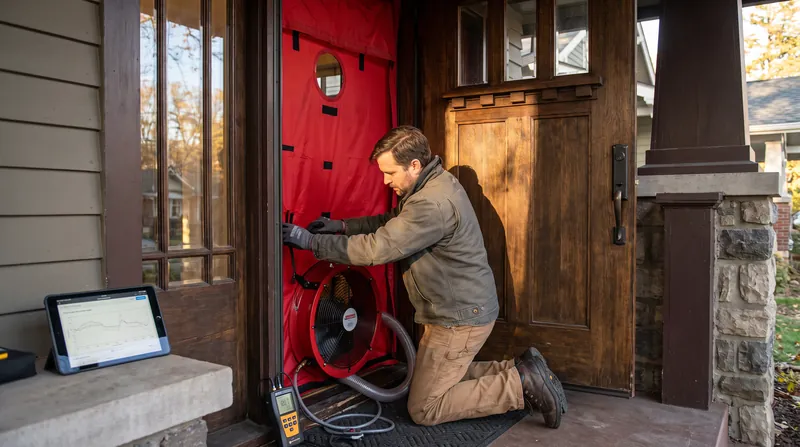
The code sets the baseline requirements for a home's "envelope"—the physical barrier between the indoors and outdoors, including walls, windows, and doors—as well as its heating, cooling, and lighting systems. Each iteration of the code generally pushes for deeper energy savings than the last.[4]
Crucially, the IECC is not a federal mandate. States and local municipalities decide whether to adopt the latest version, stick with an older edition, or amend the rules to fit local climates and economies. A state like California might adopt strict rules, while a Midwestern state might rely on a code from a decade ago.[3][6]
The 2024 iteration of the code is particularly ambitious. It includes stricter standards for insulation and encourages high-efficiency electric systems, such as heat pumps, over traditional fossil-fuel systems. It also touches on newer infrastructure needs, such as electric vehicle charging readiness.[5]
It includes stricter standards for insulation and encourages high-efficiency electric systems, such as heat pumps, over traditional fossil-fuel systems.
The DOE's recent analysis represents a sharp pivot in federal policy. Historically, the agency has supported the adoption of newer codes. Critics note that the DOE recently removed a webpage citing research from the Pacific Northwest National Laboratory, which had estimated that adopting the latest energy codes would save U.S. homes and businesses $182 billion between 2010 and 2040.[2][3]
The International Code Council and energy efficiency advocates have strongly pushed back against the DOE's new framing. They argue that the agency is focusing almost exclusively on upfront construction costs while ignoring the massive lifecycle savings that efficient homes generate.[2][3]
The Alliance to Save Energy points out that while $14,000 sounds steep in a vacuum, it must be viewed in the context of the broader housing market. With the average price of a new home—including land and soft costs—sitting around $665,000, the code compliance cost represents roughly a 1.3% to 2.1% increase on the total price tag.[4]
The core of the counter-argument lies in mortgage math. Because the upfront cost of a home is typically financed over a 30-year mortgage, the actual monthly increase in a homeowner's payment is relatively small.[4]
Advocates argue that the monthly savings on utility bills generated by the 2024 IECC—estimated at a 6.8% reduction in household energy costs—often exceed the slight increase in the mortgage payment. In this scenario, the homeowner is technically "cash-flow positive" from their very first month in the house.[3][4]
However, builders and federal regulators maintain that any increase in the sticker price of a home can have cascading effects. Higher purchase prices mean higher down payments and stricter mortgage qualification thresholds, which can price out first-time buyers who are already struggling with elevated interest rates.[1]
Organizations representing smaller dwellings have also raised alarms. The Tiny House Alliance USA notes that fixed regulatory costs disproportionately impact the affordability of smaller, lower-cost homes, urging policymakers to consider the unique economics of alternative housing.[7]
The policy rift shows no signs of closing. The DOE has formally urged the ICC to refocus its code-development process purely on affordability and to strip out requirements related to greenhouse gas emissions and electric vehicle infrastructure.[1][5]
Ultimately, the decision rests with state legislatures and local city councils. These local bodies must weigh the immediate housing affordability crisis against the long-term benefits of a more resilient, energy-efficient housing stock that can withstand extreme weather and volatile energy prices.[3]
For prospective homebuyers, the debate highlights the importance of looking beyond the sticker price. Understanding a home's energy rating, its insulation quality, and its projected utility costs is becoming just as crucial to the true cost of homeownership as the interest rate on the mortgage.[4]
Key points
- The DOE estimates the 2024 IECC could add up to $14,000 to the cost of a new single-family home.
- Federal regulators argue the 11- to 22-year payback period for these upgrades is too long for the average family.
- Energy efficiency advocates counter that the upgrades represent only a 1% to 2% increase in total home price.
- Because homes are financed over 30 years, advocates argue monthly utility savings immediately offset the higher mortgage payments.
- The IECC is a model code, meaning individual states and cities ultimately decide whether to adopt the new standards.
Why this matters
Building energy codes dictate how much insulation, what kind of windows, and which HVAC systems go into new homes. Understanding the tradeoff between upfront construction costs and long-term utility savings helps homebuyers navigate the true price of homeownership.
Sources
Source coverage
7 outlets
3 viewpoints surfaced







- [1]Department of EnergyFederal Regulators
Energy Department Analysis Finds Proposed International Building Codes Would Cost Americans $9.2 Billion Annually
Read on Department of Energy → - [2]Facilities DiveCode Developers & Advocates
DOE says 2024 building energy code will add $127B in construction costs
Read on Facilities Dive → - [3]DWM MagazineCode Developers & Advocates
DOE Claims 2024 IECC Will Increase Housing Costs by $9.2 Billion Annually
Read on DWM Magazine → - [4]Alliance to Save EnergyCode Developers & Advocates
Putting the DOE's $9.2 Billion Energy Code Cost Estimate in Context
Read on Alliance to Save Energy → - [5]Inside LightingClimate Policy Watchdogs
DOE vs. Energy Codes
Read on Inside Lighting → - [6]Quitting CarbonClimate Policy Watchdogs
The Trump administration really wants you to pay more to power your home
Read on Quitting Carbon → - [7]Tiny House Alliance USAFederal Regulators
DOE Seeks Comments Cost Effective Building Energy Codes
Read on Tiny House Alliance USA →
Comments
More in Home
See all →Rental Upgrades
Peel-and-Stick Wallpaper vs. Painted Stencils: The True Cost and Labor Trade-Offs for Renters
3 sources

Appliance Science
The 140°F/160°F Threshold: How Dishwasher Temperatures and Detergent Enzymes Achieve Sanitization
6 sources

HVAC Code
National Electrical Code Mandates GFCI Protection for All 240V HVAC Units as Exemption Expires
8 sources
Self-Healing Concrete
How Self-Healing Concrete Uses Bacteria and Roman Chemistry to Seal Its Own Cracks
6 sources
Every angle. Every day.
Get Home stories with full source coverage and perspective breakdowns delivered to your inbox.