
The 2026 Guide to Buying a Used EV: Battery Health, Tax Credits, and Top Picks
With steep depreciation and robust tax credits making used electric vehicles cheaper than gas cars, 2026 is a buyer's market. Here is how to check battery health and find the best deals.
By Factlen Editorial Team
- Bargain Hunters
- Prioritizing low upfront costs, steep depreciation curves, and maximizing government tax incentives.
- Tech & Range Enthusiasts
- Focused on battery degradation metrics, OBD2 scanning, and fast-charging capabilities.
- Automotive Analysts
- Tracking the macroeconomic shift as EVs reach price parity with combustion vehicles and standardizing health checks.
What's not represented
- · Independent mechanics adapting to EV repair
- · Buyers in rural areas lacking charging infrastructure
Why this matters
For the first time, buying a used electric vehicle is significantly cheaper than buying a comparable gas car. Understanding how to evaluate battery health ensures you can secure a reliable, low-maintenance vehicle that slashes your monthly transportation costs.
Key points
- Used EVs are now frequently cheaper than comparable gas cars due to steep early depreciation.
- A $4,000 federal tax credit is available at the point of sale for used EVs under $25,000.
- Modern EV batteries degrade slowly, typically losing only 1.5% to 2% of capacity per year.
- Buyers should check a vehicle's State of Health (SOH) using dashboard menus or an OBD2 scanner.
- EVs require specialized tires to handle their heavier weight and instant torque.
For years, the barrier to electric vehicle ownership was a steep upfront premium. But in 2026, the math has fundamentally flipped. A massive wave of off-lease EVs from the early 2020s has flooded the secondary market, driving prices down to unprecedented levels. According to market analysts, used EVs are now frequently cheaper than their gas-powered equivalents, offering a rare opportunity for budget-conscious drivers to upgrade their technology while slashing their monthly running costs.[2][3]
The driving force behind this affordability is a steep initial depreciation curve. While new EVs still carry a premium, they shed a significant portion of their value in the first three years. This market dynamic means that a three-year-old electric sedan or SUV can be acquired for a fraction of its original sticker price, effectively erasing the "EV tax" that early adopters paid. For the second owner, the financial proposition is overwhelmingly positive.[2][8]
In the United States, this price drop is supercharged by federal incentives. The used EV tax credit offers up to $4,000 off the purchase price at the point of sale, provided the vehicle costs under $25,000 and is purchased through a registered dealer. Because wholesale prices have stabilized at lower tiers, a vast swath of the used EV inventory now comfortably sits below that $25,000 threshold, making the federal rebate highly accessible to everyday buyers.[3]

Despite the financial incentives, many prospective buyers hesitate over a single, looming question: battery health. Early anxieties suggested that EV batteries would need catastrophic, $15,000 replacements after a few years. Large-scale telematics data has definitively proven this false. Modern lithium-ion battery packs are remarkably resilient, typically degrading at a rate of just 1.5% to 2% per year. A five-year-old EV will generally retain over 90% of its original factory range.[4][5]
When shopping for a used EV, the odometer matters far less than the battery's State of Health (SOH). The SOH is a percentage that indicates the battery's current maximum capacity compared to when it rolled off the assembly line. Understanding this metric is the single most important step in the buying process, as it directly dictates the vehicle's real-world range and long-term viability.[4][6]
Fortunately, checking the SOH has become increasingly straightforward. Many modern EVs display their battery health directly on the dashboard or through the manufacturer's infotainment system. For example, the Nissan Leaf has a dedicated capacity gauge, while Tesla owners can navigate through the service menu to view detailed battery diagnostics. If a vehicle shows an SOH above 80%, the battery is generally considered to be in excellent condition.[6][8]
If the car does not display its SOH natively, buyers can take matters into their own hands using an OBD2 scanner. By plugging a relatively inexpensive Bluetooth diagnostic tool—such as a Veepeak or Carista adapter—into the vehicle's standard diagnostic port, shoppers can pair it with smartphone apps like Torque Pro or Car Scanner. These apps pull raw data directly from the battery management system, revealing cell voltages, temperature history, and the exact degradation percentage.[6]

If the car does not display its SOH natively, buyers can take matters into their own hands using an OBD2 scanner.
For those who prefer a professional assessment, third-party battery diagnostics are becoming a standard part of the used car industry. Companies like Aviloo and Recurrent provide independent, brand-neutral battery health reports. Many reputable dealerships and auction houses now include these certified health checks in their listings, offering buyers a transparent score out of 100 and a detailed breakdown of the battery's usable capacity before any paperwork is signed.[3][7]
Beyond the SOH, buyers must understand how to interpret range estimates during a test drive. The dashboard's predicted range is highly sensitive to recent driving behavior and ambient temperature. Cold weather can temporarily reduce an EV's efficiency by forcing the battery to expend energy heating the cabin, but this does not indicate permanent degradation. Buyers should ask the seller to charge the car to 100% and compare the indicated range to the EPA estimate, factoring in the known SOH.[4][5]
A battery's history also leaves clues about its future longevity. The previous owner's charging habits play a significant role in battery preservation. Frequent reliance on DC fast chargers generates excess heat, which can accelerate cell degradation over time. Conversely, a vehicle that was primarily charged at home on a Level 2 AC charger—and kept between 20% and 80% capacity—will likely exhibit a pristine State of Health.[4][7]
While electric vehicles require virtually no traditional mechanical maintenance—say goodbye to oil changes, spark plugs, and transmission fluid—they do have one unique consumable: tires. EVs are significantly heavier than gas cars due to their dense battery packs, and their electric motors deliver instant torque to the wheels. This combination can chew through standard rubber rapidly. Buyers should check if the vehicle is fitted with EV-specific tires, which feature reinforced sidewalls and specialized compounds designed to handle the weight and maximize aerodynamic efficiency.[5]

Armed with the right inspection tools, buyers can navigate a used market filled with exceptional models. For pure budget-conscious commuting, the Chevrolet Bolt EV and its slightly larger sibling, the Bolt EUV, are nearly unbeatable. With an EPA-estimated range of 259 miles and a spacious cabin, early 2020s models are widely available well under the $20,000 mark. They represent one of the highest value-per-mile propositions in the automotive world.[1][2]
For drivers who prioritize road trips and charging infrastructure, the Tesla Model 3 remains the default choice. The sheer volume of Model 3s on the secondary market has driven prices down to highly competitive levels. Beyond its sporty handling and minimalist tech, buying a used Tesla grants native, seamless access to the sprawling Supercharger network, eliminating range anxiety for long-distance travel.[1][2]
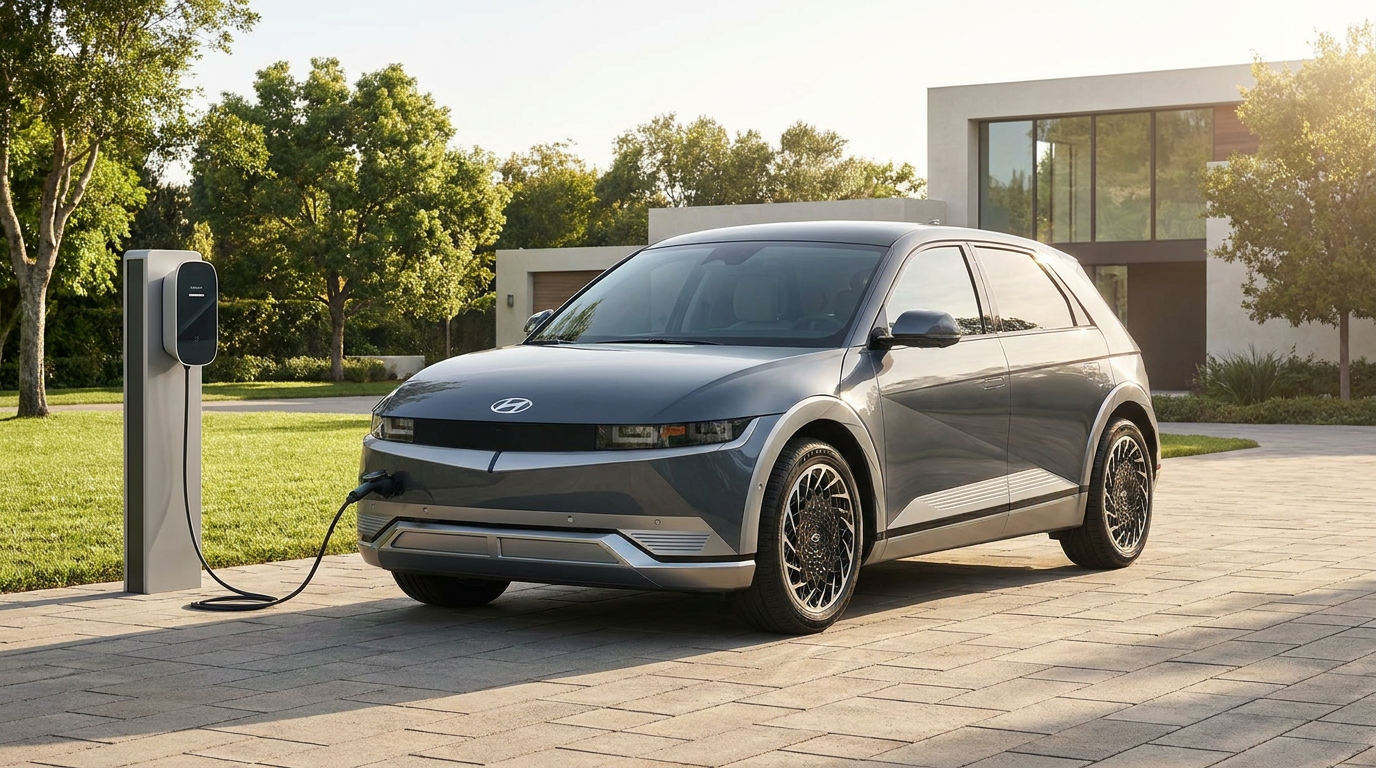
Meanwhile, the Hyundai Ioniq 5 has emerged as the premier choice for buyers seeking a family-friendly SUV with cutting-edge technology. Built on an advanced 800-volt architecture, the Ioniq 5 boasts some of the fastest charging speeds in the industry, capable of adding hundreds of miles of range in under 20 minutes. Used models are now heavily discounted from their original luxury price tags, offering premium comfort and striking retro-futuristic design at a bargain.[1][2]

The 2026 used EV landscape is a buyer's market. The combination of steep depreciation, robust government incentives, and proven battery longevity has transformed electric vehicles from expensive novelties into the most pragmatic financial choice for everyday drivers. By verifying the State of Health and checking the tires, consumers can secure a high-tech, zero-emission vehicle that will deliver years of reliable, low-cost driving.[3][8]
How we got here
2020–2023
A massive wave of new EVs hits the market, setting the stage for today's used inventory.
January 2023
The US government introduces the $4,000 federal tax credit for used EVs under $25,000.
January 2024
The used EV tax credit becomes available at the point of sale, allowing instant discounts at dealerships.
Mid-2026
Used EV prices reach parity with gas vehicles, driven by off-lease inventory and stabilized depreciation.
Viewpoints in depth
Budget-Conscious Buyers
Prioritizing low upfront costs and maximizing government incentives.
For bargain hunters, the used EV market represents an unprecedented financial loophole. By stacking the steep three-year depreciation curve of early 2020s models with the $4,000 point-of-sale federal tax credit, buyers are acquiring low-mileage vehicles for under $15,000. When factoring in the elimination of oil changes, transmission maintenance, and the lower cost of electricity compared to gasoline, the total cost of ownership for a used EV like the Chevrolet Bolt heavily undercuts even the most economical used gas compacts.
Battery Longevity Skeptics
Concerned about the long-term viability and replacement costs of aging lithium-ion packs.
Early EV adoption was plagued by fears that batteries would become useless after a few years, requiring five-figure replacements. However, extensive telematics data from fleets and independent diagnostic firms has largely dispelled this myth. While extreme heat and excessive reliance on DC fast charging can accelerate wear, the vast majority of EV batteries outlast the vehicle's chassis. The industry's shift toward transparent State of Health (SOH) reporting has given skeptics the hard data needed to buy with confidence.
Automotive Market Analysts
Tracking the macroeconomic shift as EVs reach price parity with combustion vehicles.
Industry analysts note that the flood of off-lease vehicles has fundamentally stabilized the secondary EV market. Dealerships, initially hesitant to take in used EVs due to price volatility, are now embracing them as high-margin inventory. To move these vehicles, the industry is rapidly standardizing battery health checks, partnering with third-party diagnostic firms to provide certified SOH scores. This institutionalization of battery testing is seen as the final hurdle to mass-market acceptance of used electric vehicles.
What we don't know
- How the long-term resale value of early EVs will hold up once they cross the 10-year mark.
- Whether future tax credit policies will be expanded or restricted in upcoming legislative sessions.
Key terms
- State of Health (SOH)
- A percentage metric indicating an EV battery's current maximum capacity compared to when it was brand new.
- OBD2 Scanner
- A small diagnostic device that plugs into a vehicle's standard port to read real-time data, including detailed battery health metrics.
- Level 2 Charging
- A 240-volt charging system, similar to a heavy-duty appliance outlet, that adds 10 to 30 miles of range per hour.
- DC Fast Charging
- High-power public charging stations that can refill an EV battery in minutes, though frequent use can slightly accelerate battery degradation.
- Battery Degradation
- The natural, gradual loss of a lithium-ion battery's ability to hold a full charge over years of use.
Frequently asked
Can I get a tax credit for buying a used EV?
Yes. In the US, buyers can receive a federal tax credit of up to $4,000 for a used EV, provided the vehicle costs under $25,000 and is purchased through a registered dealership.
How long do electric car batteries actually last?
Modern EV batteries are designed to outlast the vehicle itself. Data shows they typically degrade at a rate of just 1.5% to 2% per year, meaning a five-year-old car still retains over 90% of its original range.
Do I need special tires for an electric vehicle?
Yes. Because EVs are heavier and produce instant torque, they require EV-specific tires with reinforced sidewalls and specialized rubber compounds to prevent rapid wear and maximize range.
How can I check a used EV's battery health?
You can check the State of Health (SOH) via the car's dashboard, use an inexpensive OBD2 scanner with a smartphone app, or request a third-party diagnostic report from the dealer.
Sources
Source coverage
8 outlets
3 viewpoints surfaced








[1]EdmundsTech & Range Enthusiasts
Best used electric cars to buy
Read on Edmunds →[2]AP NewsBargain Hunters
With volatile gasoline prices rising, Edmunds says buy used EVs
Read on AP News →[3]RecurrentAutomotive Analysts
Used EV Market Report — Q1 2026
Read on Recurrent →[4]FLOAutomotive Analysts
Understanding EV Battery Health
Read on FLO →[5]CarMaxBargain Hunters
What to look for when buying a used EV
Read on CarMax →[6]AutoTrader UKTech & Range Enthusiasts
How to check an electric car's battery health
Read on AutoTrader UK →[7]NRMAAutomotive Analysts
EV Battery Health Check
Read on NRMA →[8]ElectrifyingAutomotive Analysts
Used EV Buying Guide
Read on Electrifying →

More in shopping
See all 5 stories →


Every angle. Every day.
Get shopping stories with full source coverage and perspective breakdowns delivered to your inbox.