
The 2026 Guide to Buying a Cold-Climate Heat Pump
With stricter federal efficiency standards and advanced variable-speed technology, modern heat pumps can now comfortably heat homes in sub-zero temperatures. Here is how to navigate SEER2 ratings, installation costs, and top brands in 2026.
By Factlen Editorial Team
- Pragmatic Homeowners
- Balance the upfront installation shock against long-term utility savings, winter reliability, and available tax rebates.
- HVAC Professionals
- Emphasize that proper sizing, load calculations, and ductwork integrity matter far more than buying the most expensive brand name.
- Electrification Advocates
- Focus on phasing out fossil fuels, emphasizing the long-term climate benefits and eventual cost savings of high-efficiency systems.
What's not represented
- · Renters unable to upgrade building infrastructure
- · Low-income households priced out of premium systems despite rebates
Why this matters
Replacing a home heating system is a massive financial commitment. Understanding the new 2026 efficiency metrics ensures you maximize federal tax credits while avoiding systems that will struggle during deep winter freezes.
Key points
- Modern cold-climate heat pumps can efficiently heat homes in sub-zero temperatures.
- The DOE has updated efficiency standards to SEER2 and HSPF2 to better reflect real-world conditions.
- Premium systems from brands like Mitsubishi and Carrier maintain 100% heating capacity down to 5°F.
- Proper installation and sizing are more critical to performance than the brand of the equipment.
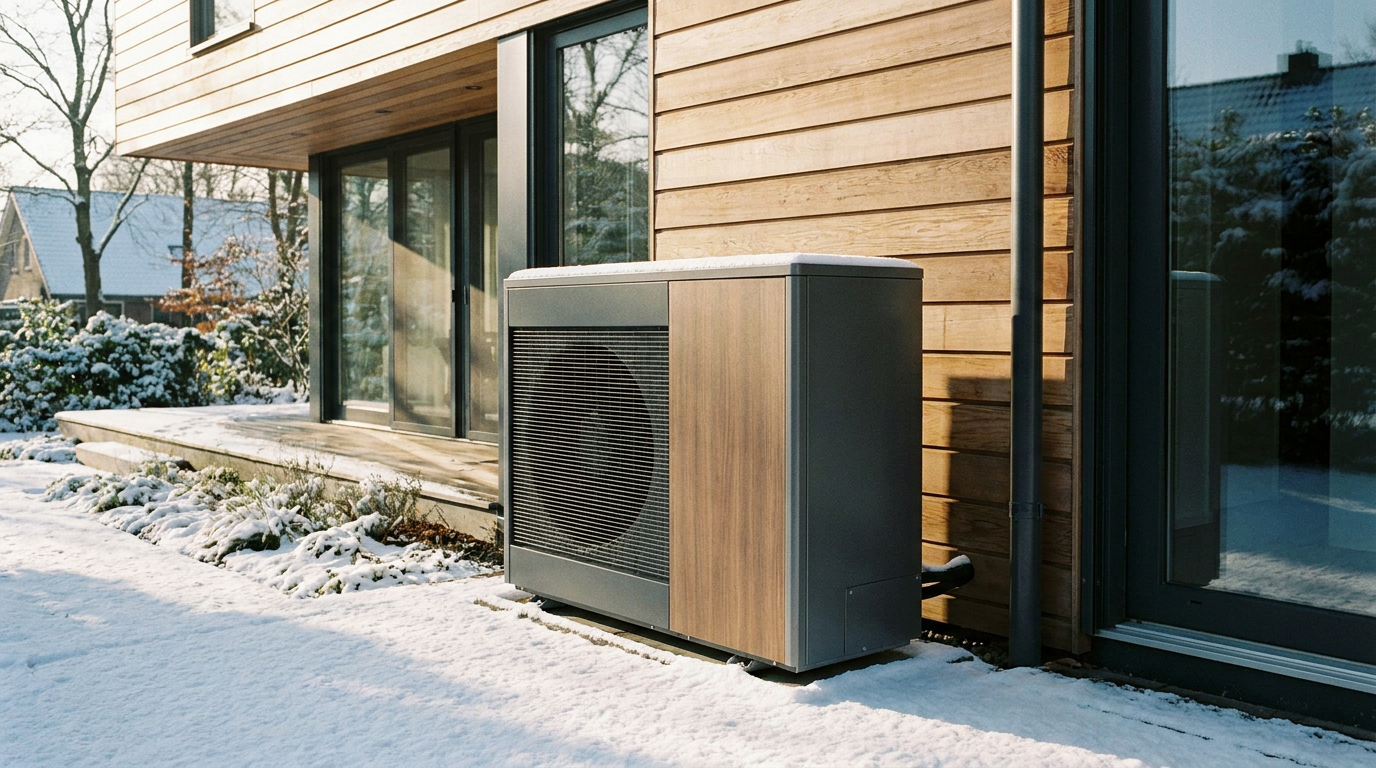
For decades, heat pumps were largely relegated to the American Sunbelt—efficient air conditioners that could occasionally reverse their flow to take the chill off a mild winter morning. But by 2026, the technology has fundamentally transformed. Driven by advancements in compressor engineering and a nationwide push toward residential electrification, modern heat pumps are now routinely replacing gas furnaces in the freezing northern climates of the United States and Canada.[1][7]
The catalyst for this rapid adoption is twofold. First, the Inflation Reduction Act continues to offer federal tax credits of up to $2,000 for qualifying high-efficiency systems, which are often stacked with local utility rebates. Second, homeowners are increasingly seeking refuge from volatile fossil fuel prices. However, navigating the 2026 heat pump market requires understanding a complex new language of efficiency standards and cold-weather performance metrics that dictate whether a system will actually keep a house warm in January.[1][4][5]
The mechanism that makes cold-climate heating possible is the variable-speed inverter compressor. Older heat pumps operated on a simple binary: they were either blasting at 100% capacity or turned completely off. Modern cold-climate systems modulate their output in tiny increments, much like the accelerator pedal in a car. Combined with advanced refrigerants, these systems can extract ambient heat energy from the outside air even when the temperature drops well below freezing.[1][5]
To ensure consumers are getting what they pay for, the Department of Energy (DOE) recently overhauled how HVAC efficiency is measured. The industry has fully transitioned from the legacy SEER and HSPF ratings to the stricter SEER2 and HSPF2 standards. These updated testing procedures account for higher external static pressure, providing a much more accurate reflection of how a system will perform when hooked up to real-world ductwork rather than in a pristine laboratory environment.[3][4][6]

SEER2 (Seasonal Energy Efficiency Ratio 2) measures a system's cooling efficiency over a typical summer. The higher the number, the less electricity the unit consumes to cool the home. In 2026, the federal minimum SEER2 requirement is 13.4 in northern states and 14.3 in the South and Southwest. However, premium high-efficiency models routinely achieve SEER2 ratings between 16 and 18, with some ultra-efficient ductless systems pushing past 20.[3][5][6]
For winter performance, buyers must look to HSPF2 (Heating Seasonal Performance Factor 2). This metric calculates the total heat output divided by the electricity consumed over the heating season. While the federal minimum is 7.5 HSPF2, experts advise that homeowners in cold climates should target systems rated between 9.0 and 10.0 or higher to ensure reliable, cost-effective winter heating.[2][6]
For winter performance, buyers must look to HSPF2 (Heating Seasonal Performance Factor 2).
The evidence supporting these cold-climate claims is robust. Top-tier systems, such as Mitsubishi's Hyper-Heating (H2i) line and Carrier's Infinity series with Greenspeed Intelligence, are engineered to maintain 100% of their rated heating capacity down to 5°F. Furthermore, these premium units can continue operating efficiently in temperatures plunging to -15°F, and in some specialized models, down to -30°F, effectively eliminating the need for backup fossil fuel heating in most regions.[1][5]
Despite these advancements, extreme cold still presents a physical limitation. As temperatures approach -22°F, even the most advanced air-source heat pumps begin to lose capacity and efficiency. For homes in the harshest northern micro-climates, contractors often recommend a "dual-fuel" setup—pairing a high-efficiency heat pump with a backup gas furnace that only kicks on during the deepest winter freezes.[1][2]
When selecting a system, homeowners must also choose between ductless and ducted configurations. Single-zone ductless mini-splits offer the absolute highest efficiency—sometimes reaching 14.0 HSPF2—because they deliver conditioned air directly into a room without the thermal losses associated with ductwork. However, they only heat the specific zone they are installed in, requiring multiple units for a whole-house solution.[2]
Conversely, ducted heat pumps integrate seamlessly into a home's existing central air vents, providing uniform whole-house comfort. The trade-off is that ducted systems generally have slightly lower efficiency ratings than their ductless counterparts and require the existing ductwork to be properly sealed and insulated to perform optimally.[2][5]

The financial reality of cold-climate technology is that it carries a significant price premium. In 2026, a fully installed single-zone cold-climate ductless system ranges from $8,500 to $12,500. For a whole-home ducted system featuring a premium variable-speed air handler, the installed cost can quickly escalate to between $18,500 and $36,500, depending on the home's size and regional labor rates.[2]
The brand landscape is highly stratified. Mitsubishi Electric is widely considered the gold standard for cold-climate and ductless reliability, while Carrier and Trane dominate the premium ducted market with their durable variable-speed compressors. For homeowners seeking a balance of performance and budget, brands like Bosch and Daikin offer highly regarded mid-range inverter systems that deliver excellent value.[1][5]

Ultimately, industry experts universally agree that the logo on the outdoor unit matters far less than the expertise of the people installing it. A premium heat pump will fail to heat a home if it is improperly sized or connected to leaky ducts. Consumers are urged to insist that their contractor performs a rigorous "Manual J" load calculation to match the equipment precisely to the home's thermal envelope, ensuring that the transition to electric heating is both comfortable and cost-effective.[1][5][7]
How we got here
Jan 2023
The Department of Energy introduces SEER2 and HSPF2 testing standards to replace older metrics.
2024–2025
Manufacturers phase out legacy SEER equipment and expand variable-speed product lines.
Jan 2026
Stricter regional efficiency minimums and Energy Star specification sunsets take full effect.
Viewpoints in depth
Electrification Advocates
Focus on phasing out fossil fuels, emphasizing the long-term climate benefits and eventual cost savings of high-efficiency systems.
This camp argues that the transition to electric heat pumps is an environmental imperative. They point to the compounding benefits of pairing high-efficiency SEER2/HSPF2 systems with a greening electrical grid. While acknowledging the high upfront costs, advocates emphasize that federal tax credits and long-term utility savings make electrification the only logical choice for future-proofing a home.
Pragmatic Homeowners
Balance the upfront installation shock against long-term utility savings, winter reliability, and available tax rebates.
For many consumers, the decision is purely economic. The sticker shock of a $20,000+ premium ducted system is a major hurdle. This group heavily weighs the immediate $2,000 IRA tax credit against the projected $1,000 to $3,500 in annual utility savings. Their primary concern is ensuring the system won't leave them freezing—or facing massive auxiliary electric bills—during a January cold snap.
HVAC Professionals
Emphasize that proper sizing, load calculations, and ductwork integrity matter far more than buying the most expensive brand name.
Installers and technicians frequently express frustration with consumers who fixate on brand names or maximum SEER2 ratings while ignoring the fundamentals of their home's thermal envelope. This camp stresses that a mid-tier heat pump installed with a proper Manual J load calculation and sealed ductwork will vastly outperform a top-tier system that is oversized or poorly integrated into an aging house.
What we don't know
- How long current federal tax credits will remain fully funded under future administrations.
- How future electricity rate hikes might alter the long-term ROI calculation against natural gas.
Key terms
- SEER2
- Seasonal Energy Efficiency Ratio 2; a metric that measures a system's cooling efficiency over a typical summer season.
- HSPF2
- Heating Seasonal Performance Factor 2; a metric that measures a heat pump's heating efficiency over a typical winter season.
- Variable-Speed Compressor
- A compressor that adjusts its output in tiny increments rather than just turning on or off, saving energy and maintaining precise temperatures.
- Dual-Fuel System
- A hybrid setup combining an electric heat pump with a backup gas furnace for extreme cold snaps.
- Manual J Calculation
- A detailed mathematical assessment used by contractors to determine the exact heating and cooling load a specific home requires.
Frequently asked
Can a heat pump really heat my home in freezing weather?
Yes. Modern cold-climate heat pumps with variable-speed compressors can operate efficiently in temperatures as low as -15°F to -30°F.
What is a good SEER2 rating?
The federal minimum is 13.4 to 14.3 depending on your region, but high-efficiency models typically range from 16 to 18 SEER2.
Do I need to replace my ductwork?
Not necessarily, but your installer should evaluate your existing ducts to ensure they can handle the airflow requirements of a new system without leaking.
Are there tax credits available for heat pumps?
Yes, the Inflation Reduction Act provides a federal tax credit of up to $2,000 for qualifying high-efficiency heat pumps.
Sources
Source coverage
7 outlets
3 viewpoints surfaced







[1]ModernizePragmatic Homeowners
What's Changed for Heat Pumps in 2026
Read on Modernize →[2]Heat Pump NetworkPragmatic Homeowners
What Cold Climate Equipment Actually Costs
Read on Heat Pump Network →[3]HVAC365Electrification Advocates
DOE Finalizes Tougher SEER2 Rules for ACs and Heat Pumps
Read on HVAC365 →[4]SylvaneElectrification Advocates
Why 2026 Energy Efficiency Standards Matter
Read on Sylvane →[5]Edge EnergyHVAC Professionals
The best heat pump brands for 2026, ranked
Read on Edge Energy →[6]InverterCoolHVAC Professionals
SEER2 vs HSPF2: Understanding Efficiency Ratings
Read on InverterCool →[7]Factlen Editorial TeamPragmatic Homeowners
Synthesis by Factlen editorial team
Read on Factlen Editorial Team →


Every angle. Every day.
Get shopping stories with full source coverage and perspective breakdowns delivered to your inbox.