
SpaceX Acquires AI Coding Startup Cursor for $60 Billion Following Blockbuster IPO
Days after its record-breaking public debut, SpaceX has purchased the AI development platform Cursor in a massive stock deal, reshaping the enterprise software landscape.
By Factlen Editorial Team
- Corporate Strategists
- Focuses on the enterprise AI arms race and the financial mechanics of the merger.
- Developer Community
- Prioritizes product usability, model choice, and the practical implications for software engineering.
- Silicon Valley Ecosystem
- Highlights the wealth generation, startup culture, and local economic impact of the deal.
What's not represented
- · Enterprise IT buyers who must decide whether to renew massive Cursor contracts under new ownership.
- · Regulators who may scrutinize the consolidation of AI compute power and application layers.
Why this matters
This $60 billion acquisition proves that independent AI startups can still achieve astronomical exits in a market dominated by Big Tech. For developers and investors, it signals a massive acceleration in AI-assisted software engineering, backed by SpaceX's newly public capital.
Key points
- SpaceX is acquiring AI coding platform Cursor for $60 billion in a stock-based merger.
- The deal follows SpaceX's record-breaking IPO, which valued the company at over $2.5 trillion.
- Cursor gains access to xAI's Colossus supercomputer to accelerate its model training.
- The acquisition gives SpaceX a massive foothold in the enterprise AI software market.
- Developers have expressed concern that Cursor may lose its model-agnostic features under SpaceX.
Just days after executing a record-breaking $85 billion initial public offering, SpaceX has deployed its newly minted public currency to acquire the AI coding platform Cursor for $60 billion. The blockbuster stock-based merger unites the world's most valuable aerospace company with one of Silicon Valley's fastest-growing enterprise software startups, instantly reshaping the competitive landscape for artificial intelligence development tools.[2][4]
The acquisition represents a dramatic reversal of fortune for Cursor, whose parent company Anysphere was founded just four years ago by a group of recent Massachusetts Institute of Technology graduates. In recent months, social media pundits and industry analysts had prematurely declared the startup outmatched following the release of Anthropic's highly capable Claude Code. Instead of folding, Cursor secured a lifeline that values the young firm at a staggering premium.[1][3]
Under the terms of the deal, Anysphere will become a wholly owned subsidiary of SpaceX, operating under a newly formed entity called X67. Because the transaction is structured entirely as a stock-based merger, SpaceX is preserving the massive capital reserves it raised during its public market debut last week. The market reacted favorably to the aggressive expansion, with SpaceX shares surging more than 10% in premarket trading before settling up 5.6% by the close.[2][4]
For SpaceX and its affiliated artificial intelligence division, xAI, the strategic rationale is clear: catching up to industry heavyweights. While xAI's Grok chatbot has gained traction in consumer markets, it has struggled to compete with OpenAI's Codex and Anthropic's Claude in the lucrative enterprise coding sector. By absorbing Cursor, SpaceX instantly acquires a platform with roughly $2.6 billion in annualized business-to-business revenue and deep penetration among Fortune 500 engineering teams.[2][4]

From Cursor's perspective, the merger solves the single biggest bottleneck facing independent AI companies today: compute power. In a statement addressing the acquisition, the company noted that while their recent agentic coding models had achieved frontier-level performance, further scaling was constrained by hardware limitations. The SpaceX deal grants Cursor direct access to xAI's Colossus supercomputer, providing the infrastructure needed to train dramatically smarter models.[6]
From Cursor's perspective, the merger solves the single biggest bottleneck facing independent AI companies today: compute power.
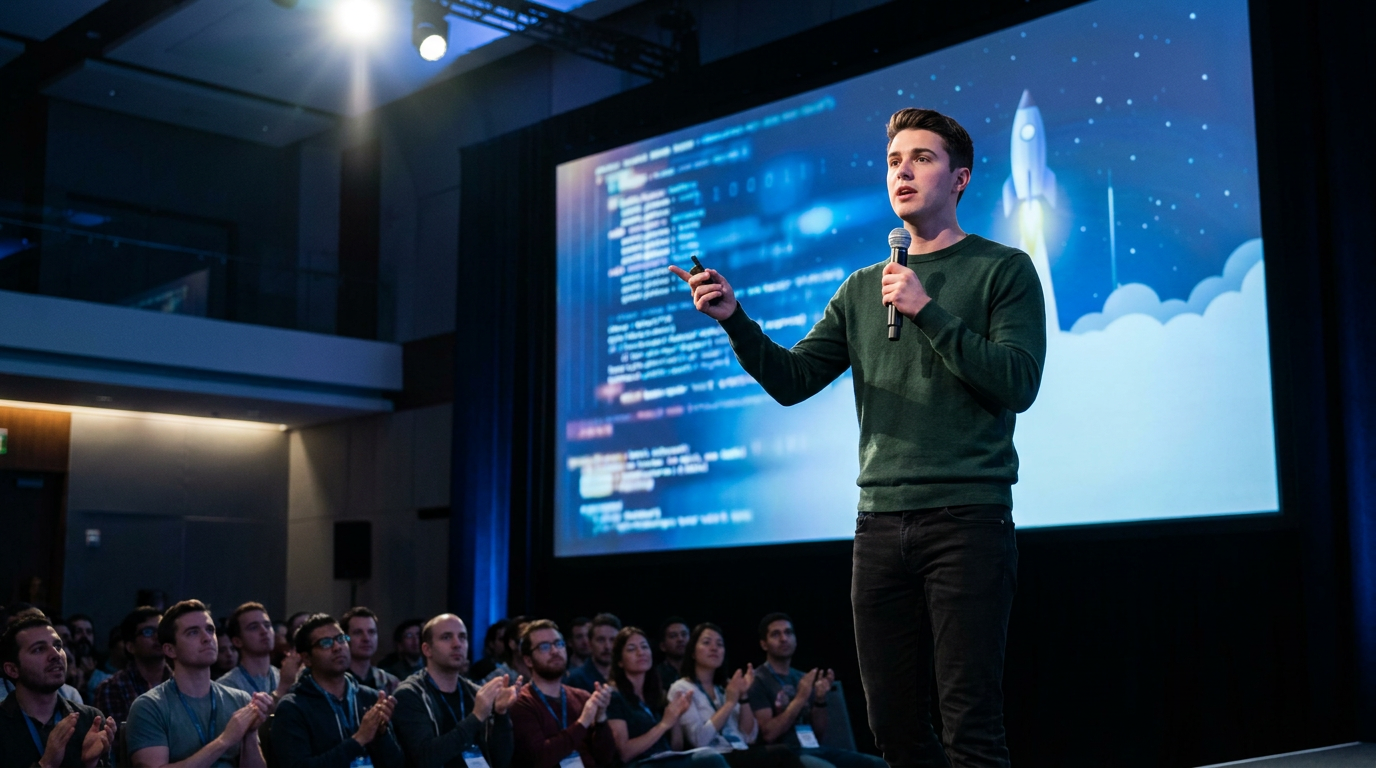
The reality of the windfall was on full display in San Francisco this week. Just hours after the ink dried on the $60 billion agreement, Cursor's 25-year-old CEO Michael Truell took the stage at the company's first-ever developer conference, Compile. Dressed in a dark green sweater and gray running shoes, Truell addressed a packed auditorium at Fort Mason, embodying the newest wave of extreme wealth generation hitting the Bay Area.[3]
The financial implications for the local economy are profound. The acquisition is expected to mint hundreds of new millionaires among Cursor's roughly 800 employees spread across San Francisco, New York, and London. Following SpaceX's lead, local AI giants Anthropic and OpenAI are reportedly eyeing their own public offerings in the coming year, setting the stage for a liquidity event that could eclipse the region's previous tech booms.[3]

Despite the celebratory atmosphere in San Francisco, the acquisition has sparked intense debate within the broader software engineering community. Cursor's meteoric rise was largely fueled by its model-agnostic approach, allowing developers to seamlessly switch between OpenAI, Anthropic, and Google models within the same interface. The platform's speed, focus, and independence earned it a fiercely loyal user base.[5]
On developer forums and social platforms, users are expressing cautious optimism mixed with concern over potential vendor lock-in. The primary fear is that Cursor could slowly transform into a "Grok-first" front end, prioritizing xAI's proprietary models over competitors. While immediate changes to the user experience are unlikely, the long-term product roadmap will test whether SpaceX can maintain the open ecosystem that made Cursor valuable in the first place.[5]
Industry analysts point out that SpaceX has strong incentives to keep developers happy. The $60 billion price tag is justified by Cursor's massive enterprise adoption, which relies on providing the best possible coding assistance regardless of the underlying model. Alienating that user base by forcing inferior models would destroy the very value SpaceX just purchased.[2][5]

The sheer scale of the transaction also sends a powerful signal to venture capitalists and founders across the technology sector. In an era where regulatory scrutiny has chilled major tech acquisitions and massive foundation models threaten to commoditize software layers, the Cursor deal proves that exceptional product execution can still result in generational exits.[1][4]
As the merger moves toward an expected close in the third quarter of 2026, the tech industry will be watching closely. If SpaceX can successfully integrate Cursor's agile product culture with xAI's massive compute resources, it could establish a dominant third pillar in the enterprise AI market, fundamentally changing how the next generation of software is built.[2][6]
How we got here
2022
Cursor is founded by a group of recent MIT graduates aiming to build an AI-native code editor.
Late 2025
Anthropic releases Claude Code, putting immense competitive pressure on independent coding assistants.
Early June 2026
SpaceX completes a record-breaking IPO, raising $85 billion and achieving a $2.5 trillion market cap.
June 16, 2026
SpaceX announces the $60 billion acquisition of Cursor to bolster its enterprise AI offerings.
Viewpoints in depth
Corporate Strategists
Analysts viewing the deal as a necessary maneuver in the enterprise AI arms race.
From a market perspective, SpaceX's acquisition is seen as a highly aggressive but necessary play to close the gap with OpenAI and Anthropic. Financial analysts note that while xAI has built impressive foundational models, it lacked the specialized application layer required to capture lucrative enterprise software budgets. By acquiring Cursor, SpaceX instantly buys its way into the daily workflows of Fortune 500 engineering teams, transforming its massive compute infrastructure into immediate B2B revenue.
Developer Community
Software engineers balancing excitement over compute scale with fears of vendor lock-in.
The reaction among everyday users of the platform is decidedly mixed. On one hand, developers are thrilled by the prospect of Cursor utilizing xAI's Colossus supercomputer to train faster, more capable coding agents. On the other hand, there is widespread anxiety that the platform will lose its cherished model-agnosticism. Developers value the ability to switch between Claude, GPT, and other models seamlessly; if SpaceX forces Grok as the default or degrades the performance of rival models, the community warns it could trigger a mass exodus.
Silicon Valley Ecosystem
Founders and investors celebrating a return to massive startup exits.
For the broader technology ecosystem, the $60 billion price tag is a massive psychological boost. In recent years, the dominance of big tech monopolies and strict antitrust scrutiny had convinced many founders that the era of generational startup acquisitions was over. Cursor's success—achieved in just four years by a team of young graduates—proves that exceptional product-market fit in the AI sector can still command astronomical valuations, reigniting venture capital enthusiasm across the Bay Area.
What we don't know
- Whether SpaceX will eventually restrict Cursor's access to rival AI models like Anthropic's Claude or OpenAI's Codex.
- How the integration of Anysphere into SpaceX's corporate structure will affect the startup's rapid product iteration speed.
- The exact timeline for when Cursor's new xAI-trained models will be deployed to enterprise customers.
Key terms
- Model-agnostic
- Software that is designed to work with multiple different artificial intelligence models rather than being locked into a single provider.
- Vibe-coding
- A colloquial industry term for using natural language AI prompts to generate software code, relying on the AI to handle the syntax.
- B2B Revenue
- Business-to-business revenue, generated by selling software licenses and services directly to other companies rather than individual consumers.
Frequently asked
Will Cursor stop supporting OpenAI and Anthropic models?
Currently, Cursor remains model-agnostic. While developers worry about future lock-in, SpaceX has not announced any plans to restrict access to rival models.
How is SpaceX paying for the $60 billion acquisition?
The deal is structured as a stock-based merger, meaning Cursor's owners are receiving SpaceX stock rather than cash from the company's recent IPO.
Why does a rocket company want an AI coding startup?
The acquisition is largely driven by SpaceX's AI division, xAI, which needs a popular enterprise application to compete with OpenAI and Anthropic in the software market.
Sources
Source coverage
6 outlets
3 viewpoints surfaced






[1]MarketWatchCorporate Strategists
Social media declared Cursor dead. Then SpaceX handed the AI startup a $60 billion lifeline.
Read on MarketWatch →[2]ForbesCorporate Strategists
SpaceX To Acquire AI Coding Startup Cursor For $60 Billion Following Blockbuster IPO
Read on Forbes →[3]The San Francisco StandardSilicon Valley Ecosystem
A young North Beach-based AI startup and its hundreds of employees are in the spotlight after a $60 billion SpaceX acquisition
Read on The San Francisco Standard →[4]ReutersCorporate Strategists
Elon Musk's SpaceX to acquire AI coding agent Cursor for $60 billion
Read on Reuters →[5]r/vibecodingDeveloper Community
SpaceX buying Cursor for $60B might be the wildest AI coding move so far
Read on r/vibecoding →[6]Cursor
Cursor partners with SpaceX on model training
Read on Cursor →

More in finance
See all 7 stories →Stablecoin Adoption
Stablecoins Quietly Cross $33 Trillion in Settlement as Stripe and PayPal Slash Merchant Fees
6 sources

Direct Indexing
Direct Indexing: How Retail Investors Are Unbundling the ETF for Tax Alpha
6 sources
AI Venture Capital
SpaceX Hands AI Startup Cursor a $60 Billion Lifeline, Reviving the 'Vibe Coding' Revolution
7 sources
Knowledge Economy
The Rise of Micro-Consulting: How Mid-Career Professionals Are Monetizing Their Expertise
8 sources

Every angle. Every day.
Get finance stories with full source coverage and perspective breakdowns delivered to your inbox.