
Solid-State EV Batteries Move From Lab to Assembly Line in 2026
Automakers and battery startups are finally moving next-generation solid-state power cells into pilot production and real-world testing. The breakthrough promises 600-mile ranges and 18-minute charge times, though a debate remains over how quickly true mass-market adoption can scale.
By Factlen Editorial Team
- Aggressive Adopters
- Automakers and startups pushing for rapid 2026 commercialization of solid and semi-solid architectures.
- Cautious Realists
- Established battery giants arguing that true all-solid-state mass production remains years away due to scaling and cost hurdles.
- Next-Gen Startups
- Western technology firms focusing on proprietary lithium-metal breakthroughs and pilot-line licensing models.
What's not represented
- · Lithium mining communities
- · Legacy auto mechanics
- · Grid infrastructure planners
Why this matters
Solid-state batteries represent the biggest leap in energy storage since the lithium-ion cell. If successfully scaled, they will eliminate EV range anxiety, drastically reduce fire risks, and make electric vehicles lighter and faster to charge—fundamentally changing the economics of transportation.
Key points
- Solid-state batteries replace flammable liquid electrolytes with stable solid materials, drastically improving safety.
- The new architecture allows for pure lithium-metal anodes, increasing energy density to 350-500 Wh/kg.
- Several automakers are launching vehicles with semi-solid hybrid batteries in 2026, promising ranges up to 600 miles.
- Industry giants warn that true, 100% all-solid-state mass production remains years away due to manufacturing complexities.
For over a decade, solid-state batteries have been the automotive industry's holy grail—a transformative technology perpetually promised to be just five years away. But in 2026, the narrative is definitively shifting from laboratory breakthroughs to factory floors. Automakers and dedicated battery startups are finally moving next-generation power cells out of isolated research environments and into pilot production lines and real-world road testing. This transition marks a critical maturation point for electric mobility, signaling that the fundamental chemistry has been solved and the focus has now shifted to the grueling realities of manufacturing at scale. As these early production cells begin to find their way into development vehicles, the industry is bracing for a paradigm shift that could render today's lithium-ion standard obsolete.
The promise of this technology is nothing short of transformative for the consumer experience. By replacing the volatile liquid components of traditional batteries with stable solid materials, engineers are unlocking a new generation of electric vehicles that can travel over 600 miles on a single charge. Furthermore, these advanced cells can accept power at unprecedented rates, allowing drivers to recharge their vehicles from 10% to 80% in roughly the time it takes to pump a tank of gas. Beyond convenience, the solid architecture operates safely in extreme temperatures, meaning drivers in freezing climates will no longer suffer the severe range degradation that plagues current electric vehicles during the winter months.
To truly understand the magnitude of this breakthrough, one must first look at the internal mechanism of a conventional lithium-ion battery. Today's electric vehicles rely on a liquid or gel electrolyte—a chemical medium that shuttles lithium ions back and forth between the battery's cathode and anode during charging and discharging cycles. While this liquid architecture has successfully powered the first wave of the EV revolution, it comes with inherent limitations. The liquid electrolyte is highly flammable, posing a severe thermal runaway risk if the battery pack is punctured in a collision or overheats due to a manufacturing defect. This vulnerability forces automakers to encase current batteries in heavy, expensive protective armor and complex cooling systems.
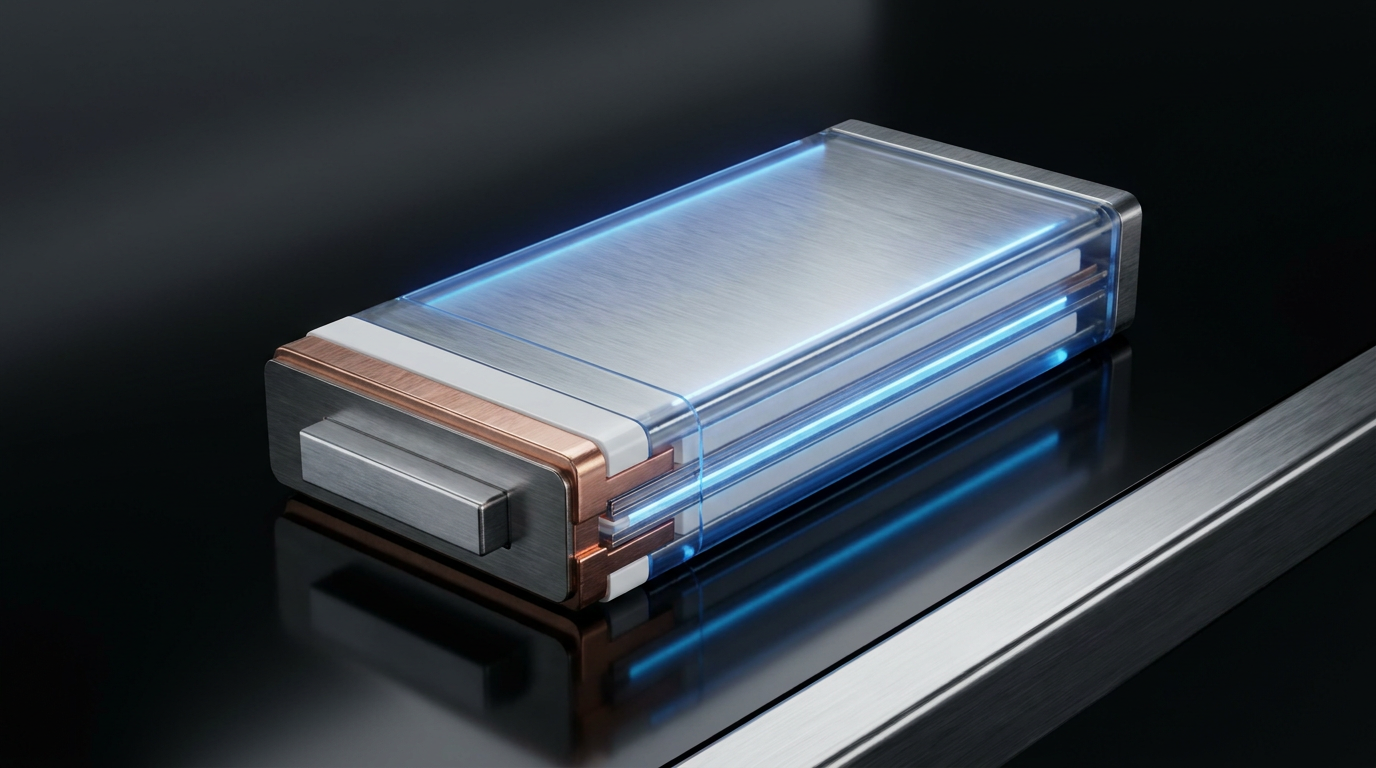
Solid-state batteries fundamentally rewrite this architecture by replacing the flammable liquid with a solid electrolyte—typically engineered from advanced ceramics, polymers, or sulfide-based glass. This single structural shift eliminates the most volatile component of the battery, drastically increasing the system's overall thermal safety margin. Because the solid material is inherently non-flammable, the risk of catastrophic fires is virtually eliminated. In recent rigorous safety testing, prototype solid-state cells have successfully withstood 170-degree Celsius heat exposure and severe physical deformation—including being crushed to half their original size—without catching fire, emitting smoke, or exploding. This enhanced safety profile allows automakers to strip away heavy protective casing, further reducing the vehicle's overall weight.[5]

Beyond the obvious safety benefits, the introduction of a solid electrolyte unlocks a massive, long-sought leap in energy density. In traditional liquid batteries, engineers are forced to use graphite for the anode to maintain stability. However, a solid electrolyte acts as an impenetrable physical barrier, allowing engineers to safely utilize pure lithium-metal anodes. In a liquid system, lithium metal tends to form 'dendrites'—microscopic, needle-like metallic spikes that grow during charging and can eventually pierce the battery's internal separator, causing a catastrophic short circuit. The rigid structure of a solid electrolyte physically suppresses this dendrite growth, safely harnessing the immense energy potential of lithium metal.
By safely utilizing these lithium-metal anodes, next-generation cells can store significantly more energy within the exact same physical footprint. While the absolute best conventional lithium-ion batteries on the market today max out at an energy density of around 250 to 300 watt-hours per kilogram (Wh/kg), the solid-state cells entering pilot production in 2026 are targeting a massive leap to 350 to 500 Wh/kg. This means an automaker can either double the driving range of a vehicle without increasing the size of the battery pack, or maintain the current 300-mile range while cutting the battery's weight and size in half, leading to lighter, more efficient, and better-handling cars.[2][6]
The global race to commercialize this technology has recently split into two distinct geographic and strategic camps. In China, domestic automakers are aggressively pushing for immediate mass-market deployment, unwilling to wait for the technology to mature further in the lab. State-owned Dongfeng Motor recently made headlines by announcing it will begin mass production of a 350 Wh/kg solid-state battery in the second half of 2026. By utilizing an oxide-polymer composite design, the automaker promises that its upcoming fleet of new energy vehicles will be capable of exceeding a staggering 1,000-kilometer (621-mile) driving range on a single charge, effectively putting an end to range anxiety.[2]
The global race to commercialize this technology has recently split into two distinct geographic and strategic camps.
Dongfeng's ambitious timeline is backed by extensive real-world validation. The company's prototype batteries recently underwent grueling cold-weather calibration testing in Mohe, China's northernmost city. Operating in brutal temperatures as low as negative 30 degrees Celsius, the solid-state battery pack retained over 74% of its total charge, proving its resilience in conditions that would cripple a standard EV. Similarly, Greater Bay Technology (GBT), a battery manufacturer backed by the GAC Group, recently rolled its first 'A-sample' all-solid-state cells off the production line. Having successfully passed rigorous needle penetration tests without igniting, GBT is now targeting gigawatt-hour-level mass production for in-vehicle use by the end of the year.[5][6]

Meanwhile, Western companies are taking a more measured, partnership-driven approach focused on perfecting the underlying chemistry before rushing to the assembly line. In California, QuantumScape—a prominent battery startup heavily backed by the Volkswagen Group—celebrated a major milestone in early 2026 by inaugurating its 'Eagle Line' pilot facility in San Jose. This highly automated manufacturing line is specifically designed to produce the company's proprietary anode-free, lithium-metal cells at a scale large enough to support rigorous sampling and testing by global automotive manufacturers. The facility serves as a critical blueprint for how these complex cells will eventually be manufactured at a gigawatt-hour scale.[4]
QuantumScape's leadership has not understated the importance of this transition, describing the launch of the pilot line as their 'Kitty Hawk moment'—the definitive pivot from theoretical research to scalable industrial manufacturing. While passenger electric vehicles remain the primary target, the company is also actively exploring lucrative applications beyond the automotive sector. Because the solid-state design eliminates the need for graphite—a material whose supply chain is heavily concentrated in China—QuantumScape is positioning its technology for defense aerospace applications and autonomous drones, where high energy density, extreme safety, and secure supply chains are absolute prerequisites for adoption.[4][7]
Out on the road, the transition from the laboratory to the asphalt is already well underway. Automotive giant Stellantis and US-based battery developer Factorial Energy have successfully integrated 375 Wh/kg solid-state cells into a Dodge Charger Daytona development vehicle, marking one of the first times the technology has been tested on public roads in North America. During these trials, the advanced cells demonstrated the remarkable ability to fast-charge from 15% to 90% capacity in just 18 minutes. The successful integration required extensive modifications to the vehicle's control systems and pack design, proving that the technology can handle the rigorous, dynamic power demands of a heavy, high-performance passenger vehicle.[1]
Despite these rapid and highly publicized advancements, a fierce debate is currently brewing within the industry over what actually constitutes a true 'solid-state' battery. The world's largest battery manufacturer, China's CATL, recently issued a stark reality check to the market, warning investors and consumers that 100% pure all-solid-state batteries are still several years away from genuine mass commercialization. CATL's leadership cautioned that while the current prototypes are impressive, the industry is conflating early-stage pilot production with the ability to reliably and profitably manufacture millions of units for everyday consumers.[3]
According to CATL's internal projections, the automotive industry will not reach a production threshold of one million true all-solid-state vehicles before the year 2030. The primary bottleneck is not the chemistry itself, but rather the immense complexity of the manufacturing process. Creating a perfect, flawless solid-solid interface between the battery's internal layers requires warm isostatic pressing under an incredible 6,000 atmospheres of pressure. At this intense crushing force, materials with different densities often misalign, leading to high defect rates. Scaling this delicate, high-pressure manufacturing process from a controlled laboratory environment to a high-speed gigafactory assembly line remains one of the greatest engineering challenges of the decade.[3]

Because of these immense engineering and cost hurdles, many of the highly touted 'solid-state' batteries hitting the consumer market in 2026 are actually semi-solid or solid-liquid hybrid architectures. Rather than relying entirely on a rigid ceramic or sulfide barrier, these transitional designs use a composite of solid electrolytes combined with a small amount of liquid or gel. This liquid component helps bridge the microscopic gaps at the interface layer, drastically simplifying the manufacturing process and reducing the need for extreme pressure, while still delivering a significant portion of the safety and energy density benefits promised by pure solid-state technology.[3]
While engineering purists may argue over the terminology, these semi-solid hybrid architectures offer a highly pragmatic and immediately scalable middle ground. Transitioning an existing lithium-ion gigafactory to produce semi-solid cells requires an equipment retrofitting investment of just 10% to 15% of the original line cost. This remarkable backward compatibility allows battery manufacturers to leverage billions of dollars in existing infrastructure rather than building entirely new facilities from scratch. For the consumer, the distinction matters little; these hybrid batteries are already delivering 500-to-600-mile driving ranges today, effectively bridging the gap while pure solid-state technology continues to mature in the background.
Looking ahead, the transition to next-generation batteries will not be an overnight revolution, but rather a calculated, multi-year phase-in. Because early solid-state and semi-solid cells will carry a significant cost premium, their initial deployment will be strictly limited to high-end luxury vehicles, flagship sports cars, and commercial aviation. Toyota, which holds more solid-state battery patents than any other automaker, is currently building a large-scale solid electrolyte pilot plant in partnership with Idemitsu. However, the Japanese giant plans to roll out the technology in carefully controlled, limited batches starting in 2027 or 2028, ensuring the manufacturing process is flawless before attempting mass-market scale.[8]
Ultimately, 2026 will be remembered as the pivotal year the solid-state dam finally broke. Whether through clever semi-solid hybrid architectures that leverage existing factory lines, or through the inauguration of highly automated pilot facilities dedicated to pure lithium-metal chemistry, the automotive industry has definitively crossed the threshold. The technology has moved out of the realm of theoretical chemistry and into the tangible world of industrial engineering. As these advanced cells begin to accumulate real-world mileage, they are setting the stage for the next great leap in electric mobility—one where range anxiety and charging delays are relegated to the history books.
How we got here
2012
Volkswagen makes its initial investment in solid-state battery startup QuantumScape.
June 2023
Toyota announces a manufacturing breakthrough, accelerating its solid-state battery roadmap.
Early 2026
QuantumScape inaugurates its 'Eagle Line' pilot production facility in California.
April 2026
Greater Bay Technology rolls its first A-sample all-solid-state cells off the production line.
Late 2026
Dongfeng Motor plans to begin mass production of vehicles equipped with 350 Wh/kg solid-state batteries.
2030
Battery giant CATL projects the industry will finally reach true mass commercialization of all-solid-state technology.
Viewpoints in depth
Aggressive Adopters
Manufacturers pushing for immediate commercialization using hybrid architectures.
Companies like Dongfeng and Greater Bay Technology are unwilling to wait for perfect all-solid-state chemistry. By utilizing oxide-polymer composites and semi-solid designs, they are bringing 350 Wh/kg batteries to market in 2026. These firms argue that the immediate benefits in safety and energy density justify deploying hybrid solutions now, rather than waiting for the 2030 timeline projected by industry skeptics.
Cautious Realists
Industry giants warning that true solid-state mass production is still years away.
The world's largest battery maker, CATL, maintains that the industry is conflating semi-solid prototypes with true all-solid-state commercialization. They point to the immense engineering challenges of manufacturing at scale—such as the 6,000 atmospheres of pressure required to bond solid interfaces. For these giants, true cost parity and mass-market viability (over one million vehicles) will not arrive until at least 2030, keeping traditional liquid lithium-ion as the dominant platform for the near future.
Next-Gen Startups
Western firms focusing on proprietary pilot lines and licensing.
Startups like QuantumScape and Factorial Energy are taking a methodical, partnership-driven approach. Rather than rushing hybrid batteries to market, they are building highly automated pilot lines—like QuantumScape's 'Eagle Line'—to perfect anode-free, lithium-metal cells. Their strategy relies on proving the technology at a smaller scale, securing OEM partnerships with giants like Volkswagen and Stellantis, and eventually licensing the manufacturing blueprint for gigawatt-hour production.
What we don't know
- Whether the massive 6,000-atmosphere pressure requirement for solid-solid interfaces can be engineered out of the mass-production process.
- How quickly the cost per kilowatt-hour will drop to match current lithium-ion prices.
- How these first-generation solid-state cells will degrade over a 10-to-15 year real-world lifespan.
Key terms
- Electrolyte
- The medium inside a battery that allows ions to flow between the cathode and anode during charging and discharging.
- Energy Density
- The amount of energy a battery can store relative to its weight, typically measured in watt-hours per kilogram (Wh/kg).
- Dendrites
- Microscopic, needle-like metallic structures that can grow inside a battery, potentially piercing the separator and causing a short circuit.
- Semi-Solid Battery
- A transitional battery design that uses a mostly solid electrolyte but retains a small amount of liquid or gel to improve performance and manufacturability.
- Thermal Runaway
- A dangerous chain reaction inside a battery where overheating causes further temperature increases, potentially leading to a fire.
Frequently asked
What is a solid-state battery?
A solid-state battery replaces the flammable liquid electrolyte found in conventional lithium-ion batteries with a solid material, such as ceramics or polymers. This makes the battery safer and allows it to store more energy.
Will solid-state batteries make EVs cheaper?
Not initially. Early solid-state and semi-solid batteries will be expensive to manufacture and will likely debut in premium luxury vehicles. Cost parity with traditional batteries is not expected until production scales up closer to 2030.
Are the batteries coming in 2026 truly solid-state?
Many of the batteries launching in 2026 are actually 'semi-solid' or hybrid designs. They use a mostly solid structure but still contain a small amount of liquid or gel to help conduct ions and ease manufacturing.
How fast can a solid-state battery charge?
Recent real-world tests of solid-state cells have demonstrated the ability to charge from 15% to 90% in just 18 minutes, significantly faster than most current EV batteries.
Sources
Source coverage
8 outlets
3 viewpoints surfaced






[1]ElectrekAggressive Adopters
Factorial, Stellantis test solid-state EV batteries in real life
Read on Electrek →[2]CarsGuideAggressive Adopters
Dongfeng to mass-produce solid-state batteries in H2 2026
Read on CarsGuide →[3]ArenaEVCautious Realists
CATL calls for solid-state EV battery reality check
Read on ArenaEV →[4]InsideEVsNext-Gen Startups
QuantumScape inaugurates Eagle Line pilot for solid-state battery production
Read on InsideEVs →[5]CarNewsChinaAggressive Adopters
Dongfeng Motor's solid-state batteries are scheduled for mass production
Read on CarNewsChina →China ramps up solid-state EV battery production with GBT breakthrough
Read on Electrek →[7]BatteryTechNext-Gen Startups
QuantumScape CEO details commercialization blueprint
Read on BatteryTech →Toyota partner breaks ground on solid electrolytes plant for all-solid-state EV batteries
Read on Electrek →
Every angle. Every day.
Get technology stories with full source coverage and perspective breakdowns delivered to your inbox.