
Smart Ring vs. Smartwatch: How to Choose the Right Wearable for Your Health
As smart rings mature into powerful health trackers, consumers face a choice between the active coaching of a smartwatch and the passive, continuous monitoring of a ring.
By Factlen Editorial Team
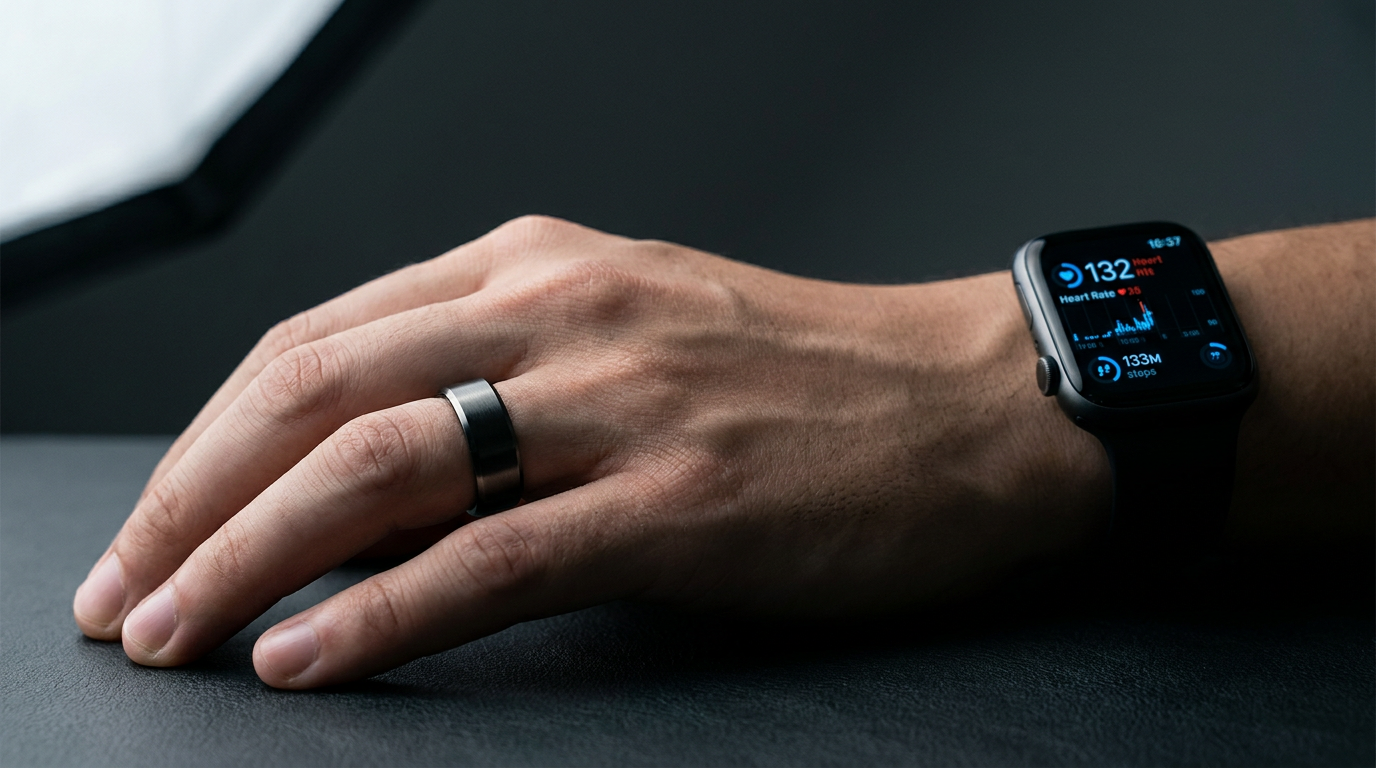
- Passive Health Optimizers
- Users who prioritize sleep tracking, recovery metrics, and continuous baseline data without digital distractions.
- Active Performance Trackers
- Athletes and fitness enthusiasts who rely on real-time data, GPS, and screen-based feedback during workouts.
- Dual-Device Wearers
- Enthusiasts who wear both devices simultaneously to capture both active workout metrics and passive recovery data.
What's not represented
- · Traditional watch collectors who use smart rings to track health without giving up mechanical timepieces.
- · Medical professionals evaluating the clinical validity of consumer wearable data.
Why this matters
Choosing the wrong wearable often leads to device abandonment, wasting hundreds of dollars. Understanding the fundamental trade-offs between active and passive tracking ensures you buy a tool that actually fits your daily habits and long-term health goals.
Key points
- Smartwatches excel at active fitness tracking, offering real-time data, GPS, and screen-based interaction.
- Smart rings dominate passive health tracking, providing superior comfort for sleep and continuous biometric baselines.
- Rings offer 4 to 7 days of battery life, significantly outlasting the 1 to 2 days typical of smartwatches.
- Many smart rings require monthly subscriptions for full data access, altering the long-term cost of ownership.
- Finger-based sensors capture cleaner resting heart rate signals, while wrist sensors are better optimized for movement.
The wearable technology market in 2026 has fractured into two distinct philosophies of health tracking, forcing consumers to choose between the wrist and the finger. For years, the smartwatch was the default answer for anyone looking to quantify their daily activity, offering a miniaturized smartphone strapped to the arm. However, the rapid maturation of smart rings has transformed the landscape, turning what was once a niche accessory into a mainstream medical-grade sensor. This shift has ignited a fierce debate over which form factor actually delivers better long-term health insights. The decision is no longer just about aesthetics; it is a fundamental choice between active, real-time fitness coaching and passive, continuous health monitoring.[5][8]
At the core of this hardware divergence is how each device expects to be used throughout the day. Smartwatches are inherently interactive tools, designed to command attention with glowing screens, haptic alerts, and live data feeds. They thrive in motion, providing instant feedback during a run or a gym session. Smart rings operate on the opposite principle, prioritizing invisibility and friction-free data collection. They lack screens, buttons, and vibration motors, existing solely to quietly harvest biometric data in the background. This fundamental difference in user experience dictates not just how the devices feel, but the quality and type of data they are best equipped to capture.[6][7]
When evaluating the case for the smartwatch, the primary argument centers on real-time visibility and standalone capability. A modern smartwatch is a dynamic dashboard that allows athletes to adjust their pace, monitor their heart rate zones, and track GPS routes without ever breaking stride or pulling out a phone. The evidence supporting this form factor is robust for active users; devices from manufacturers like Garmin and Apple utilize high-resolution sampling rates that record data at one-minute intervals or faster. Furthermore, smartwatches can function independently, allowing users to stream music, make payments, and navigate trails while leaving their primary smartphone at home.[2][7]
However, the argument against the smartwatch focuses heavily on physical intrusion and digital fatigue. Strapping a glowing, vibrating screen to the wrist introduces a constant stream of notifications that can exacerbate screen-time burnout. Physically, the bulk of a smartwatch—complete with silicone or metal bands and a rigid chassis—creates friction during daily tasks and, most notably, during rest. The necessity of charging the device every one to two days also creates inevitable gaps in data collection, often resulting in users abandoning the device on a nightstand and missing crucial overnight recovery metrics.[2][4]
Conversely, the case for the smart ring is built entirely around continuous, passive compliance. Because a ring weighs only a few grams and sits flush against the finger, it achieves a "wear and forget" status that watches struggle to match. The evidence for the ring's superiority in resting metrics is rooted in human anatomy; the blood vessels in the finger provide a stronger, cleaner pulse signal than the wrist, particularly when the body is stationary. This anatomical advantage allows smart rings to capture highly precise Heart Rate Variability (HRV) and overnight blood oxygen levels, making them unparalleled tools for tracking sleep stages and overall nervous system recovery.[1][2]
The argument against the smart ring, however, becomes glaringly apparent the moment a user begins a high-intensity workout. Smart rings are entirely dependent on a paired smartphone to display any actionable data, rendering them useless for live pacing or mid-workout heart rate checks. Furthermore, the very anatomical advantage rings hold during rest becomes a liability during exercise; gripping a barbell, holding bicycle handlebars, or swinging a tennis racket can introduce significant noise into the ring's optical sensors, degrading the accuracy of active heart rate tracking. For users who demand precise, second-by-second workout data, the ring simply cannot compete with a tightly strapped watch.[2][6]
Battery life represents another major operational trade-off between the two categories. The lack of a display allows smart rings to stretch their power reserves significantly, with most models delivering between four and seven days of continuous tracking on a single charge. This endurance directly translates to better data continuity, as users are rarely forced to take the device off. Smartwatches, burdened by bright OLED screens and power-hungry GPS chips, typically require daily or bi-daily charging. This frequent need for power often forces users to choose between tracking their sleep or having enough battery to track their morning commute.[3][4]

Battery life represents another major operational trade-off between the two categories.
The financial calculus of choosing between a ring and a watch also extends far beyond the initial retail price. On paper, the hardware costs appear comparable, with smartwatches generally ranging from $150 to $500, while premium smart rings land between $250 and $400. However, the true cost of ownership diverges sharply when factoring in software ecosystems. Many leading smart ring manufacturers have adopted a subscription model, locking comprehensive health insights and historical data behind a monthly fee that can range from $10 to $20. Over a three-year lifespan, these hidden costs can make a seemingly affordable ring significantly more expensive than a premium smartwatch.[1][3]
In response to subscription fatigue, the 2026 market has seen a surge of hardware-only ring options. Brands like RingConn and Samsung have aggressively positioned their smart rings as subscription-free alternatives, offering full access to biometric data without recurring tolls. Smartwatches have largely avoided the subscription trap for core metrics, though some platforms charge for advanced AI coaching or premium workout libraries. Buyers must weigh whether they are purchasing a piece of hardware or leasing access to their own biological data.[1][4]

Sleep tracking is the arena where the smart ring has definitively claimed victory in consumer preference. A recent industry study highlighted that over 80 percent of users preferred wearing a ring to bed over a watch, citing the elimination of wrist sweat, bulk, and accidental screen illumination. Because sleep analysis relies heavily on consistent, multi-night baselines to detect meaningful trends in temperature and resting heart rate, the comfort of the ring directly results in higher quality, uninterrupted data sets. For individuals whose primary goal is optimizing recovery and managing stress, the ring is the superior diagnostic tool.[1][3]
Yet, for all their prowess in the bedroom, smart rings remain fundamentally limited in the gym. Fitness watches dominate active tracking by pairing optical sensors with accelerometers, gyroscopes, and multi-band GPS to build a comprehensive picture of physical exertion. A smartwatch knows exactly how fast you ran, the elevation you climbed, and the precise route you took. A smart ring, lacking GPS and struggling with grip-based sensor interference, can often only estimate active calorie burn based on general movement. The watch is an active coach; the ring is a passive observer.[2][7]

This stark division of labor has given rise to a growing cohort of dual-wearers—enthusiasts who refuse to compromise and choose to wear both devices simultaneously. These users rely on a rugged smartwatch to guide their marathons and weightlifting sessions, while depending on a smart ring to monitor their overnight recovery and daily stress levels. While this approach provides the most comprehensive data picture possible, it requires a significant financial investment and the willingness to manage two separate hardware ecosystems that may not seamlessly share data.[3][8]
Ultimately, determining which device fits well requires an honest assessment of daily habits. A smartwatch fits exceptionally well when a user is training for a specific athletic event, requires real-time pacing, wants to leave their phone behind during workouts, or relies on wrist-based notifications to manage a busy schedule. It is the definitive choice for the active optimizer who views their wearable as a functional tool for navigating the day and pushing physical limits.[1][7]
Conversely, a smartwatch does not fit well for individuals who suffer from digital distraction, find wristwear uncomfortable while typing or sleeping, or primarily want to understand their baseline health without actively managing a device. For these users, the constant presence of a screen can transform health tracking from a helpful background process into a source of daily anxiety.[2][6]

A smart ring fits perfectly when a user prioritizes sleep architecture, values discreet design that blends with traditional jewelry, and wants continuous health monitoring without the cognitive load of another screen. It is ideal for the passive optimizer who wants to wake up, check a single readiness score on their phone, and go about their day with the device quietly collecting data in the background.[1][7]
However, a smart ring does not fit well when a user demands live feedback during exercise, frequently engages in grip-heavy workouts like weightlifting, or expects their wearable to handle payments, alarms, and communication. In these scenarios, the ring's minimalist design becomes a functional bottleneck, proving that while the finger is an excellent place to measure the body, it is a terrible place to display the results.[2][6]
How we got here
2015
The Apple Watch launches, cementing the wrist as the primary location for mainstream wearable health tracking.
2018
Early smart rings gain traction among biohackers and professional athletes for advanced sleep tracking.
2024
Samsung announces the Galaxy Ring, signaling major tech conglomerates entering the smart ring market.
2026
The wearable market splits evenly between active wrist trackers and passive finger sensors, with subscription-free rings gaining major market share.
Viewpoints in depth
The Case for Active Tracking
Why smartwatches remain the gold standard for athletes and fitness enthusiasts.
For users who treat their workouts as structured training, the smartwatch is non-negotiable. The ability to glance at a screen mid-stride to check heart rate zones, pace, and GPS routing transforms the device from a passive logger into an active coach. Proponents argue that a wearable's true value lies in its ability to influence behavior in real-time, a function that screenless smart rings simply cannot perform.
The Case for Passive Health
Why smart rings are capturing the everyday wellness market.
Advocates for passive tracking argue that the most valuable health data is gathered when we aren't paying attention. By removing the screen, smart rings eliminate the anxiety of constant notifications and the physical discomfort of wearing a watch to bed. This camp believes that health optimization should happen quietly in the background, focusing on long-term trends in sleep architecture and nervous system recovery rather than immediate calorie burn.
The Hybrid Approach
The emerging trend of wearing both devices to cover all bases.
A growing segment of data-obsessed users refuses to choose, opting to wear a smartwatch during the day for connectivity and workout tracking, while relying on a smart ring at night for precise sleep metrics. While this dual-device strategy provides the most comprehensive biological dashboard possible, it requires navigating fragmented data ecosystems and paying a premium for overlapping hardware.
What we don't know
- Whether major smartwatch manufacturers will eventually acquire smart ring startups to unify their health ecosystems.
- How long the subscription-based business model for smart rings can survive against subscription-free competitors.
Key terms
- PPG Sensor (Photoplethysmography)
- An optical technology that uses light to measure changes in blood volume, commonly used in wearables to track heart rate.
- HRV (Heart Rate Variability)
- The variation in time between each heartbeat, used as a key metric to assess nervous system recovery and daily stress levels.
- SpO2
- An estimate of the oxygen saturation level in your blood, often monitored overnight to detect breathing irregularities.
- Form Factor
- The physical size, shape, and design of a hardware device, such as a wrist-worn watch versus a finger-worn ring.
Frequently asked
Can a smart ring track my running pace and distance?
Most smart rings lack built-in GPS and rely on a paired smartphone to estimate distance, making them less accurate for running than a dedicated smartwatch.
Do all smart rings require a monthly subscription?
No. While some brands charge a monthly fee for full data access, newer models from companies like RingConn and Samsung offer subscription-free health tracking.
Which device is more accurate for heart rate?
Smart rings are generally more accurate for resting heart rate and sleep due to stable finger placement, while smartwatches are better at tracking active heart rate during movement.
Can I wear a smart ring while lifting weights?
You can, but gripping heavy barbells can scratch the ring and temporarily disrupt the optical sensors, leading to gaps in active heart rate data.
Sources
Source coverage
8 outlets
3 viewpoints surfaced







[1]RingConnPassive Health Optimizers
Smart ring vs smartwatch comparison 2026
Read on RingConn →[2]SmartletActive Performance Trackers
The role of screens: visibility and daily data access
Read on Smartlet →[3]Nova RingPassive Health Optimizers
From Oura Ring to Apple Watch: The Ultimate Smart Wearable Comparison for 2025
Read on Nova Ring →[4]SamsungDual-Device Wearers
Smart ring vs smartwatch: what are the key differences?
Read on Samsung →[5]BackerRockDual-Device Wearers
Smart Ring vs Smartwatch: Which Wearable Category Is Winning
Read on BackerRock →[6]RunmefitActive Performance Trackers
Smart ring vs smartwatch pros cons fitness tracking
Read on Runmefit →[7]Sensio AIPassive Health Optimizers
Smart watches are feature-rich all-rounders
Read on Sensio AI →[8]Factlen Editorial TeamDual-Device Wearers
Synthesis by Factlen editorial team
Read on Factlen Editorial Team →


Every angle. Every day.
Get shopping stories with full source coverage and perspective breakdowns delivered to your inbox.