
S&P 500 Q3 Earnings Growth Forecast Raised to 28.7%, Marking Third Straight Quarter Above 25%
Analysts have revised third-quarter earnings estimates upward for the S&P 500, driven by the technology and energy sectors. If realized, the 28.7% growth rate would mark the index's eighth consecutive quarter of double-digit expansion, allowing equity markets to absorb the pressure of higher interest rates.

- Fundamental Bulls
- Argue that the sheer velocity of corporate profit growth renders traditional interest rate anxieties obsolete.
- Macro Skeptics
- Maintain that the delayed effects of monetary tightening will eventually compress multiples and consumer spending.
- Fixed Income Allocators
- Emphasize that the risk-free rate approaching 5% offers a compelling alternative to equity risk.
Perspectives this story doesn't cover
- Small-Cap Companies
- Retail Consumers
Why it matters
Corporate earnings are the primary engine keeping equity markets near record highs despite the gravitational pull of 5% Treasury yields. For investors, this sustained profit growth provides a buffer against macroeconomic shocks, indicating that companies are successfully monetizing new technologies and passing on costs rather than absorbing them.
The mathematics of equity valuation carry a strict binding constraint: when the risk-free rate of return rises, the present value of future corporate profits falls. For the stock market to hold its ground while 10-year Treasury yields flirt with 5%, the underlying earnings being discounted must grow fast enough to outrun the macroeconomic drag. According to the latest data, that condition is currently holding with room to spare.[5]
Analysts have revised their third-quarter earnings estimates upward for the S&P 500, projecting a year-over-year growth rate of 28.7%. "If 28.7% is the actual growth rate for the quarter, it will mark the third-straight quarter of earnings growth above 25% for the index," wrote John Butters, Senior Earnings Analyst at FactSet. If realized, it would also represent the eighth straight quarter of double-digit growth for the benchmark.[1]
The upward trajectory defies the usual seasonal pattern. In a typical quarter, analysts reduce earnings estimates by roughly 2.1% during the first two months. Instead, the aggregate bottom-up earnings per share estimate for the third quarter increased by 1.2%, rising to $89.69.[1]
The information technology sector remains the primary engine of this expansion, driven by unprecedented demand for computing infrastructure and the ongoing monetization of artificial intelligence. However, the momentum is broadening. Revisions have turned positive across eight of the 16 Zacks sectors, including transportation, finance, and industrials, distributing the index's momentum beyond its mega-cap technology core.[1][2]
Energy companies have also contributed heavily to the upward revisions, buoyed by oil prices holding above $100 a barrel amid Middle East supply disruptions. This dual leadership from technology and energy has pushed the S&P 500's estimated net profit margin to 14.9% for the quarter, well above the five-year average of 12.4%.[1][2]
Energy companies have also contributed heavily to the upward revisions, buoyed by oil prices holding above $100 a barrel amid Middle East supply disruptions.
The resilience of corporate balance sheets is forcing a recalibration of year-end targets. Bull-case scenarios now project the S&P 500 could reach 8,400 by the end of 2026, provided that the current pace of earnings beats continues through the October reporting season. Conversely, bear-case models, which target 6,700, hinge on the possibility that consumer spending finally buckles under the weight of sustained inflation, compressing those record profit margins.[3][4]
For now, executives appear less concerned about pricing pressures than they were a year ago. Mentions of "inflation" on corporate earnings calls have declined, dropping 6% quarter-over-quarter and falling well below the five-year average.[1]
The fixed-income landscape provides the necessary context for this equity resilience. With interest rates remaining higher for longer, bonds offer competitive yields that typically draw capital away from stocks. As CNBC notes, higher rates are "typically viewed as dicey for stocks but also mean you can earn more on your fixed income investments." To prevent a mass rotation into bonds, equities must offer the outsized growth that analysts are currently tracking.[1][2][5]
The ultimate test arrives in mid-October when the third-quarter reporting season officially begins. With 72 S&P 500 companies having already issued positive forward guidance—significantly above the five-year average of 43—the market has built a substantial cushion. As long as those profits materialize, equities maintain the structural support required to absorb a higher discount rate.[1][4]
What to know
- Analysts project S&P 500 earnings will grow 28.7% in the third quarter, marking the third consecutive quarter above 25%.
- The upward revisions defy historical trends, as estimates typically fall by 2.1% during the first two months of a quarter.
- Technology and energy sectors are driving the bulk of the profit expansion, though growth is broadening across other industries.
- Corporate mentions of inflation on earnings calls have dropped below the five-year average.
- The sustained earnings momentum is allowing equity markets to absorb the pressure of higher interest rates.
Where opinion splits
Fundamental Bulls
Argue that the sheer velocity of corporate profit growth renders traditional interest rate anxieties obsolete.
This camp points to the broadening of earnings strength beyond the technology sector and record profit margins as evidence that large-cap companies possess the pricing power to thrive in a higher-rate environment. They view the upward revisions to third-quarter estimates as proof that the S&P 500 has decoupled from the macroeconomic drag that typically accompanies 5% Treasury yields.
Macro Skeptics
Maintain that the delayed effects of monetary tightening will eventually compress multiples.
Skeptics warn that current valuations leave no room for error, and that any deceleration in AI monetization or consumer spending will expose the market to a sharp correction toward the 6,700 level. They argue that profit margins cannot expand indefinitely while the underlying consumer base absorbs both inflation and higher borrowing costs.
Fixed Income Allocators
Emphasize that while equities are performing well, the risk-free rate offers a compelling alternative.
This perspective argues that investors no longer need to chase equity risk to achieve substantial returns. With bonds offering competitive yields, portfolio construction is fundamentally altering. For equities to justify their inherent risk premium, companies must continue delivering the exact kind of outsized earnings growth currently projected for the third quarter.
Sources
Source coverage
5 outlets
3 viewpoints surfaced





- [1]FactSetFundamental Bulls
FactSet Earnings Insight
Read on FactSet → - [2]Zacks Investment ResearchFundamental Bulls
S&P 500 Q3 Earnings Preview: Earnings and Revenue Growth Expected to Surge
Read on Zacks Investment Research → - [3]The Traders SpreadMacro Skeptics
S&P 500 Forecast: 8,400 Bull Case vs 6,700 Bear Case to Year-End
Read on The Traders Spread → - [4]TalkMarketsMacro Skeptics
Looking Ahead To The Q3 Earnings Season: What To Expect
Read on TalkMarkets → - [5]CNBCFixed Income Allocators
What to expect from stocks and bonds if interest rates remain higher for longer, according to investing pros
Read on CNBC →
Comments

More in Business
See all →Consumer Psychology
The S-O-R Model: How Environmental Stimuli and Internal States Drive Consumer Choice
11 sources

Solar Supply Chain
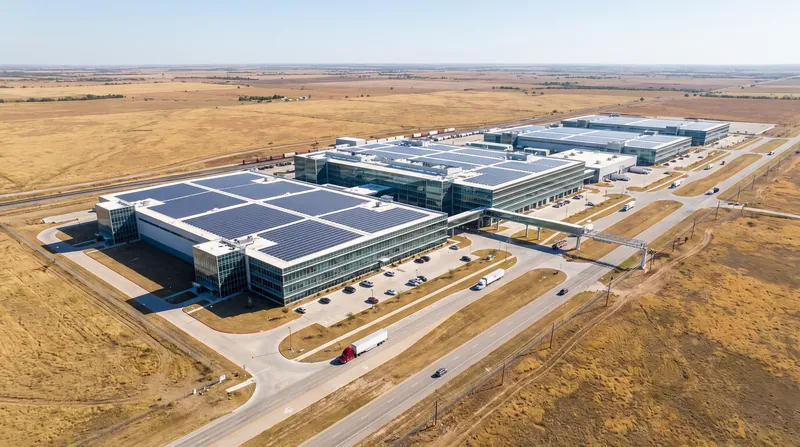
Tesla Files Plans for $10.1 Billion Vertically Integrated Solar Plant in Texas
6 sources
Labor Relations
Micron Taiwan Union Rejects Profit-Sharing Offer, Threatens Strike Over AI Revenue Distribution
5 sources

M&A Law
The Material Adverse Effect Standard: How a Change Must Substantially Impair Earning Power to Terminate an M&A Deal
6 sources

Every angle. Every day.
Get Business stories with full source coverage and perspective breakdowns delivered to your inbox.