
Porsche Scales Back EV Targets and Divests Bugatti Rimac Stake Amid Market Recalibration
Facing a cooling Chinese market and $700 million in U.S. tariff costs, Porsche is extending the life of its combustion and hybrid models while shedding non-core assets to fund a major strategic restructuring.

Share this story
Porsche, once heralded as the poster child for the luxury automotive industry's electric transition, is executing a massive strategic pivot in 2026. Facing a perfect storm of macroeconomic headwinds, shifting consumer preferences, and geopolitical trade barriers, the Stuttgart-based automaker is fundamentally rewriting its playbook. The company has officially scaled back its ambitious target of having electric vehicles make up 80 percent of its sales by 2030.
Simultaneously, Porsche is shedding high-profile non-core assets, announcing the full divestment of its stakes in the Bugatti Rimac joint venture and the broader Rimac Group. The restructuring marks a sobering reality check for a brand that enjoyed a seemingly invincible run following its blockbuster 2022 initial public offering, signaling that even the most profitable legacy automakers must adapt to the volatile realities of the current market.
The catalyst for this sweeping strategic reversal was a severe financial reckoning in early 2026. Porsche's stock endured a historic slump, tumbling 7 percent in a single trading session and wiping billions of euros off its market capitalization. The sell-off was triggered by a wave of analyst downgrades, most notably from Barclays, which shifted its rating on the automaker to "Underweight" and slashed its price target to €40.00.
Financial experts warned that the market's valuation of the company—trading at over 20 times its 2026 earnings estimates—was fundamentally misaligned with its realistic growth potential. Analysts concluded that Porsche was in the middle of a major restructuring that would heavily impact its bottom line, forcing management to issue a highly conservative outlook for the fiscal year.[3]
At the heart of Porsche's financial vulnerability is a critical "product gap" created by an overly aggressive electrification timeline. The company had originally planned to phase out the internal combustion engine versions of its popular Macan SUV and 718 sports car series, replacing them entirely with all-electric successors.
However, as global EV adoption plateaued and consumer demand for flexible powertrain options surged, Porsche found itself caught off guard. By removing combustion-engine options from its best-selling lines, the automaker inadvertently ceded market share to competitors who maintained a mix of gas, hybrid, and electric vehicles. Reversing this product gap will take time, leaving Porsche with a volume vacuum in the critical transition year of 2026.[3]
Compounding the product strategy misstep is the collapse of the luxury vehicle market in China, historically one of Porsche's most vital profit engines. Last year, the automaker's deliveries in China plummeted by 26 percent. The decline is driven by a combination of a broader economic slowdown, the introduction of a new luxury tax, and intense price competition from domestic Chinese automakers.
Brands like BYD and NIO have dominated the premium EV space with aggressive pricing and hyper-localized software features, leaving European imports struggling to compete on value. Former CEO Oliver Blume recently acknowledged that the brand misjudged the pace and nature of EV adoption in the region, a miscalculation that has severely dented Porsche's global margins.
Beyond shifting consumer demand, Porsche is uniquely exposed to the escalating geopolitical friction surrounding the automotive trade. Because the company manufactures all of its vehicles in Germany, it relies heavily on frictionless international export markets. That reliance became a massive liability in 2025, when the automaker incurred an estimated $700 million in costs tied directly to U.S. import tariffs.
These levies, combined with another 700 million euros in one-off costs related to battery activities and supply chain realignments, dragged Porsche's operating margin down from a robust 14.4 percent to a mere 1.1 percent. The sheer weight of these cross-border tariffs has forced the company to fundamentally rethink its capital allocation.[2]
In response to these compounding pressures, Porsche is officially abandoning its strict electrification mandates in favor of a "flexibility" model. Under the leadership of CEO Michael Leiters, who took the helm at the beginning of 2026 to guide the turnaround, the company is investing heavily in extending the life of its internal combustion and plug-in hybrid platforms.
Models like the Panamera and the highly profitable Cayenne SUV will now see their combustion and hybrid variants extended well into the 2030s. This dual-track approach aims to capture consumers who are hesitant to fully commit to electric vehicles due to range anxiety, charging infrastructure gaps, or high upfront costs.[2]
The strategic pivot extends to Porsche's future product roadmap as well. A highly anticipated flagship SUV, internally codenamed "K1" and positioned above the Cayenne to rival ultra-luxury models like the Ferrari Purosangue, will no longer debut as an EV-only vehicle. Instead, Porsche confirmed that the new flagship will launch with both combustion and hybrid drivetrains.
While the company maintains that it possesses the technical capacity to deliver an 80 percent EV mix by 2030 if the market demands it, management has made it clear that production will now be strictly dictated by consumer appetite rather than arbitrary corporate milestones.[2]
To fund this costly dual-track manufacturing strategy and right-size its operations, Porsche is aggressively shedding non-core assets. The most dramatic move is the full divestment of its 45 percent minority stake in the Bugatti Rimac joint venture, as well as its 20.6 percent equity stake in the broader Rimac Group.
The stakes are being acquired by a consortium led by the New York-based investment firm HOF Capital, with the Abu Dhabi-based BlueFive Capital acting as the largest single investor. The sale marks the definitive end of a landmark 2021 partnership that was originally touted as the ultimate marriage of Bugatti's hypercar heritage and Rimac's cutting-edge electric mobility expertise.[1]
The divestment represents a significant unwinding of the Volkswagen Group's historical influence over the Bugatti brand, which it acquired in 1998. Following the completion of the transaction, which is expected to close before the end of 2026 subject to regulatory clearances, the Croatia-based Rimac Group will take full control of Bugatti Rimac.
Mate Rimac, the founder of Rimac and CEO of the joint venture, will form a new strategic partnership with HOF Capital and BlueFive Capital to drive the brand's long-term growth. While the financial terms of the deal remain confidential, the infusion of capital from the U.S. and Gulf-based consortium ensures that Bugatti's development of next-generation hypercars, like the hybrid V16 Tourbillon, will continue uninterrupted.[1]
For Porsche, the sale is a pragmatic necessity. "With the sale of our stake, we demonstrate that we will focus Porsche on the core business," Leiters stated in the official announcement. Maintaining a stake in a low-volume, ultra-niche hypercar manufacturer no longer aligned with Porsche's urgent need to streamline operations and defend its core premium segments.
By liquidating its position in Rimac, Porsche frees up critical capital that can be redirected toward the high "flexibility costs" of running parallel ICE and EV assembly lines, as well as absorbing the ongoing impact of international tariffs.[1]
Porsche's recalibration is not an isolated incident; it reflects a broader reckoning across the entire global automotive industry. Over the past year, major manufacturers including Ford, General Motors, Mercedes-Benz, and Volvo have all walked back their most aggressive EV timelines.
The industry is collectively discovering that the transition curve is far steeper and more complex than the optimistic projections of the early 2020s suggested. High interest rates, the withdrawal of government EV subsidies in key European markets, and the sheer cost of battery development have forced legacy automakers to rely on the reliable cash flow generated by their traditional combustion and hybrid portfolios.[2]
Ultimately, Porsche's 2026 restructuring is a testament to the enduring power of market realities over corporate ambition. By acknowledging the product gap, absorbing the painful tariff hits, and divesting from visionary but non-core ventures like Bugatti Rimac, the automaker is attempting to build a more resilient, demand-driven business model.
Ultimately, Porsche's 2026 restructuring is a testament to the enduring power of market realities over corporate ambition.
The road ahead remains challenging, with Chinese competition intensifying and geopolitical trade barriers showing no signs of easing. However, by prioritizing powertrain flexibility and core brand strength, Porsche is betting that a pragmatic, balanced approach will eventually restore the high-margin invincibility it enjoyed in the immediate aftermath of its IPO.
Key points
- Porsche is officially scaling back its target of achieving 80% EV sales by 2030, pivoting to a flexible strategy that extends the life of combustion and hybrid models.
- The strategic shift follows a historic 7% stock drop triggered by analyst downgrades, a 26% decline in Chinese deliveries, and $700 million in U.S. tariff costs.
- To free up capital and refocus on its core business, Porsche is fully divesting its 45% stake in the Bugatti Rimac joint venture and its 20.6% stake in Rimac Group.
- The stakes are being acquired by a consortium led by U.S.-based HOF Capital and Abu Dhabi-based BlueFive Capital, ending Volkswagen Group's long-standing influence over Bugatti.
What we don’t know
- How the U.S.-led consortium will alter Bugatti's long-term product roadmap now that Porsche is no longer involved.
- Whether Porsche's renewed focus on combustion and hybrid models will be enough to recapture market share lost to aggressively priced domestic EVs in China.
- The exact financial terms of the Bugatti Rimac divestment, which remain confidential between the private parties.
How we got here
2021
Porsche and Rimac Group form the Bugatti Rimac joint venture, aiming to merge hypercar heritage with EV technology.
September 2022
Porsche AG goes public in a blockbuster IPO, boasting high margins and an aggressive 80% EV target for 2030.
2025
Porsche faces a 26% drop in China deliveries and incurs $700 million in U.S. tariff costs, severely compressing profit margins.
January 2026
Porsche stock tumbles 7% following analyst downgrades, prompting the company to officially scale back its EV targets.
April 2026
Porsche announces the full divestment of its stakes in Bugatti Rimac and Rimac Group to a U.S.-led consortium.
- Financial & Market Analysts
- Focuses on margin compression, capital allocation, and the necessity of restructuring to protect shareholder value.
- Automotive Strategy Observers
- Emphasizes strategic flexibility, core business focus, and adapting to macroeconomic headwinds.
- Corporate Leadership & Dealmakers
- Highlights the pragmatic unwinding of non-core assets to fund the transition and defend the core brand.
Perspectives this story doesn't cover
- Chinese EV Manufacturers
- European Automotive Union Workers
Sources
Source coverage
3 outlets
3 viewpoints surfaced



- [1]ReutersCorporate Leadership & Dealmakers
Porsche agrees to sell stakes in sportscar makers Bugatti and Rimac
Read on Reuters → - [2]Business TodayAutomotive Strategy Observers
Porsche Scales Back EV Push Amid China Slowdown, US Tariffs
Read on Business Today → - [3]Financial ContentFinancial & Market Analysts
Porsche AG (XETRA: P911) Tumbles 7% Following Barclays Downgrade
Read on Financial Content →
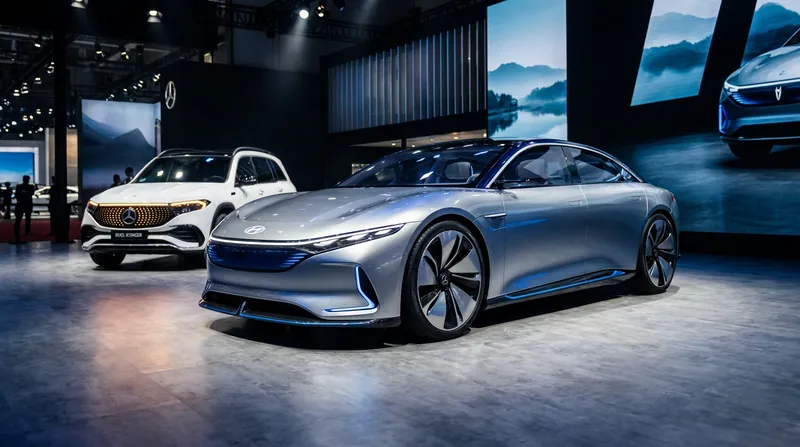
More in Automotive & Transportation
See all →Lamborghini Strategy
Lamborghini Posts Record Profit, Completes Hybrid Lineup, and Confirms Lanzador GT as PHEV
4 sources
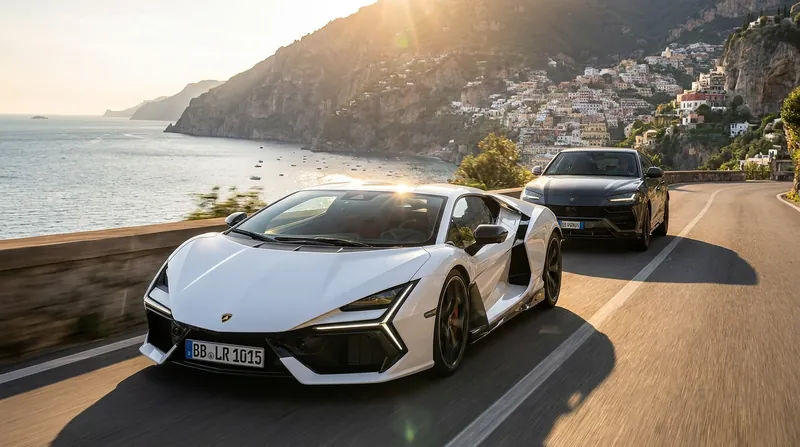
Luxury Auto
Rolls-Royce Scraps 2030 All-Electric Deadline as V12 Demand Surges and Spectre EV Sales Drop 47%
4 sources
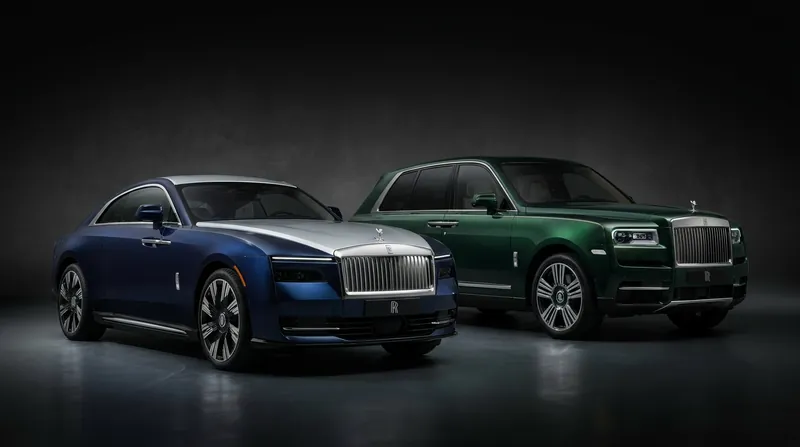
EV Architecture
Range Rover Unveils the GT: Inside the Brand's First All-Electric Grand Tourer
4 sources
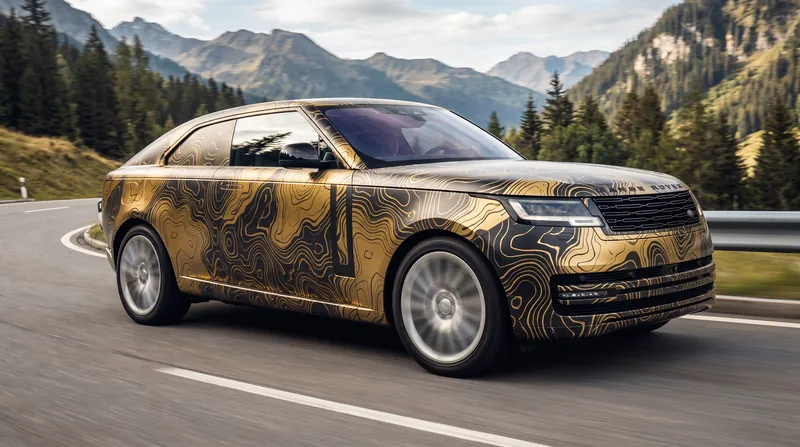
Flagship Refresh
Mercedes-Benz S-Class Facelift Unveils 'Superscreen' Cockpit and 70-Mile PHEV Range
3 sources
Comments
Every angle. Every day.
Get Automotive & Transportation stories with full source coverage and perspective breakdowns, free every day.