
Overlooked Masterpiece by Still-Life Pioneer Clara Peeters Discovered in Museum Storage
A 17th-century painting long dismissed as an anonymous copy has been forensically identified as a masterwork by Flemish artist Clara Peeters. The discovery highlights how modern curators are reclaiming the lost legacies of female artists hidden in museum vaults.
By Joao Marques

- Museum Curators
- Emphasize the forensic and material science required to accurately reattribute historical artworks.
- Feminist Art Historians
- Focus on the systemic historical erasure of female artists and the need to audit museum archives.
Common questions
Who was Clara Peeters?
Clara Peeters was a 17th-century Flemish baroque artist born around 1594. She was one of the earliest pioneers of the still-life genre in Northern Europe.
Why was the painting in storage?
The painting was originally attributed to Ambrosius Brueghel, but early 20th-century appraisers doubted the claim and reclassified it as 'anonymous,' leading the museum to place it in storage.
How did they prove it was by Peeters without a signature?
Curators matched the wooden panel to a supplier Peeters used, identified her signature compositional elements like a specific gilded tazza, and noted that woodworm had destroyed the exact spot where she normally signed.
Where can the public see the painting?
The painting will be displayed at the National Museum of Norway in Oslo as part of the 'Woman Painter' exhibition opening in October 2026.
The short answer
- A 17th-century still life in the National Museum of Norway's storage has been identified as a masterpiece by Flemish pioneer Clara Peeters.
- The painting was previously misattributed to Ambrosius Brueghel and later dismissed as the work of an 'anonymous' artist.
- Curator Cynthia Osiecki used panel supplier records and compositional fingerprints to confirm Peeters as the creator.
- Woodworm damage along the bottom edge of the panel had destroyed the area where Peeters typically signed her works.
- The reclaimed painting will debut as a centerpiece in the museum's upcoming 'Woman Painter' exhibition in October 2026.
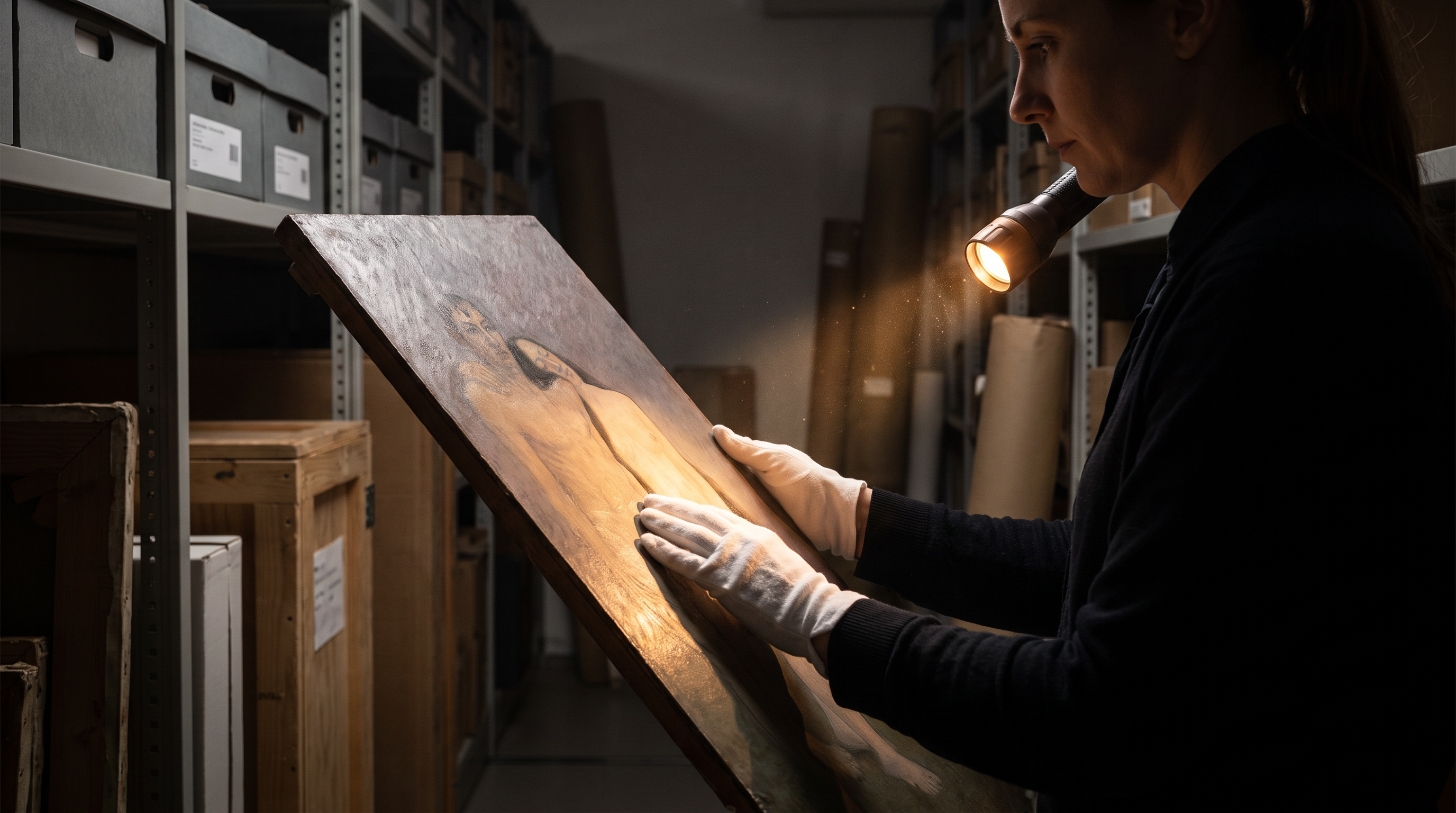
In the climate-controlled, dimly lit storage vaults of the National Museum of Norway in Oslo, a 17th-century painting sat in quiet obscurity. Covered in layers of yellowed varnish and partially chewed by historical woodworm, the wooden panel depicted a moody spread: nine freshly dead birds, scattered hazelnuts, apricots, and a single, hyper-realistic fly resting on a bunch of grapes. For decades, the museum's catalog had shrugged its institutional shoulders, labeling the masterful work simply as "anonymous."
But anonymity in the art world is rarely a neutral state—as Virginia Woolf famously noted, "anonymous" was often a woman. That exact thought crossed the mind of Cynthia Osiecki, a curator at the museum, when she chanced upon the dusty panel in 2022. Osiecki had been deeply immersed in the work of Clara Peeters, a pioneering Flemish baroque artist born in Antwerp around 1594 who practically invented the Northern European still-life genre.[1]
The Oslo painting, officially titled 'Still Life with Small Game and Grapes on a Gilded Tazza', hadn't always been nameless. It was once confidently attributed to Ambrosius Brueghel, a member of the famous Antwerp painting dynasty. However, early 20th-century appraisers rightly doubted the Brueghel connection. Unable to identify the true creator, they stripped the attribution entirely and relegated the masterpiece to the storage racks, where it slept for nearly a century.[2]
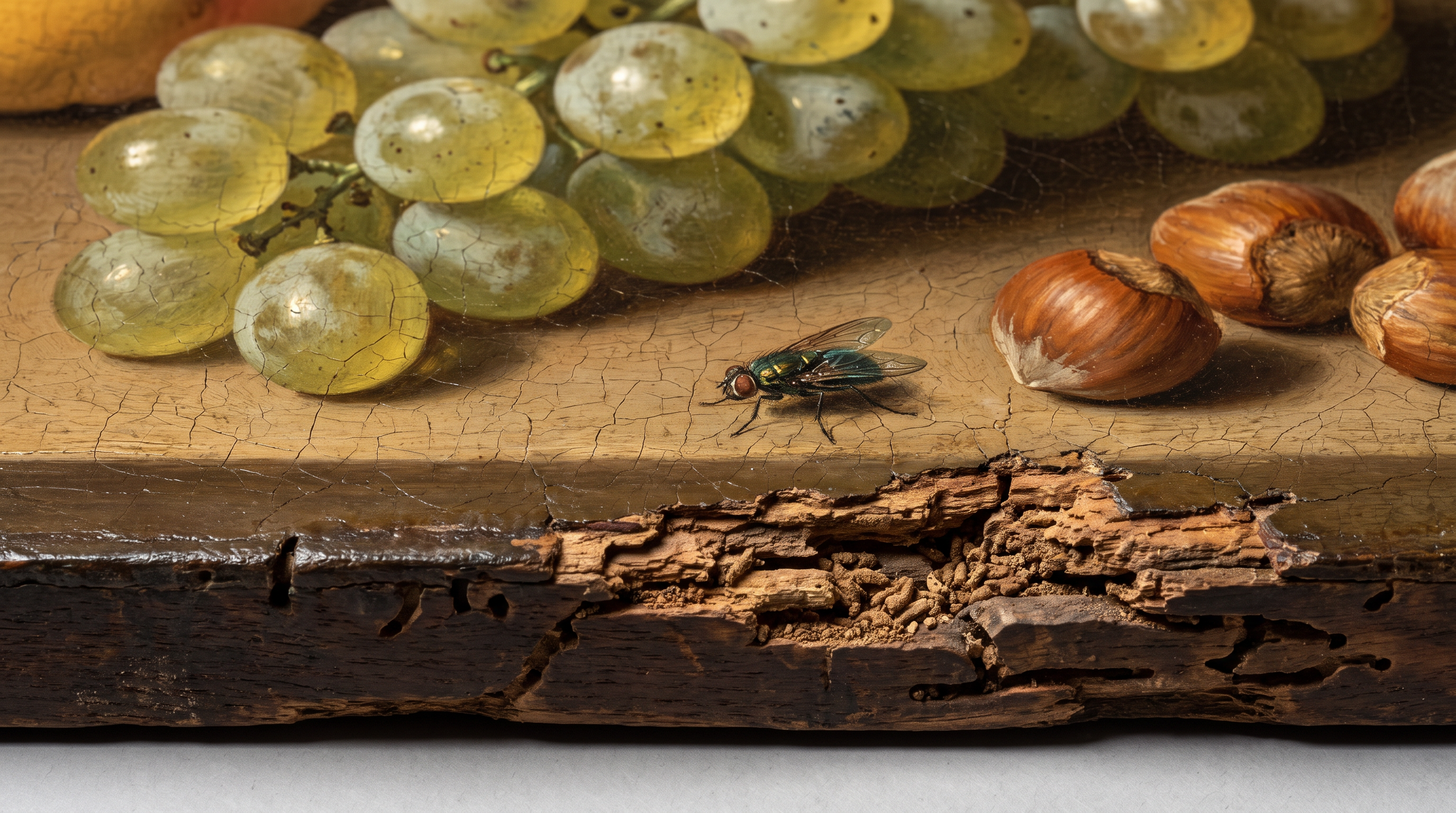
Osiecki's forensic re-evaluation began not with the paint, but with the wood beneath it. She analyzed the specific oak panel and discovered it originated from a lumber supplier that Peeters frequently used for her works. It was the first breadcrumb in a trail that would rewrite the painting's history.[3]
Osiecki's forensic re-evaluation began not with the paint, but with the wood beneath it.
The visual evidence quickly mounted. Osiecki cross-referenced the Oslo painting with confirmed Peeters works currently hanging in heavyweights like the Prado in Madrid and the Metropolitan Museum of Art in New York. She noticed the exact same gilded tazza—a saucer-like dish elevated on a pedestal—appearing across multiple paintings. The precise, almost mathematical arrangement of the hazelnuts and the delicate rendering of the birds' plumage matched Peeters' distinct stylistic fingerprints perfectly.[2]
Yet, the definitive proof—a signature—was maddeningly absent. Peeters was famous for signing her works, often hiding tiny, brilliant self-portraits in the curved reflections of pewter jugs or glass goblets. The Oslo panel lacked a signature, but Osiecki found a compelling, if frustrating, reason: woodworm had devoured the bottom edge of the panel. It was precisely the spot where Peeters habitually signed her name.[3]

The discovery highlights a systemic issue in classical art history. The misattribution of female masters' work to their male contemporaries is a well-documented phenomenon. Because the historical art market valued male artists more highly, dealers frequently forged signatures or reassigned women's masterpieces to men to inflate their price. When the male attribution fell apart, the works were often deemed "anonymous" rather than credited to a woman, simply because the establishment assumed women couldn't produce such complex compositions.[1][3]
Peeters' still lifes were never merely decorative; they were profound, quiet meditations on the transience of life. The juxtaposition of freshly killed game with ripe fruit and a hovering fly served as a classic memento mori, reminding 17th-century viewers of the brevity of their own existence.[2]
Now officially reattributed, the painting is finally leaving the vault. It is set to be a star exhibit in "Woman Painter," a major exhibition opening at the National Museum of Norway in October 2026. The show will highlight female artists who worked across Northern Europe and Italy between 1550 and 1650. By reclaiming this single panel from the dark, the museum isn't just correcting a clerical error—it is restoring a vital, long-silenced voice to the canon of the baroque.[1]
Why it matters
This discovery forces a re-evaluation of museum archives worldwide, proving that many 'anonymous' masterpieces were actually painted by pioneering women whose legacies were erased by historical market biases. It highlights how modern forensic curation is actively correcting the male-dominated art canon.
Competing readings
Museum Curators
Focusing on the forensic and material evidence required to correct historical records.
For institutional curators, reattributing a work is a rigorous forensic process that goes far beyond stylistic resemblance. It requires material science—such as analyzing the specific oak panels and identifying the lumber suppliers used by 17th-century Antwerp guilds. Curators argue that museums hold thousands of 'anonymous' works in storage, and unlocking their true origins requires dedicated funding for technical analysis, infrared reflectography, and provenance research.
Feminist Art Historians
Viewing the discovery as part of a broader necessary correction of the male-dominated art canon.
Art historians specializing in gender point out that Clara Peeters' story is frustratingly common. Because the art market historically valued male artists more highly, dealers often forged signatures or reassigned women's masterpieces to their male contemporaries—in this case, Ambrosius Brueghel. This camp argues that the 'anonymous' label in museum archives frequently masks the systemic erasure of female masters, and that institutions must actively audit their storage vaults to reclaim these lost legacies.
The sequence
Circa 1620
Clara Peeters paints 'Still Life with Small Game and Grapes on a Gilded Tazza' on an oak panel.
Early 20th Century
The painting's attribution to Ambrosius Brueghel is rejected, and it is reclassified as 'anonymous' and placed in storage.
2022
Curator Cynthia Osiecki rediscovers the painting in the National Museum of Norway's storage vault and begins forensic analysis.
August 2026
The museum officially announces the reattribution of the masterpiece to Clara Peeters.
October 2026
The painting will debut as a centerpiece in the 'Woman Painter' exhibition in Oslo.
Jargon, explained
- Tazza
- A shallow, saucer-like dish mounted on a stem and foot, often used in Renaissance and Baroque still-life paintings to display fruit or sweets.
- Memento Mori
- An artistic symbolic trope, often featuring skulls, decaying fruit, or dead animals, designed to remind the viewer of their mortality and the brevity of life.
- Provenance
- The documented history of an artwork's ownership, used as a guide to authenticity and attribution.
- Panel Painting
- A painting made on a flat panel of wood, which was the standard support for Northern European artists before canvas became widely popular.
What’s still unclear
- It remains unclear exactly when and by whom the painting was originally misattributed to Ambrosius Brueghel before entering the museum's collection.
- Curators do not know how many other works by Clara Peeters might still be languishing in European museum storage vaults under 'anonymous' labels.
Sources
Source coverage
3 outlets
2 viewpoints surfaced



[1]Vasari CodexMuseum Curators
Buried for not being Brueghel: overlooked masterpiece by still-life pioneer discovered in storage area
Read on Vasari Codex →[2]Wikipedia
List of paintings by Clara Peeters
Read on Wikipedia →[3]Factlen Editorial TeamFeminist Art Historians
Synthesis by Factlen editorial team
Read on Factlen Editorial Team →
Comments
Every angle. Every day.
Get culture stories with full source coverage and perspective breakdowns delivered to your inbox.