
Lilly Wachowski Launches Anarchists United to Pioneer a Non-Profit Studio Model
The co-creator of 'The Matrix' has introduced a new film production entity wholly owned by a 501(c)(3) foundation, designed to reinvest all profits into grants for emerging artists.
By Joao Marques
- Independent Filmmakers & Advocates
- Focuses on the urgent need for alternative financing structures that protect marginalized voices and intellectual property.
- Philanthropic Arts Funders
- Emphasizes the structural sustainability of using 501(c)(3) models to support the arts without corporate interference.
- Entertainment Industry Analysts
- Evaluates the viability of sub-$10 million budgets and the challenge of competing with equity-backed conglomerates.
Perspectives this story doesn't cover
- Major studio executives defending the traditional equity model
- Private equity investors in the entertainment sector
Thirty years after "Bound" redefined queer cinema, Lilly Wachowski is attempting to hack the Hollywood studio system itself. The co-creator of "The Matrix" franchise has spent decades navigating the friction between radical storytelling and corporate bottom lines. Now, alongside producers Sarah Marie Flores and Lawrence Mattis, she has launched Anarchists United—a new production entity designed to bypass the traditional equity-backed model entirely. The short version? It is a film studio wholly owned by a tax-exempt non-profit foundation, built to ensure that the profits from its successes are legally bound to fund the next generation of marginalized artists rather than enriching a board of shareholders.[1][2]
The timing is hardly coincidental. Hollywood is currently locked in an era of aggressive contraction, defined by mega-mergers like the $28 billion Paramount-Skydance deal and a relentless, algorithm-driven focus on established intellectual property. In this climate, the mid-budget original film has become an endangered species, and emerging creators—particularly queer, trans, and minority artists—are finding the doors to traditional financing firmly shut. Wachowski’s move represents a structural rebellion against this landscape. By removing the mandate for quarterly profit growth, Anarchists United aims to create a sustainable ecosystem where creative risk is treated as a feature rather than a liability.[1][2]
The mechanics of the Anarchists United model are specifically engineered to prevent the kind of corporate drift that typically swallows independent studios. The enterprise is split into two distinct arms. The Anarchists United Foundation, a registered 501(c)(3) nonprofit, serves as the parent organization. It wholly owns the production subsidiary, Anarchists United Studios. This means that if a film produced by the studio becomes a commercial hit, the financial windfall does not go to private owners or private equity backers. Instead, the revenue flows directly back into the foundation to fund its core initiatives, which include $20,000 filmmaker grants, a Writers Discovery Fellowship, and a Directors Prep & Pitch Lab.[3][4]
Wachowski and her co-founders drew inspiration from historical precedents like United Artists and Mary Pickford Studios, which were originally conceived as artist-run cooperatives in the early days of cinema. However, they recognized that those early models ultimately succumbed to the pressures of single-person ownership and market capitalism. "I wanted to head off the idea of single-person ownership so the company could continue without one person making all the decisions," Wachowski explained. By placing ownership in the hands of a foundation board, the founders have effectively installed a permanent moral compass that outlives any individual executive's tenure.[2]
The studio arm is operating with a highly specific mandate: developing and producing elevated, smart genre films with budgets strictly under the $10 million mark. This budget ceiling is crucial to the model's viability. By keeping costs relatively low, the studio avoids the need for massive institutional debt or equity financing, which almost always comes with demands for creative control and broad, four-quadrant commercial appeal. Alongside these sub-$10 million features, the studio is incubating microbudget films, documentaries, and long-form series, providing a pipeline for creators who might otherwise be ignored by the major streamers.[4]
The studio arm is operating with a highly specific mandate: developing and producing elevated, smart genre films with budgets strictly under the $10 million mark.
For emerging writers and directors, the appeal of this model extends beyond just getting a project greenlit. Traditional Hollywood contracts often require creators to sign away the underlying rights to their intellectual property in exchange for production financing—a dynamic that has historically stripped marginalized artists of the long-term wealth generated by their own stories. While Anarchists United still operates within the broader distribution marketplace, its mandate as a non-profit-owned entity fundamentally alters the negotiation leverage, prioritizing equitable backend participation and sustainable career building over outright IP extraction.[2][3]
The launch of Anarchists United also reflects a broader disillusionment with the standard diversity, equity, and inclusion initiatives that many major studios championed in the early 2020s, only to quietly dismantle them during recent cost-cutting measures. Wachowski’s approach suggests that true equity cannot be achieved through corporate mandates or temporary incubator programs housed within massive conglomerates. Instead, it requires building entirely new, parallel financial structures where the commitment to underrepresented voices is hardcoded into the tax status and legal charter of the company itself.[1][2]
The foundation's immediate programming highlights the practical application of this philosophy. The Writers Discovery Fellowship, operated in partnership with Circle Management + Production, is designed to give emerging television writers an immersive introduction to the shifting realities of the modern TV marketplace. Meanwhile, the Directors Prep & Pitch Lab provides filmmakers with the logistical and financial support necessary to build comprehensive production plans, ensuring they are fully prepared when they step into rooms with potential distributors or co-financiers. These initiatives bridge the gap between raw talent and industry readiness.[3][4]
Ultimately, the success of Anarchists United will serve as a high-stakes stress test for the non-profit studio concept. If the entity can produce a string of profitable, culturally resonant films that successfully fund its grant programs, it could provide a replicable blueprint for other high-net-worth artists looking to leave a legacy. It is a radical bet that the most effective way to change the stories Hollywood tells is not to ask the existing gatekeepers for permission, but to fundamentally rewrite the economic rules of how those stories are financed in the first place.[2][5]
As the industry watches this experiment unfold, the contrast between Anarchists United and the traditional studio system has never been starker. While legacy media companies are currently focused on algorithmic content generation and maximizing subscriber revenue, Wachowski and her team are attempting to prove that a studio can survive—and thrive—by treating art as a public good rather than a purely extractive asset. It is an optimistic vision for the future of cinema, built on the belief that when the current system inevitably hits rock bottom, there must be alternative structures already in place, ready to build something fairer.[1][5]
Key points
- Lilly Wachowski has launched Anarchists United, a new film studio wholly owned by a 501(c)(3) non-profit foundation.
- The model ensures that any profits generated by the studio's films are reinvested into grants and fellowships for emerging artists.
- The studio focuses on producing elevated genre films with budgets under $10 million, alongside microbudget projects and documentaries.
- The launch serves as a structural counter-measure to Hollywood's current era of corporate consolidation and risk aversion.
Viewpoints in depth
The Non-Profit Foundation Model
A structure where a 501(c)(3) foundation owns the production arm, reinvesting all returns into artist grants.
FOR: Prioritizes creative risk and marginalized voices over quarterly shareholder returns, ensuring the studio stays on mission permanently. AGAINST: Relies heavily on initial philanthropic funding and caps the financial upside for individual founders, making it difficult to scale rapidly. EVIDENCE: Anarchists United operates with a 501(c)(3) foundation owning its studio subsidiary, funding $20,000 grant cycles and fellowship programs instead of paying out dividends to executives. FITS WELL WHEN: The primary goal is incubating underrepresented talent, producing microbudget or sub-$10 million genre films, and maintaining long-term mission integrity without corporate interference. DOES NOT FIT WHEN: Projects require massive capital expenditure (like $100 million blockbusters) that necessitate traditional equity financing and aggressive profit extraction.
The Traditional Equity-Backed Studio
The standard Hollywood model driven by private equity, shareholder returns, and intellectual property consolidation.
FOR: Provides access to massive pools of institutional capital necessary for global distribution, high-end visual effects, and aggressive marketing campaigns. AGAINST: Often forces creative compromises to ensure broad commercial appeal and typically extracts ownership of intellectual property away from the original creators. EVIDENCE: The recent wave of studio consolidation—such as the $28 billion Paramount-Skydance merger—highlights a system where IP is aggregated at the top, leaving emerging artists with minimal back-end participation. FITS WELL WHEN: Producing four-quadrant global blockbusters, leveraging established franchises, or scaling a streaming platform that requires billions in annual content spend. DOES NOT FIT WHEN: Nurturing niche, experimental, or highly specific cultural narratives where the financial return is uncertain but the artistic value is high.
Sources
Source coverage
5 outlets
3 viewpoints surfaced





- [1]KCRWIndependent Filmmakers & Advocates
Lilly Wachowski reimagines the studio system
Read on KCRW → - [2]GLAADIndependent Filmmakers & Advocates
Lilly Wachowski Talks “Bound”, LGBTQ Representation in Hollywood, and Anarchists United
Read on GLAAD → - [3]Anarchists United FoundationPhilanthropic Arts Funders
Anarchists United Foundation Programs
Read on Anarchists United Foundation → - [4]Production ListEntertainment Industry Analysts
Anarchists United - Production Company Profile
Read on Production List → - [5]Factlen Editorial TeamPhilanthropic Arts Funders
Synthesis by Factlen editorial team
Read on Factlen Editorial Team →
Comments
More in Entertainment
See all →Film Classification
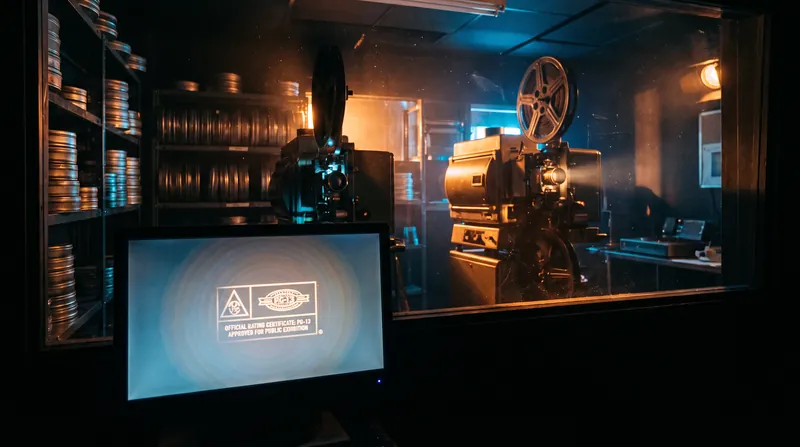
The BBFC, the MPAA, and the FSK: How Film Classification Systems Actually Work
7 sources
Behavioral Design
The Achiever, the Explorer, the Socializer, and the Killer: How Bartle's Taxonomy Classifies Player Motivation
6 sources

Anime Production
One Piece Anime Concludes 2026 Run, Confirms 2027 Return and Canonical Theatrical Films
6 sources

Audience Measurement
The Rating Point, the Share, and the Live+7 Metric: How Nielsen Actually Measures Television Viewership
5 sources

Every angle. Every day.
Get Entertainment stories with full source coverage and perspective breakdowns delivered to your inbox.