
Office-to-Residential Conversions Hit Record Highs as Cities Rewire Downtowns
A record 90,300 office-to-apartment units are currently in development across the U.S., as developers and city officials race to solve the dual crises of stranded commercial real estate and a severe housing shortage.
By Factlen Editorial Team
- Urban Planners & Officials
- View conversions as a vital tool to replace lost commercial property taxes and transition 9-to-5 business districts into 24/7 neighborhoods.
- Commercial Developers
- Emphasize that the high costs of retrofitting deep floor plates require zoning relief and tax incentives to make projects financially viable.
- Housing Advocates
- Argue that while conversions add overall supply, the high construction costs mean most units are luxury, requiring subsidies to reach affordable tiers.
What's not represented
- · Small business owners relying on daytime office foot traffic
- · Construction unions executing the complex retrofits
- · Corporate tenants navigating shrinking commercial footprints
Why this matters
The permanent shift to hybrid work has left millions of square feet of downtown real estate empty. Converting these stranded assets into housing not only helps alleviate the national apartment shortage, but physically transforms 9-to-5 business districts into vibrant, 24/7 neighborhoods.
Key points
- The U.S. office-to-residential conversion pipeline reached a record 90,300 units in early 2026, a 28% increase from the previous year.
- For the first time, the volume of office space slated for conversion or demolition is outpacing new office construction nationwide.
- New York City leads the country with over 16,300 planned units, followed closely by Washington, D.C. and Chicago.
- High engineering costs, often reaching $500 per square foot, are prompting cities like Los Angeles to waive zoning restrictions to make projects viable.
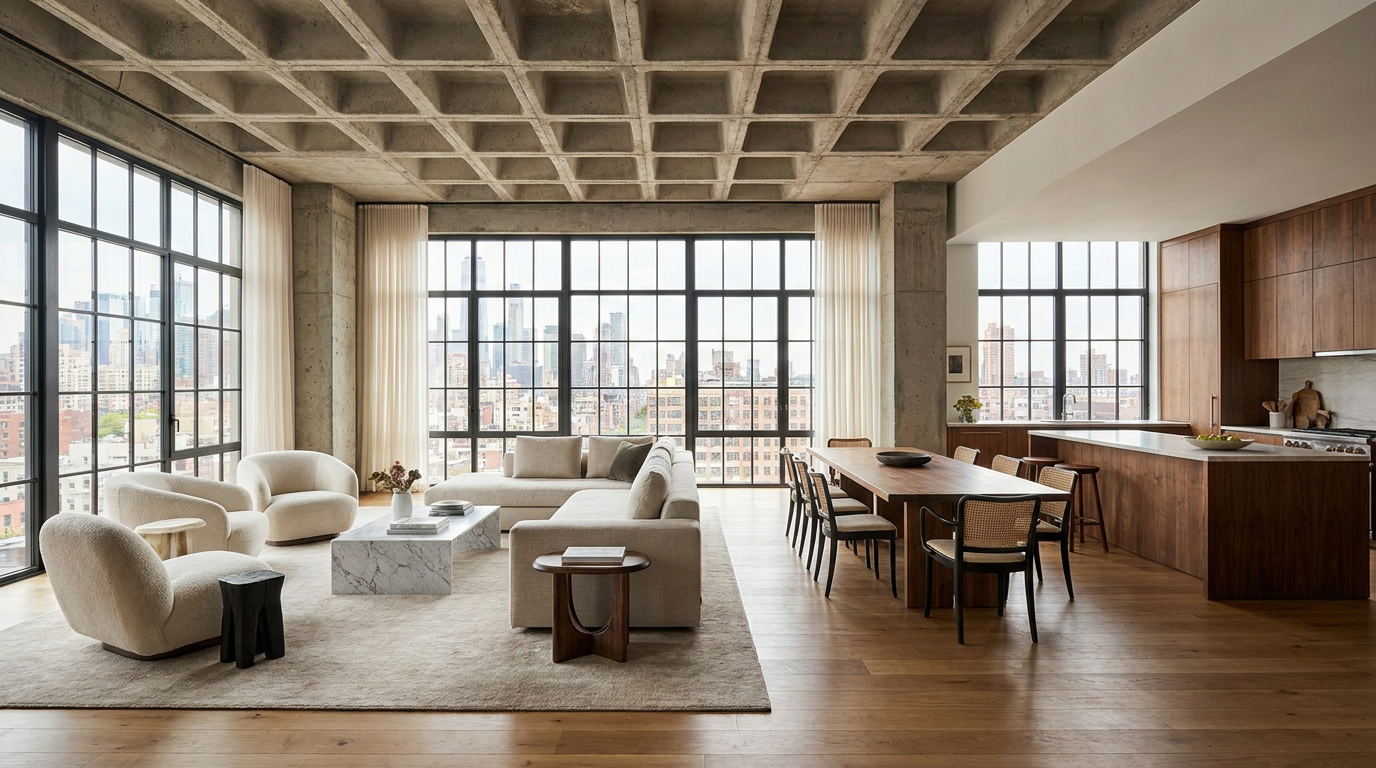
The American downtown is undergoing its most radical physical transformation since the post-war construction boom. Rather than building up, developers are gutting out. Across the country, millions of square feet of obsolete commercial real estate are being stripped to their concrete bones and reborn as residential housing. This architectural alchemy, known as adaptive reuse, is emerging as a rare dual-solution to two of the most stubborn economic hangovers of the 2020s: the permanent stranding of commercial assets due to hybrid work, and a generational, nationwide shortage of residential housing. While the concept of turning old warehouses into lofts is decades old, the sheer scale of the current office-to-residential pipeline represents a fundamental rewiring of the urban landscape.[7]
The data for 2026 reveals a trend that has officially moved from a niche architectural experiment to a dominant real estate strategy. According to the latest national tracking, there are currently 90,300 office-to-apartment units in the active conversion pipeline across the United States. This represents a staggering 28 percent year-over-year increase, and the volume is nearly four times higher than it was in 2022. Office conversions now account for 47 percent of all future adaptive reuse projects nationwide, easily outpacing hotel and industrial repurposing. The momentum is largely driven by the realization that the traditional five-day in-office workweek is not returning, leaving property owners with a stark choice: adapt or face financial ruin.[1]
The catalyst for this unprecedented wave of construction is a commercial real estate market that remains fundamentally dislocated. National office vacancy rates hovered near a record 20 percent through late 2024 and early 2025, with physical occupancy on any given weekday often sitting much lower. While premium, amenity-rich "Class A" office buildings have largely maintained their tenant base, older Class B and C structures have become stranded assets. These underutilized buildings drag down local property values and decimate the foot traffic required to sustain downtown retail and restaurant ecosystems. Simultaneously, the United States is facing a severe housing deficit, with industry groups estimating a need for 4.3 million additional rental units by 2035 just to meet baseline demographic demand.[5]

The shift in capital allocation is so profound that it has inverted a long-standing real estate metric. For the first time in modern tracking, the amount of U.S. office space poised to disappear is outpacing the amount being built. In 2025, more than 23.3 million square feet of office space across major markets was slated for either demolition or conversion to other uses. By contrast, developers are expected to complete only 12.7 million square feet of new office supply. This crossover marks a historic inflection point. Just a few years prior, in 2019, nearly 60 million square feet of new office space came online compared to less than 10 million square feet of repurposed space. The era of speculative office tower construction has functionally ended, replaced by an era of aggressive retrofitting.[2]
Geographically, the conversion boom is highly concentrated in cities with the most acute housing shortages and the largest inventories of aging commercial stock. New York City is the undisputed capital of this movement, leading the nation with over 16,300 future converted units in its pipeline—a near doubling of its volume from the previous year. Manhattan's office vacancy rate, which remains elevated at over 22 percent, has motivated owners to reposition underperforming assets. The surge in New York is the product of attractive post-pandemic economics, where the depressed value of office buildings has finally dropped low enough to make residential reuse financially viable, coupled with aggressive new tax incentives designed to clear regulatory hurdles.[1][3]
Beyond New York, the trend is reshaping the skylines of several major hubs. Washington, D.C. holds the second-largest pipeline with nearly 8,500 units, driven heavily by the reduction of the federal government's physical footprint and a push to bring residents into the city's core. Chicago follows closely with over 4,300 units in development. However, when measured as a percentage of total office inventory, smaller markets are actually leading the charge. Cleveland, Ohio, currently has over 8 percent of its total office stock either undergoing or planned for conversion, the highest proportion of any city in the country. High construction costs for ground-up development and limited land availability have made conversions the most logical path for growth in these mid-sized markets.[1][2]

Despite the surging numbers, executing an office-to-residential conversion is an incredibly complex architectural and engineering feat. It is not simply a matter of erecting drywall and moving in beds. Modern office buildings were designed with massive, deep floor plates to maximize cubicle density, meaning the interior spaces are entirely cut off from natural light. Because residential building codes strictly require bedrooms to have operable windows, developers are often forced to core out the center of these massive structures to create interior light wells and courtyards. This subtractive construction is highly technical, requiring the removal of thousands of tons of concrete and steel while maintaining the building's structural integrity.[7]
Despite the surging numbers, executing an office-to-residential conversion is an incredibly complex architectural and engineering feat.
The mechanical challenges are equally daunting. A typical commercial floor features a centralized core housing the elevators, a set of communal restrooms, and a massive, unified HVAC system. Converting that single floor into a dozen individual apartments requires decentralizing all of those systems. Construction crews must core through thick concrete slabs to install individual plumbing lines, electrical panels, and climate control systems for every single unit. Because of these intense mechanical requirements, the cost of converting an office building can easily range from $300 to $500 per square foot in major metropolitan areas, making it nearly as expensive as building a new structure from the ground up.[7]
Because of these architectural constraints, not every vacant office building is a viable candidate for housing. The ideal targets are older structures, typically built before 1990, which feature smaller, narrower floor plates that allow natural light to penetrate deeper into the building. Real estate analysts utilizing conversion feasibility indexes estimate that roughly 1.9 billion square feet of office space in the United States—about 24 percent of the total national inventory—possesses the right physical characteristics to be successfully converted. The remaining 76 percent of the market, which includes many of the massive, glass-box towers built in the late 1990s and 2000s, will likely remain stranded unless entirely new architectural solutions are developed.[1]

To bridge the financial gap and make these expensive conversions pencil out for developers, local governments are aggressively rewriting their zoning codes. In February 2026, Los Angeles enacted a sweeping Citywide Adaptive Reuse Ordinance designed to eliminate the bureaucratic friction that has historically stalled these projects. The new policy waives minimum unit size requirements, locks in existing parking minimums so developers do not have to excavate new garages, and allows builders to introduce interior courtyards and mezzanines without incurring floor-area penalties. By streamlining the approval process and removing arbitrary zoning barriers, Los Angeles is attempting to unlock millions of square feet of dormant real estate to meet its state-mandated housing production goals.[6]
The push for regulatory relief extends to the federal level, where lawmakers recognize that local zoning changes alone cannot overcome the massive capital requirements of adaptive reuse. Bipartisan legislation, such as the proposed Revitalizing Downtowns and Main Streets Act, aims to provide a 20 percent tax credit for the eligible costs of converting underutilized commercial structures into housing. Proponents argue that this federal subsidy is necessary not just to create housing, but to save the municipal tax bases of major cities. If downtown office buildings are allowed to sit empty and their assessed values plummet, cities will face catastrophic shortfalls in the property tax revenues that fund schools, police, and public infrastructure.[5]
A critical question surrounding the conversion boom is who actually gets to live in these new units. Because the baseline construction costs are so high, the vast majority of completed office-to-residential projects are positioned as luxury or market-rate apartments. Without heavy government subsidies, developers cannot afford to designate these units as affordable housing. However, demographic simulations conducted by urban policy researchers suggest that even market-rate conversions can have a positive impact on citywide equity. By injecting thousands of new units into highly desirable, transit-rich downtown cores, these projects help alleviate overall price pressure in the broader housing market, while also desegregating historically exclusive commercial districts.[4]

Beyond the economic and demographic benefits, adaptive reuse offers a massive environmental advantage over traditional construction. The real estate sector is responsible for a significant portion of global greenhouse gas emissions, much of which comes from the "embodied carbon" required to manufacture and transport steel and concrete. By preserving the existing foundation and structural skeleton of an office building, developers can avoid the catastrophic carbon footprint associated with demolition and ground-up rebuilding. European sustainability studies have shown that an office-to-residential conversion can have a carbon footprint up to four times smaller than demolishing the site and building a comparable residential tower from scratch.[7]
While office buildings dominate the headlines, they are part of a broader adaptive reuse ecosystem that is finding value in all types of forgotten architecture. Hotels currently make up about 18 percent of the future conversion pipeline, largely driven by the repurposing of older, lower-tier hospitality assets that struggled to recover post-pandemic. Industrial properties, including old factories and warehouses, account for another 16 percent. Even schools, healthcare facilities, and obsolete government buildings are being swept up in the trend. Yet, it is the sheer volume of the office sector—and its central location in the heart of American cities—that makes its transformation the most consequential for the future of urban living.[1]
As the 90,000 units currently in the pipeline begin to deliver over the next several years, the fundamental rhythm of the American downtown will change. Districts that historically emptied out at 5:00 p.m. on weekdays are being seeded with a permanent residential population, creating the density required to support grocery stores, neighborhood parks, and evening entertainment. Office-to-residential conversions will not single-handedly solve the nation's 4.3 million unit housing deficit, nor will they save every struggling commercial landlord. But as an evidence-backed strategy to heal the scars of the pandemic economy, adaptive reuse stands as a powerful testament to the resilience of cities and their ability to reinvent themselves.[1][5][7]
How we got here
Early 2020s
The widespread adoption of remote and hybrid work leads to a historic spike in commercial office vacancies.
2023
Major cities like New York and Chicago begin passing zoning code changes to incentivize the conversion of stranded commercial assets.
2025
For the first time on record, the amount of U.S. office space slated for demolition or conversion outpaces new office construction.
Feb 2026
Los Angeles enacts a sweeping Citywide Adaptive Reuse Ordinance to streamline approvals and waive restrictive zoning rules.
Mid 2026
The national office-to-residential pipeline hits a record 90,300 units, a 28 percent year-over-year increase.
Viewpoints in depth
Urban Planners' View
Focusing on neighborhood vitality and municipal tax bases.
For city officials and urban planners, the hollowing out of downtown office districts represents an existential threat to municipal finance. Commercial real estate taxes fund a massive portion of city services, from public schools to transit systems. Planners argue that incentivizing office-to-residential conversions is not just about housing—it is a defensive strategy to prevent the collapse of the urban tax base. By bringing permanent residents into the urban core, cities can replace lost daytime office workers with evening and weekend foot traffic, sustaining local retail and creating more resilient, mixed-use neighborhoods.
Commercial Developers' View
Highlighting the severe financial and architectural friction of adaptive reuse.
The real estate development community stresses that adaptive reuse is rarely a cheap alternative to ground-up construction. Developers point to the immense engineering costs of decentralizing commercial HVAC systems, coring through concrete for hundreds of new plumbing lines, and carving out light wells to meet residential window codes. Because these retrofits frequently cost upwards of $400 per square foot, developers argue that strict zoning mandates and a lack of public subsidies make many projects un-bankable. They advocate for federal tax credits and local ordinance waivers—like the removal of parking minimums—to make the math work.
Housing Advocates' View
Questioning the affordability and equity of market-rate conversions.
Housing equity advocates acknowledge that adding any supply to a constrained market is beneficial, but they caution against viewing office conversions as a silver bullet for the affordability crisis. Because the baseline acquisition and construction costs are so steep, nearly all unsubsidized office-to-residential projects deliver luxury or premium-rate apartments. Advocates argue that without targeted government intervention, such as the proposed Revitalizing Downtowns Act tying tax credits to affordable unit minimums, the conversion boom will simply create high-end enclaves rather than serving the working-class renters who face the most severe housing insecurity.
What we don't know
- Whether federal tax incentives, like the proposed Revitalizing Downtowns Act, will pass Congress to subsidize affordable units within these projects.
- How the influx of permanent residents will alter the long-term retail and public transit ecosystems of traditionally commercial downtowns.
- If architectural innovations will eventually make it cost-effective to convert the massive, deep-floor-plate glass towers built in the 2000s.
Key terms
- Adaptive Reuse
- The architectural process of repurposing an existing building for a use other than what it was originally designed for, such as turning an office into apartments.
- Floor Plate
- The total leasable square footage of a single floor in a commercial building; deep floor plates are difficult to convert because interior spaces lack access to windows.
- Class B and C Office Space
- Older, less desirable commercial buildings that lack modern amenities and are currently facing the highest vacancy rates in the market.
- Embodied Carbon
- The total greenhouse gas emissions associated with the manufacturing, transportation, and installation of building materials like steel and concrete.
- Light Well
- An unroofed external space provided within the volume of a large building to allow light and air to reach what would otherwise be a dark interior.
Frequently asked
Can any empty office building be turned into apartments?
No. Modern office towers often have massive, deep floor plates that prevent natural light from reaching the interior. Buildings constructed before 1990 with narrower frames are generally the best candidates for conversion.
Will office conversions solve the housing shortage?
While helpful, conversions are only a partial solution. The U.S. needs an estimated 4.3 million additional housing units by 2035, and current conversion pipelines will only deliver a fraction of that total.
Why is it so expensive to convert an office building?
Offices rely on centralized plumbing and climate control. Converting them requires drilling through concrete floors to install individual bathrooms, kitchens, and HVAC systems for every single apartment, which is highly labor-intensive.
Are these new apartments affordable for average renters?
Typically, no. Because the engineering and construction costs are so high, developers usually price these units at market or luxury rates to recoup their investment, unless government subsidies are involved.
Sources
Source coverage
7 outlets
3 viewpoints surfaced






[1]RentCafeHousing Advocates
Adaptive Reuse Report 2026: Office-to-Apartment Conversions Hit Record 90,300 Units
Read on RentCafe →[2]CBRECommercial Developers
U.S. Office Conversions and Demolitions Outpace New Supply
Read on CBRE →[3]Cushman & WakefieldCommercial Developers
New York City Office-to-Residential Conversions Reach Post-2008 High
Read on Cushman & Wakefield →[4]Brookings InstitutionUrban Planners & Officials
Simulating the impacts of office-to-residential conversion on neighborhood demographics
Read on Brookings Institution →[5]NAIOPCommercial Developers
The Revitalizing Downtowns and Main Streets Act: Incentivizing Commercial Conversions
Read on NAIOP →[6]Greenberg GluskerUrban Planners & Officials
Los Angeles Adopts Citywide Adaptive Reuse Ordinance to Spur Housing
Read on Greenberg Glusker →[7]Factlen Editorial TeamHousing Advocates
Synthesis by Factlen editorial team
Read on Factlen Editorial Team →
Every angle. Every day.
Get real estate stories with full source coverage and perspective breakdowns delivered to your inbox.