
Next-Generation Geothermal Energy Reaches Commercial Scale in 2026
Enhanced Geothermal Systems (EGS) are adapting oil and gas drilling techniques to unlock massive amounts of clean, 24/7 baseload power, with the first gigawatt-scale projects coming online this year.
By Factlen Editorial Team
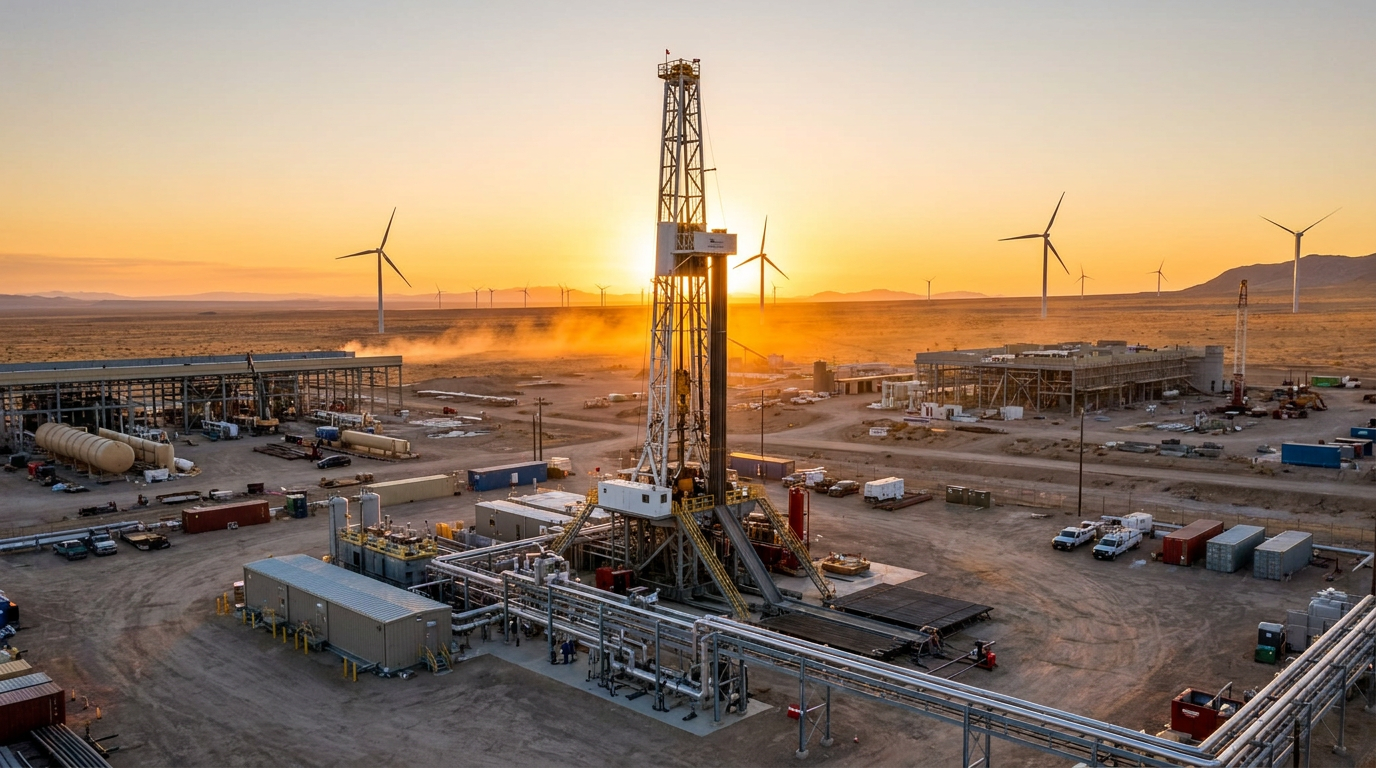
- Energy Policymakers
- Focus on grid reliability, national energy security, and driving down the levelized cost of energy.
- Geothermal Developers
- Focus on rapid commercialization, scaling, and adapting oil and gas technology to clean energy.
- Subsurface Scientists
- Focus on understanding rock mechanics, monitoring induced seismicity, and pushing the boundaries of extreme environments.
- Tech & Innovation Analysts
- Focus on the intersection of AI energy demand and the need for 24/7 carbon-free power.
What's not represented
- · Local Communities near EGS sites
- · Traditional Oil & Gas Drilling Contractors
Why this matters
As the AI boom strains the US power grid, next-generation geothermal offers a rare solution: a reliable, carbon-free energy source that runs 24/7 and can be deployed almost anywhere, fundamentally changing how we power the future.
Key points
- Enhanced Geothermal Systems (EGS) adapt shale oil drilling techniques to create artificial geothermal reservoirs.
- Fervo Energy's Cape Station in Utah is set to deliver its first 100 MW of commercial power in 2026.
- Tech giants like Google and Meta are driving demand by signing power purchase agreements for 24/7 clean energy.
- Scientists are continuously monitoring microseismic activity at EGS sites to ensure safe and optimized operations.
The artificial intelligence boom is colliding with the physical limits of the US power grid. As technology giants race to build gigawatt-scale data centers, they are discovering that wind and solar cannot provide the 24/7 "firm" power required to run them, while natural gas and nuclear face severe deployment bottlenecks and long timelines.[7]
But deep beneath the earth's surface, a 120-year-old renewable technology is undergoing a radical engineering renaissance. Enhanced Geothermal Systems (EGS) are moving from experimental pilots to commercial reality in 2026, promising to unlock a nearly inexhaustible supply of clean, baseload electricity.[1][7]
Traditional geothermal energy has always been a geographic lottery. It requires a rare combination of subterranean heat, fluid, and naturally permeable rock—conditions typically found only near tectonic fault lines or volcanic regions like Iceland and California. Because of these strict geological constraints, geothermal currently supplies less than 1 percent of US electricity.[6]
EGS rewrites the rules by engineering the reservoir itself. Instead of hunting for naturally occurring hot water, developers drill thousands of feet down into hot, dry, impermeable rock. They then apply horizontal drilling and hydraulic stimulation techniques—borrowed directly from the shale oil and gas industry—to create a network of artificial fractures.[1][6]

Water is injected down one well, forced through the newly created fractures where it absorbs the earth's ambient heat, and pumped back up a second well as superheated fluid to drive a surface turbine. This closed-loop approach effectively transforms geothermal from a niche geographic resource into a scalable manufacturing process that can be deployed across vast swaths of the country.[6]
The evidence that EGS is ready for prime time is crystallizing in Beaver County, Utah. There, Houston-based Fervo Energy is constructing Cape Station, a massive 500-megawatt facility that represents the world's first gigawatt-scale EGS development.[1]
The project's technical viability was heavily de-risked by Fervo's earlier Project Red pilot in Nevada, which successfully adapted horizontal drilling to high-temperature geothermal environments in 2023. Now, Cape Station is rapidly approaching its first major commercial milestone: delivering 100 megawatts of continuous power to the grid by late 2026.[1]
Now, Cape Station is rapidly approaching its first major commercial milestone: delivering 100 megawatts of continuous power to the grid by late 2026.
Financial markets are signaling strong confidence in the underlying engineering. In March 2026, Fervo secured $421 million in non-recourse project financing for Cape Station, following a $462 million Series E equity round in late 2025. This massive influx of capital marks a critical transition for EGS from venture-backed research to infrastructure-grade deployment.[1]
The resource potential unlocked by these techniques is staggering. The US Department of Energy estimates that next-generation geothermal could provide up to 90 gigawatts of firm capacity nationwide by 2050, while other industry analyses suggest the figure could reach 150 gigawatts. This would fundamentally alter the US energy mix, providing the reliable backbone needed to balance intermittent solar and wind.[2][3]

Technology companies are acting as the primary catalyst for this rapid commercialization. Desperate for carbon-free baseload power to satisfy corporate climate pledges while scaling AI, companies like Google and Meta have signed unprecedented power purchase agreements to buy EGS electricity, effectively guaranteeing a market for early developers.[3][6]
However, scaling EGS is not without technical and environmental uncertainties. The most prominent concern is induced seismicity. The process of hydraulically fracturing deep rock inherently creates micro-earthquakes, raising questions about the safety of deploying EGS near populated areas.[4]
To address this, subsurface scientists are conducting unprecedented monitoring. Between July 2025 and February 2026, researchers from Lawrence Berkeley National Laboratory continuously monitored microseismic activity nearly 7,000 feet underground at the Cape Station site, where temperatures reach a blistering 338 degrees Fahrenheit.[4]

This seven-month deployment represents a significant breakthrough in high-temperature sensor technology. By mapping exactly how rock fractures form in real-time under extreme conditions, scientists hope to optimize energy production while ensuring that seismic events remain too small to be felt at the surface.[4]
Cost also remains a formidable hurdle. While EGS is currently competitive with nuclear and battery-backed solar, the initial capital expenditures for deep drilling are immense. The Department of Energy's Earthshots initiative aims to drive the cost of next-generation geothermal down by 90 percent to $45 per megawatt-hour by 2035, relying on economies of scale and faster drilling times.[2]
Looking further ahead, researchers are already designing the next frontier: superhot rock geothermal. By drilling even deeper to reach temperatures approaching 400 degrees Celsius, engineers hope to tap supercritical fluids that could yield five to ten times more energy per well than current EGS designs.[5][6]

Reaching those extreme depths will require entirely new technologies. MIT spinout Quaise Energy, for example, is developing a millimeter-wave drilling system that uses microwave energy to literally vaporize rock, potentially bypassing the mechanical limits and wear-and-tear of traditional drill bits.[5]
How we got here
1904
The world's first geothermal electricity is generated in Larderello, Italy.
2023
Fervo Energy's Project Red successfully demonstrates commercial-scale EGS using horizontal drilling.
2025
Next-generation geothermal financing reaches nearly $2.2 billion globally.
March 2026
Fervo secures $421 million in project financing for its 500 MW Cape Station facility in Utah.
Late 2026
Phase 1 of Cape Station is scheduled to deliver its first 100 MW of power to the grid.
Viewpoints in depth
Geothermal Developers
Focus on rapid commercialization, scaling, and adapting oil and gas technology to clean energy.
Companies like Fervo Energy argue that the technology risk of EGS has largely been retired. Their view is that the industry must now shift from bespoke, first-of-a-kind research projects to standardized, repeatable manufacturing. By leveraging the existing supply chains, drilling rigs, and workforce of the fossil fuel industry, they believe geothermal can scale fast enough to meet the surging electricity demands of the 2020s.
Subsurface Scientists
Focus on understanding rock mechanics, monitoring induced seismicity, and pushing the boundaries of extreme environments.
Researchers at national laboratories and universities emphasize that while the commercial progress is exciting, the deep subsurface remains a highly complex and unpredictable environment. They advocate for rigorous, long-term monitoring of microseismic events to ensure that artificial fracturing does not trigger larger earthquakes. Furthermore, they are focused on the next horizon—developing materials and sensors that can survive the 400-degree Celsius temperatures required for superhot rock geothermal.
Energy Policymakers
Focus on grid reliability, national energy security, and driving down the levelized cost of energy.
For government agencies and grid planners, EGS represents the missing puzzle piece in the clean energy transition: firm, dispatchable power. While wind and solar are cheap, they require massive battery storage to provide 24/7 reliability. Policymakers view geothermal as the ideal baseload complement, which is why the Department of Energy is heavily subsidizing demonstration projects and setting aggressive cost-reduction targets through its Earthshots initiative.
What we don't know
- Whether the cost of EGS can truly fall to the Department of Energy's $45/MWh target by 2035.
- How local communities will react to the widespread deployment of hydraulic fracturing techniques for renewable energy.
- If millimeter-wave drilling and superhot rock technologies can successfully transition from the lab to the field.
Key terms
- Enhanced Geothermal Systems (EGS)
- A technology that creates artificial underground reservoirs by injecting fluid into hot, dry rock to generate steam for electricity.
- Firm Power
- Electricity generation that can be relied upon to produce energy at any time, unlike intermittent sources like wind and solar.
- Induced Seismicity
- Minor earthquakes or tremors caused by human activity, such as injecting fluids underground to fracture rock.
- Superhot Rock Geothermal
- An experimental next-generation technology that drills deeper to reach supercritical fluids at extreme temperatures, potentially yielding 5-10 times more energy per well.
Frequently asked
How is next-generation geothermal different from traditional geothermal?
Traditional geothermal relies on naturally occurring underground hot water reservoirs, limiting it to volcanic regions. Next-generation systems engineer their own reservoirs by drilling into hot, dry rock and injecting water, allowing plants to be built almost anywhere.
Can geothermal energy power AI data centers?
Yes. Because geothermal provides 24/7 "firm" power without carbon emissions, major tech companies are signing power purchase agreements with geothermal developers to meet the massive energy demands of AI.
Does enhanced geothermal cause earthquakes?
The hydraulic fracturing process does create microseismic events, which are typically too small to be felt at the surface. Scientists are actively monitoring these sites to understand fracture formation and ensure the technology scales safely.
Sources
Source coverage
7 outlets
4 viewpoints surfaced






[1]Fervo EnergyGeothermal Developers
Fervo Energy: Pioneering Next-Generation Geothermal
Read on Fervo Energy →[2]US Department of EnergyEnergy Policymakers
Enhanced Geothermal Systems (EGS) Research and Development
Read on US Department of Energy →[3]World Resources InstituteEnergy Policymakers
How State Policies Can Accelerate Next-Generation Geothermal
Read on World Resources Institute →[4]Lawrence Berkeley National LaboratorySubsurface Scientists
Scaling Enhanced Geothermal Systems with Continuous Monitoring
Read on Lawrence Berkeley National Laboratory →[5]MITSubsurface Scientists
Geothermal innovators seek deeper and hotter rocks to generate electricity at scale
Read on MIT →[6]ITIFTech & Innovation Analysts
The Promise of Next-Generation Geothermal Energy
Read on ITIF →[7]Factlen Editorial TeamTech & Innovation Analysts
Synthesis by Factlen editorial team
Read on Factlen Editorial Team →

More in science
See all 5 stories →


Every angle. Every day.
Get science stories with full source coverage and perspective breakdowns delivered to your inbox.