
Mycelium vs. Traditional Leather: The 2026 Material Trade-Off
As lab-grown mushroom leather scales to meet luxury fashion demands, a direct comparison reveals stark trade-offs between the multi-decade durability of animal hides and the radical climate efficiency of bio-fabricated materials.
By Factlen Editorial Team
- Bio-Material Analysts
- Focuses on the technological advancements, market growth, and commercial viability of lab-grown leathers.
- Environmental & Ethical Advocates
- Prioritizes the elimination of animal agriculture and the reduction of carbon emissions in fashion.
- Neutral Synthesizers
- Weighs the practical trade-offs between legacy durability and ecological innovation without taking a definitive side.
What's not represented
- · Traditional Tannery Workers
- · Cattle Farmers
Why this matters
The materials you choose to wear directly dictate your personal carbon footprint and the lifespan of your wardrobe. Understanding the exact trade-offs between traditional and bio-fabricated leathers allows you to make purchasing decisions that align with both your budget and your environmental values.
Key points
- Traditional animal leather offers multi-decade durability and a classic aging profile but carries a massive carbon and water footprint.
- Mycelium leather grows in just 10 to 14 days, reducing water usage by up to 99 percent and greenhouse gas emissions by 95 percent.
- Premium bio-leathers have passed rigorous luxury durability tests, withstanding over 20,000 flex cycles.
- To lower costs, approximately 41 percent of the mushroom leather market blends mycelium with synthetic polyurethanes, reducing its biodegradability.
- Pure mycelium remains a premium luxury investment, while traditional leather benefits from an established, subsidized agricultural supply chain.
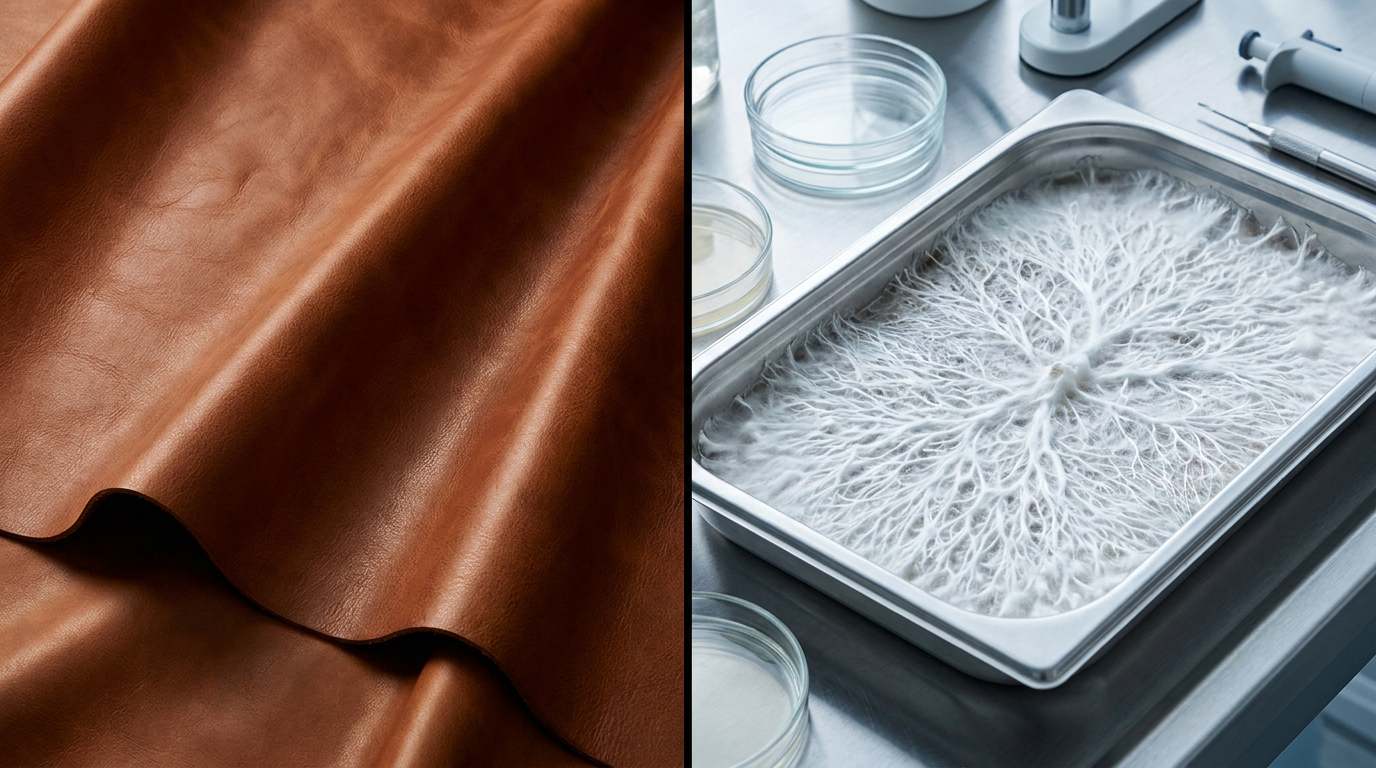
The 2026 fashion landscape is undergoing a material revolution, moving away from petrochemical polyurethanes and heavily processed animal hides toward bio-fabricated alternatives. At the center of this shift is the direct competition between traditional bovine leather and next-generation mycelium leather, derived from the root structures of fungi. As luxury houses release commercial mushroom-leather products, consumers and designers face a complex trade-off between a centuries-old material known for its longevity and a lab-grown challenger promising a fraction of the environmental footprint.[6]
Traditional animal leather has long been the gold standard for luxury and durability, benefiting from an established global supply chain and centuries of refinement. The case for traditional leather rests heavily on its unmatched longevity and structural integrity. High-quality, full-grain animal hides can last for decades, developing a unique patina that many consumers associate with premium fashion. For heritage brands and consumers seeking heirloom-quality footwear or upholstery, the proven lifecycle of bovine leather remains a formidable benchmark that bio-leathers are only just beginning to challenge.[5]
However, the case against traditional leather is anchored in its severe environmental toll, which has become increasingly difficult for the fashion industry to justify. The production of a single square meter of cow skin leather generates approximately 110 kilograms of carbon dioxide equivalent, largely driven by the methane emissions of cattle rearing. Furthermore, the tanning process is notoriously resource-intensive; producing a standard cowhide tote bag can consume upwards of 17,000 liters of water. When combined with the toxic chemical runoff associated with conventional chrome tanning, the ecological argument against animal leather is substantial.[1][7]

In contrast, the case for mycelium leather centers on its radical efficiency and minimal ecological footprint. Grown in climate-controlled vertical trays using agricultural waste like sawdust or hemp hurds, mycelium knits itself into a dense, flexible mat in just ten to fourteen days—a stark contrast to the years required to raise livestock. This rapid bio-fabrication process uses up to 99 percent less water and generates roughly 95 percent fewer greenhouse gas emissions than bovine leather. For eco-conscious consumers and brands aiming to meet strict climate targets, mycelium offers a compelling, cruelty-free alternative that physically mimics the warmth and drape of calfskin.[1][2]
The commercialization of mycelium has moved rapidly from conceptual prototypes to retail availability. Biotechnology firms have partnered with global fashion conglomerates to bring these materials to the mass market. Luxury houses have integrated fine mycelium technology into travel bags, utilizing proprietary chrome-free tanning processes that match historic standards. Simultaneously, athletic giants have experimented with mycelium uppers for iconic sneaker silhouettes, proving that the material can be engineered for both high fashion and everyday streetwear.[4]

The commercialization of mycelium has moved rapidly from conceptual prototypes to retail availability.
Yet, the case against mycelium leather highlights the growing pains of a nascent industry struggling to achieve economies of scale. While the raw biological growth is inexpensive, the capital expenditure required to build sterile, climate-controlled facilities keeps the final luxury product priced at a premium. Additionally, to meet the rigorous durability standards of footwear and automotive interiors, approximately 41 percent of the current mushroom leather market relies on blending mycelium with recycled polyurethanes or synthetic binders. This hybrid approach lowers costs by roughly 22 percent but dilutes the material's biodegradability, presenting a trade-off between performance and absolute environmental purity.[2][3]
The evidence comparing the physical performance of both materials reveals a narrowing gap. Independent testing by CTC Groupe on premium mycelium materials demonstrated that high-end bio-leathers can withstand 20,000 cycles in Bally Flex resistance tests and over 25,000 cycles in Martindale abrasion assessments, meeting stringent luxury benchmarks. However, untreated raw mycelium still falls short of animal leather's natural tear strength. Traditional leather maintains a distinct advantage in heavy-duty applications, where its dense collagen fiber network provides superior resistance to punctures and long-term mechanical stress.[4]

Consumer perception also presents a hurdle for the widespread adoption of bio-leathers. While early adopters are enthusiastic, broader market surveys indicate that nearly 38 percent of buyers still default to traditional leather due to ingrained perceptions of quality and longevity. Furthermore, the market is clouded by greenwashing, where some brands market 'plant-based' or 'mushroom' leathers that are predominantly composed of petrochemical plastics with only a fraction of biological material. This lack of transparency forces consumers to rigorously verify whether a product is genuinely bio-fabricated or simply a synthetic polyurethane masquerading as an eco-friendly alternative.[3][7]
The end-of-life disposal of these materials further complicates the environmental comparison. Traditional leather, particularly when vegetable-tanned, can eventually biodegrade, but the vast majority of commercial leather is chrome-tanned, leaving it resistant to decomposition and prone to leaching toxic chemicals into landfills. Pure mycelium leather, on the other hand, is fully compostable and returns to the soil without leaving harmful residues. However, when mycelium is blended with synthetic polymers to enhance durability—as is common in mid-tier footwear—it loses this circular advantage, contributing to the same microplastic pollution as conventional vegan leathers.[1][2]
When evaluating the financial evidence, the cost structures of the two materials are fundamentally inverted. Raw animal hides cost between $5.81 and $6.24 per square meter, benefiting from a massive, subsidized agricultural byproduct pipeline, though the environmental externalities are left off the balance sheet. Conversely, while raw unprocessed mycelium can be grown for mere cents per square meter, the specialized tanning, finishing, and limited production capacity push the final retail cost of pure mushroom leather above standard commercial leather. As automated cultivation systems improve, analysts project these costs will reach parity, but premium mycelium currently remains a luxury investment.[3][5]

Ultimately, traditional animal leather fits well when the primary requirements are multi-decade durability, heavy-duty structural support, and a classic aging profile. It remains the optimal choice for heritage footwear, motorcycle apparel, and heavy luggage where maximum tensile strength is non-negotiable and the consumer is willing to accept the associated climate impact. It does not fit well when brands are aggressively trying to reduce their Scope 3 emissions, or when targeting younger demographics who prioritize cruelty-free and low-carbon supply chains over traditional luxury signifiers.[6]
Conversely, mycelium leather fits well when the goal is to combine high-end aesthetics with cutting-edge sustainability. It is highly effective for luxury handbags, lightweight jackets, and everyday accessories where the material's softness, breathability, and 95 percent reduction in carbon emissions offer a distinct competitive advantage. It does not fit well when the application demands extreme mechanical stress, or when budget constraints prohibit the premium pricing currently associated with pure, unblended bio-fabricated materials. As the technology matures, this dynamic will shift, but today's market requires a calculated choice between legacy endurance and ecological innovation.[6]
How we got here
2013
Biomaterials companies like MycoWorks are founded to explore the structural properties of mycelium.
2020
Mycelium leather makes its debut at New York Fashion Week, showcasing its potential as a luxury material.
2021
Hermès introduces a prototype of the Victoria bag made with Fine Mycelium, signaling high-fashion acceptance.
2024
Major biotech firms expand their production facilities, bringing commercial-scale mycelium manufacturing online.
2026
Blended and pure mycelium leathers reach wider commercial availability across both luxury and athletic footwear markets.
Viewpoints in depth
Traditional Leather Industry
Defends animal leather as a durable, natural byproduct of agriculture.
Advocates for traditional leather argue that hides are an inevitable byproduct of the global meat and dairy industries, and utilizing them prevents massive waste. They emphasize that high-quality, full-grain leather offers unparalleled longevity, often lasting decades and reducing the need for frequent replacement. From this perspective, the focus should be on improving tanning processes—such as shifting to vegetable tanning—rather than abandoning a proven, durable material for lab-grown alternatives that often rely on synthetic binders.
Bio-Material Innovators
Champions mycelium as a scalable, low-impact technological breakthrough.
Biotech firms and material scientists view mycelium as the ultimate solution to fashion's climate problem. By decoupling leather production from animal agriculture, they argue the industry can eliminate the massive land, water, and methane footprints associated with cattle. Innovators point to the rapid 10-to-14-day growth cycle and the ability to tune the material's thickness and flexibility at the cellular level as evidence that bio-fabrication is not just an alternative, but a structural upgrade over traditional hides.
Sustainable Fashion Advocates
Demands strict environmental purity and transparency in bio-leathers.
Environmental watchdogs and circular-fashion advocates strongly support the shift away from animal leather but remain highly critical of how bio-leathers are commercialized. They warn against 'greenwashing,' noting that many affordable mushroom leathers are heavily blended with polyurethanes to achieve durability, negating their biodegradability. This camp argues that unless a bio-leather is 100 percent plastic-free and fully compostable at the end of its life, it is merely replacing one environmental hazard with another.
What we don't know
- How pure, unblended mycelium leather will age over a 20-to-30-year timespan compared to the proven patina of traditional full-grain leather.
- Whether automated cultivation technology will scale fast enough to bring the price of pure mushroom leather down to parity with commercial cowhides by the end of the decade.
Key terms
- Mycelium
- The branching, root-like structure of fungi that can be grown into dense mats and processed into a leather-like material.
- Bally Flex Resistance
- A standardized mechanical test used in the leather industry to measure a material's ability to withstand repeated bending and creasing without cracking.
- Chrome Tanning
- The most common method of processing animal hides into leather, utilizing chromium salts which can cause severe environmental pollution if not managed properly.
- Scope 3 Emissions
- Indirect greenhouse gas emissions that occur in a company's value chain, such as the agricultural emissions from sourcing animal leather.
- Polyurethane (PU)
- A synthetic plastic polymer frequently used in vegan leathers and sometimes blended with bio-materials to improve their durability and water resistance.
Frequently asked
Is mushroom leather actually made of mushrooms?
It is made from mycelium, which is the underground root-like network of fungi, rather than the fruiting body (the mushroom) you see above ground.
Does mycelium leather contain plastic?
Pure premium versions are plastic-free and fully biodegradable, but many mid-tier commercial bio-leathers blend mycelium with recycled polyurethanes to increase durability and lower costs.
How long does mushroom leather last?
High-end mycelium materials have passed rigorous luxury testing, enduring over 20,000 flex cycles, making them highly competitive with traditional leather for everyday wear.
Is animal leather a sustainable byproduct?
While hides are a byproduct of the meat industry, the massive greenhouse gas emissions from cattle rearing and the toxic chemicals used in conventional tanning make it highly environmentally taxing.
Sources
Source coverage
7 outlets
3 viewpoints surfaced







[1]Agronomy JournalEnvironmental & Ethical Advocates
Revolutionizing material: The rise of bio leather as eco-friendly and sustainable approach
Read on Agronomy Journal →[2]IDTechExBio-Material Analysts
Growing Lab Leather with Mushrooms and Microbes
Read on IDTechEx →[3]DatainteloBio-Material Analysts
Mushroom Derived Leather Market Research Report 2034
Read on Dataintelo →[4]Fashion DiveBio-Material Analysts
Mycelium materials company launches three new products
Read on Fashion Dive →[5]FaunalyticsEnvironmental & Ethical Advocates
Fungi Fashion: The Sustainable Appeal Of Mycelium Leather
Read on Faunalytics →[6]Factlen Editorial TeamNeutral Synthesizers
Synthesis by Factlen editorial team
Read on Factlen Editorial Team →[7]Collective Fashion JusticeEnvironmental & Ethical Advocates
Leather is not a natural or sustainable by-product, it's a profitable material produced at the expense of the planet
Read on Collective Fashion Justice →



Every angle. Every day.
Get shopping stories with full source coverage and perspective breakdowns delivered to your inbox.