
Maersk More Than Doubles 2026 Profit Forecast, Citing 'Resilience' of Container Demand
The world's second-largest ocean carrier has sharply upgraded its full-year financial guidance, reflecting a sudden tightening of the global shipping market driven by geopolitical rerouting and surging import demand.

Share this story
In a dramatic reversal of fortune for the global shipping industry, A.P. Moller-Maersk has sharply upgraded its financial guidance for 2026, signaling that the ocean freight market is running far hotter than anyone anticipated just a few months ago. The Danish logistics giant, which operates the world's second-largest container fleet, announced it now expects underlying earnings before interest, taxes, depreciation, and amortization (EBITDA) to land between $8 billion and $10 billion for the year.[3]
The new forecast effectively doubles the company's previous guidance range of $4.5 billion to $7 billion. Even more strikingly, Maersk revised its outlook for underlying operating profit (EBIT) to a range of $2 billion to $4 billion. This completely erases earlier projections that had warned investors to brace for a potential operating loss of up to $1.5 billion.
The speed of this turnaround highlights the extreme volatility currently gripping global supply chains. As recently as February, the narrative surrounding ocean freight was dominated by fears of a prolonged downturn. Maersk was cutting roughly 1,000 corporate jobs and bracing for a massive influx of newly built vessels that threatened to flood the market with excess capacity and crush profit margins.[1]
So how did the industry pivot from bracing for a crash to printing billions in profit in a matter of months? The answer lies in a complex collision of geopolitical shocks on the supply side and anxious importers on the demand side, creating a perfect storm that has rapidly absorbed the world's available shipping capacity.
The primary catalyst is the ongoing security crisis in the Middle East. With the Red Sea and the Strait of Hormuz effectively compromised by geopolitical tensions, major ocean carriers have been forced to abandon the Suez Canal. Instead, Maersk and its rivals are rerouting their Asia-to-Europe services around the southern tip of Africa via the Cape of Good Hope.[1]
This detour is not merely an inconvenience; it is a structural shock to global shipping capacity. Rerouting around Africa adds weeks to every single voyage. When ships spend an extra two to three weeks on the water to complete a single rotation, they are unavailable to pick up new cargo in Asia. This effectively shrinks the active global fleet, soaking up the excess capacity that analysts had feared would crash the market.[1]
While the geopolitical crisis constrained the supply of ships, a sudden surge in consumer and manufacturing demand hit the market simultaneously. Maersk explicitly tied its upgraded forecast to "continued strong demand in the container market, particularly in the Far East." The company has now raised its forecast for global container volume growth to approximately 4% for the year, up from a previous ceiling of 2%.[3]
This demand surge is being driven by a phenomenon known as "frontloading." Rather than waiting for the traditional late-summer peak season to move holiday inventory, global importers are rushing to ship goods right now. They are motivated by a desire to beat anticipated supply chain congestion and to get ahead of looming tariff increases on Asian manufactured goods.
By pulling their orders forward into the early summer, importers have created an artificial "early peak season." This rush for space on a constrained fleet has ignited a spectacular rally in the spot freight market—the real-time price shippers pay to move a container today rather than on a long-term contract.[2]
The rate data is staggering. According to the Freightos Baltic Index, the cost to ship a 40-foot container from Asia to the U.S. West Coast has surged 120% since mid-May, crossing $6,200. Rates to the U.S. East Coast have hit $8,000, while Drewry's composite World Container Index recently reached a 22-month high of $4,166 per container.[1]
The strain is beginning to show at the physical chokepoints of global trade. With ships arriving off-schedule due to the African detour and volumes surging, port congestion has returned with a vengeance. Industry data from Linerlytica indicates that nearly 11% of the world's containership fleet is currently idling outside ports waiting to unload, the highest level of congestion seen since the pandemic-era bottlenecks of 2022.[1]
Because Maersk handles roughly one-sixth of all global container freight, Wall Street treats its financial guidance as a de facto forward rate forecast for the entire industry. By locking in an $8 billion to $10 billion EBITDA target, Maersk is signaling to the market that its internal booking data shows this elevated-rate environment holding strong through the end of the year.[1]
The broader data supports this view. Global twenty-foot equivalent unit (TEU) demand is currently expanding at a rate of 7.3%, comfortably outpacing the 5.4% growth in fleet supply. This dynamic has produced the widest demand-supply gap in favor of the carriers since late 2024.
However, the critical question for global supply chains is whether this represents a durable, structural freight recovery or a temporary mirage. Analysts remain sharply divided on how long the current tightness can hold, warning that the underlying fundamentals of the industry have not actually changed.[1]
The bear case centers on the record orderbook of new vessels currently being built in Asian shipyards. The industry is in the middle of a massive delivery cycle. Right now, the capacity of those new ships is being entirely absorbed by the longer voyages around Africa. But if a diplomatic resolution is reached in the Middle East and the Suez Canal reopens, voyage times will instantly plummet.
If the geopolitical crisis resolves, the artificial capacity constraint will vanish overnight. The longer voyages will end, and the newly built ships will suddenly flood the market with excess space, potentially triggering a rapid collapse in freight rates.
This looming risk explains why not every carrier is ready to declare victory. Hapag-Lloyd, Maersk's partner in the upcoming Gemini Cooperation alliance, has so far maintained its more conservative 2026 guidance, warning investors that the outlook remains subject to considerable uncertainty due to the volatile nature of the Middle East conflict.
This looming risk explains why not every carrier is ready to declare victory.
For now, however, the ocean freight industry has once again defied conventional market logic. What looked like a guaranteed year of oversupply and operating losses has been transformed into a period of substantial profitability, proving that in global logistics, disruption is often the most lucrative business model of all.
Key points
- Maersk has doubled its 2026 EBITDA forecast to $8–$10 billion, erasing earlier fears of an operating loss.
- The upgrade is driven by a sudden tightening of the market caused by geopolitical rerouting and surging import demand.
- Ships avoiding the Red Sea must travel around Africa, adding weeks to voyages and absorbing global vessel capacity.
- Importers are 'frontloading' cargo to avoid looming tariffs, creating an early peak season and driving up spot rates.
What we don’t know
- Whether the current surge in demand is a durable economic recovery or merely importers pulling forward future orders.
- How quickly freight rates will normalize once geopolitical tensions in the Middle East ease and the Suez Canal reopens.
- Whether the massive influx of newly built ships scheduled for delivery will eventually crash the market once disruptions end.
How we got here
Feb 2026
Maersk cuts 1,000 jobs and warns of a potential $1.5 billion operating loss due to fears of vessel overcapacity.
Spring 2026
Geopolitical disruptions in the Middle East force widespread vessel rerouting around the Cape of Good Hope, absorbing excess capacity.
May 2026
Spot freight rates begin a sharp ascent as importers rush to frontload cargo ahead of anticipated tariffs and peak season congestion.
Jun 2026
Maersk officially doubles its full-year profit guidance, citing resilient demand and sustained high rates.
- Ocean Carriers
- Focused on capitalizing on the current high-rate environment while cautiously managing the long-term risks of vessel overcapacity.
- Global Importers
- Prioritizing supply chain reliability by frontloading shipments, despite the burden of surging spot freight costs.
- Freight Market Analysts
- Tracking the demand-supply gap and warning that the current profitability is a temporary byproduct of geopolitical disruption.
Perspectives this story doesn't cover
- Retail Consumers
- Export Manufacturers in Asia
Sources
Source coverage
3 outlets
3 viewpoints surfaced



- [1]The ConveyorFreight Market Analysts
Maersk nearly doubled its 2026 profit outlook
Read on The Conveyor → - [2]Seatrade MaritimeFreight Market Analysts
Maersk sharply raises 2026 profit forecast
Read on Seatrade Maritime → - [3]PortCallsOcean Carriers
Maersk hikes earnings guidance for 2026 with high demand, rates
Read on PortCalls →

More in Transportation
See all →Marine Engineering
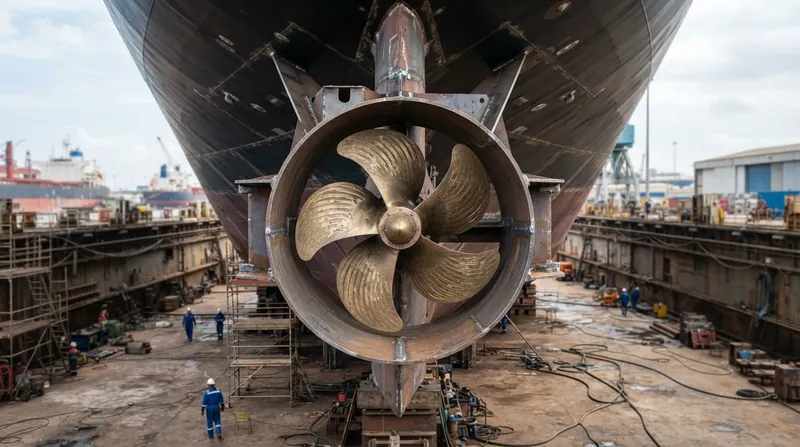
Skewed Blades and Kort Nozzles Quench Cavitation Pulses to Protect Ship Hulls
8 sources
Maritime Physics
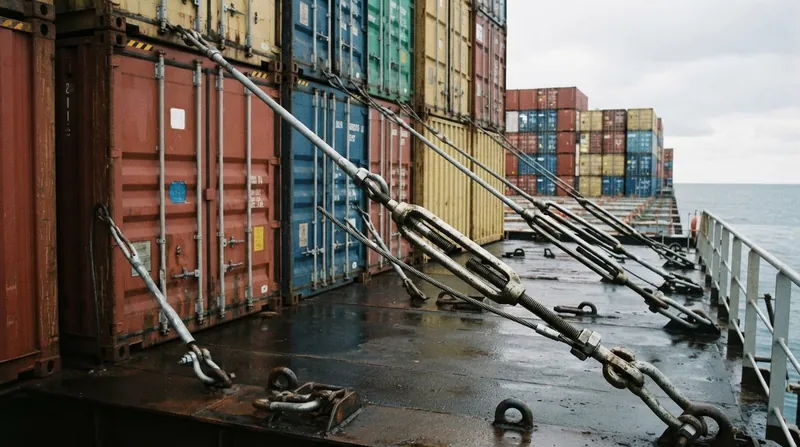
How Twistlocks and Lashing Rods Prevent Container Stacks From Collapsing During Parametric Rolling
6 sources
Cargo Liquefaction
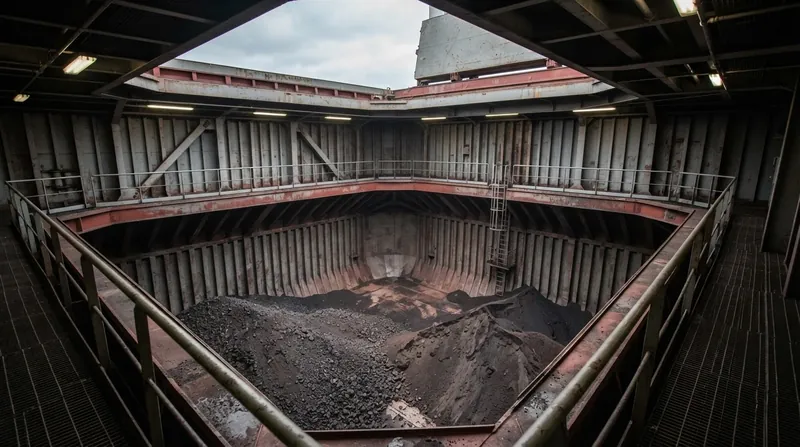
Cyclic Hull Compaction Spikes Pore Water Pressure to Liquefy Solid Ore Cargoes and Capsize Bulk Carriers
6 sources
Naval Blockade
US Fighter Jet Disables Panama-Flagged Cargo Ship in Gulf of Oman Amid Blockade
5 sources

Comments
Every angle. Every day.
Get Transportation stories with full source coverage and perspective breakdowns, free every day.