
Lab-Grown Diamonds in 2026: The Complete Buying Guide
Lab-grown diamond prices have stabilized after an 88% drop since 2020. Here is everything buyers need to know about CVD, HPHT, and getting the most value in 2026.
By Factlen Editorial Team
- Value-Focused Consumers
- Prioritizing size, ethical sourcing, and budget efficiency over long-term resale value.
- Gemological Technologists
- Viewing lab-grown stones as a triumph of materials science and engineering.
- Traditional Jewelers & Investors
- Emphasizing the scarcity and enduring financial retention of natural, mined diamonds.
What's not represented
- · Mined Diamond Miners
- · Pawn Shop Owners
Why this matters
With lab-grown diamond prices dropping by nearly 90% over the last six years, consumers can now afford significantly larger, higher-quality stones. Understanding the underlying growth technologies and market pricing ensures buyers don't overpay for their engagement rings or fine jewelry.
Key points
- Lab-grown diamond prices have stabilized in 2026 after falling nearly 88% since 2020.
- A 1-carat lab-grown diamond now averages between $725 and $1,000, representing an 80% discount compared to natural stones.
- CVD (Chemical Vapor Deposition) is the preferred growth method for large, colorless solitaires due to its high chemical purity.
- Lab-grown diamonds are chemically and optically identical to natural diamonds, but they do not hold long-term resale value.
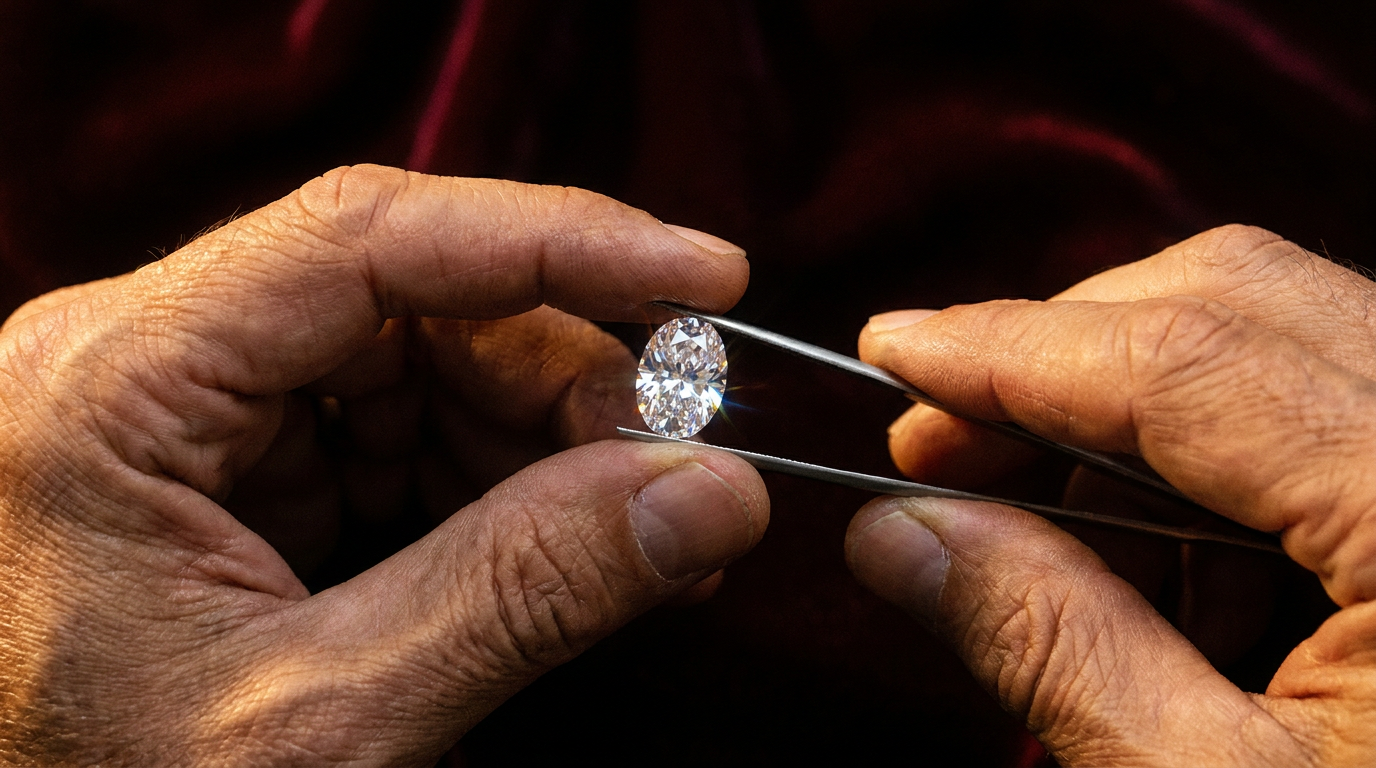
The debate over whether lab-grown diamonds are "real" is officially over. In 2026, the scientific and cultural consensus is absolute: stones grown in a laboratory are chemically, physically, and optically identical to those pulled from the earth. They share the exact same carbon crystal structure, the same Mohs hardness of 10, and the same refractive fire. But while the existential questions have been settled, the economic reality of buying a lab-grown diamond has shifted dramatically. For consumers entering the market this year, the landscape is defined by unprecedented affordability, technological mastery, and a new set of rules for maximizing value.[6][7]
The most significant development for 2026 buyers is that the multi-year price collapse of lab-grown diamonds has finally hit the floor. Between 2020 and early 2026, retail prices plummeted by an astonishing 85% to 88% across the board. A 1-carat lab-grown diamond that cost over $3,400 just six years ago now retails for roughly $725 to $1,000. This historic decline was driven by a massive expansion in global manufacturing capacity and rapid advancements in growth technology, which flooded the market with high-quality stones and drove wholesale costs down to their absolute limits.[1][4]
However, industry data indicates that this free-fall is over. Wholesale prices for rough lab-grown diamonds now sit between $250 and $500 per carat, which is dangerously close to the actual cost of production. With the curve flattening out, buyers who have been waiting on the sidelines for prices to drop even further are being advised that the bottom has arrived. The market has stabilized, meaning 2026 is arguably the most predictable and advantageous time to purchase since the lab-grown boom began.[1][3][4]

The price gap between lab-grown and natural diamonds is now a chasm. A 1-carat natural diamond of good quality typically commands between $4,000 and $6,000. Its lab-grown exact equivalent costs a fraction of that, representing savings of up to 80%. This disparity grows exponentially at larger sizes. A 2-carat natural stone can easily exceed $15,000, while a premium 2-carat lab-grown round diamond averages just $1,700 today.[1][3][8]
Because of this affordability, the traditional rules of engagement ring shopping have been rewritten. The outdated industry adage suggesting buyers spend three months' salary on a ring has been rendered obsolete. Instead, consumers are using their budgets to drastically upgrade the size and quality of their stones. In 2026, 2-carat and even 3-carat center stones have become the new normal for engagement rings, a size tier that was previously reserved for the ultra-wealthy.[3][6][8]

To navigate this highly favorable market, buyers must first understand how these stones are actually made. There are two competing technologies dominating the modern diamond industry: High Pressure High Temperature (HPHT) and Chemical Vapor Deposition (CVD). While both produce genuine, structurally perfect diamonds, the journey from raw carbon to a finished crystal is vastly different, and each method has distinct advantages depending on what the buyer is looking for in their final piece of jewelry. Understanding these methods is the key to unlocking the best possible value.[2]
The HPHT method is the older of the two technologies. It is designed to mimic the crushing pressure and searing heat of the Earth's mantle. A tiny diamond "seed" is placed into a massive mechanical press alongside a carbon source and a molten metal flux—usually a mixture of iron, nickel, and cobalt. The chamber is then subjected to temperatures exceeding 1,500 degrees Celsius and pressures of roughly 1.5 million pounds per square inch, dissolving the carbon so it can precipitate onto the seed.[2]
It is designed to mimic the crushing pressure and searing heat of the Earth's mantle.
HPHT is incredibly efficient at producing smaller stones and is the preferred method for growing fancy-colored diamonds, particularly vivid yellows and blues. However, because it relies on a metallic flux, HPHT stones can occasionally exhibit microscopic metallic inclusions or a faint blue nuance caused by boron in the growth chamber. For this reason, HPHT is often recommended for smaller accent diamonds, known as melee, or for buyers specifically seeking colored jewelry.[2]
Chemical Vapor Deposition, or CVD, is the high-tech descendant of diamond manufacturing, often compared to 3D printing with light. In the CVD process, a diamond seed is placed in a sealed vacuum chamber filled with carbon-rich gases, such as methane. A microwave beam or plasma torch is used to break the molecular bonds of the gas, causing pure carbon atoms to rain down and crystallize onto the seed, layer by layer, over several weeks.[2]
Because CVD diamonds grow in a controlled gas environment without the need for molten metals, they consistently achieve Type IIa purity. Type IIa diamonds are the most chemically pure form of diamond, containing almost no nitrogen impurities, and they account for less than 2% of all mined diamonds. For buyers in 2026 looking for a large, colorless solitaire engagement ring—particularly anything over 1 carat—CVD is widely considered the superior choice due to its icier transparency and lack of metallic inclusions.[2][7]

Beyond the growth method, shape plays a critical role in 2026 pricing dynamics. The classic round brilliant cut remains the most popular and the most expensive, as it requires cutting away more rough diamond material to achieve its signature symmetry. However, elongated shapes have surged in popularity. Oval-cut lab diamonds, which average around $800 for a 1-carat stone, offer a larger surface area that makes the diamond appear bigger on the finger while often costing slightly less than a round equivalent.[3]
Regardless of shape or growth method, the single most important rule for buying a lab-grown diamond in 2026 is independent certification. The market is flooded with uncertified, lower-purity material that serves as the absolute price floor. Experts universally advise against buying any stone that does not come with a verifiable grading report from a reputable laboratory, with the International Gemological Institute (IGI) serving as the undisputed gold standard for the lab-grown sector.[1][5][7]
An IGI certificate guarantees that the diamond has been objectively graded on the 4Cs—Cut, Color, Clarity, and Carat—protecting the buyer from inflated claims. Because lab-grown diamonds are so affordable, experts recommend prioritizing an "Excellent" or "Ideal" cut above all else, as the cut is the primary driver of a diamond's sparkle and brilliance. Buyers can easily save money by dropping the clarity to VS1 or VS2, as inclusions at this level are entirely invisible to the naked eye.[5][7][8]
The final, and perhaps most crucial, consideration for the 2026 buyer is the reality of resale value. It is a persistent myth that lab-grown diamonds are financial investments. Unlike natural diamonds, which derive a portion of their secondary market value from their geological scarcity, lab-grown diamonds are manufactured consumer goods. As production technology continues to scale, the secondary market for used lab-grown stones remains incredibly weak.[6]
Financial analysts and jewelers alike urge consumers to treat a lab-grown diamond purchase similarly to buying a luxury car or a high-end piece of technology: the value lies in the enjoyment, beauty, and utility of the item, not in its future liquidation price. For buyers who accept this trade-off, lab-grown diamonds offer an unparalleled opportunity to acquire a flawless, ethically sourced, and visually spectacular gemstone at a fraction of its historical cost.[6][8]
How we got here
2018
The Federal Trade Commission (FTC) rules that lab-grown diamonds are real diamonds, removing the word 'synthetic' from its guidelines.
2020
Lab-grown diamond prices peak, with a 1-carat stone averaging around $3,410 at US retail.
2022
Global manufacturing capacity scales rapidly, causing wholesale prices to plummet by 36% in a single year.
Early 2026
Prices stabilize near the cost of production, with a 1-carat stone retailing for under $1,000.
Viewpoints in depth
Value-Focused Consumers
Prioritizing size, ethical sourcing, and budget efficiency over long-term resale value.
For the modern engagement ring buyer, the appeal of lab-grown diamonds is purely mathematical and aesthetic. This camp argues that spending $15,000 on a natural 2-carat diamond is an outdated financial burden, especially when an identical lab-grown stone can be purchased for under $2,000. They value the ethical certainty of a conflict-free origin and are perfectly comfortable treating the ring as a sunk consumer cost rather than an appreciating financial asset.
Traditional Jewelers & Investors
Emphasizing the scarcity and enduring financial retention of natural, mined diamonds.
Legacy jewelers and diamond investors maintain that natural diamonds hold a unique intrinsic value driven by geological scarcity. They point out that while lab-grown diamonds are beautiful, their infinite supply means their secondary market value is virtually zero. From this perspective, a natural diamond is a generational heirloom that retains a percentage of its wealth, whereas a lab-grown diamond is a depreciating manufactured good.
Gemological Technologists
Viewing lab-grown stones as a triumph of materials science and engineering.
Scientists and gemologists view the perfection of CVD and HPHT processes as a monumental technological achievement. This camp is less concerned with the romance of the jewelry market and more focused on the industrial and scientific applications of flawless carbon crystals. They highlight that lab-grown methods can consistently produce Type IIa diamonds—the purest form of carbon crystal—which are incredibly rare in nature and highly valuable for advanced optics and quantum computing.
What we don't know
- It remains unclear if the secondary resale market for lab-grown diamonds will ever mature, or if pawn shops and jewelers will continue to reject them.
- The long-term impact of infinitely scalable diamond production on the legacy natural diamond mining industry is still unfolding.
Key terms
- CVD (Chemical Vapor Deposition)
- A high-tech method of growing diamonds in a vacuum chamber using carbon-rich gases and plasma.
- HPHT (High Pressure High Temperature)
- A diamond growth method that mimics the extreme heat and pressure of the Earth's mantle using a mechanical press.
- Type IIa Diamond
- The purest form of diamond, containing almost no nitrogen impurities, commonly produced via the CVD method.
- IGI (International Gemological Institute)
- The leading independent gemological laboratory for grading and certifying lab-grown diamonds.
Frequently asked
Are lab-grown diamonds real diamonds?
Yes. They are chemically, physically, and optically identical to mined diamonds. They share the exact same carbon crystal structure and the same Mohs hardness of 10.
Will lab-grown diamond prices keep dropping?
Industry data suggests the massive price drops are over. In 2026, wholesale prices have stabilized near the actual cost of production, meaning further significant declines are unlikely.
Can a jeweler tell the difference by looking at it?
No. To the naked eye, they are completely indistinguishable. Telling them apart requires advanced laboratory equipment to detect microscopic growth patterns.
Do lab-grown diamonds hold their resale value?
No. Because they are manufactured goods with an infinite supply, they depreciate significantly after purchase and should not be viewed as financial investments.
Sources
Source coverage
8 outlets
3 viewpoints surfaced







[1]Regal StudioValue-Focused Consumers
Lab Grown Diamond Price Drop 2026: The Shocking Truth
Read on Regal Studio →[2]TheIceLaneGemological Technologists
A Deep Dive into CVD vs. HPHT Lab-Grown Diamonds
Read on TheIceLane →[3]Monarch JewelryValue-Focused Consumers
Lab-Grown Diamond Prices in 2026: What Buyers Should Know
Read on Monarch Jewelry →[4]Edahn Golan Diamond ResearchTraditional Jewelers & Investors
Lab Diamond Price Decline 2020 to 2026: The Full Data Report
Read on Edahn Golan Diamond Research →[5]MadisonDiaGemological Technologists
Best Places to Buy Lab-Grown Diamonds in 2026 | IGI Verified Guide
Read on MadisonDia →[6]Factlen Editorial TeamTraditional Jewelers & Investors
Synthesis by Factlen editorial team
Read on Factlen Editorial Team →[7]Roselle JewelryGemological Technologists
Lab Grown Diamonds Hong Kong: Complete 2026 Buying Guide
Read on Roselle Jewelry →[8]VelurValue-Focused Consumers
How Much Does a Lab-Grown Diamond Cost? 2026 Prices at a Glance
Read on Velur →

Every angle. Every day.
Get shopping stories with full source coverage and perspective breakdowns delivered to your inbox.