
Jürgen Klopp Appointed as Germany National Team Head Coach
The German Football Association (DFB) has officially named Jürgen Klopp as the new head coach of the men's national team. Klopp will lead the squad through the Euro 2028 cycle, ending his two-year managerial hiatus.
By Jackson Reed

- German Football Establishment
- Views the appointment as a necessary cultural and tactical reset for the national team.
- International Observers
- Focuses on the challenge of adapting club-level pressing tactics to the international game.
- European Rivals
- Recognizes the immediate psychological and competitive threat a Klopp-led Germany poses.
Perspectives this story doesn't cover
- Domestic Bundesliga club managers
- Grassroots German youth coaches
The German Football Association (DFB) has officially confirmed Jürgen Klopp as the new head coach of the men's national team, ending months of intense speculation and securing the most coveted managerial free agent in world football. The announcement marks a monumental shift for the four-time World Cup winners, who have aggressively pursued the former Liverpool and Borussia Dortmund boss since his departure from club football. Klopp, who has enjoyed a two-year sabbatical away from the touchline, will immediately take the reins from Julian Nagelsmann following the conclusion of the 2026 World Cup campaign. The appointment is being hailed domestically as a dream scenario, uniting Germany’s most globally beloved modern tactician with a national squad eager to reclaim its position at the absolute pinnacle of European and world football.[1][2]
The transition comes at a critical juncture for the German national setup. Following a grueling 2026 World Cup cycle that saw the team navigate intense tactical shifts under Nagelsmann, the DFB recognized the need for a unifying figure capable of galvanizing both the locker room and the broader public. Nagelsmann’s departure, which was mutually agreed upon as he expressed a desire to return to the day-to-day rhythm of club management, left a vacancy that DFB executives immediately earmarked for Klopp. Negotiations reportedly moved swiftly over the past two weeks, with Klopp expressing a deep sense of national duty and a readiness to embrace the unique rhythm of the international football calendar.[4][6]
For Klopp, the move represents a fascinating evolution in a storied career defined by high-octane, emotionally charged club rebuilds. When he stepped down from Liverpool in May 2024, citing depleted energy reserves after nearly nine years of relentless Premier League competition, many wondered if he would ever return to the dugout. During his hiatus, he consistently rebuffed lucrative offers from top-tier European clubs and emerging leagues, maintaining that he would only return for a project that genuinely inspired him. The opportunity to lead his home country, with a lighter match schedule that allows for deeper strategic planning without the exhausting grind of domestic cups and European travel, proved to be the perfect catalyst for his return.[1][5]
Tactically, the integration of Klopp’s signature gegenpressing philosophy into the national team framework presents an exciting, albeit complex, challenge. Unlike club football, where managers have months of daily training sessions to drill complex pressing triggers and spatial awareness, international windows offer only a few days of preparation. However, the current German squad is heavily populated by players who have either played directly under Klopp or have been deeply schooled in similar high-intensity systems at clubs like Bayern Munich, Borussia Dortmund, and Arsenal. Analysts suggest this existing tactical familiarity will significantly accelerate the team's adaptation to his demanding style of play.[3][7]
Tactically, the integration of Klopp’s signature gegenpressing philosophy into the national team framework presents an exciting, albeit complex, challenge.
The reaction across the German football landscape has been overwhelmingly euphoric. Former national team captains and prominent pundits have universally praised the DFB for securing a manager of Klopp’s pedigree. Beyond his tactical acumen, Klopp is viewed as a master motivator and a charismatic frontman capable of absorbing media pressure and protecting his players. In a footballing culture that heavily scrutinizes the national team, his ability to forge a deep, emotional connection with the fanbase is seen as just as vital as his strategic adjustments on the pitch. The DFB is banking on this Klopp effect to create a formidable home advantage and a unified national spirit.[2][6]
Klopp’s contract is set to run through the summer of 2028, aligning perfectly with the next UEFA European Championship cycle. This two-year window provides a clear, focused mandate: build a squad capable of dominating the continent. While the financial terms of the agreement remain officially undisclosed, industry insiders indicate that the DFB structured a highly competitive compensation package, heavily incentivized by tournament performance and qualification milestones. The relatively short duration of the initial contract also suits both parties, offering a natural evaluation point following the Euro 2028 tournament without locking either side into a decade-long commitment.[4][8]
The immediate roadmap for the new manager begins with the upcoming UEFA Nations League fixtures in September. These matches will serve as Klopp’s first official laboratory to assess the squad, integrate emerging young talents, and begin installing his preferred tactical architecture. Observers will be keenly watching his initial squad selection to see if he recalls any veteran players who had previously been phased out, or if he accelerates the promotion of standout performers from Germany’s Under-21 setup. The Nations League will provide crucial competitive repetitions before the more grueling World Cup and European Championship qualification campaigns commence.[3][5]
In his first official statement released through the DFB, Klopp expressed profound gratitude and a clear sense of purpose. He stated that being asked to lead the national team is an honor that transcends ordinary football management, noting the immense technical quality and burning desire to win within the current generation of players. His stated goal is to channel that energy, making Germany a team that nobody wants to play against, while giving the fans a squad they can be unconditionally proud of. As the dust settles on this blockbuster appointment, the global football community now watches with bated breath to see if Klopp’s heavy metal football can conquer the international stage.[1][2][4]
Key takeaways
- Jürgen Klopp has been appointed head coach of the Germany national team through Euro 2028.
- He replaces Julian Nagelsmann, who departed following the 2026 World Cup.
- The move ends Klopp's two-year sabbatical from management after leaving Liverpool in 2024.
- His first matches in charge will be the UEFA Nations League fixtures in September.
- The appointment is widely viewed as a massive boost for German football morale and tactical identity.
Sources
Source coverage
8 outlets
3 viewpoints surfaced







- [1]BBC SportInternational Observers
Jurgen Klopp confirmed as new Germany head coach ahead of Euro 2028
Read on BBC Sport → - [2]KickerGerman Football Establishment
Bundestrainer Klopp: Der DFB landet den ultimativen Coup
Read on Kicker → - [3]ESPNInternational Observers
Germany appoints Jurgen Klopp as manager following World Cup exit
Read on ESPN → - [4]ReutersInternational Observers
Soccer-Klopp takes charge of German national team on two-year deal
Read on Reuters → - [5]The AthleticInternational Observers
Why Jurgen Klopp to Germany is the perfect marriage of manager and moment
Read on The Athletic → - [6]Deutsche WelleGerman Football Establishment
Jürgen Klopp named Germany coach: A new era begins for the DFB
Read on Deutsche Welle → - [7]Sky SportsEuropean Rivals
Jurgen Klopp returns to management as Germany boss
Read on Sky Sports → - [8]MarcaEuropean Rivals
Germany issues a warning to Europe with Jurgen Klopp appointment
Read on Marca →
Comments
More in Sports
See all →Binding Mechanics
The 7-Millisecond Torsional Release Threshold: How the ISO 11088 Standard Calculates Ski Binding Release Values to Prevent Tibial Fractures
9 sources

Power ranking
Post-Montreal Cycling Power Rankings: McNulty and Vollering Surge as Pogačar Holds the Throne
5 sources

Preview
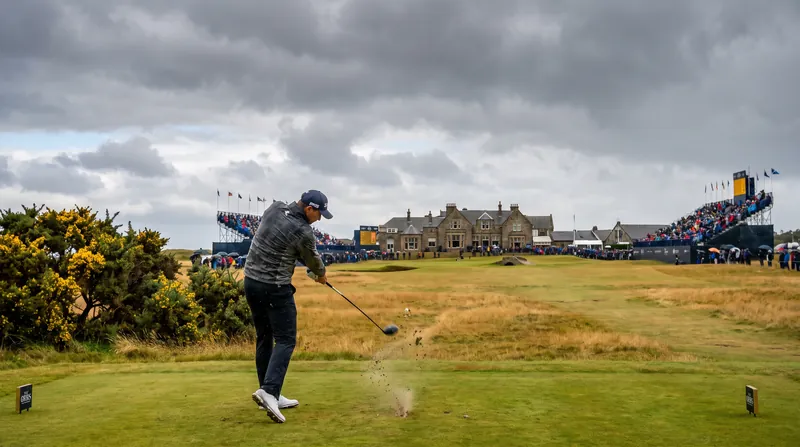
2026 Alfred Dunhill Links Championship Preview: MacIntyre Defends as LIV Stars Return to St Andrews
6 sources
Standings
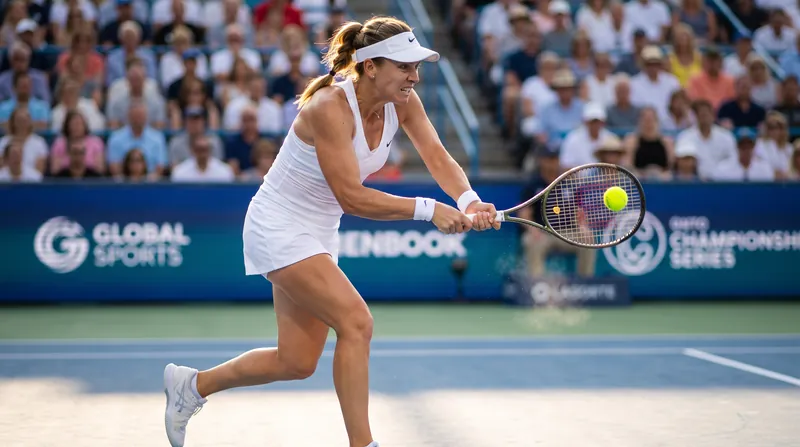
The Math of the WTA Finals Cutoff: How Noskova's Wimbledon Exemption Forces Swiatek Into a High-Stakes Asian Swing Chase
4 sources
Every angle. Every day.
Get Sports stories with full source coverage and perspective breakdowns delivered to your inbox.