
How Virtual Power Plants Are Turning American Homes Into the Grid of the Future
By networking home batteries, EVs, and smart thermostats, Virtual Power Plants are providing a cheaper, cleaner alternative to fossil-fuel peaker plants while paying consumers to stabilize the grid.
By Factlen Editorial Team
- Grid Operators & Utilities
- Focus on VPPs as a fast, capital-efficient tool to manage peak load and defer expensive infrastructure upgrades.
- Homeowners & Consumers
- View VPPs as a way to gain financial empowerment, earn passive income, and increase household energy resilience.
- Environmental Advocates
- Champion VPPs as a critical mechanism to decarbonize the grid and shut down highly polluting fossil-fuel peaker plants.
What's not represented
- · Fossil Fuel Generators
- · Traditional Infrastructure Developers
Why this matters
As electricity demand surges from AI data centers and extreme weather, Virtual Power Plants offer a faster, cheaper, and cleaner way to prevent blackouts. By networking home batteries and smart appliances, this technology pays consumers to stabilize the grid while eliminating the need for highly polluting fossil-fuel peaker plants.
Key points
- Virtual Power Plants (VPPs) aggregate home batteries, EVs, and smart thermostats into a single cloud-based energy resource.
- When grid demand spikes, VPPs instantly discharge stored power and reduce consumption, preventing blackouts.
- VPP capacity costs roughly $280 per kilowatt-year, making it three to four times cheaper than building new natural gas peaker plants.
- Homeowners who enroll their devices receive financial compensation through upfront rebates or ongoing capacity payments.
- The Department of Energy estimates that scaling VPPs could save American ratepayers $10 billion annually by 2030.
The American electrical grid is facing an unprecedented squeeze. Between the explosive load growth of AI data centers, a nationwide push toward electric vehicles, and extreme weather events driving record air-conditioning use, utilities are scrambling for capacity. Historically, the solution to peak demand was brute force: spending billions of dollars and several years to build massive natural gas "peaker" plants that only run a few dozen hours a year.[3][5]
Today, a faster, cheaper, and cleaner solution is already sitting in American garages and basements. Enter the Virtual Power Plant (VPP). Rather than centralizing power generation in a single industrial facility, a VPP decentralizes it, turning the community itself into the power plant.[6][7]
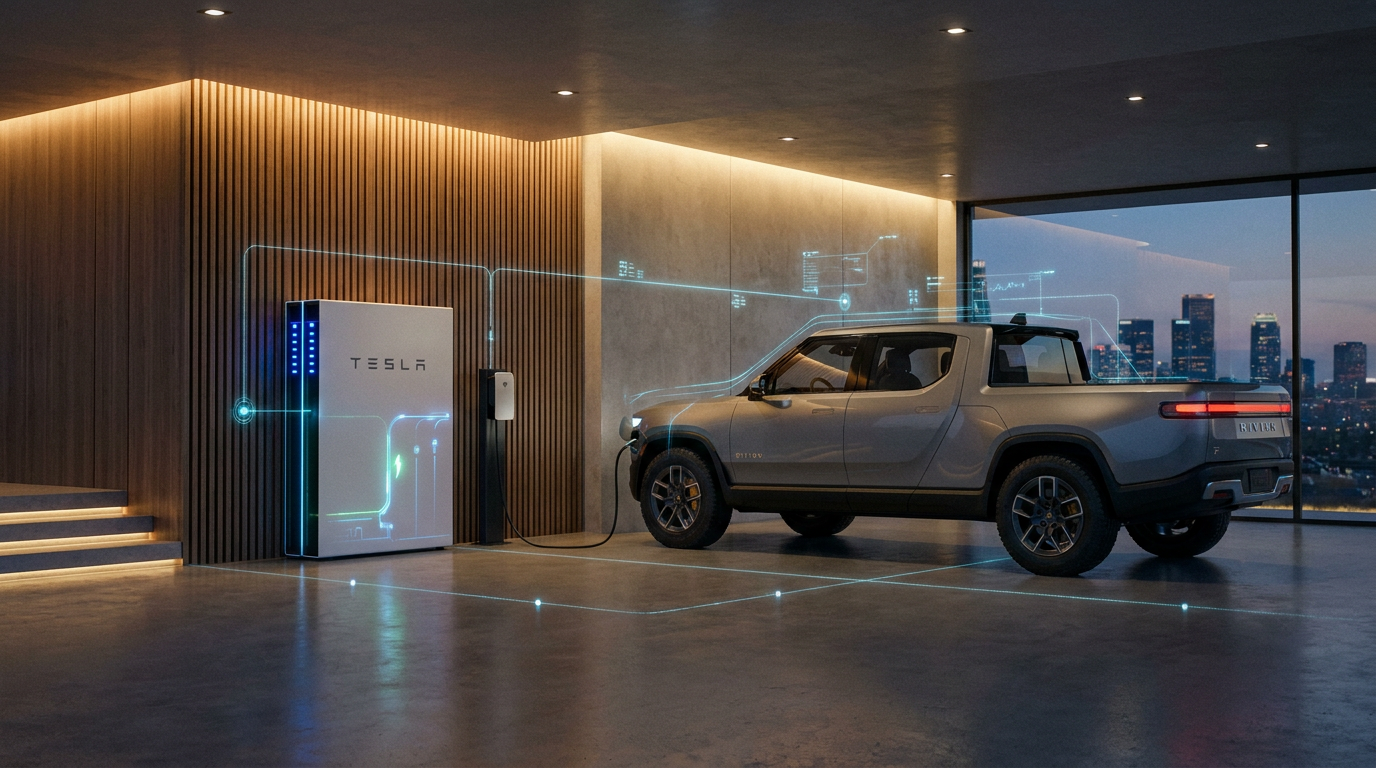
A Virtual Power Plant is a cloud-based software network that aggregates thousands of small-scale Distributed Energy Resources (DERs). These resources include residential battery storage systems, rooftop solar arrays, electric vehicle chargers, smart thermostats, and flexible commercial HVAC systems.[1][5]
When the grid experiences a surge in demand—such as a sweltering summer evening when millions of people return home and turn on their air conditioning—the VPP platform springs into action. Instead of the utility firing up a fossil-fuel peaker plant, the VPP aggregator sends a digital signal to its network of enrolled devices.[2][7]

In a matter of seconds, the VPP might pause thousands of EV charging sessions for an hour, bump smart thermostats up by a single, unnoticeable degree, and command home batteries to discharge their stored solar power back into the grid.[1][5]
The collective impact of these micro-adjustments is massive. To a grid operator, this aggregated capacity functions exactly like a traditional power plant. It delivers a sudden, reliable injection of power and a simultaneous drop in demand, instantly stabilizing the grid without a single smokestack.[6][7]
The economics driving this transition are staggering. According to 2026 industry data, the fully loaded marginal cost of VPP capacity has dropped to approximately $280 per kilowatt-year.[4]
According to 2026 industry data, the fully loaded marginal cost of VPP capacity has dropped to approximately $280 per kilowatt-year.
Compare that to the cost of building new physical infrastructure. Constructing a traditional natural gas peaker plant costs utilities between $800 and $1,200 per kilowatt-year. By utilizing existing consumer hardware, VPPs deliver wholesale market parity at roughly three to four times the capital efficiency of fossil fuel alternatives.[4][6]

The U.S. Department of Energy estimates that deploying 80 to 160 gigawatts of VPP capacity by 2030 could save American ratepayers $10 billion annually. This shift redirects grid spending away from heavy infrastructure and directly into the pockets of consumers.[1][7]
Homeowners are no longer just passive ratepayers; they are active, compensated participants in the energy market. Utilities and third-party aggregators offer lucrative financial incentives to households that enroll their devices, ranging from upfront equipment rebates to ongoing capacity payments.[1][2]
In California, for example, Pacific Gas and Electric (PG&E) piloted a program offering customers $1 per kilowatt-hour for energy dispatched from their home batteries during grid emergencies. Other programs, like National Grid's ConnectedSolutions in New England, have grown to over 220 megawatts, successfully shaving hundreds of megawatts of demand during severe heatwaves to prevent rolling blackouts.[2]
Beyond residential benefits, VPPs are emerging as a critical tool for the tech industry. As AI data centers demand unprecedented volumes of electricity, VPPs offer a "speed-to-power" solution. While a new gas plant takes years to permit and build, a VPP can be scaled and deployed in a matter of months, bypassing supply-chain bottlenecks.[3]

Despite their proven efficacy, scaling VPPs still faces structural hurdles. The traditional utility business model guarantees a rate of return based on capital expenditures—meaning utilities make money by building physical infrastructure, not by paying software aggregators and homeowners for efficiency.[2][5]
However, regulatory frameworks are evolving to break down these barriers. Landmark policy shifts, such as the Federal Energy Regulatory Commission's (FERC) Order 2222, mandate that distributed energy aggregators be allowed to compete on a level playing field in regional wholesale electricity markets.[4][7]
How we got here
2016
National Grid launches ConnectedSolutions, an early VPP program in New England that has since grown to over 220 megawatts.
2020
FERC issues Order 2222, opening wholesale energy markets to distributed energy aggregators.
2023
The Department of Energy releases its 'Liftoff' report, calling for a tripling of VPP capacity by 2030 to save ratepayers billions.
Viewpoints in depth
Grid Operators & Utilities
Using digital networks to bypass physical infrastructure bottlenecks.
For grid operators, the primary appeal of a VPP is speed and capital efficiency. As AI data centers and widespread electrification push the grid to its limits, utilities are struggling to build physical infrastructure fast enough. VPPs act as a 'non-wires alternative,' allowing operators to balance supply and demand without spending billions on new substations or natural gas peaker plants. However, some legacy utilities remain hesitant, as their traditional business models reward capital expenditures on physical assets rather than software-driven efficiency.
Homeowners & Consumers
Turning household appliances into revenue-generating assets.
From the consumer perspective, VPPs represent a shift from passive ratepayer to active 'prosumer.' By enrolling home batteries, EVs, or smart thermostats into a VPP, households can earn upfront rebates or ongoing capacity payments. This financial incentive helps offset the high initial cost of clean energy hardware. Furthermore, consumers retain control; most programs allow users to set reserve limits on their batteries, ensuring they maintain backup power for their own homes during severe weather or blackouts.
Environmental Advocates
Accelerating decarbonization by retiring fossil-fuel peaker plants.
Environmental groups champion VPPs as a direct replacement for natural gas peaker plants, which are notoriously inefficient and highly polluting. Because peaker plants are often sited in low-income or marginalized communities, replacing their capacity with distributed clean energy is viewed as a major victory for environmental justice. By smoothing out the intermittency of wind and solar power, VPPs serve as the critical digital glue needed to transition the broader grid toward 100% renewable energy.
What we don't know
- How quickly legacy utility business models will adapt to incentivize software-based capacity over physical capital expenditures.
- Whether current cybersecurity frameworks are robust enough to protect highly decentralized, cloud-based grid networks from coordinated attacks.
Key terms
- Virtual Power Plant (VPP)
- A cloud-based network that aggregates decentralized energy resources—like home batteries and smart thermostats—to act as a single, dispatchable power plant.
- Distributed Energy Resources (DER)
- Small-scale energy generation or storage technologies located close to where electricity is used, such as rooftop solar panels or electric vehicles.
- Peaker Plant
- A traditional power plant, usually powered by natural gas, that only runs during periods of exceptionally high electricity demand.
- Peak Shaving
- The practice of reducing electricity consumption during periods of maximum demand to prevent grid stress and lower costs.
- FERC Order 2222
- A federal ruling that allows aggregated distributed energy resources to compete alongside traditional power plants in wholesale electricity markets.
Frequently asked
How much money can a homeowner make from a VPP?
Payouts vary by region and program. Some utilities offer upfront rebates of several thousand dollars for battery installation, while others pay an ongoing rate, such as $1 per kilowatt-hour dispatched during peak events.
Will a VPP drain my home battery completely during an outage?
No. VPP software allows homeowners to set reserve limits (e.g., keeping 20% of the battery reserved for personal backup power) so they are never left in the dark during an actual blackout.
Do I need solar panels to participate in a VPP?
Not necessarily. While solar-plus-storage is common, standalone home batteries, smart thermostats, and electric vehicle chargers can also be enrolled in VPP programs to help shift grid demand.
How does a VPP differ from a microgrid?
A microgrid is a localized energy system that can disconnect from the main grid and operate independently. A VPP remains connected to the main grid, coordinating distributed resources over a wide geographic area to support the broader system.
Sources
Source coverage
8 outlets
3 viewpoints surfaced







[1]Department of EnergyHomeowners & Consumers
Pathways to Commercial Liftoff for Virtual Power Plants
Read on Department of Energy →[2]RMIGrid Operators & Utilities
Designing VPP Programs to meet utilities' needs
Read on RMI →[3]Renewable Energy WorldGrid Operators & Utilities
Can VPPs Help With Data Center Load Growth?
Read on Renewable Energy World →[4]Energy SolutionsEnvironmental Advocates
Virtual Power Plants 2026–2035: The $3.5–5.5B Grid Orchestration Oligopoly
Read on Energy Solutions →[5]Pew Charitable TrustsGrid Operators & Utilities
How States Are Advancing Distributed Energy
Read on Pew Charitable Trusts →[6]SEIAHomeowners & Consumers
Virtual Power Plants Provide a Model for Grid Stability
Read on SEIA →[7]University of ChicagoEnvironmental Advocates
Making Space for Virtual Power Plants
Read on University of Chicago →[8]Factlen Editorial TeamEnvironmental Advocates
Synthesis by Factlen editorial team
Read on Factlen Editorial Team →
Every angle. Every day.
Get energy stories with full source coverage and perspective breakdowns delivered to your inbox.