
How the Malaria Vaccine Rollout is Rewriting Child Survival in Africa
Real-world data confirms that the newly deployed RTS,S and R21 malaria vaccines are averting 1 in 8 child deaths. As 25 African countries scale up the historic rollout, the focus is shifting from scientific discovery to securing the funding needed to reach 50 million children by 2030.
By Factlen Editorial Team
- Public Health Implementers
- Focuses on the logistical scale-up, the millions of lives that can be saved, and the necessity of integrating vaccines with existing tools.
- Immunology Researchers
- Emphasizes the historic scientific breakthrough of vaccinating against a complex parasite and the efficacy of the adjuvants.
- Health Economists & Ministries
- Highlights the massive healthcare savings and reduced hospital burdens, while warning of the looming funding cliffs.
What's not represented
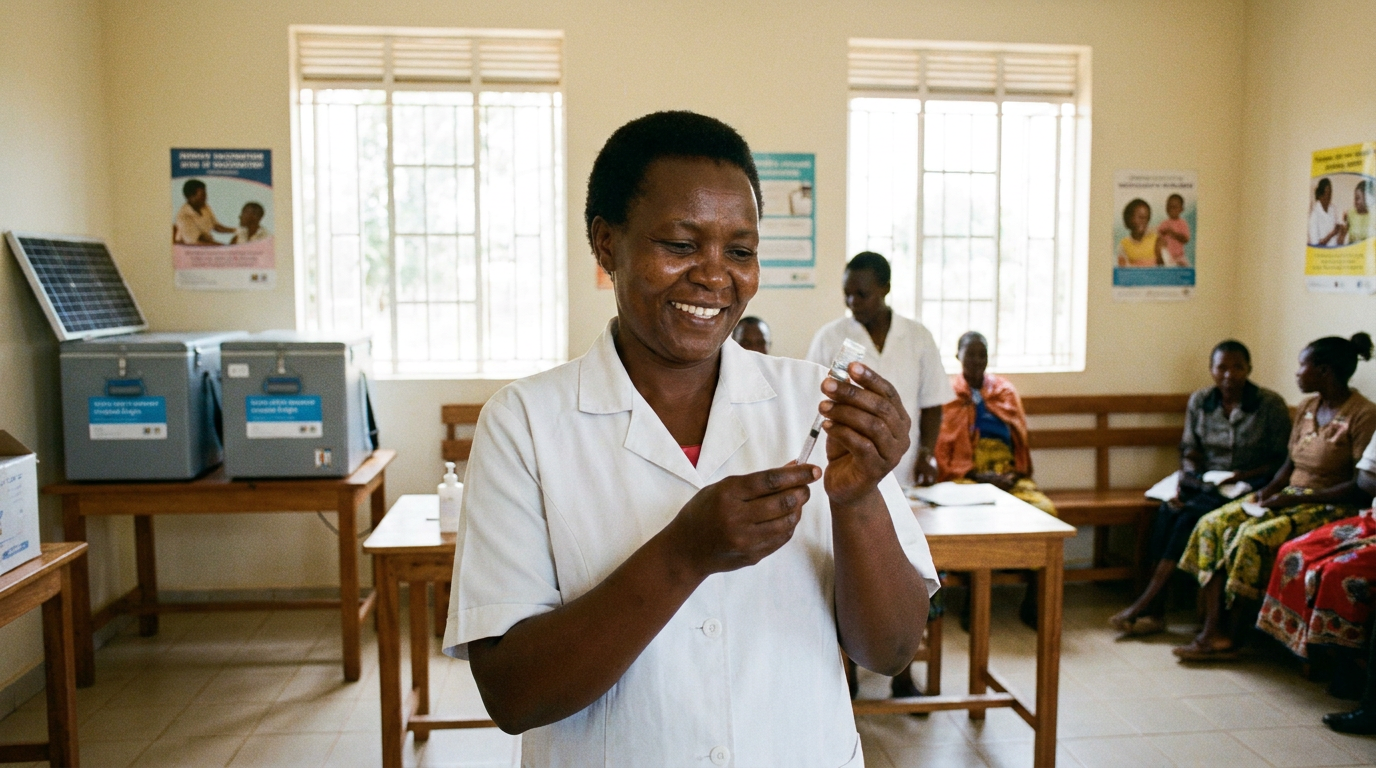
- · Frontline pediatric nurses managing the day-to-day logistics of the four-dose regimen
- · Parents in rural communities navigating the transition from relying solely on bed nets to embracing the new vaccines
Why this matters
Malaria has historically been one of the leading causes of child mortality globally. The successful deployment of these vaccines proves that parasitic diseases can be defeated, offering a blueprint that will save tens of thousands of lives annually and relieve massive economic burdens on developing healthcare systems.
Key points
- A landmark 2026 evaluation confirms the RTS,S and R21 malaria vaccines are averting 1 in 8 child deaths in pilot regions.
- 25 African countries are now rolling out the vaccines, targeting over 10 million children annually.
- The vaccines represent a historic scientific milestone as the first successful immunizations against a complex parasitic infection.
- Long-term success depends on securing sustained financing as international procurement budgets transition to national health ministries.
For decades, the fight against malaria has been a grinding war of attrition, fought primarily with insecticide-treated bed nets, indoor residual spraying, and antimalarial drugs. While these tools have saved millions, the disease has remained a stubborn leading cause of death for young children. But a historic shift is now underway across the African continent. In May 2026, a landmark evaluation published in The Lancet confirmed that the world's first malaria vaccines are fundamentally altering the trajectory of child mortality, proving that immunization can succeed where other preventative measures have stalled.[1][2]
The real-world data, gathered over four years from extensive pilot programs in Ghana, Kenya, and Malawi, revealed a staggering public health victory: an estimated one in eight child deaths were averted among those eligible for the vaccine. For a disease that killed approximately 438,000 African children in 2024 alone, this level of efficacy translates to tens of thousands of lives saved annually. The findings have galvanized the global health community, shifting the conversation from cautious optimism to an urgent mandate for widespread deployment.[1][3]
"This is very solid evidence of the potential for malaria vaccines to change the trajectory of child mortality in Africa," noted Dr. Kate O'Brien, the World Health Organization's Director of Immunization, Vaccines and Biologicals. The undeniable success of the initial pilots has triggered an unprecedented scale-up across the continent. Today, 25 endemic African countries are actively offering the vaccines as part of their routine childhood immunization programs, marking one of the fastest vaccine rollouts in recent public health history. Health ministries are now racing to integrate the shots into their standard pediatric care schedules.[1][4]

The current rollout is targeting more than 10 million children each year, supported by a massive logistical coalition of international partners including the WHO, UNICEF, and Gavi, the Vaccine Alliance. Uganda recently launched the continent's largest single campaign, distributing over 2.2 million doses of the newer R21/Matrix-M vaccine to more than a million children under the age of two. Zambia, Burundi, and Ethiopia have rapidly followed suit with their own national and subnational campaigns, navigating complex supply chains to deliver the fragile vials to remote rural clinics.[1][4][5]
To truly understand the magnitude of this breakthrough, it is necessary to look at the biological complexity of the enemy. Unlike COVID-19, polio, or measles, which are caused by relatively simple viruses, malaria is caused by Plasmodium falciparum—a highly complex, shape-shifting parasite transmitted through the bite of the Anopheles mosquito. Viruses typically have only a handful of genes, making them easier for the immune system to recognize and remember. The malaria parasite, by contrast, is a massive organism with thousands of genes that constantly mutate to evade detection.[6][8]
Because parasites have evolved over millennia to hide from the human immune system, they have historically been notoriously difficult targets for immunization. Decades of clinical trials ended in failure as the parasite easily bypassed early vaccine candidates. The RTS,S and R21 vaccines represent a monumental scientific milestone: the first time in medical history that a vaccine has successfully defended the human body against a parasitic infection at scale, opening the door for future vaccines against other neglected tropical diseases.[6][8]
Because parasites have evolved over millennia to hide from the human immune system, they have historically been notoriously difficult targets for immunization.
Both vaccines work by targeting the circumsporozoite protein on the surface of the parasite right after it enters the bloodstream, neutralizing the threat before the parasite can travel to the liver to multiply and cause severe illness. Because the parasite is so evasive, both vaccines rely heavily on an 'adjuvant'—a chemical booster like Matrix-M in the R21 shot or AS01 in the RTS,S shot—to force the child's immune system to mount a massive, durable defense that it would not naturally produce on its own.[6][8]

However, public health officials are adamant that the vaccine is not a standalone silver bullet. The highest impact is achieved through an 'integrated approach,' where the vaccines are layered on top of existing interventions rather than replacing them. The clinical data shows that while the vaccine is highly effective, its protection wanes over time, requiring a strict four-dose regimen administered between five months and two years of age to maintain immunity during a child's most vulnerable developmental window.[1][3]
When this four-dose vaccine regimen is combined with the consistent use of insecticide-treated bed nets (ITNs) and seasonal malaria chemoprevention (SMC)—the periodic administration of antimalarial drops during the rainy season—the protective effect compounds dramatically. This multi-layered defense creates a formidable barrier that the parasite struggles to penetrate. In regions where all three interventions are deployed simultaneously, severe malaria cases have plummeted, proving that the tools to eradicate the disease are finally in hand, provided communities maintain high adherence to the full suite of protective measures.[6][8]
Beyond the immediate preservation of life, the economic and systemic benefits of the rollout are already materializing across the continent. Severe malaria is a massive drain on African healthcare systems, frequently overwhelming pediatric wards and depleting national blood supplies due to the severe anemia the parasite induces in young children. Treating these acute cases requires intensive care, expensive intravenous medications, and extended hospital stays that routinely bankrupt vulnerable families. By preventing the infection from reaching this critical stage, the vaccines are lifting a crushing financial burden from both households and state health ministries.[5][8]

Early data indicates that the vaccines have substantially reduced hospitalizations for severe malaria in the pilot regions. In Burkina Faso, the Ministry of Health reported that the combination of vaccines and strong national control programs generated an estimated $26.6 million in direct healthcare savings in just a few years. Across the continent, fewer hospital admissions mean that doctors and nurses can redirect their limited time and resources to other pressing pediatric emergencies, fundamentally strengthening the overall resilience of the healthcare system.[1][5]
Despite the clinical and economic triumphs, the rollout faces a looming vulnerability: sustained financing. Demand for the vaccines currently outstrips the long-term financial commitments required to deliver them at scale. While the global manufacturing supply of both RTS,S and R21 is now sufficient to meet the need, the logistical costs of cold-chain storage, rural distribution, and healthcare worker training are immense. International donors have heavily subsidized the initial launch phases, but the long-term financial model remains precarious as global health budgets face increasing pressure from competing crises.[3][7]
Gavi, the Vaccine Alliance, has set an ambitious target to reach 50 million children with a full course of malaria vaccines by 2030. However, starting in 2026, Gavi is transitioning decision-making and procurement budgets directly to recipient countries. In an era of constrained international aid and shifting donor priorities, African governments will have to make difficult choices about how to allocate their national health budgets, balancing the high upfront costs of the malaria vaccine against other critical immunization programs.[4][5]
Bridging this funding gap is now the central focus of global health diplomacy. Advocates argue that the return on investment—measured in both lives saved and economic productivity gained—far outweighs the operational costs. If the financial momentum can be sustained over the next decade, the widespread deployment of the RTS,S and R21 vaccines will not just mitigate a seasonal health crisis; it will fundamentally rewrite the survival odds for the next generation of African children, closing the chapter on one of humanity's oldest and deadliest plagues.[1][8]
How we got here
Oct 2021
The WHO officially recommends the RTS,S vaccine, marking the first approval of a malaria vaccine.
Oct 2023
The WHO recommends the second malaria vaccine, R21/Matrix-M, significantly boosting global supply.
Mar 2025
Uganda launches Africa's largest single rollout, distributing over 2.2 million doses of the R21 vaccine.
May 2026
A landmark Lancet study confirms the vaccines have averted 1 in 8 child deaths in pilot countries.
Viewpoints in depth
Public Health Implementers
Focuses on the logistical scale-up and the necessity of integrating vaccines with existing tools.
Organizations like the WHO and Gavi view the vaccine as a monumental victory, but stress that it is not a standalone cure. They argue that the highest impact is achieved only when the vaccine is layered with insecticide-treated nets and seasonal chemoprevention. Their primary concern is operational: ensuring supply chains, cold storage, and community outreach can support the complex four-dose regimen across 25 countries.
Immunology Researchers
Emphasizes the historic scientific breakthrough of vaccinating against a complex parasite.
For decades, scientists struggled to develop a vaccine against Plasmodium falciparum because the parasite shape-shifts and evades the immune system far more effectively than a virus. Researchers highlight the critical role of adjuvants—like Matrix-M in the R21 vaccine—which force the human immune system to mount a durable defense. They view the current rollout as the proof-of-concept that parasitic diseases can be defeated through immunization.
Health Economists
Highlights the massive healthcare savings while warning of looming funding cliffs.
Economists point to early data from countries like Burkina Faso, which saved tens of millions in direct healthcare costs by reducing severe malaria hospitalizations. However, they warn that the financial model is fragile. As international organizations like Gavi begin transitioning procurement responsibilities to national governments, economists argue that African ministries must secure sustained domestic and donor financing to prevent the rollout from stalling.
What we don't know
- How African governments will bridge the funding gap once Gavi transitions procurement budgets directly to national health ministries.
- Whether the vaccines will maintain their high efficacy rates as the Plasmodium falciparum parasite continues to mutate over the next decade.
- The exact timeline for when the remaining high-burden countries will be able to integrate the four-dose regimen into their national schedules.
Key terms
- Plasmodium falciparum
- The deadliest species of malaria-causing parasite, prevalent across the African continent.
- Adjuvant
- An ingredient used in some vaccines that helps create a stronger, more durable immune response in the patient.
- RTS,S (Mosquirix)
- The world's first WHO-approved malaria vaccine, which paved the way for widespread immunization.
- R21/Matrix-M
- The second WHO-approved malaria vaccine, notable for its high efficacy and lower manufacturing cost.
- Seasonal Malaria Chemoprevention (SMC)
- The periodic administration of antimalarial medicines to children during peak transmission seasons.
Frequently asked
Which malaria vaccine is better, RTS,S or R21?
Both are WHO-recommended, highly effective, and use similar mechanisms to target the parasite. Public health officials emphasize using whichever vaccine is locally available to ensure rapid coverage.
Does the vaccine replace the need for mosquito nets?
No. The vaccines are designed to be used alongside insecticide-treated nets and seasonal medicines. This integrated approach provides the highest level of protection.
Why did a malaria vaccine take so long to develop?
Unlike simple viruses, malaria is caused by a complex, shape-shifting parasite with thousands of genes. It easily evades the immune system, making it much harder to target with a vaccine.
Sources
Source coverage
8 outlets
3 viewpoints surfaced







[1]World Health OrganizationPublic Health Implementers
New evidence confirms malaria vaccine saves child lives and will have high impact in wider rollout
Read on World Health Organization →[2]The LancetImmunology Researchers
Public health impact of the RTS,S malaria vaccine in Ghana, Kenya, and Malawi
Read on The Lancet →[3]UN NewsPublic Health Implementers
Malaria vaccine is saving children's lives: WHO
Read on UN News →[4]NatureHealth Economists & Ministries
Africa launches historic malaria vaccine rollout amid funding uncertainty
Read on Nature →[5]Gavi, the Vaccine AlliancePublic Health Implementers
Africa's routine vaccine systems deliver gains against cancer and malaria, but funding pressures loom
Read on Gavi, the Vaccine Alliance →[6]PATHImmunology Researchers
Malaria vaccines: RTS,S and R21
Read on PATH →[7]DevelopmentAidHealth Economists & Ministries
Malaria vaccine confirmed to save child lives in Africa, WHO reports
Read on DevelopmentAid →[8]Factlen Editorial TeamHealth Economists & Ministries
Synthesis by Factlen editorial team
Read on Factlen Editorial Team →

Every angle. Every day.
Get world stories with full source coverage and perspective breakdowns delivered to your inbox.