
How to Identify High-Quality Furniture: The Explainer on Materials, Joinery, and Avoiding 'Fast Furniture'
As the environmental toll of disposable 'fast furniture' mounts, experts emphasize that the most sustainable choice is investing in solid materials and interlocking joinery built to last a lifetime.
By Factlen Editorial Team
- Sustainable Design Advocates
- This camp prioritizes the environmental footprint of furniture, advocating for circular lifecycles and renewable materials.
- Traditional Craftspeople
- Woodworkers and artisans focus on structural integrity, arguing that true sustainability comes from building pieces that never need to be replaced.
- Budget-Conscious Consumers
- This perspective highlights the economic barriers to high-quality furniture, noting that fast furniture serves a vital role for renters and young adults.
What's not represented
- · Mass-Market Furniture Retailers
- · Waste Management Facilities
Why this matters
Americans throw away over 12 million tons of furniture annually, most of which cannot be recycled. Learning to spot true craftsmanship saves you from the costly cycle of replacing cheap, broken pieces every few years while drastically reducing your environmental footprint.
Key points
- Americans discard over 12 million tons of furniture annually, with 80 percent going straight to landfills due to unrecyclable mixed materials.
- Solid hardwoods like oak and maple offer decades of use and can be refinished, whereas engineered composites like MDF swell and chip easily.
- High-quality craftsmanship relies on interlocking joinery, such as dovetail and mortise-and-tenon joints, rather than staples and glue.
- Sustainable upholstery favors natural fibers or recycled polyester (rPET) over polyurethane 'vegan' leathers that peel and degrade quickly.
For the past two decades, the furniture industry has been dominated by the convenience of the flat-pack box. Consumers became accustomed to ordering a bookshelf or a dining table online, assembling it with an Allen wrench, and treating it as a temporary fixture. This era of "fast furniture" democratized stylish interior design, making modern aesthetics accessible on almost any budget. However, the hidden cost of this convenience is now becoming impossible to ignore. As trends turn over at breakneck speed and engineered materials inevitably warp or chip, millions of pieces are being dragged to the curb. The realization that cheap furniture is essentially disposable has sparked a growing consumer backlash. Today, a new movement is taking hold: a return to craftsmanship, durable materials, and sustainable sourcing. Shoppers are increasingly looking past the glossy marketing photos to inspect what is actually inside their sofas and tables, seeking out pieces designed to last a lifetime rather than a single lease term.[1]
The scale of the fast furniture waste crisis is staggering. According to the U.S. Environmental Protection Agency, Americans discarded roughly 12.1 million tons of furniture and furnishings in a single year. The trajectory of this waste stream is steep; since 1960, the volume of discarded furniture has grown more than fivefold. Even more alarming is what happens to these items once they leave the home. Unlike paper or aluminum, which boast robust recovery systems, furniture is a recycling nightmare. Data shows that a staggering 80.1 percent of discarded furniture goes straight into landfills, while a mere 0.3 percent is actually recycled. The remaining fraction is combusted for energy recovery. This means that almost every cheap desk or trendy accent chair purchased today is destined to sit in a landfill for centuries.[2][3]
The primary reason fast furniture cannot be recycled lies in its construction. Modern mass-market pieces are typically made from mixed materials that are economically unfeasible to separate. A standard flat-pack dresser is not simply made of wood; it is constructed from medium-density fiberboard (MDF) or particleboard, which consists of wood dust bound together by synthetic adhesives and formaldehyde-based resins. These composites are then wrapped in plastic laminates or thin wood veneers. When the piece breaks, it cannot be chipped into mulch or cleanly incinerated without releasing toxic chemicals. Furthermore, the metal fasteners, plastic dowels, and synthetic foam padding are all glued or stapled together, creating a tangled bundle that recycling facilities simply reject.[7]

This unrecyclable nature is compounded by an intentionally short lifespan. Retailers in the reuse and consignment space report that flat-pack pieces from major big-box stores are typically engineered to survive only about five years of regular use. The materials are simply not designed to withstand the rigors of daily life or the stress of being disassembled and moved to a new home. MDF swells and loses its structural integrity when exposed to even minor moisture, while thin laminates peel and chip at the edges. Because these composite materials cannot be easily sanded down, refinished, or re-glued like solid wood, a broken joint or a water ring often means the entire piece is ruined. This creates a relentless cycle of buying, breaking, and replacing.[2][4]
In response to this cycle, design experts and environmental advocates are championing a simple philosophy: the most eco-friendly piece of furniture is the one you never have to buy again. Investing in high-quality, durable furniture dramatically reduces a household's environmental footprint while often saving money in the long run. A solid wood dining table might cost twice as much upfront as its MDF equivalent, but if it lasts thirty years instead of six, the cost per year of use plummets. More importantly, it eliminates the need for multiple replacement purchases and keeps hundreds of pounds of synthetic materials out of the local landfill.[4]
The foundation of any heirloom-quality piece is its core material. When evaluating a table, bed frame, or dresser, the first step is to look for solid wood construction. Hardwoods like oak, maple, cherry, walnut, and teak offer exceptional density and resistance to wear. Unlike particleboard, solid wood can be sanded down and refinished multiple times over its lifespan, allowing owners to repair scratches or update the stain color as trends change. While high-quality plywood—featuring at least nine layers of cross-banded wood—is an acceptable and structurally sound material for cabinet boxes or drawer bottoms, the primary load-bearing elements and high-wear surfaces should always be solid wood.[4][8]

However, not all solid wood is inherently sustainable. Wood harvested from clear-cut old-growth forests carries a massive ecological footprint, regardless of how beautiful the grain might be. To ensure environmental responsibility, consumers should look for the Forest Stewardship Council (FSC) certification. FSC-certified wood guarantees that the timber was harvested from responsibly managed forests where harvesting rates are strictly controlled, biodiversity is protected, and replanting is mandatory. Beyond virgin timber, reclaimed wood—salvaged from old barns, factories, and demolished buildings—offers unparalleled character and zero new deforestation. Bamboo is another highly sustainable alternative; as a fast-growing grass that requires no pesticides and regenerates naturally, it provides the strength of hardwood with a fraction of the environmental impact.[8]
Wood harvested from clear-cut old-growth forests carries a massive ecological footprint, regardless of how beautiful the grain might be.
Even the finest solid wood will fail if it is held together poorly. The true test of furniture craftsmanship lies in its joinery—the techniques used to connect the pieces of wood. In fast furniture, joints are typically secured using staples, small nails, wooden dowels, and heavy applications of glue. These connections are inherently weak and will inevitably loosen over time as the piece is subjected to weight and movement. High-quality furniture, by contrast, relies on interlocking joinery, where the geometry of the wood itself provides the structural stability. Skilled artisans cut precise shapes into the mating pieces so they lock together seamlessly, creating a bond that can withstand decades of racking and shearing forces.[5]
For drawers and cabinetry, the gold standard of craftsmanship is the dovetail joint. A dovetail joint features a series of interlocking, wedge-shaped projections—known as pins and tails—cut into the ends of two boards. When fitted together, these wedges create an incredibly secure corner that boasts immense tensile strength. Because of the flared shape of the tails, the joint physically cannot be pulled apart in the direction of tension, making it perfectly suited for the daily push and pull of a heavy drawer. Finding dovetail joints on the front and back of a drawer box is one of the most reliable indicators that a manufacturer has invested in long-term durability.[5]

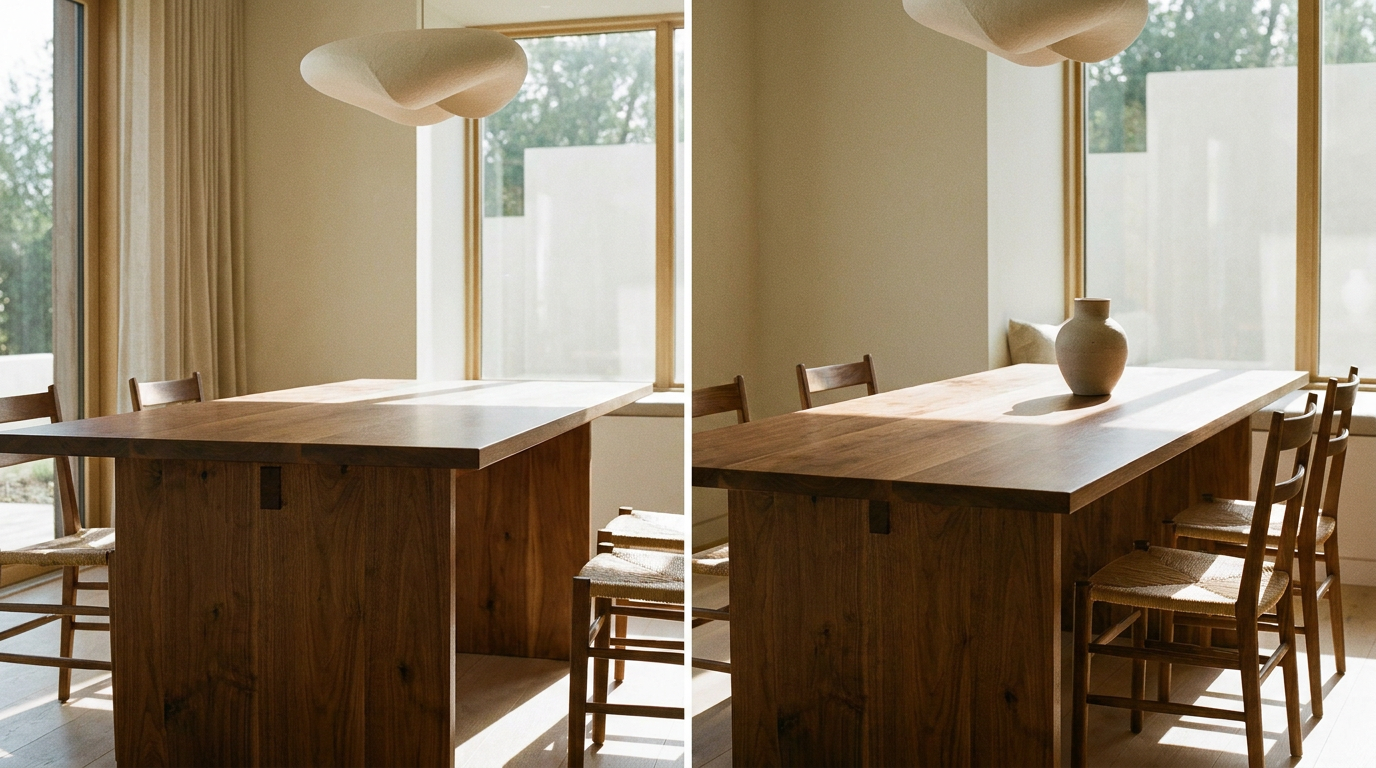
For load-bearing frames, such as the legs of a dining table or the structure of a heavy chair, the mortise and tenon joint is the traditional hallmark of quality. This ancient and highly reliable technique involves carving a projecting rectangular pin (the tenon) on the end of one piece of wood, which fits snugly into a corresponding hole (the mortise) carved into the other. This creates a massive amount of surface area for wood glue to bond, while the physical insertion of the wood prevents the joint from twisting or wobbling. Furniture built with properly fitted mortise and tenon joints rarely suffers from the dreaded "wobbly leg" syndrome that plagues cheaper, bolt-together pieces.[5]
When evaluating upholstered seating, what lies beneath the fabric is just as critical as the exterior frame. A beautiful sofa is worthless if the cushions collapse after a year of use. High-quality seating relies on robust suspension systems, with the eight-way hand-tied spring system widely considered the pinnacle of comfort and longevity. In this method, artisans manually tie each coil spring to the frame and to the other springs in eight different directions, ensuring even support that will not sag over time. For the cushions themselves, buyers should look for high-resilience, high-density foam cores wrapped in down or a synthetic down alternative. This combination provides the firm structural support necessary for posture, topped with a soft, luxurious feel that maintains its shape.[6]
The choice of upholstery fabric also plays a massive role in both the lifespan and the sustainability of a piece. Natural fibers like organic cotton, linen, and responsibly sourced wool offer excellent breathability and comfort, though they may require more careful maintenance. For high-traffic areas, recycled polyester (often labeled as rPET) is an increasingly popular eco-friendly option. Made by diverting post-consumer plastic bottles from landfills, recycled polyester requires substantially less energy to produce than virgin synthetic fabrics while offering excellent resistance to stains and fading. Hemp is another rising star in sustainable textiles; it is naturally antimicrobial, highly durable, and requires a fraction of the water needed to cultivate conventional cotton.[8]

Conversely, consumers seeking sustainable options should be highly skeptical of "vegan leather." While the term sounds eco-friendly and cruelty-free, the vast majority of vegan leather on the market is actually polyurethane (PU) or polyvinyl chloride (PVC)—essentially, pure plastic. These synthetic materials are notorious for their short lifespans. Unlike genuine full-grain leather, which develops a rich patina and grows softer over decades of use, PU leather typically begins to crack, peel, and flake within three to five years. Once this degradation begins, the piece cannot be repaired or reupholstered economically, sending yet another bulky item straight to the landfill.[4]
The final indicators of a well-crafted piece are found in its finish and hardware. A high-quality wood finish should feel perfectly smooth to the touch, with no rough patches, bubbles, or uneven staining. This protective coating—whether a traditional oil, wax, or a modern low-VOC lacquer—is essential for guarding the wood against moisture, UV damage, and daily scratches. Similarly, the hardware used for drawer pulls, hinges, and knobs should be made of solid, weighty metals like brass, stainless steel, or wrought iron. Flimsy plastic hardware or thin, hollow metals are immediate red flags that the manufacturer cut corners on the details.[6]
Ultimately, transitioning away from fast furniture requires a shift in how we calculate value. The upfront price tag of a handcrafted, solid wood dresser may induce sticker shock when compared to a flat-pack alternative. However, true value is measured in cost-per-use and longevity. A piece that survives multiple moves, withstands the wear and tear of a growing family, and can eventually be passed down to the next generation is a far better financial investment. By learning to identify the hallmarks of quality—solid materials, interlocking joinery, and robust upholstery—consumers can break the cycle of disposable decor, curating homes that are both beautiful and genuinely sustainable.[1][4]
Viewpoints in depth
Sustainable Design Advocates
This camp prioritizes the environmental footprint of furniture, advocating for circular lifecycles and renewable materials.
Environmental advocates argue that the furniture industry must fundamentally shift away from the linear "take-make-dispose" model. They emphasize that the true cost of a $100 particleboard desk includes the carbon emissions of global shipping, the toxic formaldehyde resins used in its construction, and the centuries it will spend in a landfill. This camp champions FSC-certified timber, recycled textiles like rPET, and the right to repair. They push for Extended Producer Responsibility (EPR) laws, which would force manufacturers to fund the recycling and recovery of their products at the end of their lifespans.
Traditional Craftspeople
Woodworkers and artisans focus on structural integrity, arguing that true sustainability comes from building pieces that never need to be replaced.
For traditional furniture makers, the conversation begins and ends with joinery and material density. They view the reliance on staples, dowels, and glue as a structural failure that guarantees a short lifespan. This camp argues that techniques like the dovetail and mortise-and-tenon are not just aesthetic choices, but engineering necessities for pieces meant to withstand decades of use. They advocate for solid hardwoods over any form of engineered composite, pointing out that a solid piece can be infinitely sanded, repaired, and refinished, whereas a chipped veneer usually spells the end of a piece's usable life.
Budget-Conscious Consumers
This perspective highlights the economic barriers to high-quality furniture, noting that fast furniture serves a vital role for renters and young adults.
While acknowledging the environmental flaws of fast furniture, consumer advocates point out that solid hardwood pieces are prohibitively expensive for a large portion of the population. For college students, frequent movers, or young families on tight budgets, flat-pack furniture offers an accessible way to furnish a home without taking on debt. This camp argues that the burden of sustainability should not fall entirely on the consumer to buy $2,000 dining tables; rather, mass-market retailers need to innovate by creating affordable, modular pieces that use standardized, easily replaceable parts and non-toxic, recyclable composites.
What we don't know
- Whether Extended Producer Responsibility (EPR) laws will eventually force U.S. furniture manufacturers to fund the recycling of their products, as is currently being tested in parts of Europe.
- How quickly emerging biodegradable materials, such as mycelium (mushroom-based) foam and bio-resins, can scale to replace the toxic adhesives currently dominating the mass market.
Key terms
- Fast Furniture
- Mass-produced, inexpensive furniture designed for quick assembly and short-term use, often resulting in high turnover and landfill waste.
- Mortise and Tenon
- A strong woodworking joint where a projecting pin (tenon) on one piece fits snugly into a corresponding hole (mortise) on another, commonly used in table and chair frames.
- Dovetail Joint
- A highly durable joint used primarily in drawers, featuring interlocking wedge-shaped cuts that prevent the pieces from being pulled apart.
- MDF (Medium-Density Fiberboard)
- An engineered wood product made by breaking down hardwood or softwood residuals into wood fibers, combining it with wax and a resin binder, and forming it into panels.
- 8-Way Hand-Tied Springs
- A premium upholstery technique where craftsmen manually tie each seat spring to the frame and surrounding springs in eight directions, providing superior, long-lasting comfort.
Frequently asked
What is the difference between solid wood and MDF?
Solid wood is cut directly from a tree and can be sanded and refinished multiple times. MDF (Medium-Density Fiberboard) is an engineered composite made of wood dust and resin, which is cheaper but prone to swelling and chipping.
How can I quickly tell if a drawer is well-made?
Pull the drawer out and look at the outside corners. If you see interlocking wedge shapes (a dovetail joint), it is high quality. If you see staples, nails, or flat edges glued together, it is lower quality.
Is 'vegan leather' a sustainable furniture choice?
Usually, no. Most vegan leather is made from polyurethane (PU) or PVC plastics. It tends to crack and peel within a few years and cannot be recycled, making it a major contributor to landfill waste.
What does an FSC certification mean on furniture?
It means the wood was certified by the Forest Stewardship Council, ensuring it was harvested from responsibly managed forests that protect biodiversity and mandate replanting, rather than from clear-cut old-growth forests.
Sources
Source coverage
8 outlets
3 viewpoints surfaced








[1]Factlen Editorial TeamBudget-Conscious Consumers
Synthesis by Factlen editorial team
Read on Factlen Editorial Team →[2]Earth911Sustainable Design Advocates
Fast Furniture and the 12-Million-Ton Reckoning
Read on Earth911 →[3]U.S. Environmental Protection AgencySustainable Design Advocates
Durable Goods: Product-Specific Data
Read on U.S. Environmental Protection Agency →[4]Wooden StreetTraditional Craftspeople
Sustainable Furniture Materials: What to Buy, Avoid & Why It Matters
Read on Wooden Street →[5]Vermont Woods StudiosTraditional Craftspeople
Types of Joints in Solid Wood Furniture
Read on Vermont Woods Studios →[6]Sharp & Grey InteriorsTraditional Craftspeople
How to Choose Quality Furniture
Read on Sharp & Grey Interiors →[7]Plastic BankSustainable Design Advocates
Why fast furniture is filling homes and landfills
Read on Plastic Bank →[8]SolarTechSustainable Design Advocates
Complete Guide To Sustainable Furniture: Materials, Brands & Tips 2025
Read on SolarTech →



Every angle. Every day.
Get shopping stories with full source coverage and perspective breakdowns delivered to your inbox.