
How the Reopening of the Strait of Hormuz Unblocks Global Supply Chains
A new interim agreement between the US and Iran is reopening the world's most critical maritime chokepoint, sparking a global market rally and easing severe bottlenecks in energy and agriculture.
By Factlen Editorial Team
- Global Markets & Investors
- Focused on the macroeconomic relief, easing inflation, and capitalizing on the resumption of normalized trade.
- Supply Chain & Logistics Analysts
- Focused on the physical mechanics of maritime trade, insurance costs, and the long-term need for resilient routing.
- Energy & Economic Researchers
- Focused on the structural vulnerabilities of global trade and the cascading impacts of energy shocks on food security.
What's not represented
- · Consumers in developing nations facing food inflation
- · Ship crews navigating the high-risk waterway
Why this matters
The reopening of the Strait of Hormuz ends a three-month maritime blockade that had severely disrupted global energy and fertilizer supplies. For consumers, this diplomatic breakthrough means an easing of the inflationary pressures that have been driving up the cost of fuel, electricity, and groceries worldwide.
Key points
- The US and Iran have reached an interim agreement to reopen the Strait of Hormuz to commercial shipping.
- The waterway handles roughly a third of global seaborne oil trade and 20% of liquefied natural gas.
- A three-month blockade had caused outbound crude and LNG shipments to plummet by over 95%.
- The closure cascaded into global food supply chains by trapping up to 30% of internationally traded fertilizers.
- Global markets rallied on the news, though logistics experts warn that unwinding the backlog will take time.
Global markets breathed a collective sigh of relief on Monday as the United States and Iran reached an interim agreement to reopen the Strait of Hormuz. The strategic waterway, which had been effectively blockaded since late February following a severe regional military escalation, is the world's most critical maritime chokepoint. For months, the closure has rattled the wider region and strangled international trade, forcing shipping companies to abandon the route entirely. The sudden diplomatic breakthrough halts a conflict that had threatened to drag the global economy into a deep recession, offering a vital lifeline to energy-dependent nations and strained logistics networks.[1][7]
The immediate reaction across financial hubs was overwhelmingly positive, fueling a global relief rally in equities and bonds. Investors are rapidly pricing in the end of a crippling energy crisis, with hedge funds reopening pre-war playbooks to capitalize on the de-escalation. Beaten-up Asian currencies, shorter-maturity Treasuries, and consumer stocks are already seeing early gains as the prospect of normalized trade returns. The optimism is rooted in the expectation that the resumption of energy flows will ease the inflationary pressures that have burdened economies worldwide since the blockade began.[2]
But while traders celebrate the geopolitical de-escalation, supply chain professionals are assessing the complex mechanics of restarting a frozen logistics network. Reopening the Strait of Hormuz is not as simple as flipping a switch; it requires unwinding months of rerouted vessels, recalibrating exorbitant insurance premiums, and restoring the flow of critical raw materials that have been trapped in Gulf ports. The maritime logistics market has been fundamentally disrupted by the three-month closure, and returning to pre-war efficiency will demand coordinated efforts from shipping lines, maritime insurers, and regional port authorities who must now manage a sudden influx of delayed cargo.[6]

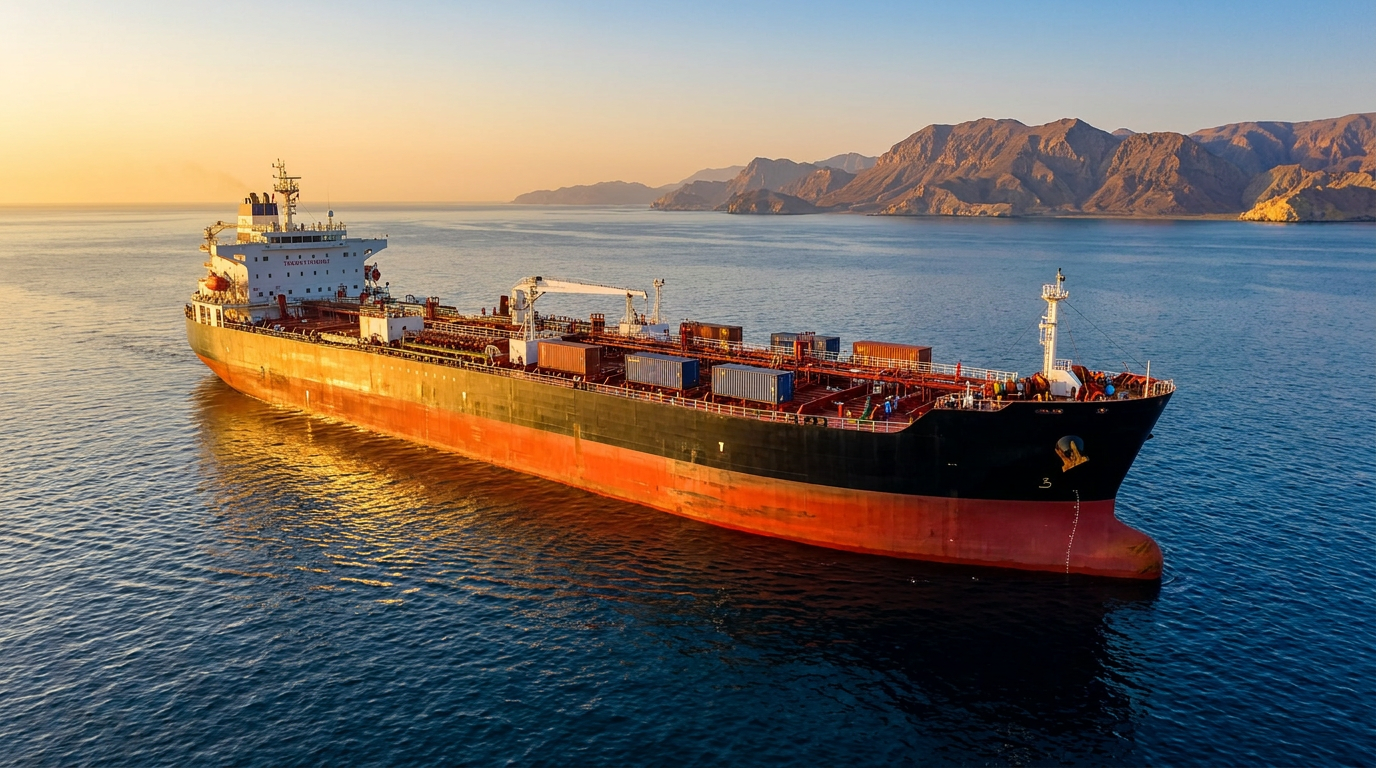
To understand the magnitude of the relief, one must understand the physical bottleneck that defines the region. The Strait of Hormuz is a narrow sea passage separating the Arabian Peninsula and Iran, connecting the Persian Gulf with the Gulf of Oman and the Arabian Sea. At its narrowest point, the Strait is only 21 to 29 nautical miles wide, consisting of meticulously managed two-mile-wide navigable channels for inbound and outbound shipping. Because alternative export routes via overland pipelines are severely limited in capacity, the Strait functions as the single most important valve for Middle Eastern exports.[3]
Despite its narrow geography, the waterway handles an outsized share of global energy. Before the closure, approximately 20 million barrels of crude oil and petroleum products passed through the Strait daily. This volume represents roughly 25% to 34% of the world's seaborne oil trade, making it indispensable for global energy security. The bulk of these exports are destined for Asian markets, with China, India, and Japan heavily reliant on the uninterrupted flow of tankers. When the waterway was blocked, the sudden removal of this supply sent shockwaves through energy markets, forcing nations to tap into strategic reserves.[3][6]
The impact of the Strait extends far beyond crude oil. The passage is also the primary export route for liquefied natural gas (LNG) from Qatar and the United Arab Emirates. Nearly 20% of the global LNG trade relies on this single chokepoint. Because LNG liquefaction plants in other parts of the world operate close to maximum capacity, it is virtually impossible to replace these lost volumes on short notice. The blockade effectively stranded these critical gas supplies, threatening the energy grids of importing nations and driving up utility costs for millions of consumers.[3][5]

The passage is also the primary export route for liquefied natural gas (LNG) from Qatar and the United Arab Emirates.
When the waterway closed in late February, the disruption to physical trade was immediate and severe. Data from maritime tracking agencies revealed that outbound trade in crude oil plummeted by 95% within weeks, while LNG shipments dropped by an astonishing 99%. Fertilizer-related cargoes also fell to near zero. Even brief windows of perceived calm produced no measurable recovery in transit volumes, as the risk of military engagement kept commercial vessels far away from the designated shipping lanes.[5]
This closure triggered a cascading shock across global supply chains, exposing vulnerabilities that standard economic models often miss. Researchers at the Kiel Institute for the World Economy noted that energy disruptions quickly cascaded into chemical and fertilizer production. Because natural gas is a primary feedstock for these industries, the bottleneck amplified losses far beyond the energy sector. This mechanism is particularly punishing because refineries and chemical plants are designed for specific inputs and cannot easily adapt to alternative raw materials when their primary supply is cut off.[4]
The Persian Gulf is a major hub for non-mineral products, including hydrocarbon derivatives, methanol, and urea fertilizer. Up to 30% of internationally traded fertilizers normally transit the Strait of Hormuz. By blocking these exports, the crisis directly threatened global food security, driving up agricultural input costs right before the peak Northern Hemisphere planting season. Developing countries that depend heavily on imported fertilizers—particularly in South Asia and sub-Saharan Africa—faced the steepest food price increases, demonstrating how a localized maritime blockade can dictate crop yields on the other side of the world.[4]

Logistics networks were forced into costly and inefficient adaptations to survive the closure. With the Strait impassable, vessels were forced to idle in the Gulf of Oman or reroute entirely, extending voyage times and burning additional fuel. The price of Marine Gas Oil (MGO) soared from $700 per ton before the conflict to as high as $1,800. Simultaneously, war-risk insurance premiums skyrocketed; costs that typically hovered around 0.125% of a vessel's value surged to up to 3%, adding millions of dollars in overhead to a single voyage.[6]
The interim agreement promises to reverse these intense financial pressures, but the recovery will be phased rather than instantaneous. Maritime insurers will need to gradually lower war-risk premiums as safe passage is consistently demonstrated by early transits. Only when insurance costs normalize will freight rates and operating costs for shipping companies begin to fall. Port authorities in the region are now preparing for a surge of activity as backlogged vessels finally move to load millions of barrels of stored crude and refined products that have been waiting for export.[6]
However, some economists warn that the reopening introduces new, unexpected complexities for the global economy. Bloomberg Economics notes that the US-Iran deal is setting the stage for a rapid recovery in Chinese oil demand. If the restored energy flows successfully revive the world's second-largest economy, the resulting surge in consumption could paradoxically drive up global inflation pressures in the medium term. This dynamic highlights the delicate balance central banks must navigate as the sudden influx of supply meets pent-up industrial demand.[1]

Furthermore, market participants remain wary of declaring a permanent victory. While the interim deal eases immediate nerves and allows ships to move, the underlying geopolitical tensions that led to the blockade remain unresolved. Analysts caution against celebrating too soon, noting that the conflict's broader economic fallout will take time to repair. Supply chain planners, having just survived a worst-case scenario, are likely to maintain their costly contingency routes and diversified supplier networks rather than returning entirely to the pre-war status quo.[1][7]
Ultimately, the reopening of the Strait of Hormuz serves as a stark reminder of the extreme fragility of global trade. While the immediate crisis has abated and markets are rallying on the good news, the three-month blockade has fundamentally altered how multinational corporations view energy dependence. The event has proven that a single 21-mile-wide waterway can dictate the cost of shipping, the price of food, and the trajectory of global inflation, ensuring that logistics resilience will remain a top priority for the foreseeable future.[4][6]
How we got here
Late 2023
Red Sea shipping disruptions begin, forcing early maritime rerouting and straining global logistics.
Feb 28, 2026
Military escalation leads to the effective closure of the Strait of Hormuz to commercial shipping.
March 2026
Outbound crude oil and LNG shipments through the Strait plummet by over 95%.
April 2026
Global supply chains feel the cascading effects as fertilizer and chemical feedstock prices surge.
June 15, 2026
The US and Iran reach an interim agreement to reopen the waterway, sparking a global market rally.
Viewpoints in depth
Global Markets & Investors
Focused on the macroeconomic relief, easing inflation, and capitalizing on the resumption of normalized trade.
Financial markets view the reopening of the Strait as a massive bullish signal that removes the worst-case scenario from economic forecasts. Hedge funds and institutional investors are rapidly unwinding defensive positions and reopening pre-war playbooks, betting that the resumption of energy flows will cool global inflation. For this camp, the diplomatic breakthrough is a definitive win that paves the way for central banks to stabilize interest rates without the looming threat of a supply-driven energy shock.
Supply Chain & Logistics Planners
Focused on the physical bottlenecks, the reluctance to abandon contingency routes, and the soaring costs of insurance.
Logistics professionals are far more cautious than equity traders. They emphasize that a diplomatic agreement does not instantly repair a broken supply chain. This camp points to the immense backlog of vessels, the logistical nightmare of unwinding rerouted ships, and the stubborn persistence of exorbitant war-risk insurance premiums. Many supply chain managers argue that the three-month closure proved the extreme vulnerability of the Strait, leading them to maintain costly, diversified contingency routes rather than returning entirely to the pre-war status quo.
Energy & Food Security Analysts
Focused on the cascading effects of the blockade on fertilizer production and agricultural costs in developing nations.
Economic researchers highlight the hidden structural damage caused by the blockade, particularly the bottleneck effect on non-mineral products. This viewpoint stresses that the Strait is not just an oil artery, but a critical valve for global agriculture. By trapping up to 30% of the world's traded fertilizers, the closure drove up farming input costs precisely during the Northern Hemisphere's planting season. Analysts in this camp warn that while the Strait is reopening, the delayed effects of these fertilizer shortages will continue to impact food prices in vulnerable developing nations for months to come.
What we don't know
- How quickly maritime insurers will lower the exorbitant war-risk premiums required for vessels to transit the Strait.
- Whether the interim agreement will hold long enough to permanently resolve the underlying geopolitical tensions.
- If the sudden influx of energy supply will be entirely offset by a rapid recovery in Chinese industrial demand.
Key terms
- Strait of Hormuz
- A narrow maritime chokepoint between the Persian Gulf and the Gulf of Oman, critical for global energy exports.
- Liquefied Natural Gas (LNG)
- Natural gas that has been cooled to a liquid state for easier and safer non-pipeline maritime transport.
- Marine Gas Oil (MGO)
- A type of fuel used by commercial shipping vessels, the price of which heavily dictates global freight costs.
- War-Risk Premium
- An additional insurance cost levied on vessels traveling through conflict zones, calculated as a percentage of the ship's total value.
- Chokepoint
- A narrow geographical feature, such as a strait or canal, that causes traffic to bottleneck and creates vulnerability in supply chains.
Frequently asked
Why is the Strait of Hormuz so important?
It is the primary export route for Middle Eastern energy, handling roughly a third of the world's seaborne oil trade and 20% of global liquefied natural gas (LNG).
How did the closure affect food prices?
The region exports up to 30% of internationally traded fertilizers. The blockade cut off these supplies, driving up agricultural input costs globally right before the planting season.
Will shipping costs drop immediately?
No. While the agreement is in place, maritime insurers will require time to verify safe passage before lowering the exorbitant war-risk premiums that currently inflate freight rates.
Could the reopening cause inflation?
Paradoxically, yes. If the restored energy flows trigger a rapid recovery in Chinese industrial demand, the sudden surge in consumption could drive up global prices.
Sources
Source coverage
7 outlets
3 viewpoints surfaced






[1]BloombergGlobal Markets & Investors
US-Iran Deal Poses Inflation Risk If Chinese Oil Demand Recovers
Read on Bloomberg →[2]CNBCGlobal Markets & Investors
CNBC Daily Open: Iran deal fuels global relief rally
Read on CNBC →[3]International Energy AgencyEnergy & Economic Researchers
Strait of Hormuz - About
Read on International Energy Agency →[4]Kiel Institute for the World EconomyEnergy & Economic Researchers
The Cost of Closing the Strait of Hormuz: Energy Bottlenecks and Global Food Security
Read on Kiel Institute for the World Economy →[5]World Trade OrganizationSupply Chain & Logistics Analysts
Strait of Hormuz Trade Tracker | Data Lab
Read on World Trade Organization →[6]Cello SquareSupply Chain & Logistics Analysts
Middle East Supply Chain: Risks & Response Strategies
Read on Cello Square →[7]Factlen Editorial TeamEnergy & Economic Researchers
Synthesis by Factlen editorial team
Read on Factlen Editorial Team →

More in business
See all 5 stories →AI Infrastructure
SpaceX Raises Record $85.7 Billion in Historic IPO to Fund Orbital AI Infrastructure
7 sources

AI Economics
The Compute-First Era: How AI is Rewriting the Rules of Venture Capital
6 sources

Fed Watch
Federal Reserve Holds Rates Steady as New Chair Kevin Warsh Signals Hawkish Pivot
8 sources
Every angle. Every day.
Get business stories with full source coverage and perspective breakdowns delivered to your inbox.