
How the Passive House Standard is Revolutionizing Energy-Efficient Living
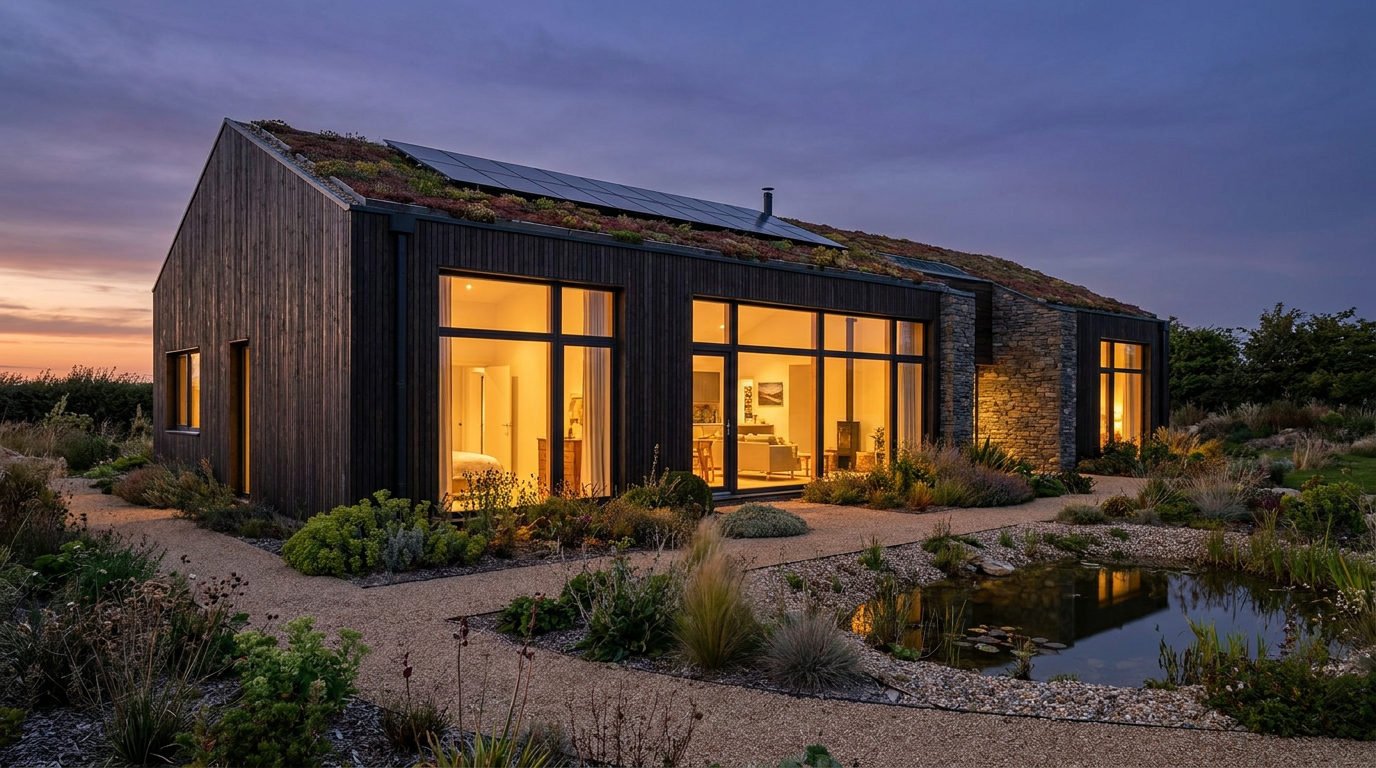
By relying on building physics rather than massive heating systems, the Passive House standard cuts energy use by up to 90 percent. Now, the EnerPHit retrofit model is bringing these ultra-efficient principles to older, existing homes.
By Factlen Editorial Team
- Sustainable Architects & Builders
- Focus on the rigorous building physics, quality control, and long-term durability required to meet the strict certification standards.
- Homeowners & Residents
- Value the immediate lifestyle benefits: superior indoor air quality, elimination of cold drafts, and drastically reduced monthly energy bills.
- Climate & Policy Advocates
- View deep-energy retrofits as a critical, scalable tool for decarbonizing the global housing stock and meeting net-zero emissions targets.
What's not represented
- · Traditional HVAC manufacturers
- · Low-income housing developers
Why this matters
Buildings account for roughly 35 percent of global energy consumption. Upgrading our homes to these rigorous standards not only slashes utility bills and improves indoor air quality, but it is also a critical step in reducing global carbon emissions.
Key points
- The Passive House standard reduces a building's heating and cooling energy demand by up to 90 percent compared to conventional construction.
- The standard relies on five core principles: superinsulation, airtightness, high-performance windows, thermal-bridge-free design, and heat recovery ventilation.
- Rather than relying on large HVAC systems, Passive Houses use the building's own envelope to maintain a stable, comfortable indoor climate.
- The EnerPHit certification adapts these rigorous principles for older homes, allowing homeowners to perform deep-energy retrofits in manageable phases.
The winter energy bill arrives, and for millions of homeowners, it is a reliable source of dread. Traditional homes, even relatively new ones, are often plagued by drafts, cold spots, and thermal leaks that force heating systems to work overtime just to maintain a baseline level of comfort.[6]
But a quiet revolution in building science is proving that homes do not need to be energy sinks. The "Passive House" (or Passivhaus) standard, a rigorous approach to architectural design, is moving from a niche European concept to a mainstream global solution for sustainable living.[1][2]
Buildings certified to this standard consume up to 90 percent less energy for heating and cooling than conventional structures. Instead of relying on massive furnaces or air conditioning units, a Passive House uses the building's own fabric to maintain a stable, comfortable indoor temperature year-round.[3][5]

The concept originated in 1988 from a conversation between Bo Adamson of Lund University and Wolfgang Feist, a German physicist. Frustrated that simply adding insulation to new buildings wasn't yielding the expected energy reductions, Feist realized the construction industry was violating basic laws of physics through poor execution and leaky designs.[2][3]
Today, the standard is overseen by the Passive House Institute (PHI) and has grown exponentially. As of early 2025, there are over 47,400 certified units worldwide, spanning diverse climates from harsh Scandinavian winters to hot and humid tropical regions.[2]
The secret to this ultra-low energy performance lies not in complex smart-home gadgets, but in five interlocking architectural principles. The first is superinsulation. A continuous, thick layer of high-performance insulation wraps the entire building, preventing heat from escaping in the winter or entering in the summer.[1][6]
The second principle is airtight construction. Traditional homes lose massive amounts of energy through uncontrolled air leaks around doors, outlets, and joints. In a Passive House, every seam is meticulously sealed and verified with a pressurized "blower door" test to ensure zero drafts.[2][3]
Third is the use of high-performance glazing. Passive Houses utilize triple-pane windows with insulated frames. These windows are strategically positioned to capture solar heat during the winter while utilizing shading techniques—like overhangs or exterior blinds—to prevent overheating during the summer.[1][3]
Passive Houses utilize triple-pane windows with insulated frames.
The fourth principle involves thermal-bridge-free detailing. A thermal bridge is a weak point in a building's envelope—like a concrete balcony slab extending from the inside out—that acts as a highway for heat to escape. Passive House architects engineer these junctions out of the design entirely.[1][3]

The fifth and perhaps most crucial component is Mechanical Ventilation with Heat Recovery (MVHR). Because the house is completely airtight, it requires a mechanical "lung" to breathe and circulate fresh air.[1][3]
The MVHR system continuously extracts stale, moist air from kitchens and bathrooms, passing it through a heat exchanger. This exchanger captures the thermal energy from the outgoing air and uses it to warm the incoming fresh, filtered air from outside. The result is a constant supply of clean air, free of pollen and dust, without the energy penalty of opening a window in freezing weather.[1][3][6]
While building a new Passive House from scratch is straightforward, the larger global challenge is the existing housing stock. Buildings account for roughly 35 percent of global energy consumption, and demolishing them to build new ones carries a massive embodied carbon footprint.[3][4]
To address this, the Passive House Institute developed the "EnerPHit" standard. EnerPHit adapts the five core principles for deep-energy retrofits of older, existing buildings where achieving the strict new-build criteria might be structurally impossible or prohibitively expensive.[3][4]
EnerPHit retrofits utilize a "Building Component Method," allowing homeowners to upgrade their properties in phased, manageable steps. For example, a homeowner might start by upgrading to triple-glazed windows and installing an MVHR system, followed years later by exterior wall insulation and airtightness sealing.[4][6]

The environmental impact of these deep retrofits is staggering. Studies indicate that an EnerPHit retrofit can reduce a building's whole-life carbon emissions by 60 to 65 percent compared to conventional, surface-level renovation methods.[4]
Beyond the environmental benefits, the financial economics of Passive House design are shifting favorably. While the initial construction or retrofit costs are typically 5 to 10 percent higher due to premium materials and rigorous quality control, the operational savings are immediate and permanent.[5]
By virtually eliminating the need for a conventional HVAC system, homeowners save thousands of dollars on equipment installation, replacement, and maintenance. When combined with a 90 percent reduction in monthly utility bills, the upfront premium often pays for itself within a decade, insulating the owner from future energy price shocks.[5][6]
Ultimately, the Passive House standard represents a fundamental shift in how we think about shelter. It proves that true sustainability doesn't require sacrificing comfort; in fact, by focusing on the integrity of the building envelope, we can create homes that are healthier, quieter, and radically more resilient.[1][6]
How we got here
1988
Bo Adamson and Wolfgang Feist conceptualize the Passive House standard to address the failures of early energy-efficient building experiments.
1990
The first Passivhaus residence is constructed in Darmstadt, Germany, proving the concept's viability.
1996
The Passive House Institute (PHI) is founded to standardize certification and promote research globally.
2010s
The EnerPHit standard is introduced, providing a tailored certification pathway for retrofitting existing buildings.
Viewpoints in depth
Sustainable Architects & Builders
Focus on the rigorous building physics, quality control, and long-term durability required to meet the strict certification standards.
For architectural professionals, the Passive House standard is fundamentally about math and physics rather than aesthetics. By utilizing the Passive House Planning Package (PHPP) software, architects can accurately model a building's thermal performance before a single brick is laid. This camp argues that the construction industry has historically relied on oversized mechanical systems to compensate for poor building envelopes. By shifting the investment from HVAC equipment to high-quality insulation and airtightness, builders can deliver structures that perform exactly as designed, eliminating the notorious 'performance gap' between architectural blueprints and real-world energy use.
Homeowners & Residents
Value the immediate lifestyle benefits: superior indoor air quality, elimination of cold drafts, and drastically reduced monthly energy bills.
From the perspective of those living in these homes, the abstract metrics of carbon reduction are secondary to the tangible improvements in daily comfort. Residents frequently highlight the silence of a Passive House—the thick insulation and triple-glazed windows block out street noise almost entirely. Furthermore, the continuous mechanical ventilation ensures that the air never feels stale, and issues like winter condensation or mold are virtually eliminated. For many homeowners, the upfront premium paid during construction or retrofit is justified by the peace of mind that comes with near-zero heating bills, especially during periods of volatile global energy prices.
Climate & Policy Advocates
View deep-energy retrofits as a critical, scalable tool for decarbonizing the global housing stock and meeting net-zero emissions targets.
Environmental advocates point out that the built environment is responsible for over a third of global energy consumption. While building new, ultra-efficient homes is positive, this camp stresses that we cannot demolish our way to net-zero. The existing housing stock is the true battleground for climate policy. Advocates champion the EnerPHit standard because it provides a verified, evidence-based roadmap for decarbonizing older buildings. They argue that governments should aggressively subsidize deep-energy retrofits, as reducing residential energy demand at the source is far more efficient than simply transitioning a wasteful grid to renewable energy.
What we don't know
- How quickly government subsidies and green mortgages will scale to offset the higher upfront costs of deep-energy retrofits for middle- and low-income homeowners.
- Whether the construction industry can train enough specialized tradespeople to meet the growing global demand for airtight, thermal-bridge-free building techniques.
Key terms
- Passivhaus
- The original German term for Passive House, a rigorous voluntary standard for energy efficiency in a building.
- EnerPHit
- A certification standard developed by the Passive House Institute specifically for deep-energy retrofits of existing buildings.
- Thermal Bridge
- A weak point in a building's insulation (like a concrete balcony) that allows heat to easily escape to the outside.
- MVHR (Mechanical Ventilation with Heat Recovery)
- A system that continuously extracts stale indoor air and uses its heat to warm incoming fresh, filtered air.
- Blower Door Test
- A diagnostic tool used to measure the airtightness of a building by depressurizing the interior and measuring air leaks.
Frequently asked
Can you open the windows in a Passive House?
Yes. While the mechanical ventilation system provides constant fresh air, residents can open windows whenever they want without breaking the system.
Does a Passive House have a heating system?
Most require a very small supplemental heating source (like a heated towel rail or a tiny heat pump) for the coldest days, but they do not need traditional large-scale furnaces.
Is the Passive House standard only for residential homes?
No. The standard can be applied to any building type, including schools, skyscrapers, offices, and healthcare facilities.
What is the difference between Passive House and EnerPHit?
Passive House is the strict standard for new construction, while EnerPHit is a slightly relaxed standard designed specifically for retrofitting existing, older buildings.
Sources
Source coverage
6 outlets
3 viewpoints surfaced





[1]Passive House InstituteSustainable Architects & Builders
What is a Passive House?
Read on Passive House Institute →[2]WikipediaClimate & Policy Advocates
Passive house
Read on Wikipedia →[3]Passivhaus TrustSustainable Architects & Builders
What is Passivhaus?
Read on Passivhaus Trust →[4]Passive House Association of IrelandClimate & Policy Advocates
What is Enerphit?
Read on Passive House Association of Ireland →[5]OPAL ArchitectureSustainable Architects & Builders
The financial benefits of investing in a Passive House
Read on OPAL Architecture →[6]Factlen Editorial TeamHomeowners & Residents
Synthesis by Factlen editorial team
Read on Factlen Editorial Team →

Every angle. Every day.
Get lifestyle stories with full source coverage and perspective breakdowns delivered to your inbox.