
How the Middle East is Pivoting from Oil to Green Hydrogen and Solar Megaprojects
Gulf states are investing hundreds of billions into massive solar arrays and green hydrogen facilities, aiming to maintain their status as global energy exporters in a post-carbon world.
By Factlen Editorial Team
- Economic Diversifiers
- Gulf state governments and sovereign wealth funds focused on securing post-oil revenue.
- Energy Transition Advocates
- Climate scientists and international bodies pushing for rapid global decarbonization.
- Hydrocarbon Pragmatists
- National oil companies and energy strategists balancing green investments with fossil fuel realities.
What's not represented
- · Local ecological conservationists concerned about the land footprint of mega-projects
- · Smaller, non-oil-producing regional states struggling to fund their own transitions
Why this matters
The global transition to clean energy cannot succeed without the participation of historical petrostates. By rapidly scaling renewable infrastructure, the Middle East is proving that the economic model of the future can be built on clean electrons rather than extracted carbon.
Key points
- The Middle East is projected to reach 75 gigawatts of solar capacity by 2030, driven by massive investments in Saudi Arabia and the UAE.
- The UAE is developing a 19-gigawatt-hour battery storage system to provide round-the-clock "baseload" solar power.
- Saudi Arabia's $8.4 billion NEOM project aims to produce 600 tonnes of green hydrogen daily by the end of 2026.
- Gulf states are converting green hydrogen into ammonia to export clean energy to European and Asian markets.
- The region is utilizing current oil and gas revenues to fund the astronomical capital costs of this post-carbon infrastructure.
For nearly a century, the Middle East has been synonymous with a single commodity: oil. The region's vast hydrocarbon reserves shaped global geopolitics, fueled the 20th-century economic boom, and built modern desert metropolises. But as the world accelerates its transition away from fossil fuels, the Gulf states are not waiting to be left behind. Instead, they are orchestrating one of the most rapid and heavily capitalized energy pivots in history. Driven by ambitious national visions and plummeting renewable technology costs, the Middle East is transforming its sun-drenched deserts into the engine room of the post-carbon economy.[6]
The sheer scale of the region's renewable energy ambitions dwarfs many Western initiatives. Across the Middle East and North Africa, solar capacity is projected to surge to 75 gigawatts by 2030, a massive leap from the 22.3 gigawatts installed as of early 2024. This expansion is not merely about adding green energy to the grid; it is a strategic recalibration designed to power domestic manufacturing, run energy-intensive desalination plants, and ultimately export clean power to the rest of the world.[5]
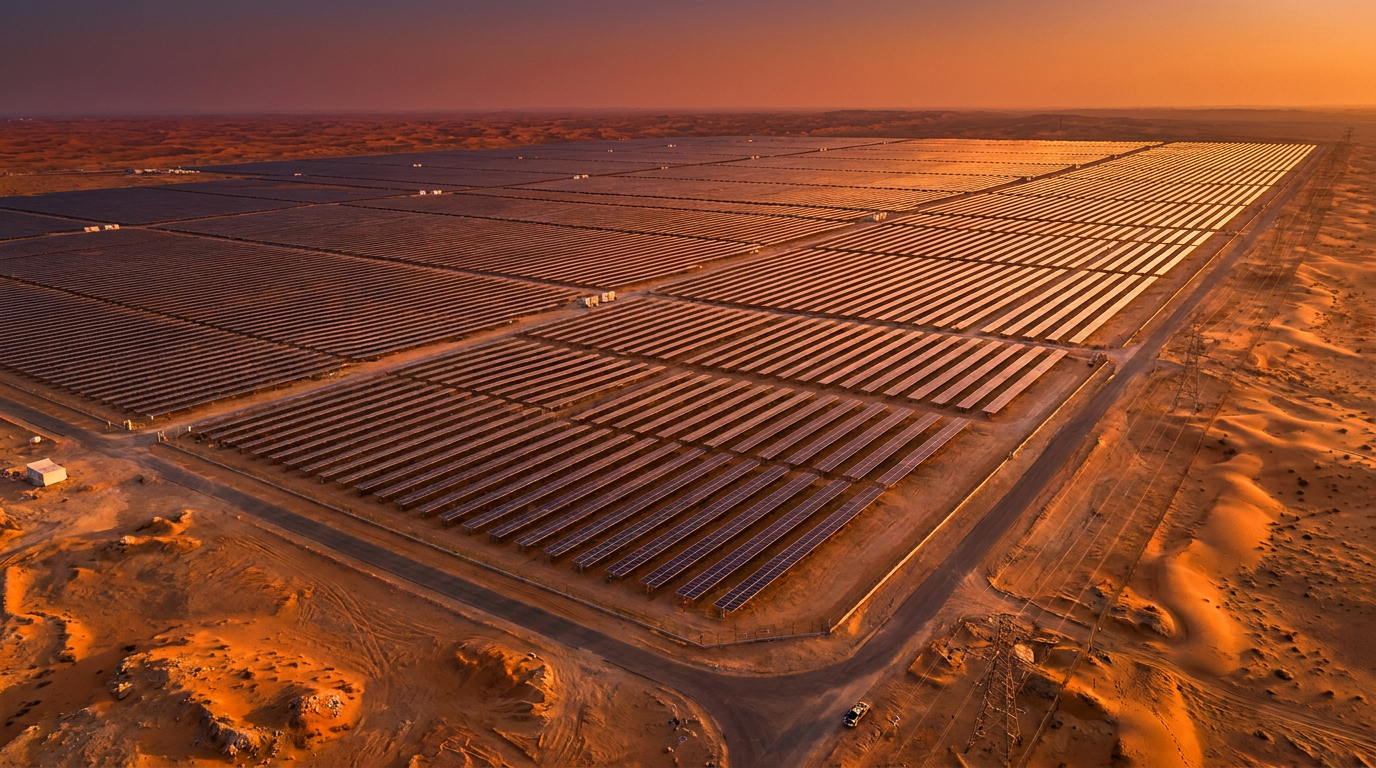
The United Arab Emirates has emerged as an early leader in this space. The country, which was the first in the Middle East to pledge net-zero emissions by 2050, has rapidly scaled its infrastructure. The Al Dhafra Solar PV project, one of the largest single-site solar plants on Earth, exemplifies this push. But the UAE's strategy goes beyond simple generation. In 2025, the state-owned renewable energy company Masdar, alongside the Emirates Water and Electricity Company, launched a staggering 5.2-gigawatt solar project paired with a 19-gigawatt-hour battery energy storage system in Abu Dhabi.[1][3]

That massive battery component solves the fundamental flaw of solar power: intermittency. By storing vast amounts of energy during peak daylight hours, the facility is designed to deliver round-the-clock, grid-scale clean power. This concept of "solar as baseload"—providing the continuous, reliable electricity traditionally supplied by coal or nuclear plants—is crucial for powering the next generation of digital infrastructure and artificial intelligence data centers.[1]
Neighboring Saudi Arabia is executing an even larger transformation under its Vision 2030 economic diversification plan. The Kingdom aims to deploy between 100 and 130 gigawatts of renewable capacity by the end of the decade, targeting a domestic energy mix where 50 percent of electricity comes from renewable sources. This includes flagship developments like the 2.6-gigawatt Al Shuaibah solar project and the integration of clean energy into NEOM, the country's futuristic smart city project.[5]
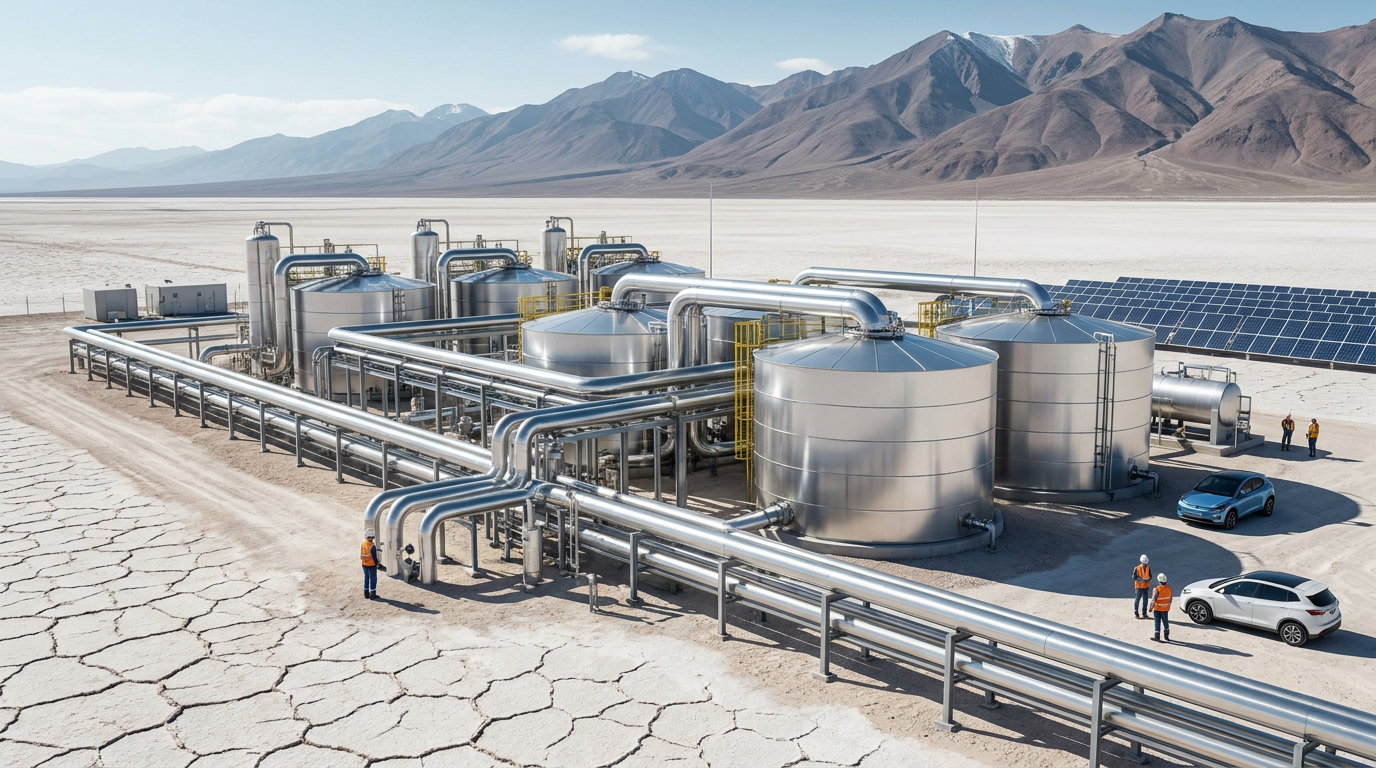
But exporting electricity over long distances is notoriously difficult. To maintain their dominance as global energy exporters, Gulf nations are turning to a different technology: green hydrogen. While traditional "grey" hydrogen is extracted from natural gas in a carbon-intensive process, green hydrogen is produced by using renewable electricity to split water into hydrogen and oxygen via an electrolyser. The resulting fuel produces zero carbon emissions when burned and can be used to decarbonize heavy industries like steelmaking and shipping.[2][4][6]
But exporting electricity over long distances is notoriously difficult.
The Middle East possesses structural advantages that make it uniquely suited to dominate the green hydrogen market. The region boasts some of the world's lowest-cost solar and wind generation, vast tracts of available land, and existing port infrastructure that can be adapted for chemical exports. Market analysts project that the Middle East's green hydrogen market will explode from $168 million in 2024 to over $1.2 billion by 2033.[2]

The crown jewel of this hydrogen push is the NEOM Green Hydrogen Project in Saudi Arabia. Valued at $8.4 billion, the facility integrates 4 gigawatts of wind and solar power with over 2 gigawatts of electrolyser capacity. Having reached financial close in 2023, the project is now nearing completion and is expected to produce up to 600 tonnes of carbon-free hydrogen per day by the end of 2026.[2]
Oman, which possesses smaller hydrocarbon reserves than its neighbors, is taking an even more aggressive leap of faith into the hydrogen economy. In 2022, the Sultanate established Hydrom, a national hydrogen company, and has since designated massive tracts of land exclusively for clean energy development. Oman's strategy envisions attracting $140 billion in investment by 2050, aiming to produce 1 million tonnes of green hydrogen annually by 2030 and up to 8.5 million tonnes by 2050.[3][6]
Because hydrogen gas is highly volatile and difficult to transport by ship, these mega-projects typically include facilities to convert the hydrogen into green ammonia. Ammonia is denser, easier to liquefy, and already has an established global supply chain. By converting desert sunlight into green ammonia, Middle Eastern states can load clean energy onto tankers and ship it to energy-hungry markets in Europe and Asia, effectively replacing their traditional oil exports.[2][6]

Despite the rapid progress, the transition is not without friction. The engineering required for commercial-scale green hydrogen is complex, demanding a workforce that blends traditional oil and gas expertise with highly specialized electrochemical and renewable engineering skills. Sourcing this talent at a regional level remains a significant bottleneck for developers racing to meet ambitious project deadlines.[2]
Furthermore, the upfront capital costs for these mega-projects are astronomical. To fund the transition, major producers like Saudi Arabia and the UAE are performing a delicate balancing act. They must continue extracting and selling hydrocarbons in the near term to generate the revenue required to build their post-carbon infrastructure. This creates a paradoxical dynamic where record oil profits are directly subsidizing the construction of the renewable energy systems meant to replace them.[3]
Ultimately, the pace of technological advancement is forcing the issue. Innovations in battery storage and electrolyser efficiency are surging forward exponentially, eliminating the technical obstacles that once made renewable energy seem like a distant dream for heavy industry. By aggressively pivoting today, the Middle East is ensuring that when the world finally stops burning oil, the region will still be the undisputed center of global energy.[4][6]
How we got here
2012
The UAE begins early solar investments, with capacity sitting at just 12 megawatts.
2021
The UAE becomes the first Middle Eastern nation to formally pledge net-zero emissions by 2050.
2022
Oman establishes Hydrom, dedicating massive tracts of land exclusively to green hydrogen development.
2023
Saudi Arabia's $8.4 billion NEOM Green Hydrogen Project reaches financial close.
2025
Masdar launches a record-breaking 5.2-gigawatt solar and 19-gigawatt-hour battery storage project in Abu Dhabi.
Late 2026
NEOM's hydrogen facility nears completion, targeting 600 tonnes of daily production by year's end.
Viewpoints in depth
Economic Diversifiers
Gulf state governments and sovereign wealth funds focused on securing post-oil revenue.
For regional leaders, the renewable transition is fundamentally an economic survival strategy rather than purely an environmental crusade. By leveraging their vast capital reserves and abundant sunlight, these states aim to dominate the emerging markets for green hydrogen and clean electrons. They view mega-projects like NEOM and Masdar as essential infrastructure to attract foreign investment, create high-tech jobs, and ensure their economies remain globally relevant long after peak oil demand passes.
Energy Transition Advocates
Climate scientists and international bodies pushing for rapid global decarbonization.
Environmental advocates celebrate the sheer scale of capital being deployed into renewables by historical petrostates, noting that the world cannot reach net-zero without the Middle East's participation. However, they frequently urge these nations to accelerate the phase-out of their domestic fossil fuel extraction. They argue that while green hydrogen and solar mega-projects are vital, their climate benefits are muted if the region continues to expand its oil and gas export capacity simultaneously.
Hydrocarbon Pragmatists
National oil companies and energy strategists balancing green investments with fossil fuel realities.
Industry veterans argue that a sudden halt to hydrocarbon production is economically and practically impossible. They point out that the astronomical costs of building green hydrogen facilities and gigawatt-scale solar farms are currently being subsidized by oil revenues. From this perspective, maintaining a robust, albeit cleaner, oil and gas sector in the medium term is the only realistic way to fund the massive infrastructure required for a successful, stable transition to renewable energy.
What we don't know
- Whether the global market will be willing to pay the premium prices currently required for green hydrogen and ammonia.
- How quickly the region can train or import the highly specialized electrochemical engineering talent needed to operate these facilities.
- The exact timeline for when renewable energy export revenues will be able to fully replace the economic output of traditional oil exports.
Key terms
- Green Hydrogen
- Hydrogen fuel produced by splitting water molecules using renewable electricity, resulting in zero carbon emissions.
- Electrolyser
- A specialized system that uses an electrical current to break water into hydrogen and oxygen gases.
- Baseload Power
- The minimum amount of continuous, reliable power needed to meet a grid's electricity demand at any given time.
- Green Ammonia
- A chemical compound made by combining nitrogen with green hydrogen, frequently used as a stable carrier to transport hydrogen by ship.
Frequently asked
Why are oil-rich countries investing in renewable energy?
Gulf states are investing in renewables to diversify their economies, prepare for a post-oil future, and maintain their status as global energy exporters by selling clean electricity and green hydrogen.
How does green hydrogen differ from regular hydrogen?
Most hydrogen today is "grey," meaning it is extracted from natural gas in a process that releases carbon. Green hydrogen is made using renewable electricity and water, producing zero emissions.
Can solar power provide electricity at night?
Yes, when paired with massive battery energy storage systems. For example, the UAE is developing a 19-gigawatt-hour battery facility designed to store solar energy for round-the-clock grid use.
Why convert hydrogen into ammonia?
Hydrogen gas is highly volatile and difficult to transport by sea. Converting it into green ammonia makes it denser and easier to liquefy, allowing it to be shipped globally using existing supply chains.
Sources
Source coverage
6 outlets
3 viewpoints surfaced






[1]Energy ConnectsHydrocarbon Pragmatists
From megawatts to smart watts: fifteen projects rewiring energy in 2025 and powering the next wave in 2026
Read on Energy Connects →[2]NES FircroftHydrocarbon Pragmatists
Green Hydrogen's Role in the Middle East Energy Transition
Read on NES Fircroft →[3]Carnegie Endowment for International PeaceHydrocarbon Pragmatists
The Gulf's Complex Balancing Act on Energy Transition
Read on Carnegie Endowment for International Peace →[4]Stimson CenterEnergy Transition Advocates
A Middle East grappling with climate change faces new upheaval in clean energy transition
Read on Stimson Center →[5]Power Info TodayEconomic Diversifiers
Middle East Energy Transition 2030: Integrating Renewables into the Industrial Mix
Read on Power Info Today →[6]Factlen Editorial TeamEconomic Diversifiers
Synthesis by Factlen editorial team
Read on Factlen Editorial Team →
More in world
See all 19 stories →Aral Sea Recovery
How Kazakhstan is Resurrecting the Northern Aral Sea
7 sources
Reef Tech
How Scientists Are Rebuilding Asia-Pacific Coral Reefs With Sound, Steel, and Super Corals
7 sources

Sleeper Trains
How Europe's Night Train Renaissance is Reshaping Continental Travel in 2026
8 sources

Desert Solar
How the Middle East is Bottling Sunshine: The Rise of Desert Mega-Solar
8 sources
Every angle. Every day.
Get world stories with full source coverage and perspective breakdowns delivered to your inbox.