
How the 2026 SELF DRIVE Act Aims to Rewrite US Autonomous Vehicle Law
Congress is making its third attempt to establish a national framework for autonomous vehicles, introducing legislation that would replace a 34-state regulatory patchwork with a unified federal standard.
By Adrien Caron

Share this story
The U.S. autonomous vehicle industry has reached a critical regulatory bottleneck. While robotaxis now operate commercially in major cities like Phoenix, San Francisco, and Los Angeles, the absence of a unified federal law has left automakers navigating a highly fragmented landscape of state-by-state rules. To break this legislative logjam and provide the certainty needed for mass commercialization, Congress is making its third major attempt to establish a national framework with the introduction of the Safely Ensuring Lives Future Deployment and Research In Vehicle Evolution (SELF DRIVE) Act of 2026.
Introduced formally as H.R. 7390 by Representative Bob Latta (R-OH), the legislation aims to significantly expand the National Highway Traffic Safety Administration's (NHTSA) authority over Automated Driving Systems (ADS). If enacted, it would serve as the first federal statute dedicated specifically to the safety, testing, and deployment of autonomous vehicles, covering highly automated systems classified as SAE Levels 3, 4, and 5.
The bill seeks to replace the current regulatory patchwork with a single, cohesive national standard, allowing manufacturers to scale their fleets across state lines without having to modify hardware or software for different jurisdictions.[1]
The core mechanism of the SELF DRIVE Act represents a fundamental and unprecedented shift in how the federal government regulates motor vehicles. Instead of relying solely on traditional physical crash-testing and highly prescriptive equipment mandates, the bill introduces the concept of a 'safety case' to the automotive sector. Borrowed directly from the aviation industry's Federal Aviation Administration (FAA) certification process, a safety case is a structured, comprehensive, and evidence-based argument submitted by a manufacturer to demonstrate that a specific complex system is safe for operation on public roads.
Under the proposed legislative framework, automakers would be required to develop a comprehensive safety case for each distinct version of their automated driving system before deployment. This extensive documentation must prove that the design, construction, and performance of the technology will not present an unreasonable risk of accidents, death, or injury to the public. The legislation directs NHTSA to issue a final rule by September 2027 outlining the objective content requirements for these safety cases, though manufacturers would initially be permitted to self-certify their compliance with the standards.
To accommodate the unique architectural design of fully driverless vehicles, the bill explicitly allows manufacturers to deploy vehicles without traditional manual controls. If a vehicle is operated entirely by an automated driving system, it cannot be legally required to include a steering wheel, brake pedals, or mirrors intended for a human driver. This provision is particularly significant for the commercial freight sector, as it clears a definitive legal pathway for the development and deployment of 'cab-less' autonomous semi-trucks optimized entirely for aerodynamics and cargo capacity rather than human comfort.
The most consequential—and politically contentious—provision of the SELF DRIVE Act is the inclusion of broad federal preemption. Currently, 34 individual states have enacted their own autonomous vehicle regulations, creating a complex and often contradictory web of testing mandates, permitting requirements, and operational limits. The bill contains explicit language that would effectively slice this patchwork to tatters, legally preventing state and local governments from restricting the deployment of ADS-equipped vehicles if the manufacturer has successfully developed a compliant safety case at the federal level.
Industry advocates argue that this level of federal preemption is an existential necessity for the technology's survival. The Autonomous Vehicle Industry Association asserts that clear federal rules and regulatory certainty are required to scale deployment nationwide and meaningfully reduce the nearly 40,000 traffic fatalities caused annually by human error. Proponents also frame the legislation as a pressing geopolitical imperative, warning lawmakers that without a unified domestic market, the United States risks permanently ceding global leadership in autonomous technology to China, which is rapidly accelerating its own commercial AV deployments.
However, the preemption clause has triggered fierce pushback from state regulators, municipal transit authorities, and consumer protection advocates, effectively fracturing the bill's initial bipartisan coalition. Representative Debbie Dingell (D-MI), who co-drafted the early discussion version of the legislation, notably withdrew her sponsorship shortly before the bill was officially introduced. The primary point of friction lies in the balance of regulatory power: local officials argue that stripping states of their ability to govern AV operations puts communities at risk, especially before NHTSA has established rigorous, objective performance standards for the industry.
This ideological divide was starkly visible during the bill's first major legislative hurdle. On February 10, the House Subcommittee on Commerce, Manufacturing, and Trade advanced the SELF DRIVE Act on a narrow 12-11 party-line vote, highlighting the deep reservations held by the minority. Democratic lawmakers, including Energy and Commerce Ranking Member Frank Pallone, cited unresolved and significant concerns over state-federal preemption, the subjective nature of allowing manufacturers to self-certify their safety cases, and a perceived lack of transparency regarding how corporate data collection will be managed and audited.
To address some of these transparency concerns, the legislation mandates the creation of a National Automated Vehicle Safety Data Repository. Under this provision, manufacturers would be legally required to report data regarding serious crashes involving an engaged automated driving system and submit quarterly reports detailing the total miles their autonomous fleets travel in revenue service. This centralized repository is designed to replace temporary standing orders and provide a standardized, public metric for accurately comparing the safety record of autonomous vehicles against traditional human-driven fleets.
The bill also proposes significantly raising the cap on the number of vehicles a manufacturer can deploy under federal safety exemptions. If passed in its current form, the legislation would allow automakers to introduce up to 90,000 non-compliant autonomous vehicles annually into the market. Industry leaders argue this expanded exemption cap is critical, as it provides the scale necessary for widespread commercial pilot programs and allows companies to gather the massive amounts of real-world driving data required to continuously train and refine their artificial intelligence models.
Despite the partisan friction evident in the subcommittee markup, the legislative window for enacting federal autonomous vehicle policy remains viable. Previous iterations of the SELF DRIVE Act failed to pass in both 2017 and 2021, but the industry landscape and technological maturity have advanced significantly since those early attempts.
With the massive Surface Transportation Reauthorization bill looming on the 2026 congressional calendar, lawmakers have a practical legislative vehicle to attach autonomous vehicle provisions to, ensuring the debate over the future of American mobility will remain a central focus on Capitol Hill.
Key points
- The SELF DRIVE Act of 2026 aims to establish the first comprehensive federal safety framework for autonomous vehicles.
- The legislation would shift NHTSA's regulatory approach from traditional hardware mandates to a data-driven 'safety case' model.
- A controversial preemption clause would override the existing patchwork of 34 state-level autonomous vehicle regulations.
- The bill explicitly allows for the deployment of vehicles without traditional manual controls, clearing the way for cab-less freight trucks.
What we don’t know
- Whether the bill can regain bipartisan support as it moves to the full House Energy and Commerce Committee.
- How NHTSA will define the 'objective content requirements' for manufacturer safety cases by the 2027 deadline.
- Whether the legislation will pass as a standalone bill or be folded into the broader 2026 Surface Transportation Reauthorization.
How we got here
July 2017
The first iteration of the SELF DRIVE Act passes the House unanimously but stalls in the Senate.
June 2021
A second version of the legislation is introduced but fails to advance amid labor and safety concerns.
January 2026
A bipartisan discussion draft of the 2026 SELF DRIVE Act is circulated and debated in a House subcommittee hearing.
February 5, 2026
Rep. Bob Latta officially introduces H.R. 7390, though original co-drafter Rep. Debbie Dingell drops her sponsorship.
February 10, 2026
The bill advances out of the House Subcommittee on Commerce, Manufacturing, and Trade on a 12-11 party-line vote.
- Federal Framework Advocates
- Industry groups and automakers arguing that a unified national standard is essential for scaling AV technology and competing globally.
- State & Local Regulators
- Lawmakers and safety advocates who oppose federal preemption without strict, objective safety benchmarks.
- Legal & Policy Analysts
- Experts focused on the unprecedented shift in how the federal government regulates motor vehicles.
Perspectives this story doesn't cover
- Insurance Industry Underwriters
- Commercial Truck Drivers / Labor Unions
Sources
Source coverage
1 outlets
3 viewpoints surfaced

- [1]GovInfoLegal & Policy Analysts
H.R. 7390 - Safely Ensuring Lives Future Deployment and Research In Vehicle Evolution Act of 2026
Read on GovInfo →
More in Automotive & Transportation
See all →Autonomous Vehicles
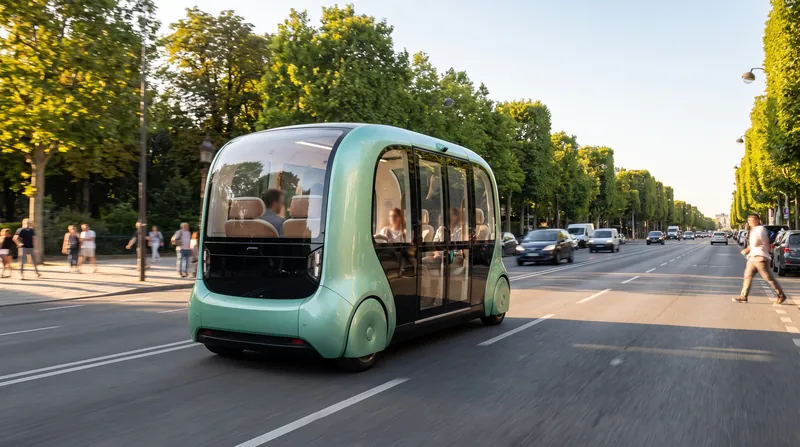
UN Approves First Global Standard for L4 Autonomous Driving Systems, Clearing Path for Mass Deployment
7 sources
AV Regulation
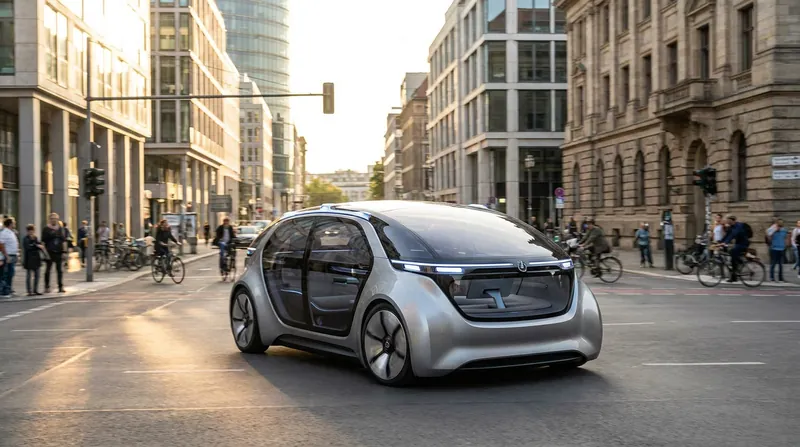
California DMV Finalizes AV Deployment Rules, Requiring 100,000 Autonomous Miles for Robotaxis
5 sources
eVTOL Procurement
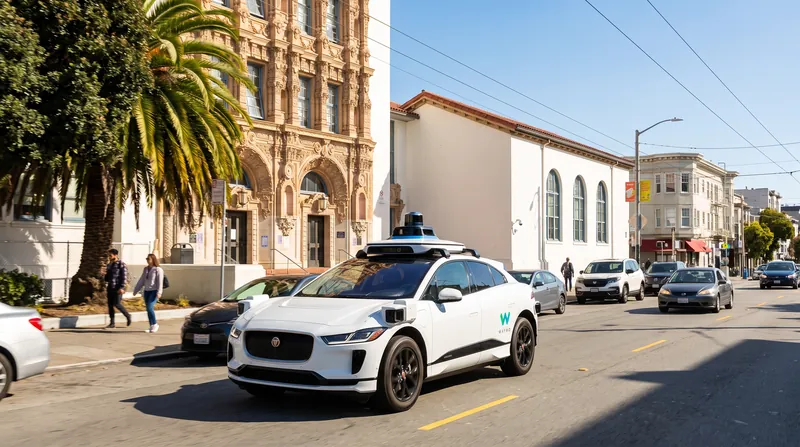
CATL Clears Major eVTOL Safety Hurdle: The Battery Trade-Offs Facing Fleet Buyers
6 sources
EV Price War
Ford CEO Warns Chinese EVs Will Breach US Market, Details New Affordable EV Strategy
6 sources
Comments
Every angle. Every day.
Get Automotive & Transportation stories with full source coverage and perspective breakdowns, free every day.