
How Smart Mouthguards Are Changing the Math on Brain Trauma in Combat Sports
Embedded sensors are transforming the traditional mouthguard into a real-time biometric tracker, allowing fighters to measure head impacts, optimize training, and flag concussion risks before they compound.
By Meera Iyer
Share this story
For over a century, the mouthguard has served a single, rudimentary purpose in combat sports: keeping teeth intact and preventing fighters from biting their own tongues. It was a passive piece of plastic, entirely disconnected from the complex neurological events happening just inches above it. But as the long-term consequences of subconcussive impacts become impossible to ignore, the humble mouthpiece is undergoing a radical transformation.
In 2026, a new generation of "smart" mouthguards is quietly infiltrating boxing gyms and mixed martial arts academies. Devices from companies like ORB Sport, OPRO, and HITIQ are equipped with micro-sensors that measure the exact forces acting on a fighter's skull in real-time. They are effectively turning the human jaw into a biometric telemetry station.[1]
The engineering behind these devices is remarkably dense. Packed into a custom-molded, heat-activated chassis are tri-axial accelerometers and gyroscopes capable of logging up to 15,000 data points per second. When a fighter absorbs a left hook, the mouthguard instantly calculates both the linear acceleration—the head snapping back—and the rotational velocity, which is the twisting motion most responsible for concussions.
This data is then synthesized into an objective metric, often referred to as a Damage Severity Index (DSI). For decades, coaches and ringside physicians had to rely on the "eye test" or a fighter's subjective self-reporting to determine if a sparring session had gotten out of hand. Now, a ringside tablet can flash a red warning the moment a fighter crosses a dangerous cumulative threshold.
The mouth is uniquely suited for this kind of measurement. Unlike headgear or wearable patches, which can slide against the sweaty skin and produce noisy data, a custom-fitted mouthguard locks directly onto the upper jaw. Because the maxilla bone is fused to the skull, the sensors record the exact motion of the brain casing with near-perfect fidelity.
But the appeal of smart mouthguards extends beyond pure medical surveillance. Manufacturers have realized that to get fighters to adopt the technology voluntarily, the devices need to offer tangible competitive advantages. Consequently, the newest models are being marketed as high-tech performance enhancers.[2]
By tracking the precise location and vector of every absorbed strike, the software can reveal glaring defensive blind spots that neither the fighter nor the coach might have noticed in real-time. If a boxer's post-sparring heat map shows that 80 percent of the impacts landed on the right side of their head, it provides undeniable mathematical proof that their left hand is dropping during exchanges.[2]
Beyond impact tracking, premium models have integrated optical sensors to monitor heart rate and overall movement. In contact sports, athletes cannot practically wear chest straps or wrist-based fitness trackers during live sparring. The smart mouthguard bridges this gap, allowing strength and conditioning coaches to monitor cardiovascular load and fatigue levels while punches are actually flying.[1][2]
The adoption of this technology is following a familiar top-down trajectory. World Rugby has already mandated the use of sensor-laden mouthguards for international athletes, requiring independent medical evaluations if a player registers an impact above a specific threshold. Combat sports, which are highly fragmented and heavily reliant on individual state athletic commissions, are moving slower, but elite training camps are already treating the tech as a standard operational expense.[2]
For the amateur practitioner, however, the barrier to entry remains steep. While a standard boil-and-bite mouthguard costs less than $20, and a dentist-fitted custom guard runs around $100, the new smart variants carry price tags ranging from $300 to $400, often accompanied by monthly software subscription fees.[2]
This pricing dynamic creates a genuine dilemma for hobbyists and rising amateurs. As equipment reviewers have noted, the data is only as useful as the person interpreting it. A professional fighter with a dedicated sports science team can use DSI scores to perfectly taper their sparring intensity before a bout. A hobbyist might just be paying $350 to confirm that they are, indeed, getting punched in the face.
There are also looming questions regarding data privacy and career leverage. If a fighter's mouthguard logs a history of severe concussive impacts during closed-door sparring, who owns that data? Promoters and athletic commissions could theoretically use biometric histories to deny licenses or lower contract offers, creating a complex ethical debate around medical privacy.
Despite these hurdles, the cultural shift inside combat sports gyms is palpable. The old-school mentality of "gym wars"—where fighters routinely battered each other in unrecorded, unmonitored sparring sessions—is rapidly falling out of favor. Quantifiable data is replacing performative toughness, allowing athletes to train smarter rather than just harder.
Smart mouthguards cannot prevent a concussion; the brain will still rattle against the skull regardless of what is between the teeth. But by illuminating the invisible accumulation of trauma and turning defensive lapses into actionable data, this technology is finally giving fighters the tools to protect their most valuable asset.[3]
The essentials
- Smart mouthguards use embedded sensors to measure linear and rotational forces on the skull.
- The devices log up to 15,000 data points per second to calculate a Damage Severity Index (DSI).
- Coaches use directional impact data to identify defensive flaws and optimize a fighter's guard.
- Integrated optical sensors track heart rate and cardiovascular load during live sparring.
- The technology is widely adopted by elite pros, though the $350 price tag remains a barrier for amateurs.
Timeline
2010s
Early impact-sensing mouthguards are developed primarily for academic research in football and rugby.
2024
World Rugby mandates the use of smart mouthguards for all international athletes to monitor head impacts.
2026
Advanced models integrating heart rate, optical sensors, and real-time defensive analytics gain widespread adoption in elite boxing and MMA camps.
- Sports Scientists & Medical Staff
- Argues that objective biometric data is essential to remove the guesswork from concussion protocols and protect athletes from cumulative trauma.
- Professional Fighters & Coaches
- Values the technology primarily as a performance enhancer that identifies defensive flaws and tracks cardiovascular load.
- Amateur Practitioners
- Questions whether the high cost of the devices is justified for hobbyists who lack a dedicated medical team to interpret the data.
Perspectives this story doesn't cover
- State Athletic Commissions who must decide how to regulate and protect biometric data.
- Promoters who might use impact data to evaluate a fighter's longevity or market value.
Sources
Source coverage
3 outlets
3 viewpoints surfaced



- [1]ORB SportProfessional Fighters & Coaches
Meet ORB Sport™: A smarter way to train
- [2]Sports Business JournalProfessional Fighters & Coaches
Orb Sport Smart Mouthguard launches, collecting performance datapoints
Read on Sports Business Journal → - [3]Factlen Editorial TeamAmateur Practitioners
Synthesis by Factlen editorial team
Read on Factlen Editorial Team →
More in Sports
See all →Recap
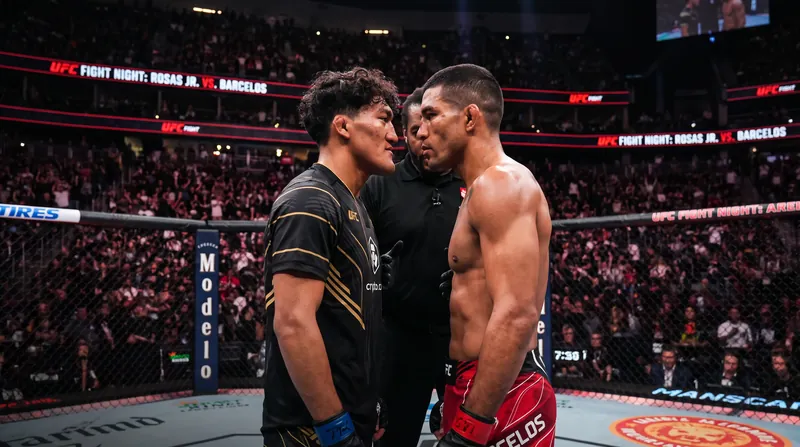
Raul Rosas Jr. Shows Incredible Restraint in Frightening UFC Vegas 121 Main Event Finish
6 sources

Injury
Rinya Nakamura Returns From 13-Month Injury Layoff at UFC Vegas 121
7 sources

Standings
ONE Championship Unveils Eight-Man Field for 2026 Flyweight Muay Thai World Grand Prix
6 sources

Storyline
Raul Rosas Jr. Set to Make UFC History as Youngest Main Eventer Against Raoni Barcelos
6 sources
Comments
Every angle. Every day.
Get Sports stories with full source coverage and perspective breakdowns, free every day.