
The Shift to Local AI: How On-Device Models Are Replacing Cloud Subscriptions in 2026
The artificial intelligence landscape is experiencing a massive shift as users and tech giants alike pivot from cloud-based services to local, on-device models. Driven by privacy concerns, cost savings, and offline capabilities, tools like Ollama and Apple Intelligence are making powerful AI accessible directly on consumer hardware.
By Factlen Editorial Team
- Privacy Advocates
- Focus on data sovereignty and protection from corporate surveillance.
- Cost-Conscious Power Users
- View local AI as a financial strategy to eliminate recurring software bills.
- Ecosystem Integrators
- Prioritize ambient, OS-level AI over standalone chatbot applications.
- Open-Source Developers
- Champion local models for customization and avoiding vendor lock-in.
What's not represented
- · Cloud Infrastructure Providers
- · Enterprise Compliance Officers
Why this matters
By shifting AI processing from corporate cloud servers to your own laptop or phone, local AI eliminates monthly subscription fees, guarantees absolute data privacy, and works completely offline. This transition empowers users to harness frontier-level intelligence without sacrificing control over their personal or proprietary information.
Key points
- Local AI runs large language models directly on user hardware rather than remote cloud servers.
- The shift guarantees 100% data privacy, as prompts and documents never leave the device.
- Users can save hundreds of dollars annually by eliminating cloud AI subscription fees.
- Advanced compression allows highly capable models to run smoothly on standard 16GB laptops.
- Apple's WWDC 2026 announcements cemented on-device processing as the future of ambient OS-level intelligence.
For years, the artificial intelligence revolution has been tethered to the cloud. Accessing state-of-the-art language models meant paying a monthly subscription, requiring a constant internet connection, and sending every keystroke, private thought, and proprietary document to servers owned by tech giants. But in 2026, a quiet rebellion has gone mainstream: the rise of local AI.[3][4]
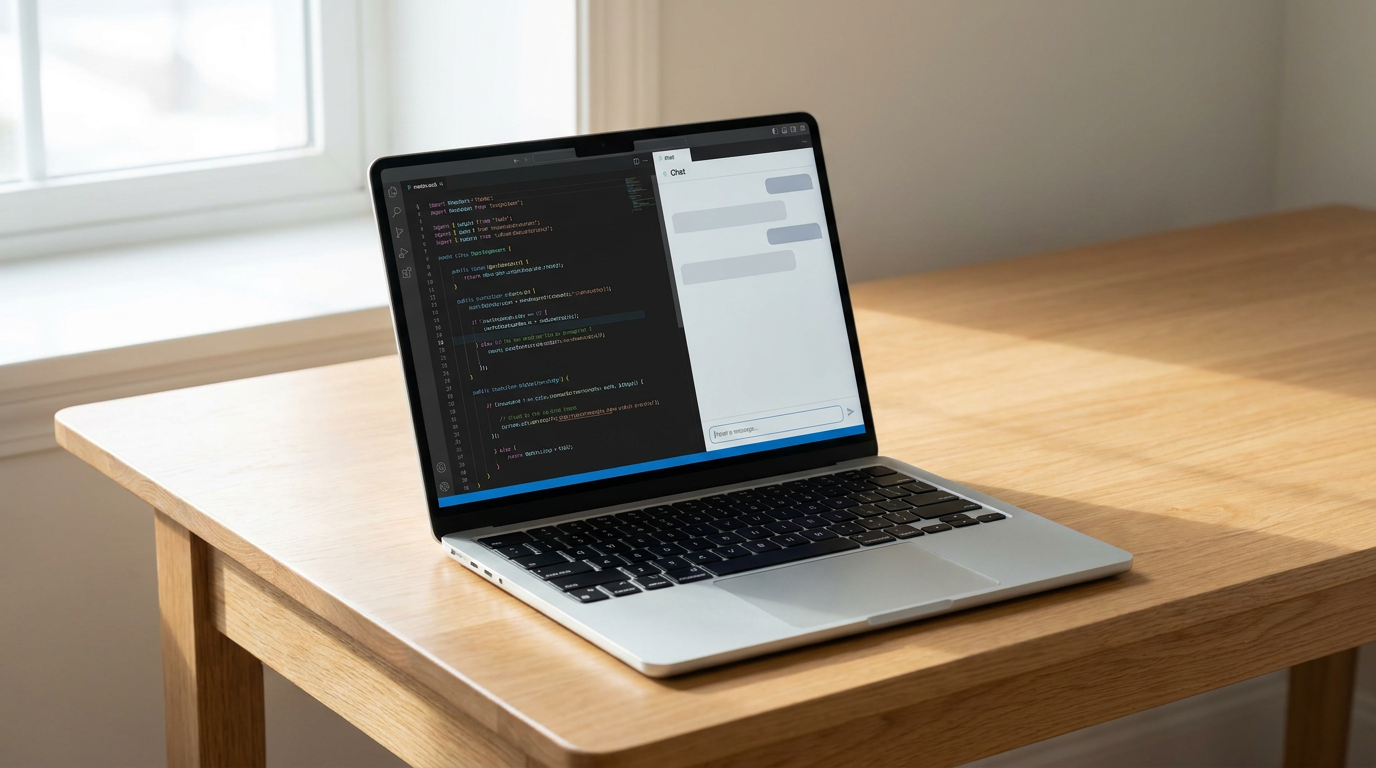
Local AI flips the fundamental architecture of modern computing. Instead of renting intelligence from a distant data center, users are downloading large language models (LLMs) directly onto their own laptops, desktops, and smartphones. Once installed, these models run entirely on the device's own silicon, generating text, writing code, and analyzing documents without ever pinging an external server.[2][4]
The primary catalyst for this shift is privacy. When users rely on cloud-based AI, their prompts travel across the internet, exposing sensitive information to potential data breaches, corporate surveillance, and shifting terms of service. Local execution eliminates this vulnerability entirely. Because the data never leaves the machine, local AI has become the gold standard for professionals handling confidential business strategies, proprietary code, and regulated personal data.[4][7]
Beyond security, the economics of local AI are driving massive adoption. Cloud AI services typically charge around $20 per month, or bill developers per token, which can quickly escalate into hundreds of dollars a year. Running models locally requires a one-time hardware investment—often just a standard modern laptop—after which every single query, summarization, and generation is completely free.[1][3]

This offline capability unlocks new frontiers for productivity. Because local models do not require an internet connection, they function flawlessly on airplanes, in remote rural areas, and within highly secure, air-gapped corporate environments. Users are no longer at the mercy of server outages, network latency, or a provider's decision to deprecate an older model.[3][4]
Until recently, running an LLM locally required navigating complex command-line interfaces and managing Python dependencies. Today, the software ecosystem has matured dramatically. Applications like LM Studio and Ollama have transformed the process into a seamless, point-and-click experience. Users can browse a catalog of models, click download, and start chatting within minutes, all through polished graphical interfaces that rival commercial web apps.[1][2]
Until recently, running an LLM locally required navigating complex command-line interfaces and managing Python dependencies.
The hardware barrier has also plummeted. Thanks to advanced compression techniques known as quantization, models that once required massive server racks can now run efficiently on consumer hardware. In 2026, highly capable models like Google's Gemma 4 and Meta's Llama 4 can operate smoothly on laptops equipped with just 16GB of RAM, democratizing access to frontier-level intelligence.[2]
This democratization is not limited to open-source enthusiasts; the world's largest tech companies are pivoting to the edge. At WWDC 2026, Apple cemented on-device processing as the cornerstone of its AI strategy. Rather than building a standalone chatbot, Apple integrated its third-generation Apple Foundation Models directly into the operating system, allowing AI to operate ambiently across apps.[5][8]

Apple's approach, branded as Apple Intelligence, prioritizes running its most advanced on-device model, AFM 3 Core Advanced, entirely on the user's local hardware. This allows the system to read personal messages, summarize notifications, and execute multi-step tasks across different applications with zero latency and absolute privacy.[6][8]
For tasks that exceed the computational limits of a smartphone or laptop, Apple introduced Private Cloud Compute. This architecture routes complex requests to secure servers running Apple Silicon, with cryptographically verifiable guarantees that the data is never stored, logged, or accessible even to Apple itself. It represents a hybrid bridge between local privacy and cloud power.[5][8]
The developer ecosystem is rapidly adapting to this on-device paradigm. Through frameworks like App Intents, third-party developers can expose their app's capabilities to local AI agents. This means a local model can seamlessly orchestrate actions—like pulling a flight itinerary from an email and adding it to a calendar—without the data ever being exposed to a third-party API.[5][6]
Enterprises are taking notice. For compliance teams and IT departments, the data sovereignty provided by local AI is not just a preference; it is a regulatory necessity. By deploying local models, companies can empower their workforce with AI coding assistants and document analyzers without running afoul of strict data residency laws or risking the leakage of trade secrets.[3][7]

There are still trade-offs. Cloud-based frontier models, backed by massive data centers, retain an edge in highly complex reasoning tasks, advanced mathematics, and orchestrating massive datasets. For the average user, however, the gap between cloud and local performance has narrowed to the point of being indistinguishable for daily writing, coding, and brainstorming tasks.[1][2]
As 2026 unfolds, the narrative around artificial intelligence is fundamentally changing. It is no longer just a service we connect to; it is a capability we own. By bringing intelligence to the edge, local AI is returning control, privacy, and autonomy to the user, ensuring that the most powerful technology of our time serves the individual first.[3][4]
How we got here
Early 2023
Running local AI requires massive server GPUs and complex command-line setups.
Mid 2024
Tools like Ollama and LM Studio launch, providing easy graphical interfaces for local models.
Late 2025
Open-weight models match the performance of proprietary cloud chatbots for daily tasks.
June 2026
Apple integrates on-device AI directly into its operating systems at WWDC 2026.
Viewpoints in depth
Privacy Advocates
Focus on data sovereignty and protection from corporate surveillance.
This camp argues that the cloud-first era of AI was a privacy disaster waiting to happen. By sending every prompt, document, and codebase to centralized servers, users exposed themselves to data breaches and shifting corporate terms of service. They view local AI not just as a technological convenience, but as a fundamental digital right, ensuring that sensitive information remains strictly on the hardware owned by the user.
Cost-Conscious Power Users
View local AI as a financial strategy to eliminate recurring software bills.
For heavy AI users and developers, monthly subscriptions to cloud models and API usage fees can easily exceed a thousand dollars annually. This perspective champions local AI as a cost-arbitrage play: by making a one-time investment in a capable laptop or desktop GPU, users can generate unlimited tokens at zero marginal cost. They emphasize tools like LM Studio and Ollama that make this transition seamless.
Ecosystem Integrators
Prioritize ambient, OS-level AI over standalone chatbot applications.
Led by Apple's recent architectural shifts, this camp believes AI shouldn't be a destination you visit in a web browser. Instead, they argue that intelligence should be woven directly into the operating system, securely accessing personal context—like emails, calendars, and photos—to automate tasks in the background. They see on-device processing as the only way to achieve this deep integration without compromising user trust.
What we don't know
- How cloud AI providers will adjust their pricing models as local AI continues to eat into their subscriber base.
- Whether future regulatory frameworks will mandate on-device processing for certain types of highly sensitive enterprise data.
Key terms
- Local LLM
- A large language model that runs entirely on a user's own hardware rather than a remote cloud server.
- Inference
- The computational process of an AI model generating a response or prediction based on a user's prompt.
- Quantization
- A technique that compresses massive AI models so they can run efficiently on consumer laptops without losing significant quality.
- Private Cloud Compute
- Apple's architecture that processes complex AI requests on secure servers with cryptographic guarantees that data is never stored.
- App Intents
- A framework that allows local AI agents to securely interact with and control third-party applications on a device.
Frequently asked
Do I need an expensive computer to run local AI?
Not anymore. Thanks to model compression, highly capable AI models can now run smoothly on standard laptops with 16GB of RAM.
Is local AI completely private?
Yes. Because the model runs on your own hardware, your prompts and data never leave your device, making it safe for confidential information.
Can local AI replace ChatGPT?
For everyday tasks like coding, writing, and document analysis, local models offer comparable performance. Cloud models still hold an edge for the most complex reasoning tasks.
Does local AI work without Wi-Fi?
Yes. Once you download the model and the interface software, the AI functions entirely offline.
Sources
Source coverage
8 outlets
4 viewpoints surfaced






[1]Prompt QuorumCost-Conscious Power Users
Power Local LLM — Build a Private AI Stack That Replaces Your SaaS Bills
Read on Prompt Quorum →[2]PinggyOpen-Source Developers
Top Local LLMs and Tools in 2026
Read on Pinggy →[3]Local-LLM.netPrivacy Advocates
Eight compelling reasons to run AI on your own hardware
Read on Local-LLM.net →[4]Windows ForumOpen-Source Developers
The new frontier of personal AI is undeniably local
Read on Windows Forum →[5]MindStudioEcosystem Integrators
Apple Is Building AI Into the Operating System Itself
Read on MindStudio →[6]TWiT.tvEcosystem Integrators
What Will Apple Announce About Siri and AI at WWDC 2026?
Read on TWiT.tv →[7]Enclave AIPrivacy Advocates
Cloud AI vs Local LLMs: Understanding the Privacy Gap
Read on Enclave AI →[8]AppleEcosystem Integrators
Apple Intelligence architecture and Private Cloud Compute
Read on Apple →



Every angle. Every day.
Get ai stories with full source coverage and perspective breakdowns delivered to your inbox.