
How Sodium-Ion Batteries Are Rewriting the Economics of Electric Vehicles
Mass production of sodium-ion batteries in 2026 is unlocking cheaper, cold-weather-resilient electric vehicles and grid storage by replacing expensive lithium with abundant salt.
By Factlen Editorial Team
- Battery Manufacturers
- View sodium-ion as a crucial complementary chemistry to stabilize supply chains and capture the budget EV market.
- Western Automakers & Grid Operators
- See the technology primarily as a stationary energy storage solution where weight doesn't matter, rather than a passenger EV panacea.
- Resource & Supply Chain Analysts
- Emphasize the geopolitical relief of moving away from concentrated critical minerals like lithium and cobalt.
What's not represented
- · Lithium Mining Industry
- · Used EV Market Analysts
Why this matters
By breaking the auto industry's total reliance on expensive, geopolitically concentrated lithium, sodium-ion technology promises to make entry-level electric vehicles significantly cheaper and far more reliable in freezing winter climates.
Key points
- Sodium-ion batteries are entering mass production in 2026, offering a cheaper, abundant alternative to lithium.
- The chemistry retains 90% of its capacity at -40°C, solving the cold-weather range loss that plagues current EVs.
- Cell costs are forecast to drop to $19/kWh, roughly 60% cheaper than standard lithium iron phosphate (LFP) batteries.
- Because they have lower energy density, sodium-ion batteries will target city cars and grid storage rather than long-range luxury EVs.
- The technology is significantly safer than lithium-ion, passing strict penetration tests without catching fire.
For the past decade, the electric vehicle revolution has been almost entirely dependent on a single, temperamental element: lithium. While lithium-ion batteries have successfully powered millions of cars and enabled the modern EV industry, the chemistry comes with steep and increasingly visible trade-offs. Automakers have had to navigate volatile raw material costs, geopolitically concentrated supply chain bottlenecks, and severe battery performance drops in freezing weather. As governments push for mass EV adoption, the industry has realized that relying solely on premium, expensive lithium to electrify the entire global fleet is economically and logistically unsustainable. The search for a cheaper, more abundant alternative has been the holy grail of battery science for years, and after a decade of laboratory development, that alternative has finally arrived at commercial scale.[2][7]
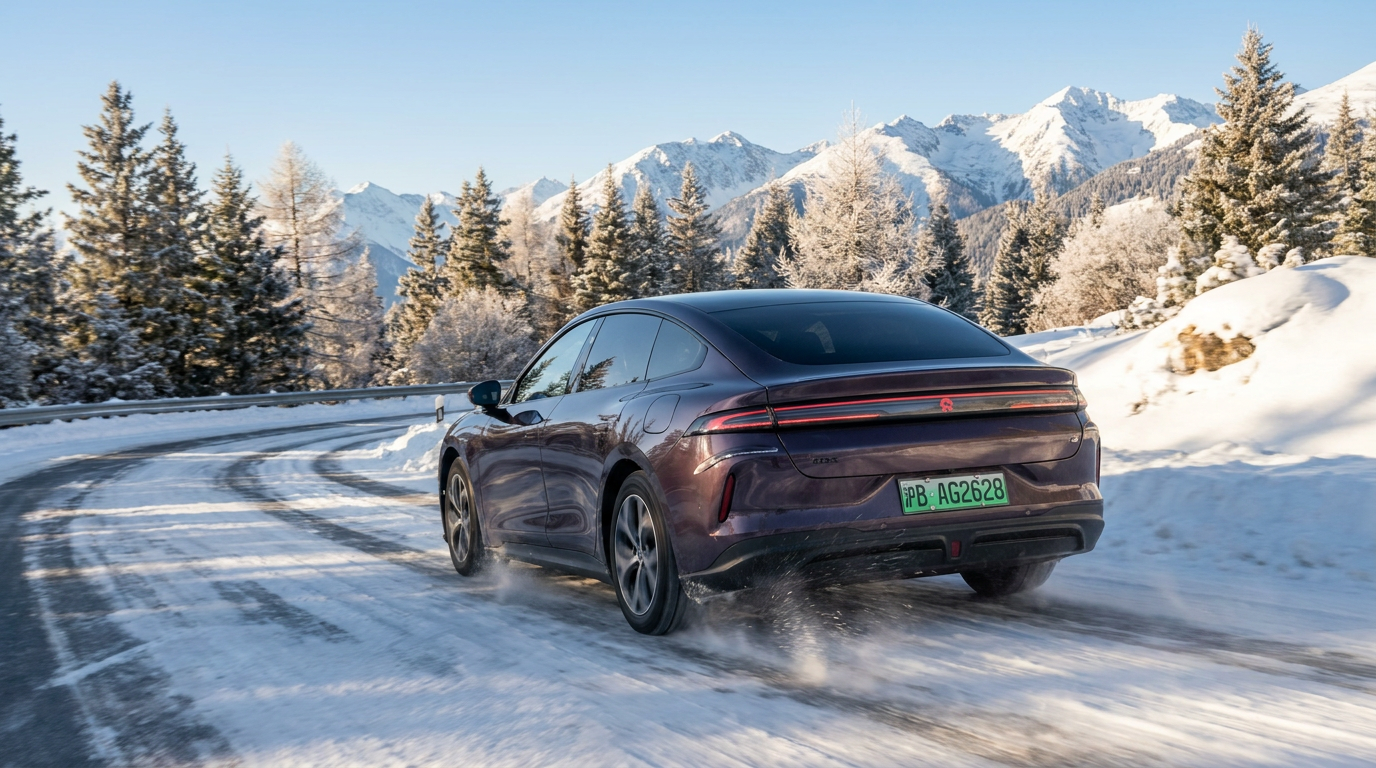
In 2026, the battery industry is undergoing its most significant chemistry shift in years. Sodium-ion batteries—long considered a heavy, low-density laboratory experiment unsuitable for transportation—are officially entering mass production for passenger vehicles. In February, battery giant CATL and automaker Changan unveiled the Nevo A06, the world's first mass-produced passenger EV running on a sodium-ion pack. This launch signals that the technology has crossed the critical threshold from pilot-stage credibility to real-world automotive deployment, setting the stage for a new era of affordable electric mobility.[1][4]
The underlying mechanism of a sodium-ion battery closely mirrors its lithium counterpart, which is part of what makes the transition so seamless for manufacturers. In both systems, ions shuttle back and forth between a cathode and an anode through a liquid electrolyte to store and release electrical energy. The critical difference is the charge carrier itself: sodium ions replace lithium ions. Because sodium ions are physically larger and heavier than lithium ions, engineers had to redesign the battery's internal architecture to accommodate them. This typically involves swapping the standard graphite anode used in lithium batteries for a specialized "hard carbon" alternative that can efficiently host the larger sodium particles without degrading.[4][8]

The primary appeal of this chemical swap is sheer, undeniable abundance. Sodium is roughly 1,000 times more common in the Earth's crust than lithium and can be cheaply extracted from virtually limitless sources, including seawater and common rock salt. By eliminating the need for lithium, as well as controversial and expensive metals like cobalt and nickel, manufacturers can drastically insulate themselves from the price spikes and mining bottlenecks that have historically plagued EV production. This shift fundamentally alters the geopolitics of energy storage, moving reliance away from a handful of concentrated mining regions to a resource that is universally available.[6][7]
This massive abundance translates directly into transformative cost savings at the factory level. Industry forecasts suggest that CATL's sodium-ion cells will eventually cost around $19 per kilowatt-hour to produce at scale. To put that in perspective, large-volume lithium iron phosphate (LFP) batteries—currently the standard for budget EVs—cost roughly $55 to $60 per kilowatt-hour. For automakers that have been struggling for years to produce profitable entry-level electric vehicles, a 60% reduction in core cell costs represents an economic breakthrough that could finally make EVs cheaper than their gas-powered equivalents.[3][6]
However, the physics of sodium come with an inherent penalty that cannot be entirely engineered away: energy density. Because sodium is a heavier element, these batteries cannot pack as much energy into the same physical footprint or weight limit. CATL's current "Naxtra" sodium-ion cells achieve an energy density of about 175 watt-hours per kilogram (Wh/kg). While this is a massive leap from early prototypes and represents a triumph of chemical engineering, it still trails the 250 to 300 Wh/kg offered by the premium lithium-ion packs used in today's longest-range vehicles.[1][6]

However, the physics of sodium come with an inherent penalty that cannot be entirely engineered away: energy density.
Consequently, sodium-ion technology is not poised to replace lithium in luxury SUVs, heavy pickup trucks, or 500-mile highway cruisers where every ounce of weight matters. Instead, its immediate automotive future lies in compact city cars, local delivery vans, and two-wheelers where a 200-to-250-mile range is more than sufficient for daily use. By strategically segmenting the market, automakers can reserve expensive, high-density lithium for premium, high-performance vehicles while utilizing ultra-cheap sodium to democratize basic electric mobility for the masses.[2][7]
Where sodium-ion truly outshines lithium, however, is in extreme environmental conditions. Lithium-ion batteries are notoriously sluggish in the cold, often losing up to a third of their driving range and charging speed in freezing winter temperatures. Sodium-ion chemistry, by contrast, is remarkably resilient to the cold. The latest mass-produced cells retain approximately 90% of their nominal capacity at temperatures as low as -40 degrees Celsius, and they can even accept a rapid charge when the battery pack is essentially frozen solid.[2][4]
This cold-weather superpower makes sodium-ion an immediate game-changer for drivers living in Nordic countries, Canada, and the northern United States. A battery that reliably delivers its stated range during a Helsinki winter or a Chicago blizzard removes one of the most persistent and valid consumer anxieties surrounding electric vehicle adoption. For taxi fleets and ride-share drivers operating in cold climates, the ability to maintain predictable range and charging times year-round is a massive operational advantage.[4][8]

Furthermore, the technology excels at rapid charging, which helps offset its lower overall energy density. Recent prototypes and production cells from manufacturers like BAIC and CATL have demonstrated the ability to charge a sodium-ion pack from 10% to 80% in roughly 11 to 15 minutes. This ultra-fast charging capability means that drivers can top up their vehicles during a quick coffee break rather than waiting for an extended charging session, making a slightly shorter maximum range much more manageable for occasional road trips.[1][8]
Safety is another critical advantage driving the adoption of sodium-ion technology. Sodium is inherently less chemically reactive than lithium, making the batteries significantly less prone to thermal runaway—the dangerous, self-sustaining chain reaction that causes highly publicized battery fires. CATL's sodium-ion cells were the first to pass China's stringent new GB 38031-2025 EV safety standards, surviving brutal penetration and cutting tests at full charge without emitting smoke or catching fire, offering peace of mind for both consumers and regulators.[3][8]
Beyond passenger cars, the largest immediate market for sodium-ion technology is actually stationary energy storage. For grid-scale battery parks designed to store intermittent solar and wind energy, physical weight and size are largely irrelevant constraints. In these applications, cost per kilowatt-hour, cycle life, and safety are the only metrics that truly matter. Currently, stationary storage accounts for nearly 80% of the global sodium-ion market, with companies like General Motors actively investing in the chemistry to build massive, fire-safe grid storage facilities.[3][5]

The manufacturing transition to sodium is also proving smoother than many analysts anticipated. Because sodium-ion cells share a highly similar fundamental architecture with lithium-ion cells, manufacturers can utilize existing gigafactory production lines with only minor retooling and adjustments. This manufacturing compatibility has allowed global sodium-ion shipments to surge rapidly, reaching 9 gigawatt-hours in 2025—a 150% year-over-year increase—as companies scale up production without needing to build entirely new factories from scratch.[3][8]
Ultimately, the arrival of mass-produced sodium-ion batteries in 2026 does not spell the end of the lithium era. Instead, it marks the maturation of the global battery industry into a more sophisticated, multi-chemistry ecosystem. By matching the right chemical tool to the right job—lithium for premium range, sodium for budget cars and grid storage—the global energy transition can proceed faster, cheaper, and with a vastly more secure and sustainable supply chain.[7][8]
How we got here
Early 2020s
Sodium-ion technology remains largely confined to laboratory research and early stationary storage pilots.
Late 2023
The first small-scale sodium-ion electric vehicle prototypes are introduced in China.
2025
Global sodium-ion battery shipments reach 9 gigawatt-hours as pilot production lines scale up.
Feb 2026
CATL and Changan unveil the Nevo A06, the world's first mass-production passenger EV running on a sodium-ion pack.
Late 2026
Full-scale mass production of EV-grade sodium-ion cells begins, driving costs down toward $19 per kilowatt-hour.
Viewpoints in depth
Battery Manufacturers
View sodium-ion as a crucial complementary chemistry to stabilize supply chains and capture the budget EV market.
For major battery producers like CATL and BYD, sodium-ion is not a replacement for lithium, but a necessary pressure-release valve for the global supply chain. By shifting entry-level vehicles and stationary grid storage over to abundant sodium, these manufacturers can reserve their limited lithium supplies for high-margin, long-range vehicles. This dual-chemistry approach allows them to scale production infinitely without being bottlenecked by the volatile mining output of critical minerals like cobalt and nickel.
Western Automakers & Grid Operators
See the technology primarily as a stationary energy storage solution where weight doesn't matter, rather than a passenger EV panacea.
While Chinese automakers are aggressively putting sodium-ion batteries into passenger cars, Western companies are taking a more cautious approach. Because North American and European consumers generally demand longer driving ranges, automakers in these regions view sodium's lower energy density as a tough sell for passenger vehicles. Instead, companies like General Motors are investing heavily in sodium-ion for stationary grid storage, where the batteries' low cost, high safety, and temperature resilience make them perfect for backing up wind and solar farms.
Resource & Supply Chain Analysts
Emphasize the geopolitical relief of moving away from concentrated critical minerals like lithium and cobalt.
Supply chain analysts view the rise of sodium-ion technology as a massive geopolitical win. For years, the energy transition has been vulnerable to the concentrated mining and processing of lithium, cobalt, and nickel—resources often tied to geopolitical tensions or ethical mining concerns. Because sodium can be extracted cheaply from seawater and rock salt anywhere in the world, analysts argue that this chemistry democratizes energy storage, allowing countries to build battery reserves without relying on complex, fragile international supply chains.
What we don't know
- How quickly Western automakers will adopt sodium-ion technology for passenger vehicles, given China's current dominance in manufacturing.
- Whether the long-term degradation curve of sodium-ion cells will match the 10-to-15-year lifespan proven by modern lithium-ion packs.
- How the emergence of ultra-cheap sodium batteries will impact the developing lithium recycling industry.
Key terms
- Sodium-ion battery
- A rechargeable battery that uses sodium ions as the charge carrier, offering a cheaper and more abundant alternative to lithium.
- Energy density
- The amount of energy a battery can store relative to its weight or size, usually measured in watt-hours per kilogram (Wh/kg).
- Lithium Iron Phosphate (LFP)
- A popular, lower-cost lithium-ion battery chemistry widely used in standard-range electric vehicles today.
- Thermal runaway
- A dangerous chain reaction within a battery cell that causes it to rapidly overheat and potentially catch fire.
- Hard carbon anode
- A specialized carbon material used in sodium-ion batteries to store the larger sodium ions, replacing the graphite used in lithium batteries.
Frequently asked
Can I buy a sodium-ion electric car today?
The first mass-produced models, like the Changan Nevo A06, are hitting the Chinese market in 2026. Global availability is expected to follow in the coming years as production scales.
Are sodium-ion batteries safer than lithium-ion?
Yes. Sodium is less chemically reactive, making the batteries significantly less prone to thermal runaway and fire, even when punctured or damaged.
Will sodium-ion batteries replace lithium-ion?
No. Because lithium-ion batteries hold more energy per pound, they will remain the standard for long-range and high-performance vehicles. Sodium-ion will dominate budget cars and grid storage.
Do sodium-ion batteries charge faster?
Yes, they excel at fast charging. Current production cells can charge from 10% to 80% in roughly 11 to 15 minutes, even in freezing temperatures.
Sources
Source coverage
8 outlets
3 viewpoints surfaced








[1]ElectrekBattery Manufacturers
CATL is bringing sodium-ion batteries to EVs in 2026
Read on Electrek →[2]IEAResource & Supply Chain Analysts
Sodium-ion batteries are entering the scale-up phase
Read on IEA →[3]Battery-Tech NetworkWestern Automakers & Grid Operators
2025–2026: Sodium-Ion Moves Into Production Reality
Read on Battery-Tech Network →[4]EleportBattery Manufacturers
Sodium-Ion batteries go mainstream
Read on Eleport →[5]Inside Climate NewsWestern Automakers & Grid Operators
Sodium-ion battery market share is essentially zero in North America, but poised to grow
Read on Inside Climate News →[6]EV CentralBattery Manufacturers
CATL pushes ahead with sodium-ion mass production
Read on EV Central →[7]CRU GroupResource & Supply Chain Analysts
Sodium-ion battery technology gains traction in 2026
Read on CRU Group →[8]TycorunResource & Supply Chain Analysts
Sodium-ion vs lithium-ion: The future of batteries explained
Read on Tycorun →

Every angle. Every day.
Get transportation stories with full source coverage and perspective breakdowns delivered to your inbox.