
How Radar and ARAS Are Transforming Motorcycle Safety in 2026
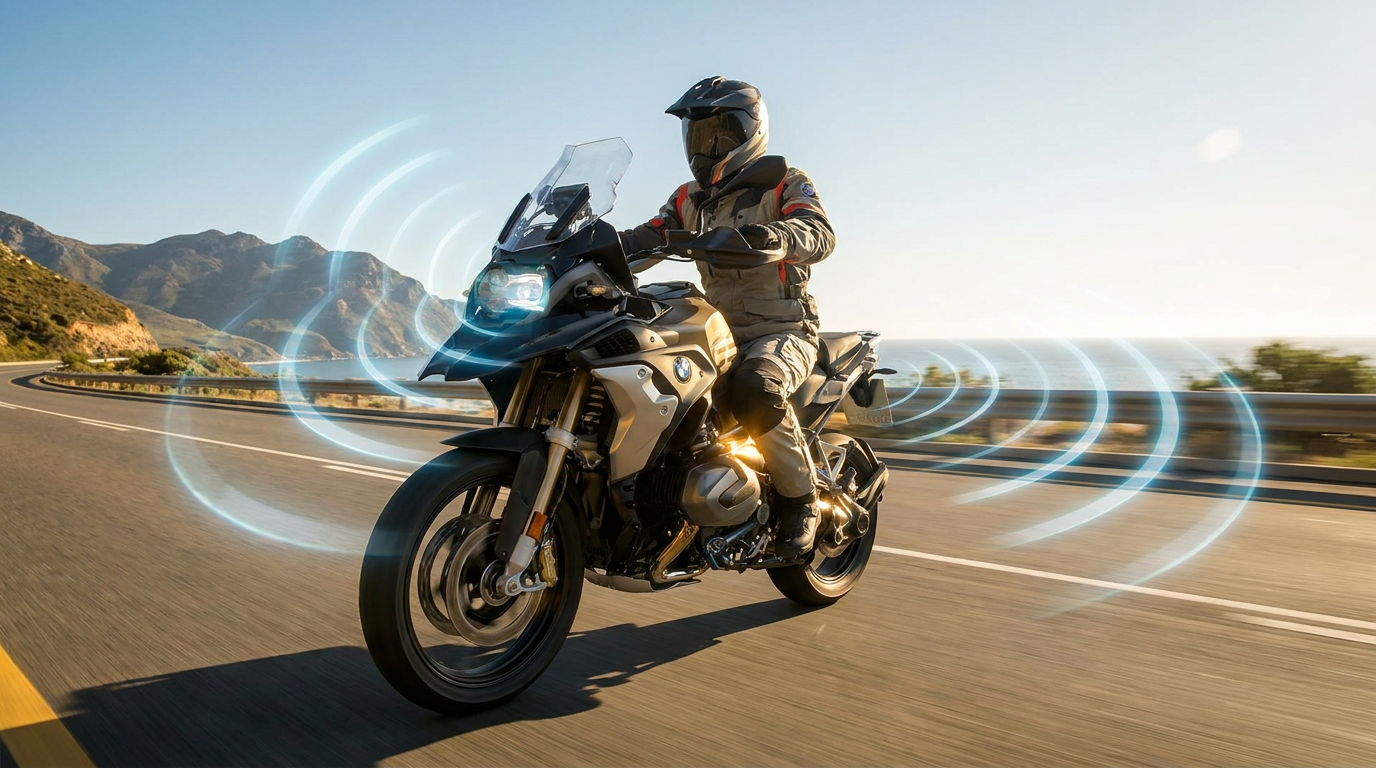
Advanced Rider Assistance Systems (ARAS) are bringing car-like safety features—such as adaptive cruise control and blind-spot detection—to motorcycles, promising to prevent one in six accidents.
By Factlen Editorial Team
- Safety Technologists & OEMs
- Engineers view ARAS as a necessary evolution to protect vulnerable road users.
- Traditionalist Riders
- Purists worry that digital safety nets will erode essential analog riding skills.
- Touring Motorcyclists
- Long-distance riders embrace the technology for its fatigue-reducing benefits.
What's not represented
- · Motorcycle Insurance Actuaries
- · Motorcycle Safety Foundation Instructors
Why this matters
Motorcyclists are inherently vulnerable on the road. The integration of millimeter-wave radar into both new bikes and aftermarket kits provides riders with a 360-degree digital safety net, fundamentally changing how we navigate heavy traffic and reducing the cognitive load of long rides.
Key points
- Advanced Rider Assistance Systems (ARAS) use millimeter-wave radar to bring car-like safety features to motorcycles.
- Core features include Adaptive Cruise Control, Blind Spot Detection, and Forward Collision Warning.
- Bosch estimates that widespread adoption of radar-based ARAS could prevent one in six motorcycle accidents.
- Aftermarket companies are now producing retrofit radar kits, allowing older motorcycles to gain blind-spot detection.
- The technology significantly reduces physical fatigue and cognitive load for long-distance touring riders.
Motorcycling has historically been an exercise in analog hyper-vigilance. Without the steel cage, crumple zones, or airbags of a car, a rider's primary defense has always been their own vision, anticipation, and the physical shoulder check. But the landscape of two-wheeled safety is undergoing a profound digital transformation. Advanced Rider Assistance Systems (ARAS) are shifting the paradigm, wrapping riders in an invisible, 360-degree safety net that never blinks, never fatigues, and reacts in milliseconds.[6]
At its core, ARAS is a suite of electronic aids designed to mitigate human error and manage the chaos of modern traffic. The most prominent features include Adaptive Cruise Control (ACC), Blind Spot Detection (BSD), and Forward Collision Warning (FCW). While these technologies have been standard in passenger cars for years, miniaturizing them and adapting their algorithms for the unique physics of a leaning, single-track vehicle has been a monumental engineering challenge.[1][6]
The breakthrough enabling this revolution is the adoption of 77GHz automotive-grade millimeter-wave radar. Unlike early optical camera systems, which can be easily blinded by sun glare, heavy rain, or fog, millimeter-wave radar easily penetrates poor weather conditions. It doesn't just "see" a vehicle; it actively tracks its closing speed, exact distance, and trajectory, feeding a continuous stream of high-fidelity data to the motorcycle's central computer.[3][6]
German engineering giant Bosch has been the primary catalyst in bringing this technology to the two-wheeled world. According to the company's accident research data, the widespread implementation of radar-based ARAS could prevent one in six motorcycle accidents globally. Their latest generation of front-facing radar achieves a staggering 210-meter detection range, giving the system ample time to calculate closing speeds and initiate warnings long before a human rider might recognize the danger.[1][4]

Integrating these systems into a motorcycle requires a delicate touch. In a car, an aggressive automatic braking event might spill a cup of coffee; on a motorcycle, it could easily lock the front wheel or upset the chassis enough to cause a crash. Consequently, motorcycle ARAS tuning must be incredibly progressive. The system gently rolls off the electronic throttle and applies the brakes with smooth, calculated pressure, ensuring the rider maintains complete balance and control.[2]
The premium adventure touring segment served as the launchpad for this technology. Ducati made headlines when it released the Multistrada V4, the first production motorcycle to feature both front and rear radar modules seamlessly integrated into its bodywork. KTM and BMW Motorrad quickly followed suit, equipping their flagship models with similar suites, proving that the technology was not just a gimmick, but a highly functional tool for serious riders.[2][5]
The premium adventure touring segment served as the launchpad for this technology.
For long-distance touring, Adaptive Cruise Control fundamentally changes the riding experience. The rider selects a target speed and a preferred following distance, and the motorcycle handles the rest. By offloading the continuous micro-adjustments of the throttle and brakes required to navigate highway traffic, ACC drastically reduces physical fatigue and cognitive load, allowing the rider to stay sharper for the twisty roads at the end of the highway slog.[2][6]
Meanwhile, the rear-facing radar powers the Blind Spot Detection system, addressing one of motorcycling's most persistent annoyances: compromised mirrors. Motorcycle mirrors are often plagued by engine vibration or blocked by the rider's own shoulders. BSD solves this by illuminating a bright amber LED on the edge of the mirror glass whenever a vehicle enters the rider's blind spot, providing an unmistakable visual cue before a lane change.[1][2]

Until recently, this level of digital awareness was locked behind the paywall of $25,000 flagship motorcycles. However, the rapid miniaturization of radar components has sparked an explosion in the aftermarket sector. Companies like INNOVV and CHIGEE have developed sophisticated, standalone radar kits that can be retrofitted to almost any motorcycle, democratizing access to top-tier safety tech.[3]
These aftermarket systems typically utilize a discreet radar module mounted near the motorcycle's license plate. They wire directly into the bike's power supply and communicate with either handlebar-mounted displays or stick-on mirror LEDs. In real-world testing, these systems have proven remarkably adept at filtering out stationary objects and only alerting the rider to vehicles actively closing in from behind, avoiding the "boy who cried wolf" syndrome of constant false alarms.[3]
Despite the clear safety benefits, the rise of ARAS has sparked a philosophical debate within the riding community. Motorcycling is inherently about self-reliance, and traditionalists argue that relying on flashing LEDs breeds complacency. They worry that riders will begin to trust the computer more than their own eyes, eventually abandoning the physical shoulder check—a fundamental survival skill that has kept bikers alive for a century.[3][6]
Safety advocates and engineers counter that ARAS is designed to augment, not replace, fundamental riding skills. Just as the introduction of Anti-lock Braking Systems (ABS) didn't eliminate the need for proper braking technique, radar acts as a fail-safe for the inevitable moments when human attention lapses. It provides an extra layer of situational awareness, particularly in chaotic urban environments where threats can materialize from multiple directions simultaneously.[1][6]

The technology is not standing still. The next frontier for motorcycle ARAS is the integration of Vehicle-to-Everything (V2X) communication. This will allow motorcycles to wirelessly exchange data with surrounding cars, traffic lights, and infrastructure. A V2X-equipped bike could alert its rider to a car running a red light blocks away, or warn of a sudden traffic jam around a blind corner, predicting hazards before they even enter the radar's line of sight.[4]
As production scales and component costs continue to plummet, ARAS is rapidly transitioning from a luxury novelty to a standard safety feature. Industry analysts project the technology will soon trickle down from premium touring rigs to mid-capacity commuter bikes and scooters. By providing riders with a tireless digital co-pilot, radar technology is quietly engineering a future where motorcycling is significantly safer, without sacrificing the freedom that draws us to two wheels in the first place.[4][6]
How we got here
2018
KTM and Ducati begin publicizing their development of radar-assisted motorcycle prototypes.
Late 2020
Ducati unveils the Multistrada V4, the first production motorcycle equipped with both front and rear radar.
2024
Aftermarket companies launch accessible retrofit radar kits, bringing blind-spot detection to older motorcycles.
2025
The global motorcycle ARAS market surpasses $1.8 billion as the technology trickles down to mid-range bikes.
Viewpoints in depth
Safety Technologists & OEMs
Engineers view ARAS as a necessary evolution to protect vulnerable road users.
For companies like Bosch and Ducati, the data is unequivocal: human attention lapses, and when it does on a motorcycle, the consequences are severe. By implementing sensors that never blink and react in milliseconds, technologists believe they can engineer away a significant portion of rear-end collisions and blind-spot accidents. They view ARAS not as a luxury, but as the inevitable next step in vehicle safety, akin to the mandatory adoption of ABS.
Traditionalist Riders
Purists worry that digital safety nets will erode essential analog riding skills.
A vocal segment of the motorcycling community views the influx of radar and flashing LEDs with skepticism. Their primary concern is risk homeostasis—the idea that riders will subconsciously rely on the blind-spot light instead of physically turning their heads for a shoulder check. For these riders, motorcycling is inherently about personal responsibility and hyper-awareness, and they fear that wrapping a rider in a digital cocoon breeds a dangerous level of complacency.
Touring Motorcyclists
Long-distance riders embrace the technology for its fatigue-reducing benefits.
For riders logging hundreds of miles a day on interstate highways, ARAS is a revelation. Maintaining a constant following distance manually requires continuous micro-adjustments of the throttle and brakes, which drains mental and physical energy over hours in the saddle. By offloading this task to adaptive cruise control, touring riders report arriving at their destinations significantly less fatigued, allowing them to maintain sharper focus when they transition to complex urban environments.
What we don't know
- How quickly insurance companies will universally adopt premium discounts for motorcycles equipped with aftermarket ARAS kits.
- Whether the influx of digital alerts could eventually lead to sensory overload for new riders in highly congested urban environments.
- The exact timeline for when V2X (Vehicle-to-Everything) communication will become standardized enough to reliably interact with motorcycle radar systems.
Key terms
- ARAS
- Advanced Rider Assistance Systems; a suite of electronic safety features designed specifically for motorcycles.
- Adaptive Cruise Control (ACC)
- A system that automatically adjusts a motorcycle's speed to maintain a safe, pre-set following distance from the vehicle ahead.
- Blind Spot Detection (BSD)
- A radar-based feature that monitors the areas behind and beside the motorcycle, illuminating a warning light if a vehicle is present.
- Millimeter-Wave Radar
- A high-frequency radar technology (often 77GHz) used in automotive sensors to precisely measure the distance, speed, and trajectory of surrounding objects.
- V2X Communication
- Vehicle-to-Everything technology, which allows motorcycles to wirelessly share safety and hazard data with other vehicles and road infrastructure.
Frequently asked
Can I add blind-spot detection to my current motorcycle?
Yes. While early systems were built directly into new flagship bikes, aftermarket companies now sell standalone radar kits that can be retrofitted to almost any motorcycle.
Does motorcycle adaptive cruise control steer the bike?
No. Unlike some advanced car systems, motorcycle ARAS only manages the throttle and brakes to maintain a safe following distance. The rider remains entirely responsible for steering and balancing.
Will radar systems work in the rain?
Yes. Unlike optical cameras, which can be blinded by rain, fog, or glare, millimeter-wave radar easily penetrates poor weather conditions to accurately track surrounding vehicles.
Are the warning lights distracting?
Most systems are designed to place warning LEDs in the rider's peripheral vision, such as on the edges of the side mirrors, providing alerts without requiring the rider to look away from the road.
Sources
Source coverage
6 outlets
3 viewpoints surfaced






[1]Bosch MobilitySafety Technologists & OEMs
Motorcycle assistance systems
Read on Bosch Mobility →[2]CNETTouring Motorcyclists
Ducati Multistrada V4 gets front and rear radar
Read on CNET →[3]WebBikeWorldTraditionalist Riders
INNOVV ThirdEYE BSD System Review
Read on WebBikeWorld →[4]Market.usSafety Technologists & OEMs
Global Motorcycle Advanced Rider Assistance System Market
Read on Market.us →[5]TopSpeedTouring Motorcyclists
Ducati Multistrada V4 Radar Features
Read on TopSpeed →[6]Factlen Editorial TeamTouring Motorcyclists
Synthesis by Factlen editorial team
Read on Factlen Editorial Team →


Every angle. Every day.
Get shopping stories with full source coverage and perspective breakdowns delivered to your inbox.