
How Precision Agriculture is Shielding the Food Supply From the 2026 Fertilizer Crisis
With global fertilizer prices surging 80% amid geopolitical disruptions, farmers are rapidly adopting biological alternatives and AI-driven precision tools to maintain crop yields.
By Factlen Editorial Team
- AgTech Innovators
- Advocates for technological solutions believe the crisis will permanently modernize farming.
- Global Food Security Advocates
- International organizations warn of a widening technological divide.
- Traditional Producers
- Conventional farmers emphasize the immediate financial risks of the transition.
What's not represented
- · Smallholder farmers in developing nations who cannot afford AgTech solutions
Why this matters
The global fertilizer shortage threatens to severely reduce crop yields and drive up food prices worldwide. However, the rapid adoption of precision agriculture and biological alternatives is providing a crucial buffer, fundamentally transforming how the world grows its food.
Key points
- Geopolitical disruptions in the Strait of Hormuz have trapped roughly 30% of global fertilizer exports, driving prices up 80%.
- Farmers are rapidly pivoting to precision agriculture, using AI and sensors to apply fertilizer only where strictly necessary.
- Variable-rate application technologies can reduce total fertilizer use by 36 to 60 percent without sacrificing crop yields.
- The crisis is accelerating the mainstream adoption of biological fertilizers, which enhance soil health and reduce reliance on synthetic chemicals.
- While large agribusinesses are adapting, smallholder farmers in developing nations remain highly vulnerable to the input shock.
The spring 2026 planting season is unfolding under unprecedented economic pressure. Across the Northern Hemisphere, farmers are confronting an 80 percent year-on-year spike in the price of urea and other essential fertilizers. The surge, triggered by geopolitical disruptions in the Middle East, has fundamentally altered the math of modern agriculture. For decades, the standard practice was to apply synthetic nutrients broadly across fields to guarantee maximum yields. Today, that approach is financially ruinous, forcing a rapid, industry-wide pivot toward high-efficiency farming techniques.[1][2]
The root of the current crisis lies in the Strait of Hormuz, a narrow maritime chokepoint that typically handles up to 30 percent of internationally traded fertilizers. Recent regional conflicts have reduced commercial shipping traffic through the strait by more than 95 percent. Unlike the energy shocks of previous years, this disruption hit the agricultural sector during its most vulnerable window—the exact weeks when millions of tons of inputs must be purchased and applied to fields.[3][4]
The stakes for global food security are immense. The Food and Agriculture Organization has warned that without immediate adaptation, the input shock could reduce the protein content of staple crops and trigger a cascading crisis of lower yields and higher consumer prices by late 2026. The World Bank projects that fertilizer affordability is currently at its worst level since 2022, placing immense strain on producers who cannot simply pass all their rising costs onto consumers.[1][2]

Yet, rather than accepting inevitable crop failures, the agricultural sector is accelerating the deployment of technologies that were once considered experimental. The 2026 crisis is acting as a massive catalyst for precision agriculture—a data-driven approach that treats fields not as uniform blocks of land, but as complex ecosystems requiring targeted interventions. By integrating satellite imagery, soil sensors, and artificial intelligence, farmers are learning to do significantly more with less.[8]
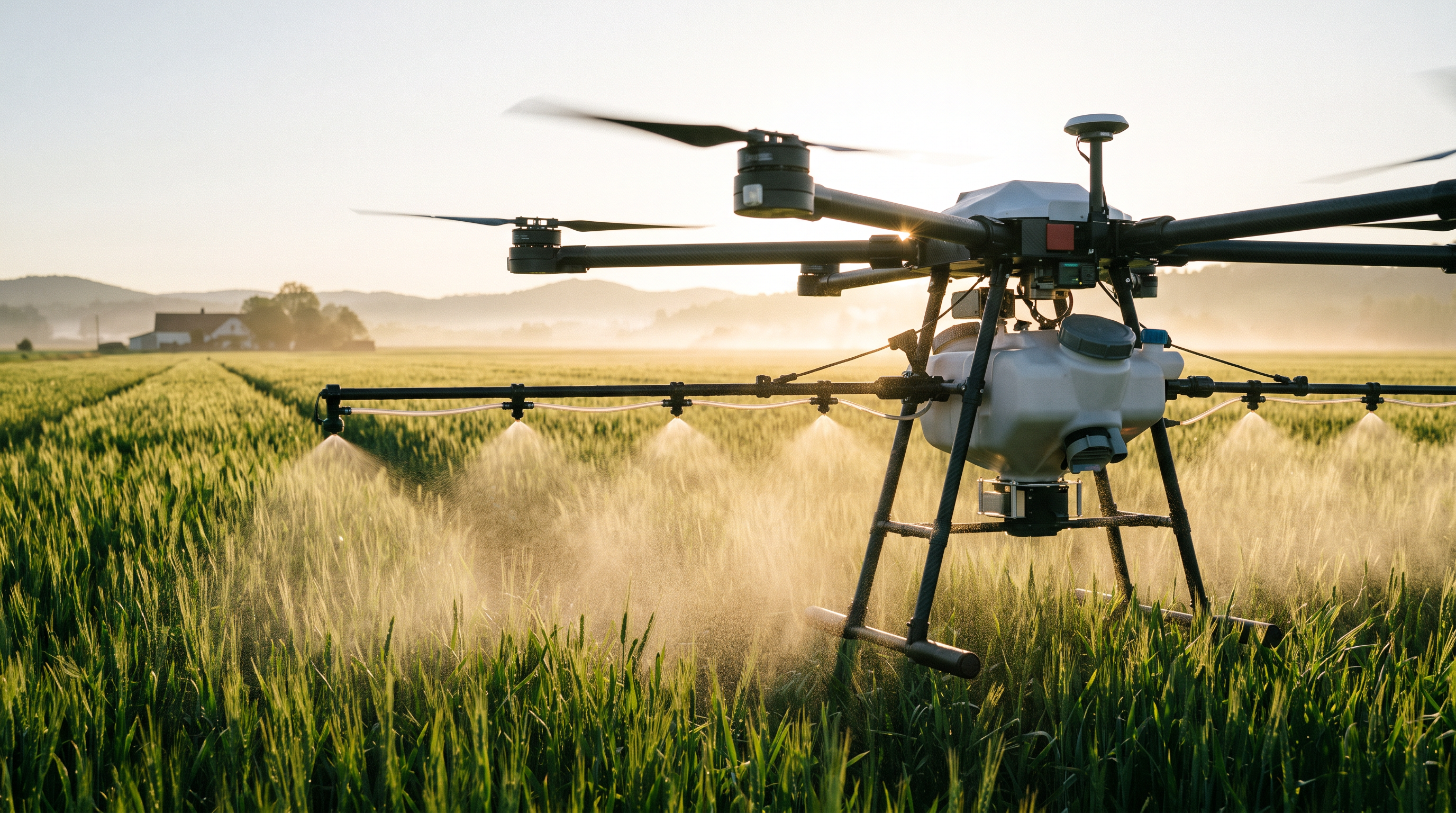
The mechanics of precision agriculture represent a paradigm shift in resource management. Instead of spraying an entire 500-acre farm with a uniform coat of nitrogen, autonomous tractors equipped with variable-rate technology analyze real-time soil data to apply fertilizer only where it is strictly needed. A patch of nutrient-rich soil might receive nothing, while a depleted zone receives a concentrated dose. This surgical precision dramatically lowers overall consumption without sacrificing the plant's health.[6][8]
The environmental and economic benefits of this targeted approach are substantial. A recent synthesis of agricultural data published in Nature found that climate-smart technologies and variable-rate applications can decrease total fertilizer use by 36 to 60 percent while maintaining average crop yields. In a year where input costs have nearly doubled, that level of efficiency is the difference between a profitable harvest and farm bankruptcy.[6]
The environmental and economic benefits of this targeted approach are substantial.
Beyond mechanical precision, the biological composition of fertilizers is also undergoing a rapid evolution. For the past century, agriculture has relied heavily on synthetic nitrogen, phosphorus, and potassium. Now, biologicals—products derived from naturally occurring microorganisms, plant extracts, and organic matter—are moving firmly into the mainstream. These biostimulants and biocontrols are designed to enhance the soil's natural ability to fix nitrogen and absorb nutrients.[5][8]

Industry data reflects this massive shift in agronomic strategy. Market analysts track the agricultural biologicals sector growing at an annual rate of 10 to 14 percent, with recent surveys indicating that 86 percent of agricultural distributors plan to expand their biological offerings in 2026. These products are no longer viewed as niche organic alternatives; they are essential tools for conventional growers looking to reduce their synthetic load and improve soil resilience.[5]
Water management is also being overhauled to protect these expensive nutrient investments. Data-driven irrigation systems now use soil moisture sensors to deliver water precisely to the root zone. By preventing over-watering, farmers reduce the runoff that typically washes valuable nitrogen and phosphorus out of the soil and into local waterways. Keeping the nutrients locked in the soil ensures that the plant actually absorbs the fertilizer the farmer paid for.[7][8]
The transition to smart farming is not without significant friction. The upfront capital required to outfit a farm with GPS-guided machinery, drone surveillance, and AI analytics is steep. While large agribusinesses in North America and Europe can amortize these investments over thousands of acres, smaller operations face a daunting barrier to entry. The technology exists to solve the fertilizer crisis, but the financial mechanisms to distribute that technology evenly do not.[2][4]
This technological divide is particularly acute in developing nations. In parts of East and Southern Africa, where millions are already facing acute food insecurity, smallholder farmers lack access to both the synthetic fertilizers trapped in global supply chains and the high-tech precision tools used to mitigate those shortages. International organizations have stressed that protecting the nutritional integrity of agrifood systems in these regions requires urgent international support and technology transfer.[1][2]

Policymakers are beginning to recognize that agricultural resilience is a matter of national security. Several governments are actively exploring subsidies and grant programs to accelerate the adoption of climate-smart agricultural tools. By underwriting the cost of soil sensors and biological inputs, states aim to decouple their domestic food supply from the volatility of global fossil fuel and fertilizer markets.[4][8]
The integration of biology and digital data is creating a feedback loop of continuous improvement. As more farms adopt precision tools, the algorithms powering variable-rate applications become smarter, further optimizing input use. Agronomists anticipate that by the end of the decade, the baseline standard for commercial farming will look vastly different than it did in 2025, driven entirely by the economic shocks of the present moment.[5][8]
Ultimately, the 2026 fertilizer crisis is forcing a painful but necessary evolution in global agriculture. The era of cheap, abundant synthetic inputs has ended, replaced by an imperative for extreme efficiency. While the immediate geopolitical disruptions present a severe challenge, the rapid scaling of precision agriculture and biological innovation offers a hopeful blueprint for a more resilient, sustainable food system capable of feeding a growing planet.[8]
How we got here
February 2026
Geopolitical conflict escalates around the Strait of Hormuz, disrupting commercial shipping.
March 2026
Global urea fertilizer prices surge by nearly 50 percent in a matter of weeks.
May 2026
The FAO warns of a systemic shock to global agrifood systems as the spring planting season is hit by input shortages.
July 2026
Data shows a massive acceleration in the adoption of precision agriculture and biological fertilizers to offset synthetic shortages.
Viewpoints in depth
AgTech Innovators
Advocates for technological solutions believe the crisis will permanently modernize farming.
Technology developers and precision agriculture advocates view the 2026 fertilizer spike as a necessary catalyst for an overdue industry overhaul. They argue that traditional broadcast fertilization is inherently wasteful and ecologically damaging. By forcing the adoption of variable-rate application, AI analytics, and biologicals, they contend the current crisis will ultimately yield a more resilient food system that produces higher yields with a fraction of the synthetic inputs.
Traditional Producers
Conventional farmers emphasize the immediate financial risks of the transition.
Many conventional growers and agricultural economists caution that the pivot to precision agriculture is not a seamless transition. They highlight the massive capital expenditure required to upgrade machinery and integrate digital tools—costs that are difficult to absorb when operating margins are already compressed by high input prices. For these producers, the immediate reality is a struggle to maintain yields and avoid bankruptcy before the long-term benefits of AgTech can be realized.
Global Food Security Advocates
International organizations warn of a widening technological divide.
Institutions like the FAO and the World Bank emphasize the unequal distribution of agricultural technology. They argue that while well-capitalized farms in the Global North can mitigate fertilizer shortages with drones and biologicals, smallholder farmers in developing nations are left fully exposed to the price shocks. These advocates stress that without aggressive technology transfer and financial aid, the crisis will disproportionately devastate food security in Africa and parts of Asia.
What we don't know
- Whether the rapid adoption of precision agriculture can fully offset the yield losses expected from the 80% drop in synthetic fertilizer application.
- How long the Strait of Hormuz will remain effectively closed to commercial fertilizer shipments.
- To what extent governments will subsidize the high upfront costs of AgTech for smaller, independent farming operations.
Key terms
- Precision Agriculture
- A farming management concept that uses digital techniques, sensors, and GPS to monitor and optimize agricultural production processes.
- Variable-Rate Application
- Technology that allows farmers to apply different rates of fertilizer, seed, or chemicals across a single field based on specific local conditions.
- Biologicals
- Agricultural products derived from naturally occurring microorganisms or plant extracts used to enhance soil health and crop growth.
- Urea
- A widely used, highly concentrated solid nitrogen fertilizer essential for global crop production.
Frequently asked
Why have fertilizer prices spiked so dramatically in 2026?
Geopolitical conflicts have severely disrupted shipping through the Strait of Hormuz, a critical maritime chokepoint that handles roughly 30 percent of the world's internationally traded fertilizers.
How does precision agriculture reduce fertilizer use?
By using soil sensors, GPS, and AI, precision agriculture allows farmers to apply fertilizer only to the specific areas of a field that need it, rather than spraying the entire area uniformly.
Will the fertilizer shortage cause a global famine?
While the shortage poses a severe risk to global food security—particularly in developing nations—the rapid adoption of high-efficiency farming techniques and biological alternatives is helping to mitigate the worst impacts.
What are agricultural biologicals?
They are natural products, such as beneficial microbes and biostimulants, that help plants absorb nutrients more efficiently and improve overall soil health, reducing the need for synthetic chemicals.
Sources
Source coverage
8 outlets
3 viewpoints surfaced







[1]Food and Agriculture OrganizationGlobal Food Security Advocates
FAO Director-General warns of systemic shock to global agrifood systems
Read on Food and Agriculture Organization →[2]World BankGlobal Food Security Advocates
Food Security Update: Trends in Global Agricultural Commodity Prices
Read on World Bank →[3]Council on Foreign RelationsGlobal Food Security Advocates
Why the Strait of Hormuz Matters: The World's Most Dangerous Choke Point
Read on Council on Foreign Relations →[4]World Economic ForumGlobal Food Security Advocates
Another conflict, another reminder of the fragility of the world's food supply
Read on World Economic Forum →[5]ICL GroupAgTech Innovators
Trend #1 – Biologicals Go Mainstream
Read on ICL Group →[6]NatureAgTech Innovators
Climate-smart technologies decrease fertilizer use while maintaining crop yields
Read on Nature →[7]PhycoTerraAgTech Innovators
American farmers have navigated volatile fertilizer markets before
Read on PhycoTerra →[8]Factlen Editorial TeamTraditional Producers
Synthesis by Factlen editorial team
Read on Factlen Editorial Team →

Every angle. Every day.
Get food drink stories with full source coverage and perspective breakdowns delivered to your inbox.