
DOE Proposes Rule to Overhaul Appliance Efficiency Standards, Setting Higher Bar for Future Mandates
The Department of Energy has proposed a major revision to its rulemaking process, establishing strict new energy-saving thresholds that must be met before future appliance efficiency standards can be enacted.
By Factlen Editorial Team
- Energy Efficiency Advocates
- Argue that the higher thresholds will block future standards, ultimately costing consumers billions in missed utility bill savings and increasing grid strain.
- Appliance Manufacturers
- Argue that the new process will reduce regulatory uncertainty, lower upfront manufacturing costs, and preserve consumer choice in product features.
- Commercial Facility Managers
- Focused on how the rule will impact the long-term operating costs of commercial equipment like water heaters and clean-water pumps.
What's not represented
- · State-level energy regulators who may attempt to implement their own stricter appliance standards if federal mandates stall.
- · Utility companies managing grid load, who rely on increasingly efficient appliances to offset rising electricity demand.
Why this matters
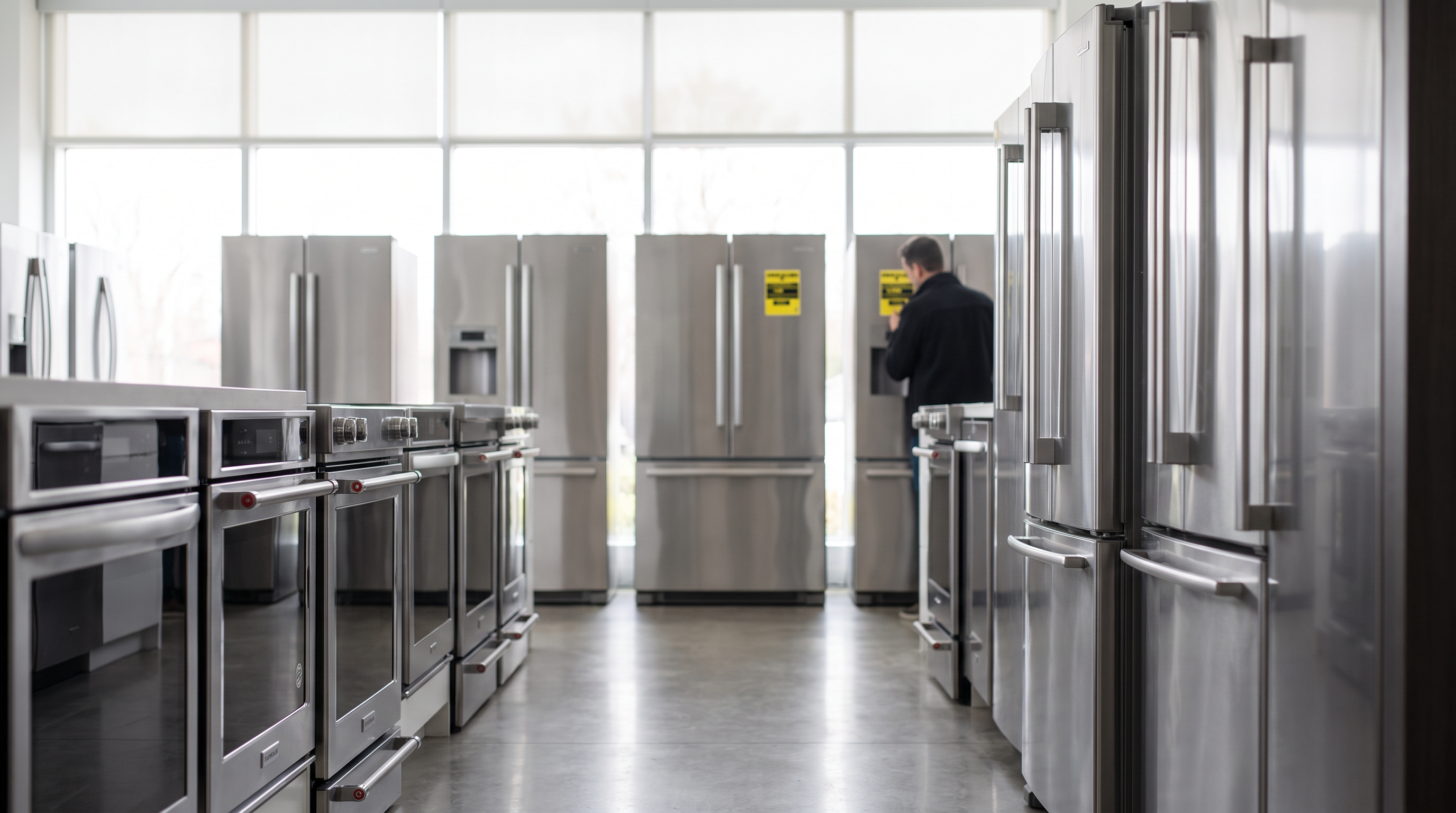
While this proposed rule won't change the appliances currently sitting in showrooms, it fundamentally rewrites the playbook for how future energy standards are created. By setting a much higher bar for new efficiency mandates, the policy aims to lower the upfront purchase price of household appliances, but critics warn it could lock consumers into higher monthly utility bills for decades to come.
Key points
- The DOE has proposed overhauling its Process Rule, which governs how future appliance efficiency standards are created.
- New standards would only be approved if they save at least 2 quadrillion BTUs of energy or reduce energy use by 10%.
- The proposal adds an early assessment stage to screen out mandates that do not meet the new economic thresholds.
- Industry groups support the move, arguing it will lower upfront appliance costs and preserve consumer choice.
- Efficiency advocates warn the higher bar will block future standards, costing consumers billions in long-term utility savings.
- The proposed rule does not repeal or alter any existing efficiency standards for appliances currently on the market.
The U.S. Department of Energy (DOE) has initiated a sweeping proposal that could fundamentally alter how the federal government regulates the energy consumption of household and commercial appliances. On July 2, 2026, the agency issued a Notice of Proposed Rulemaking aimed at overhauling its "Process Rule"—the internal framework used to determine whether new efficiency mandates are technologically feasible and economically justified. Rather than targeting specific products like gas stoves or dishwashers individually, the proposal rewrites the underlying rulebook for how all future standards will be evaluated and implemented.[3][5]
For decades, the DOE’s Appliance and Equipment Standards Program has served as the invisible baseline for the American kitchen and laundry room. Mandated by the Energy Policy and Conservation Act of 1975, the program requires the agency to periodically review and update minimum efficiency requirements for roughly 60 categories of products. These standards are the reason modern refrigerators use significantly less electricity than models from the 1990s, and why incandescent light bulbs have largely been replaced by highly efficient LEDs.[3][6]
The new proposal, however, represents a sharp pivot in regulatory philosophy. Energy Secretary Chris Wright has framed the overhaul as a necessary step to protect consumer choice and prevent federal mandates from driving up the upfront costs of essential household goods. By establishing stricter prerequisites for any new regulation, the DOE aims to ensure that future standards are only adopted when they deliver massive, undeniable benefits to the public, rather than marginal efficiency gains that might compromise appliance performance.[3][5]
At the heart of the 192-page proposal is a stringent new definition of what constitutes "significant energy savings." Under the revised Process Rule, the DOE would be prohibited from advancing any new efficiency standard unless it is projected to save at least 2 quadrillion British thermal units (BTUs) of full-fuel-cycle energy over a 30-year period. Alternatively, a proposed standard could proceed if it guarantees at least a 10 percent reduction in energy use compared to existing models.[2][6]

To put that threshold into perspective, a single BTU is roughly the amount of energy generated by burning one wooden match. Two quadrillion BTUs—often referred to as two "quads"—is an immense volume of energy, equivalent to the total annual energy consumption of millions of American households. By setting the bar at this level, the DOE is effectively screening out incremental updates, ensuring that only the most transformative technological leaps trigger new federal mandates.[2]
Beyond the numerical thresholds, the proposal introduces significant structural hurdles to the rulemaking process itself. It establishes an "early assessment" stage designed to quickly filter out proposed standards that fail to meet the new economic or energy-saving criteria before the agency expends resources on deep technical analysis. Furthermore, it requires the DOE to utilize a completely separate regulatory track when attempting to "cover" entirely new types of appliances that do not fit neatly into existing categories.[1][2]
Proponents of the overhaul, including major trade associations representing heating, ventilation, and appliance manufacturers, argue that these procedural changes are long overdue. They contend that the relentless pace of recent efficiency mandates has forced manufacturers to prioritize energy conservation over product utility, leading to appliances that cost more at the register and sometimes perform worse—such as washing machines that require longer cycles to clean clothes.[4][5]
For the manufacturing sector, the proposed Process Rule offers a promise of regulatory stability. By capping the frequency and stringency of new mandates, companies can invest in long-term product development without the looming threat of shifting federal baselines. Industry advocates assert that when manufacturers are freed from aggressive compliance schedules, they can focus on innovating features that consumers actually want, while allowing market competition—rather than government intervention—to drive efficiency improvements naturally.[4][7]
For the manufacturing sector, the proposed Process Rule offers a promise of regulatory stability.
Conversely, energy efficiency advocates and environmental groups have strongly condemned the proposal, characterizing it as an intentional bottleneck designed to paralyze the DOE’s regulatory apparatus. Critics, including the Appliance Standards Awareness Project, argue that the 2-quadrillion BTU threshold is arbitrarily high and would retroactively disqualify many of the most successful standards enacted over the past decade—standards that have collectively saved American households billions of dollars.[1][6]
The core of the opposition's argument centers on the long-term financial impact on consumers. While less-efficient appliances may carry a lower price tag at the big-box store, they consume significantly more electricity and water over their 10-to-15-year lifespans. Advocates warn that by stalling future standards, the DOE is effectively locking lower-income households into higher monthly utility bills, erasing the upfront savings through years of inflated operating costs.[2][4]

The commercial building sector is also watching the rulemaking closely, as the Process Rule governs industrial equipment alongside residential appliances. Facility managers rely on steady improvements in the efficiency of commercial water heaters, clean-water pumps, and heavy-duty refrigeration units to manage the massive energy footprints of office buildings and warehouses. If the new thresholds prevent the DOE from updating commercial standards, businesses could face higher long-term overhead costs.[2][7]
Despite the intense debate surrounding the proposal, it is crucial for consumers to understand what the rule does not do. The Notice of Proposed Rulemaking does not repeal or roll back any existing appliance efficiency standards. The energy-saving refrigerators, induction cooktops, and high-efficiency heat pumps currently available on the market are entirely unaffected. The proposal is strictly forward-looking, governing only how the next generation of standards will be evaluated.[3][7]
For homeowners currently in the market for new appliances, the shopping experience remains unchanged. The federal government’s three-tier system for evaluating appliance efficiency is still the most reliable tool for consumers. The baseline is set by the current DOE minimum standards, ensuring that every product legally sold in the United States meets a basic level of operational efficiency.[3]

Above that baseline, consumers should rely on the bright yellow EnergyGuide labels affixed to showroom models. These labels provide a standardized estimate of the appliance's annual operating cost and electricity usage, allowing buyers to directly compare the long-term financial impact of competing models. Finally, the blue Energy Star badge remains the gold standard for premium efficiency, identifying products that significantly exceed federal minimums and often qualify for local utility rebates.[1]
The DOE's proposal is currently moving through a mandatory public comment period, inviting feedback from manufacturers, consumer advocates, and the general public. As the agency reviews these submissions, the ultimate fate of the Process Rule remains uncertain. However, if finalized in its current form, the overhaul will mark a defining shift in federal energy policy, prioritizing upfront affordability and market choice over mandated long-term conservation.[1][4]
How we got here
1975
The Energy Policy and Conservation Act establishes the federal Appliance and Equipment Standards Program.
2020
The DOE implements a process rule requiring significant energy savings thresholds for new standards.
2021–2025
The Biden administration reverses the 2020 rule and implements updated standards for roughly 25 product classes.
July 2, 2026
The DOE issues a new Notice of Proposed Rulemaking to overhaul the Process Rule and establish strict new thresholds.
August 6, 2026
The public comment period for the proposed rule officially closes.
Viewpoints in depth
Appliance Manufacturers' View
A focus on lowering upfront costs and preserving consumer choice by limiting federal mandates.
Trade associations representing HVAC and home appliance companies argue that the relentless pace of recent efficiency mandates has forced them to prioritize energy conservation over product utility. They contend that strict regulations often lead to appliances that cost more at the register and sometimes perform worse—such as dishwashers that require longer cycles to clean effectively. By raising the threshold for new mandates, manufacturers believe they can focus on innovating features consumers actually want, allowing market competition to drive efficiency improvements naturally without the burden of shifting federal baselines.
Efficiency Advocates' View
A focus on the long-term financial and environmental costs of stalling future energy standards.
Consumer and environmental advocates argue that the proposed 2-quadrillion BTU threshold is arbitrarily high and designed specifically to paralyze the DOE’s regulatory apparatus. They point out that while less-efficient appliances might carry a slightly lower upfront price tag, they consume significantly more electricity and water over their 10-to-15-year lifespans. By stalling future standards, advocates warn that the DOE is effectively locking lower-income households into higher monthly utility bills, erasing any upfront retail savings through years of inflated operating costs and placing unnecessary strain on the national power grid.
What we don't know
- Whether the proposed rule will survive inevitable legal challenges from environmental groups and state attorneys general if finalized.
- How exactly the DOE will define and measure the 'full-fuel-cycle' energy savings under the new early assessment protocols.
- Whether Congress will attempt to intervene and codify the Process Rule changes into law, as requested by some industry groups.
Key terms
- Process Rule
- The internal set of procedures and guidelines the Department of Energy uses to develop and implement new appliance efficiency standards.
- British Thermal Unit (BTU)
- A traditional unit of heat representing the amount of energy required to heat one pound of water by one degree Fahrenheit.
- Notice of Proposed Rulemaking (NOPR)
- A formal public announcement issued by a federal agency stating its intention to add, remove, or change a regulation.
- Full-Fuel-Cycle Energy
- A measurement that accounts for the total energy consumed by an appliance, including the energy required to extract, process, and deliver the fuel to the home.
Frequently asked
Does this rule eliminate current energy efficiency standards?
No. The proposed rule changes the process for setting future standards; existing requirements for appliances currently on the market remain in place.
What is the 2 quadrillion BTU threshold?
It is a proposed minimum requirement stating that any new efficiency mandate must save at least 2 quadrillion British thermal units of energy over 30 years to be enacted.
Will this change the price of appliances today?
Not immediately. Because the rule targets future regulations, current appliance prices and availability will not change in the short term.
How can I find the most efficient appliances right now?
Consumers should continue to look for the yellow EnergyGuide label to compare estimated operating costs and the blue Energy Star badge for premium efficiency.
Sources
Source coverage
7 outlets
3 viewpoints surfaced






[1]Utility DiveEnergy Efficiency Advocates
A proposed rule would create an 'obstacle course of restrictions' bogging down the Department of Energy's appliance efficiency program, a consumer advocate said
Read on Utility Dive →[2]Facilities DiveEnergy Efficiency Advocates
DOE plan to revisit appliance standards will hike energy costs, critic says
Read on Facilities Dive →[3]CNETCommercial Facility Managers
The US Department of Energy wants changes to energy-efficiency standards enacted under the Biden administration
Read on CNET →[4]The Cool DownAppliance Manufacturers
US appliance industry says Energy Department plan could ease costs for homeowners
Read on The Cool Down →[5]Department of EnergyAppliance Manufacturers
Trump Administration Moves to Permanently End Green New Scam Appliance Mandates
Read on Department of Energy →[6]Appliance Standards Awareness ProjectEnergy Efficiency Advocates
DOE Proposes Roadblocks for Future Efficiency Standards Despite Rising Energy Bills
Read on Appliance Standards Awareness Project →[7]Green Building Law UpdateCommercial Facility Managers
Rollback of Federal Appliance Efficiency Standards Happening – What Businesses Need to Know
Read on Green Building Law Update →

Every angle. Every day.
Get home stories with full source coverage and perspective breakdowns delivered to your inbox.