
Brown-Forman Rejects $15 Billion Sazerac Bid as Spirits Distribution Giant RNDC Unravels
The maker of Jack Daniel's has rejected an unsolicited takeover offer from the parent company of Buffalo Trace. The failed merger highlights a massive structural shift in the US alcohol industry as the nation's second-largest distributor systematically dismantles its footprint.
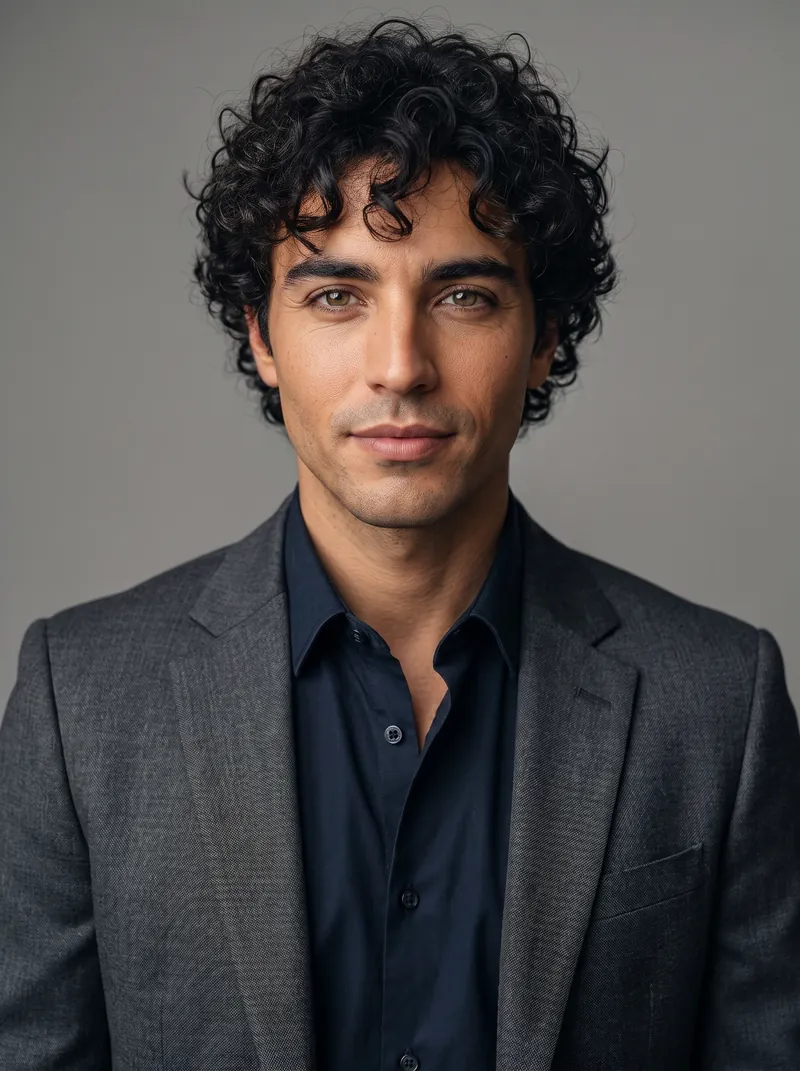
The American whiskey industry is undergoing a seismic structural shift, driven by a high-stakes battle for leverage between the companies that distill the spirits and the middlemen who deliver them. At the center of the storm is a rejected $15 billion takeover bid that would have united two of the most famous portfolios in the world.[4]
In late July 2026, Brown-Forman—the Louisville-based parent company of Jack Daniel's and Woodford Reserve—officially rejected an unsolicited, all-cash acquisition proposal from its cross-town rival, Sazerac. Sazerac, the privately held powerhouse behind Buffalo Trace, Pappy Van Winkle, and Fireball, offered $32 per share, a roughly 20% premium over Brown-Forman's trading price at the time.[2][4][6]
The deal would have created an unprecedented concentration of American whiskey brands under a single corporate roof. However, Brown-Forman's board, guided by the Brown family which has controlled the company since 1870, concluded the offer was "not actionable." Representatives for the family's Class A voting shares stated that Sazerac's vision did not align with their long-term strategy for independence.[2][6]
The rejection came just weeks after Brown-Forman walked away from a potential "merger of equals" with French spirits giant Pernod Ricard. That earlier deal, which would have united Jack Daniel's with Jameson and Absolut, collapsed over disagreements regarding debt structure and economics. While the Pernod Ricard proposal was largely stock-based—allowing the Brown family to retain influence—Sazerac's all-cash approach would have forced the dynasty to relinquish control entirely.[4][6]
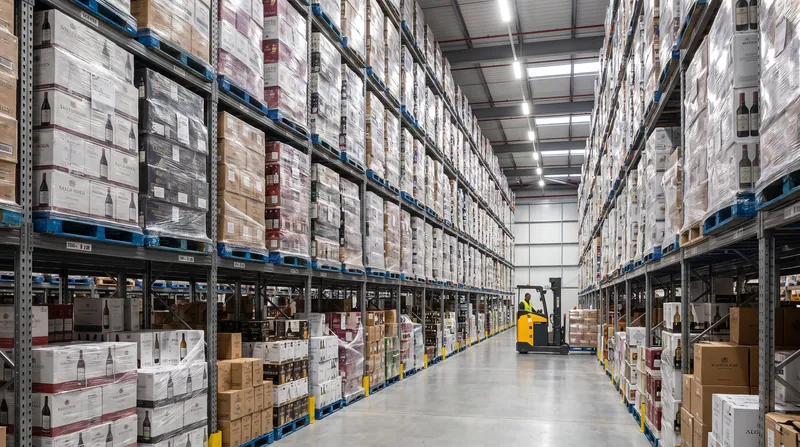
To understand why these massive suppliers are suddenly scrambling to merge, one must look at the middle layer of the American alcohol industry: the distributors. Following the repeal of Prohibition, the United States established the "three-tier system," a legal framework requiring producers to sell their alcohol to wholesale distributors, who then sell it to retailers and bars.[1][3]
For decades, this system was highly profitable for a handful of massive national distributors. But the balance of power is shifting, highlighted by the spectacular unraveling of Republic National Distributing Company (RNDC), once the second-largest wine and spirits wholesaler in the country.[1][4]
RNDC's ongoing collapse is the catalyst for the current wave of supplier consolidation. The distributor's troubles began in early 2023 when Sazerac abruptly terminated its decades-long partnership, pulling its massive portfolio from RNDC across more than 30 markets.[3][4]
The breakup was exceptionally bitter. Sazerac sued RNDC for $38.6 million, alleging the distributor had failed to pay for shipped inventory. RNDC fired back with a countersuit, claiming Sazerac was attempting to circumvent the three-tier system by taking marketing and promotional duties in-house while slashing the distributor's margins to a flat $8.50 per case.[1][3]
Sazerac's departure proved to be the first domino. In early 2025, Tito's Handmade Vodka—another massive volume driver—pulled its California business from RNDC, moving to Reyes Beverage Group. This triggered a mass exodus of brands, including High Noon and Cutwater, leaving RNDC scrambling to plug the holes in its revenue.[1]
By 2026, the cracks had accelerated into a full-scale dismantling of RNDC's national footprint. In June 2025, the company completely withdrew from California. Months later, RNDC sold eleven major markets to Reyes Beverage Group, marking the largest acquisition in Reyes' history.[1]
The sell-off didn't stop there. In April 2026, RNDC offloaded its operations in 13 control states to Martignetti Companies, while handing over its Pacific Northwest territories to Columbia Distributing. By the summer of 2026, RNDC was even preparing for a permanent exit from Illinois, citing a lack of available financing.[1]
As RNDC unravels, the distributors absorbing its territory are becoming unprecedented behemoths. Reyes Beverage Group, traditionally a beer distributor, is aggressively expanding into spirits, creating a new kind of mega-wholesaler.[1][4]
This rapid consolidation at the distributor tier terrifies alcohol producers. When a handful of mega-distributors control access to retail shelves across the country, suppliers lose their negotiating leverage. Distributors naturally prioritize the highest-volume, easiest-to-sell brands, leaving smaller labels fighting for attention.[1][4]
This power dynamic explains Sazerac's aggressive $15 billion play for Brown-Forman. By combining the makers of Fireball and Jack Daniel's, Sazerac hoped to build a portfolio so indispensable that no distributor could dictate terms to them. As one industry analyst noted, larger combined entities can command better margins and secure dedicated attention from wholesalers.[1][4]
Sazerac's strategy of bypassing traditional mega-distributors in favor of a fragmented network of smaller, logistics-focused partners was initially viewed as a massive risk. Yet, the company's performance has continued to outpace the broader market, proving that a supplier with enough brand power can rewrite the rules of the three-tier system.[4]
For now, the Brown family has chosen to weather the storm alone, betting that the enduring global appeal of Jack Daniel's and Woodford Reserve will protect them from the squeeze. But as post-pandemic alcohol demand softens and the middle tier continues to consolidate, the pressure on independent distillers will only intensify.[2][4][6]
The unraveling of RNDC and the failed mega-mergers of 2026 reveal a fundamental truth about the modern beverage industry: the battle for the consumer's dollar is no longer just fought in the distillery or on the billboard. It is fought in the warehouses, the loading docks, and the boardrooms where distribution contracts are signed.[1][4][5]
Key points
- Brown-Forman rejected a $15 billion all-cash takeover bid from Sazerac, opting to maintain family control.
- The rejection follows the collapse of a potential merger between Brown-Forman and Pernod Ricard.
- The supplier consolidation is being driven by the spectacular unraveling of RNDC, once the second-largest US distributor.
- RNDC has sold off dozens of state markets to competitors like Reyes Beverage Group after losing major brands.
What we don’t know
- Whether Sazerac will attempt a hostile takeover or increase its bid for Brown-Forman.
- How the expansion of beer distributors like Reyes Beverage Group into spirits will impact craft brands.
- If RNDC will eventually be sold entirely or if it can stabilize its remaining regional footprint.
How we got here
Early 2023
Sazerac abruptly terminates its decades-long partnership with RNDC, sparking a bitter legal battle over unpaid invoices and marketing duties.
June 2025
RNDC announces its complete withdrawal from the California market following the departure of Tito's Handmade Vodka.
Early 2026
RNDC sells eleven major markets to Reyes Beverage Group, accelerating the dismantling of its national footprint.
April 2026
Brown-Forman and Pernod Ricard terminate discussions for a 'merger of equals' due to disagreements over debt structure.
July 2026
Brown-Forman officially rejects Sazerac's unsolicited $15 billion all-cash takeover bid.
- Independent Distillers
- Argues that maintaining family control and brand legacy is more valuable than short-term cash premiums.
- Aggressive Consolidators
- Believes suppliers must merge into massive portfolios to maintain negotiating leverage against shrinking distribution networks.
- Distribution Network
- Defends the traditional three-tier system and argues that suppliers taking marketing in-house unfairly cuts distributor margins.
- Industry Analysts
- Focuses on the macroeconomic shifts, noting that distributor consolidation is forcing a fundamental rewiring of the alcohol supply chain.
Perspectives this story doesn't cover
- Craft Distillers
- Independent Retailers and Bar Owners
- Consumers
Sources
Source coverage
6 outlets
4 viewpoints surfaced






- [1]Park Street UniversityIndustry Analysts
RNDC Divestment: A Mega-Distributor Unwinds
Read on Park Street University → - [2]WHAS11Independent Distillers
Brown-Forman rejects Sazerac acquisition proposal, cites family shareholders' long-term vision
Read on WHAS11 → - [3]Shanken News DailyDistribution Network
RNDC Strikes Back At Sazerac With Countersuit
Read on Shanken News Daily → - [4]VineturAggressive Consolidators
Sazerac has offered about $15 billion to buy Brown-Forman
Read on Vinetur → - [5]FingersIndustry Analysts
How RNDC's boss is talking about RNDC's breakup
Read on Fingers → - [6]The Spirits BusinessIndependent Distillers
Jack Daniel's owner Brown-Forman has rejected Sazerac's takeover bid
Read on The Spirits Business →
More in Food & Drink
See all →Alcohol Pricing
How the FTC's Antitrust Suit Against Southern Glazer's Could Overhaul US Alcohol Pricing
7 sources
Beverage Industry
Structural Decline: How GLP-1 Drugs and Non-Alcoholic Alternatives Are Rearranging the Global Spirits Industry
7 sources
Three-Tier System
The Mechanics of the Three-Tier System: What RNDC's Bankruptcy Reveals About the US Alcohol Market
8 sources
Trade Tariffs
The Mechanics of Alcohol Tariffs: How the US-EU Trade Dispute Reshapes the Spirits Market
6 sources
Comments
Every angle. Every day.
Get Food & Drink stories with full source coverage and perspective breakdowns, free every day.