
Structural Decline: How GLP-1 Drugs and Non-Alcoholic Alternatives Are Rearranging the Global Spirits Industry
The rapid adoption of GLP-1 weight-loss medications is accelerating a structural shift in the beverage industry, compounding existing trends toward non-alcoholic alternatives. As consumers report reduced cravings and shift toward moderation, alcohol producers are being forced to rethink portfolios traditionally reliant on volume growth.
By Kabir Mehra

In short
- GLP-1 medications are actively reducing users' desire for alcohol by dampening the brain's reward pathways.
- Financial analysts project up to a 75% reduction in alcohol consumption among patients taking these drugs.
- Wine and beer are facing the steepest consumption declines due to demographic overlaps and physical satiety.
The traditional bar scene is built on the automatic second round—the unspoken rhythm of a night out. But a new class of medications is quietly disrupting that rhythm, forcing the global beverage industry to rethink its future.[7]
GLP-1 receptor agonists, the blockbuster drugs originally designed for diabetes and weight management, are altering how people experience cravings. Beyond suppressing the appetite for food, these medications are actively reducing the desire for alcohol.[5]
With millions of Americans now using medications like Ozempic, Wegovy, and Zepbound, the ripple effects are reaching the hospitality and beverage sectors. What began as a medical breakthrough is now a major consumer trend reshaping social rituals.[5]
The mechanism is twofold. First, GLP-1 treatments mimic hormones that regulate digestion, slowing gastric emptying and making users feel fuller for longer. This physical satiety makes consuming large volumes of liquid uncomfortable.[1]
But the impact goes beyond the stomach. These drugs also interact with the brain's reward pathways, dampening the dopamine hit traditionally associated with a cocktail or a glass of wine, effectively neutralizing the craving.[1]
The data is striking. A study published by the American Medical Association found that nearly half of GLP-1 patients who previously drank at least once a week reported a drop in alcohol consumption after starting the medication.[5]
Financial analysts are taking note. Morgan Stanley's research points to a potential 75% reduction in alcohol consumption among patients taking these drugs, driven by fewer drinking occasions and fewer drinks per occasion.[3]
For decades, the alcohol industry has relied on volume growth to sustain revenues. Now, producers are facing a structural decline in traditional consumption that cannot be easily offset by simply raising prices.[1]
Wine appears particularly exposed to this shift. Wine drinkers tend to overlap heavily with the higher-income, health-conscious demographics most likely to use GLP-1 drugs for weight management.[1][4]
Beer faces its own unique challenges. The carbonation and larger serving sizes inherent to beer can become physically uncomfortable for users experiencing the delayed digestion caused by the medications.[1]
But this is not a story of empty bars and lost revenue; it is a story of evolution. The desire for a beverage experience—the clinking of glasses, the complex flavor profiles, the social connection—remains entirely intact.[4]
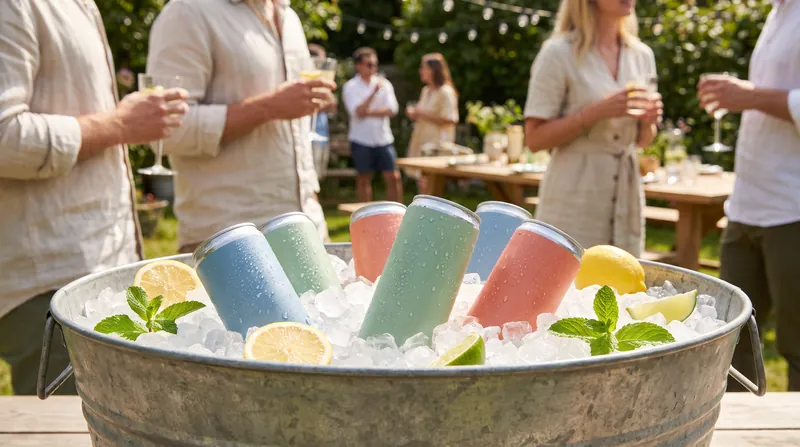
Enter the non-alcoholic boom. The global non-alcoholic drinks market is experiencing explosive growth, with zero-proof spirits, functional beverages, and premium mocktails leading the charge.[2]
Recent retail data shows that non-alcoholic beer, wine, and spirits have broken firmly into the mainstream, with off-premise sales nearing the $1 billion mark and growing at a rapid double-digit pace year-over-year.[6]
Interestingly, the vast majority of non-alcoholic beverage buyers also purchase traditional alcohol. This trend is about moderation and expanding choices rather than a strict commitment to absolute sobriety.[6]
Beverage companies are adapting to this new reality. Premium mocktails, craft sparkling beverages, and functional drinks infused with adaptogens are replacing the traditional well drink on menus worldwide.[4]
The physical product is changing alongside the liquid. Smaller, premium single-serve formats are gaining traction as consumers prioritize the quality of the experience over the sheer quantity of the pour.[4]
The future of the spirits industry lies in this intentionality. Brands that embrace occasion-based messaging and invest heavily in premium, low- or no-alcohol options are positioning themselves to thrive in a changing landscape.[6]
Ultimately, the rise of GLP-1 medications is accelerating a broader cultural shift toward mindful drinking, transforming the global beverage market into one that favors wellness, choice, and complex flavors over pure volume.[7]
Key terms
- GLP-1 Receptor Agonist
- A class of medications that mimic a naturally occurring hormone to regulate blood sugar and appetite, commonly used for diabetes and weight management.
- Gastric Emptying
- The process by which food leaves the stomach and enters the small intestine; GLP-1 drugs slow this process, prolonging the feeling of fullness.
- NoLo
- An industry term referring to beverages that contain no alcohol or low amounts of alcohol.
- Zebra Striping
- The practice of alternating between alcoholic and non-alcoholic drinks during a single social occasion to moderate overall intake.
- Premiumization
- A market trend where consumers choose to buy fewer, but higher-quality and more expensive products.
Frequently asked
Do GLP-1 drugs cure alcoholism?
While early studies show they reduce cravings by dampening the brain's reward pathways, they are not currently approved as a primary treatment for alcohol use disorder, though clinical trials are ongoing.
Why is wine consumption dropping more than other alcohols?
Wine drinkers share a strong demographic overlap with early adopters of GLP-1 medications, who tend to be older, affluent, and health-conscious.
Are bars losing money because people are drinking less?
Not necessarily. Many hospitality operators are offsetting the decline in traditional alcohol sales by offering premium, high-margin non-alcoholic cocktails and functional beverages.
What is the sober-curious movement?
It is a cultural shift where individuals choose to reduce their alcohol intake for health and wellness reasons, without necessarily committing to strict sobriety.
Viewpoints in depth
Traditional Spirits Producers
Argue that the impact of GLP-1s is overstated and that premiumization will protect margins.
Many established alcohol executives maintain a cautious but unalarmed stance regarding the GLP-1 phenomenon. They argue that while individual consumption volumes may dip, the broader trend of 'premiumization'—where consumers drink less but spend more on higher-quality products—will insulate their bottom lines. By focusing on premium single-serve formats and defending their core portfolios, these producers believe the structural threat to revenue is negligible.
Non-Alcoholic Innovators
View the GLP-1 wave as a massive catalyst for the sober-curious movement.
For brands specializing in zero-proof spirits and functional beverages, the rise of GLP-1 medications is validating years of investment in complex flavor profiles. These innovators see the drugs not as a threat, but as an accelerant for the mindful drinking movement. By offering sophisticated alternatives that mimic the ritual and taste of traditional cocktails without the alcohol, they are capturing a rapidly expanding demographic that prioritizes wellness and moderation.
Hospitality Operators
Focused on adapting the menu to offset volume declines with high-margin alternatives.
Bars and restaurants are on the front lines of this behavioral shift. Rather than mourning the loss of the automatic second round, forward-thinking operators are aggressively revamping their beverage programs. By introducing premium mocktails, craft sparkling waters, and adaptogenic drinks, they are maintaining the social experience for their guests while securing high-margin sales that do not rely on traditional alcohol volumes.
- Non-Alcoholic Beverage Brands
- Capitalizing on the moderation trend, emphasizing wellness and complex flavor innovation.
- Traditional Alcohol Producers
- Focus on premiumization and defending core portfolios while downplaying long-term volume threats.
- Market Analysts
- Highlighting the structural financial risks to the alcohol industry and the rapid behavioral shifts in consumer spending.
Perspectives this story doesn't cover
- Addiction recovery specialists evaluating the off-label use of GLP-1s.
- Small-scale craft brewers struggling to invest in non-alcoholic production technology.
Sources
Source coverage
7 outlets
3 viewpoints surfaced







- [1]VineturTraditional Alcohol Producers
New research and industry data suggest the weight-loss medicines are reducing drinking across beer, wine and spirits markets worldwide.
Read on Vinetur → - [2]FoodNavigatorNon-Alcoholic Beverage Brands
What's driving growth in the no- and low-alcohol sector?
Read on FoodNavigator → - [3]Morgan StanleyMarket Analysts
Projected Decline in Alcohol Consumption as GLP-1 Use Grows Among Obese and Overweight Populations
Read on Morgan Stanley → - [4]EYMarket Analysts
How GLP-1 is driving a new era of alcohol industry innovation
Read on EY → - [5]AlixPartnersTraditional Alcohol Producers
A new wave of medications has dominated the headlines and is ready to shake up the beverage industry.
Read on AlixPartners → - [6]NielsenIQNon-Alcoholic Beverage Brands
Non Alcohol Is No Longer a Niche—It's a Billion-Dollar Movement
Read on NielsenIQ → - [7]Factlen Editorial Team
Synthesis by Factlen editorial team
Read on Factlen Editorial Team →
More in Food & Drink
See all →Cocktail Science
The 66° to 68° Brix Window: How Sugar Concentration Dictates the Microbial Stability and Crystallization of Simple Syrup
6 sources
Cocktail Science
The 10% to 20% Air Incorporation: How Shaking Creates Opacity and Texture in Cocktails
6 sources
Cocktail Science
The 25% to 35% Dilution Window: How Ice Melt Dictates a Cocktail's Final Texture and Flavor Balance
11 sources
Cocktail Science
The Mechanics of Oleo-Saccharum: How Sugar and Abrasion Extract Essential Oils from Citrus Zest
6 sources
Comments
Every angle. Every day.
Get Food & Drink stories with full source coverage and perspective breakdowns, free every day.