
Sazerac Acquires Shuttered Kentucky Distillery to Boost Production Amid Brown-Forman Takeover Pursuit
The maker of Buffalo Trace has purchased the Garrard County Distilling facility for $20 million to expand its bourbon production capacity. The acquisition arrives as Sazerac continues its aggressive push to acquire Jack Daniel's parent company, Brown-Forman, signaling a potential massive consolidation in the American whiskey market.

Share this story
If you enjoy American whiskey, the landscape of who makes it and how much it costs is quietly shifting beneath your feet. The bourbon boom has strained supply chains, forcing the biggest players to either build, buy, or consolidate to secure their future stock.
For the consumer, this behind-the-scenes maneuvering dictates everything from the availability of a favorite mid-shelf bottle to the pricing of highly sought-after premium releases. The industry is currently witnessing a high-stakes game of monopoly, with legacy brands attempting to scale production fast enough to capture global demand without overextending their capital.[1]
Sazerac, the privately held giant behind Buffalo Trace and Pappy Van Winkle, has finalized a $20 million acquisition of the shuttered Garrard County Distilling facility in Lancaster, Kentucky. The purchase adds immediate, turnkey production capacity to a company that has publicly acknowledged it cannot distill fast enough to meet the soaring global appetite for its products. By acquiring an existing, fully built facility rather than starting from scratch, Sazerac bypasses years of construction delays and zoning approvals, allowing it to begin laying down new barrels almost immediately.[1][2][4]
The facility itself represents a cautionary tale of the modern bourbon rush. Built by Atlanta-based Staghorn and opened in 2024, the 210-acre Garrard County site was heavily touted as Kentucky's largest independently owned distillery. It features two massive column stills and two 20,000-square-foot barrel warehouses designed to age thousands of casks. However, the ambitious operation collapsed just 14 months later after defaulting on a $26 million construction loan, sending the property into a court-ordered receivership auction where Sazerac assumed the debt and took control.[1][4][7]
The Lancaster acquisition is merely the latest piece of a massive infrastructure puzzle for the spirits conglomerate. Over the past few years, Sazerac has poured roughly $1 billion into its Kentucky footprint to alleviate severe supply bottlenecks. This includes a recently completed 10-year, $1.2 billion expansion at its flagship Buffalo Trace Distillery in Frankfort, which added a new still house, 20 fermenters, and 19 aging warehouses. The company has also invested heavily in its Barton 1792 and Glenmore facilities, signaling a relentless drive to maximize physical output.[2][3][7]
The mechanics of bourbon scaling explain why these investments are so capital-intensive. Unlike vodka or gin, which can be produced, bottled, and sold in a matter of weeks, straight bourbon requires years of aging in charred new oak barrels to meet legal definitions and flavor profiles. This creates a massive capital delay. Distillers must predict consumer demand five to ten years in advance, building warehouses and laying down stock today for a market that may look very different a decade from now.[3]
While Sazerac aggressively buys up physical capacity, it is simultaneously attempting a market-altering corporate takeover. The company has repeatedly pursued a $15 billion acquisition of rival Brown-Forman, the publicly traded but family-controlled owner of Jack Daniel's and Woodford Reserve. This dual approach—building physical infrastructure while attempting to swallow a primary competitor—illustrates a strategy aimed at total dominance of the American whiskey category on a global scale.[1][5]
Brown-Forman's board and the Wolf Pen Branch—a coalition of Brown family members who control the majority of the company's voting Class A shares—have firmly rejected Sazerac's advances. The family stated that the unsolicited proposal did not align with their vision for the company's future, expressing confidence in their standalone strategic plan. For the descendants of the founders, maintaining cultural and operational independence remains a higher priority than a lucrative buyout, at least under the current terms.[6]
Sazerac's latest proposal, outlined in a July 2026 letter to shareholders, detailed a "fully financed" all-cash bid of $32 per share, representing a significant premium over Brown-Forman's current market capitalization. The pitch included a 13-page white paper arguing that combining the two entities would create a global beverage behemoth second only to Diageo, with estimated 2026 revenues exceeding $12 billion and an EBITDA margin of more than 30 percent. Sazerac's leadership clearly believes that consolidation is the only way to effectively challenge the international dominance of European conglomerates.[5]
Brown-Forman's resistance to Sazerac comes shortly after its own failed merger talks earlier in the year. In early 2026, Brown-Forman engaged in formal negotiations with French spirits giant Pernod Ricard regarding a potential "merger of equals." Those discussions ultimately collapsed in late April, leaving Brown-Forman independent but clearly in play for industry consolidation. The fact that Brown-Forman entertained Pernod Ricard but rejected Sazerac suggests a preference for international diversification over domestic consolidation.[5][6]
The friction between Sazerac and Brown-Forman highlights a fundamental clash of business models. Sazerac is entirely privately held and family-owned, allowing it to make aggressive, debt-financed acquisitions without the pressure of quarterly earnings reports or public shareholder scrutiny. Brown-Forman is publicly traded but insulated by a dual-class share structure that keeps ultimate control in the hands of the founding family's descendants, allowing them to block takeovers that standard public boards might be forced to accept.[6]
Sazerac's aggressive expansion and acquisition attempts are occurring against a backdrop of complex industry dynamics. While premium bourbon demand remains robust, the broader spirits market has seen recent headwinds, with some producers curtailing production amid increased inventories. The Kentucky Distillers' Association reported a record-high 16.1 million barrels of aging whiskey in storage earlier this year, prompting fears of an impending glut if consumer demand softens.[1]
By acquiring the Garrard County facility and relentlessly pursuing Brown-Forman, Sazerac is betting heavily that the current inventory buildup is a temporary stabilization rather than a structural decline. The company is positioning itself to dominate the American whiskey category globally, ensuring it has both the physical liquid and the iconic brand portfolio to control the market for the next generation. Whether through brick-and-mortar acquisitions or corporate takeovers, the landscape of Kentucky bourbon is being aggressively redrawn.[1][2][5]
Viewpoints in depth
Sazerac's Strategic Vision
The privately held giant views aggressive physical and corporate expansion as necessary to meet global demand.
Sazerac leadership argues that despite current high inventory levels across Kentucky, the long-term global appetite for American whiskey requires massive scale. By purchasing distressed assets like the Garrard County facility and pursuing blockbuster mergers, the company aims to secure the production capacity and brand portfolio needed to compete with international conglomerates like Diageo.
Brown-Forman's Independence
The founding family believes their standalone strategy and cultural legacy offer better long-term shareholder value.
The Wolf Pen Branch, representing the descendants of Brown-Forman's founders, maintains that unsolicited takeover bids fundamentally misalign with the company's future. They point to their successful stewardship of Jack Daniel's and recent strategic acquisitions in the rum and gin categories as evidence that they do not need to be absorbed by a rival to thrive in the modern spirits market.
Industry Analysts
Market observers see a tension between short-term inventory gluts and long-term consolidation pressures.
Analysts note that Sazerac's moves come at a precarious moment for the bourbon industry, which is currently sitting on a record 16.1 million aging barrels. While some distillers are scaling back production to avoid a market crash, Sazerac's willingness to spend billions on infrastructure and acquisition bids suggests a belief that the premium whiskey boom still has decades of runway left.
Key points
- Sazerac finalized a $20 million acquisition of the shuttered Garrard County Distilling facility in Kentucky.
- The purchase adds immediate production capacity, including two massive column stills and two barrel warehouses.
- Sazerac has invested roughly $1 billion in its Kentucky infrastructure over the past few years to meet demand.
- Simultaneously, Sazerac is pursuing a $15 billion takeover of Brown-Forman, the owner of Jack Daniel's.
What we don’t know
- Whether Sazerac will increase its $15 billion bid for Brown-Forman or attempt a hostile takeover.
- How quickly the Garrard County facility will be fully integrated into Sazerac's production network.
- Whether the record 16.1 million barrels of aging whiskey in Kentucky will lead to a market glut or simply meet future global demand.
How we got here
2024
Staghorn opens the Garrard County Distilling facility in Lancaster, Kentucky.
Early 2026
Brown-Forman engages in formal merger discussions with French spirits giant Pernod Ricard.
April 2026
Merger talks between Brown-Forman and Pernod Ricard collapse without an agreement.
May 2026
Brown-Forman rejects an initial $15 billion takeover bid from Sazerac.
June 2026
Sazerac acquires the shuttered Garrard County facility in a court-ordered receivership auction.
July 2026
Sazerac renews its $15 billion bid for Brown-Forman, which the controlling family again rejects.
August 2026
Sazerac formally completes the $20 million acquisition of the Lancaster distillery.
- Sazerac Leadership
- Aggressive expansionists betting on long-term global demand for American whiskey, seeking to consolidate production and brand power.
- Brown-Forman Controlling Shareholders
- Protective of their multi-generational family legacy, confident in their standalone strategic plan, and resistant to unsolicited takeovers.
- Industry Analysts
- Market observers who see a tension between short-term inventory gluts and long-term consolidation pressures.
Perspectives this story doesn't cover
- Local Kentucky Distillery Workers
- Independent Craft Distillers
Sources
Source coverage
7 outlets
3 viewpoints surfaced






- [1]Inc.Sazerac Leadership
Sazerac Completes $20 Million Acquisition of Garrard County Distillery
Read on Inc. → - [2]Food DiveIndustry Analysts
Sazerac acquired a Kentucky distillery, the company's latest investment in building out its spirits portfolio
Read on Food Dive → - [3]The Whiskey WashIndustry Analysts
Sazerac has acquired the Garrard County Distilling facility in Lancaster, Kentucky
Read on The Whiskey Wash → - [4]Drinks InternationalIndustry Analysts
Sazerac acquires Garrard County Distilling facility in Kentucky
Read on Drinks International → - [5]ForbesSazerac Leadership
Sazerac Company Inc., owner of Buffalo Trace Distillery, has renewed interest in acquiring Brown-Forman
Read on Forbes → - [6]The Spirits BusinessBrown-Forman Controlling Shareholders
Brown-Forman turns down 'unsolicited' Sazerac offer
Read on The Spirits Business → - [7]Building KentuckySazerac Leadership
Sazerac acquires Garrard County Distilling facility in Lancaster, Kentucky
Read on Building Kentucky →
More in Food & Drink
See all →Alcohol Science
The 8-Gram Standard: How the Mass of Pure Ethanol in an Alcohol Unit Varies Globally
6 sources
Spirits Science
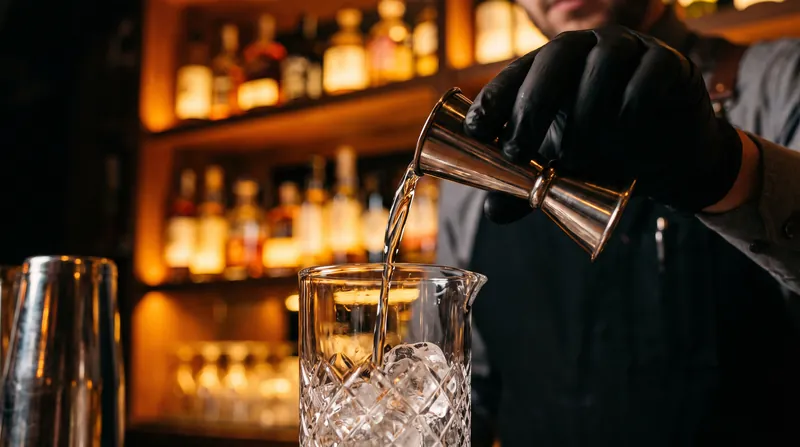
The Ouzo Effect: How Spontaneous Emulsification Creates the Milky Cloud in Anise Spirits
7 sources
Cocktail Science
The 66° to 68° Brix Window: How Sugar Concentration Dictates the Microbial Stability and Crystallization of Simple Syrup
6 sources
Cocktail Science
The 10% to 20% Air Incorporation: How Shaking Creates Opacity and Texture in Cocktails
6 sources
Comments
Every angle. Every day.
Get Food & Drink stories with full source coverage and perspective breakdowns, free every day.