
UEFA Bans Repeated Home Fixtures in Champions League Draw, Affecting Liverpool and Inter
A new UEFA regulation prevents Champions League teams from playing the exact same fixture at the same stadium for three consecutive seasons. The algorithmic tweak means Liverpool cannot host Real Madrid at Anfield, and Inter Milan cannot host Arsenal at San Siro during the 2026/27 league phase.

Share this story
The short version is simple: UEFA has officially banned Champions League teams from playing the exact same fixture at the same stadium for three consecutive seasons. As the 36-team league phase enters its critical third year, European football's governing body has tweaked its automated draw software to prevent repetitive travel schedules and ensure fresh matchups for match-going fans.[1][2]
The immediate consequence of the rule change falls squarely on two of Europe's most intimidating fortresses. Liverpool is now barred from hosting Real Madrid at Anfield during the 2026/27 league phase, while Inter Milan cannot welcome Arsenal to the hostile environment of San Siro.[3][4]
The mechanism behind the ban is rooted in the "Swiss Model" format that UEFA introduced in the 2024/25 season. Under this high-stakes system, the traditional four-team group stage was scrapped entirely in favor of a single, massive 36-team table where every goal difference matters.[5]
Instead of playing three opponents home and away, each club now faces eight different teams—four at home and four on the road. Because the draw pulls from four seeded pots to generate a balanced schedule, the mathematical probability of drawing the exact same opponent in consecutive years increased significantly.[6]
Without the forced rotation of the old group stage, the random nature of the draw meant that a team could theoretically host the same heavyweight rival year after year. This exact scenario played out for both Liverpool and Inter Milan over the format's first two grueling editions.[3][7]
In November 2024, Liverpool defeated Real Madrid 2-0 under the lights at Anfield. A year later, in the 2025/26 league phase, the automated draw spat out the exact same fixture, resulting in a tense 1-0 Liverpool victory on Merseyside.[4][8]
Similarly, Mikel Arteta's Arsenal traveled to Milan to face Inter at San Siro in both the 2024/25 and 2025/26 campaigns, enduring the exact same grueling away trip in back-to-back European runs.[3][7]
To inject variety back into the competition and prevent the schedule from feeling stale, the UEFA Club Competitions Committee invoked Paragraph 16.03 of the tournament regulations. The clause acts as a safety valve, allowing the administration to "determine alternative conditions for the draw" to avoid algorithmic deadlocks and account for relevant constraints.[1][4]
The newly activated condition explicitly states that any individual fixture between the same two teams may not be repeated with the same home team for three consecutive seasons.[1][2]
Crucially, this does not mean Liverpool and Real Madrid, or Inter and Arsenal, are entirely kept apart. If the draw pairs them together for the 2026/27 league phase, the software will automatically assign the venue to the team that was forced to travel in the previous two years.[3][8]
Should Liverpool draw the Spanish giants, the match must take place at the Santiago Bernabéu. If Arsenal draws the Italian champions, the fixture is locked in for the Emirates Stadium in London, shifting the home-field advantage entirely.[7][8]
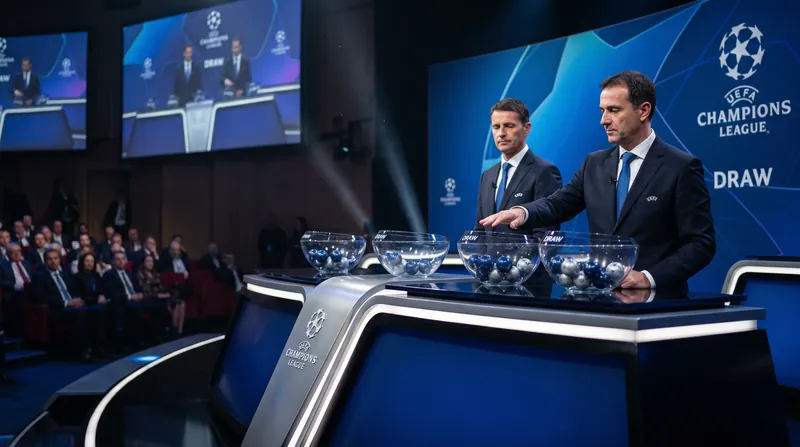
The restriction is enforced seamlessly by the competition's dual-nature draw system. While a physical ball containing a club's name is drawn manually from a glass bowl on stage in Monaco, designated automated software instantly selects the eight opponents and assigns the home and away venues.[1][6]
The software is already programmed with strict guardrails: it prevents clubs from the same national association from meeting in the league phase, and it caps the number of opponents from a single foreign league at two. The three-year venue ban is simply a new parameter coded into the algorithm to force rotation.[2][6]
The venue restriction arrives as part of a broader package of fine-tuning for the 2026/27 season. Recognizing that an eight-match league phase creates a different disciplinary environment than the old six-match groups, UEFA has also raised the threshold for a yellow-card suspension from three cards to four, giving players slightly more breathing room in the expanded format.[2]
Ultimately, the governing body is attempting to balance the commercial appeal of blockbuster matchups with the absolute necessity of competitive variety. By forcing the algorithm to rotate venues, UEFA ensures that local supporters are not subjected to a static menu of European nights, keeping the stakes high and the travel schedules unpredictable.[4][5]
Key points
- UEFA has banned Champions League teams from playing the exact same fixture at the same stadium for three consecutive seasons.
- Liverpool cannot host Real Madrid at Anfield during the 2026/27 league phase.
- Inter Milan cannot host Arsenal at San Siro during the 2026/27 league phase.
- If these teams are drawn together, the match must be played at the venue of the team that traveled in the previous two years.
Unanswered questions
- Whether UEFA will introduce further algorithmic restrictions to prevent repetitive matchups regardless of venue.
- How the software will handle potential deadlocks if multiple venue restrictions clash in the final stages of the draw.
How we got here
August 2024
UEFA implements the new 36-team 'Swiss Model' format, replacing the traditional group stage.
November 2024
Liverpool hosts Real Madrid at Anfield in the inaugural league phase, winning 2-0.
Autumn 2025
The automated draw repeats the exact fixtures, sending Real Madrid back to Anfield and Arsenal back to San Siro for a second consecutive season.
August 2026
UEFA activates Paragraph 16.03, officially banning any fixture from featuring the same home team for a third consecutive year.
- UEFA Regulators
- Focuses on algorithmic balance and maintaining tournament variety.
- Premier League Clubs
- Focuses on the loss of home advantage for specific legacy matchups.
- European Heavyweights
- Focuses on the shifting dynamics of away fixtures and the technicalities of the draw.
Perspectives this story doesn't cover
- Smaller Market Clubs
- Traveling Supporter Groups
Sources
Source coverage
8 outlets
3 viewpoints surfaced







- [1]UEFAUEFA Regulators
Draw procedure and conditions for the 2026/27 UEFA Champions League
Read on UEFA → - [2]TribunaEuropean Heavyweights
15 new rules and changes coming to the Champions League in 2026/27
Read on Tribuna → - [3]MirrorPremier League Clubs
Arsenal and Liverpool impacted as UEFA rule in Champions League draw 'bans' two games
Read on Mirror → - [4]SPORTbiblePremier League Clubs
UEFA's little-known rule prevents Liverpool from participating in the Champions League fixture
Read on SPORTbible → - [5]Premier LeagueUEFA Regulators
How the Champions League format works
Read on Premier League → - [6]Sky SportsPremier League Clubs
Champions League draw: How it works, fixtures, dates, teams
Read on Sky Sports → - [7]Inter MilanEuropean Heavyweights
The draw rules for the 2026/27 Champions League
Read on Inter Milan → - [8]ASEuropean Heavyweights
Real Madrid ruled out of Anfield trip by new UEFA Champions League rule
Read on AS →
More in Sports
See all →Football Finance
The 10% National TV Rights Split and the Two Proportionality Factors: How the Champions League Market Pool is Calculated
5 sources
Champions League Records
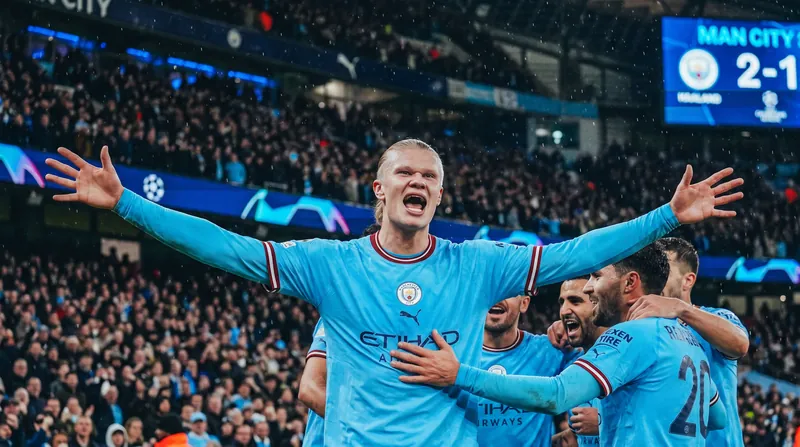
Erling Haaland Reaches 59 Champions League Goals in 59 Games, Closing in on Lionel Messi's Age Record
6 sources
Coefficient Rules
The 20% Association Floor and the Five-Year Rolling Average: How the UEFA Club Coefficient Actually Works
7 sources
Como 1907
The Relational Engine: How Cesc Fàbregas Engineered Como 1907's Historic Champions League Debut
6 sources

Comments
Every angle. Every day.
Get Sports stories with full source coverage and perspective breakdowns, free every day.