
New UEFA Rule Blocks Liverpool-Real Madrid Matchup at Anfield in Champions League Draw
A newly activated algorithmic constraint prevents teams from playing the exact same home fixture for three consecutive seasons in the league phase. While Liverpool cannot host Real Madrid, a clash at the Santiago Bernabéu remains possible.
By Omar Haddad

As the 2026/27 UEFA Champions League draw approaches, a rumor has swept across social media and fan forums: Liverpool and Real Madrid have been banned from playing each other. The narrative suggests UEFA stepped in to artificially separate the two European heavyweights after they clashed in the previous two league phases. It sounds like a conspiracy tailored for talk radio.
The reality is far more specific, and it hinges on a newly activated clause in the competition's evolving rulebook. UEFA hasn't banned the heavyweight bout. Instead, a strict new algorithmic constraint prohibits the exact same fixture—with the exact same home team—from occurring in the league phase for a third consecutive season.[1][7]
Because Liverpool hosted Real Madrid at Anfield in both the 2024/25 and 2025/26 campaigns, the mathematical possibility of a third straight Merseyside clash has been scrubbed from Thursday's draw in Monaco. The stakes, however, remain massive: Arne Slot's squad could still be drawn to run the gauntlet away at the Santiago Bernabéu.[4][5]
To understand the mechanics behind the block, you have to look under the hood of the "Swiss model" league phase, now entering its high-stakes third season. The 36-team single-table format demands that each club play eight different opponents—four at home, four away. The entire pitch to broadcasters and fans was maximum variety and early-tournament jeopardy.[2]
But pure probability threw a wrench into the variety engine. With teams seeded into four pots and drawing two opponents from each, the mathematical odds of repeat fixtures proved stubbornly high. When Liverpool drew Real Madrid at home two years in a row—securing a 2-0 win in November 2024 and a tense 1-0 victory in 2025—UEFA administrators realized the flagship format risked feeling repetitive.[6]
Enter Paragraph 16.03 of the UEFA Champions League regulations. To protect the product, the UEFA Club Competitions Committee quietly armed the 2026/27 draw with a hard stop: "any individual fixture between the same two teams may not be repeated in the same competition with the same home team for three consecutive seasons." It is a surgical strike against fixture fatigue.[3][7]
Liverpool and Real Madrid aren't the only giants caught in the algorithmic net. Inter Milan is similarly barred from hosting Arsenal at the San Siro this autumn, having welcomed the North London club in both of the previous two league phases. Just like the Anfield scenario, a reverse fixture at the Emirates Stadium remains fully on the table.[2][5]
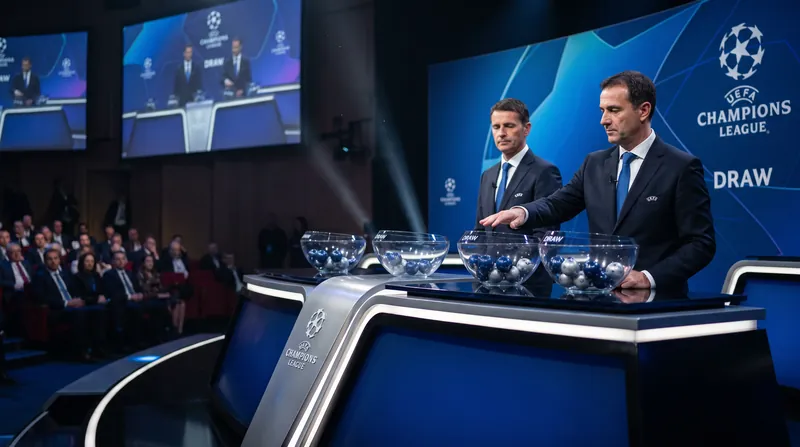
Executing this rule live in Monaco requires heavy computational lifting. When the automated draw software generates potential Pot 1 opponents for Liverpool, it will instantly lock out Real Madrid from the pool of eligible home games. This new constraint must be calculated in milliseconds alongside existing hard rules, such as the strict ban on domestic matchups in the league phase.[1]
For the managers navigating this eight-game sprint, these algorithmic guardrails carry massive competitive weight. The difference between hosting Real Madrid in front of the Kop and surviving a trip to the Bernabéu can dictate a club's entire European trajectory. Securing a top-eight finish in the 36-team table is the ultimate prize, granting a crucial bye to the round of 16 and avoiding a grueling two-legged playoff in February.
What remains untested is how many more of these micro-regulations UEFA will deploy as the Swiss model matures. The current rule stops a three-peat of identical home fixtures, but it doesn't prevent teams from colliding three years in a row if the venues flip. As the draw software grows increasingly complex, the line between a random lottery and a curated television spectacle is getting thinner by the season.[3]
Viewpoints in depth
UEFA's Broadcasting Priorities
Administrators view the algorithmic constraints as necessary to keep the massive league phase fresh for global audiences.
For UEFA, the success of the 36-team Swiss model relies entirely on delivering novel, high-stakes matchups across all eight matchdays. When pure probability results in the exact same heavyweight clashes at the exact same venues year after year, it diminishes the format's core selling point. By introducing Paragraph 16.03, administrators are prioritizing the commercial and entertainment value of variety, ensuring broadcasters aren't forced to market a repetitive product.
The Traditionalist Critique
Football purists argue that adding software-driven rules compromises the fundamental integrity of a random draw.
Critics of the expanding rulebook point out that every new constraint pushes the Champions League further away from a genuine sporting lottery and closer to a curated exhibition series. Traditionalists argue that if the Swiss model naturally produces repeat fixtures, the governing body should accept those mathematical realities rather than artificially engineering the schedule. For these fans, the reliance on opaque software to instantly block certain matchups erodes trust in the draw's transparency.
Club Strategic Calculus
Managers and analysts are forced to adapt to how these venue blocks alter the difficulty of their European campaigns.
Inside the analytics departments of elite clubs, the draw is no longer just about who you play, but how the algorithm restricts where you play them. For Liverpool, knowing they cannot host Real Madrid means their Pot 1 home games will necessarily be drawn from a different pool of elite opponents. Club strategists must now factor these multi-year venue constraints into their squad rotation and points-projection models, as securing a top-eight finish is vital for avoiding the grueling February playoff round.
What we don’t know
- Whether UEFA will introduce further algorithmic constraints to prevent repeat matchups regardless of venue.
- How the software will handle edge cases if the draw reaches a deadlock due to cascading venue restrictions.
- Club Strategists
- Focus on how these venue constraints alter the mathematical difficulty of the eight-game league phase and impact their chances of a top-eight finish.
- UEFA Administrators
- Prioritize fixture variety and television product appeal, using algorithmic constraints to prevent stale matchups.
- Traditionalists / Fans
- Argue that a draw should be purely random, and that adding complex software constraints undermines the integrity of the competition.
Sources
Source coverage
7 outlets
3 viewpoints surfaced





- [1]Sky SportsClub Strategists
Liverpool cannot be paired at home to Real Madrid in Thursday's Champions League draw due to new rules
Read on Sky Sports → - [2]DAZNClub Strategists
Champions League draw rules 2026-27
Read on DAZN → - [3]Goal.comTraditionalists / Fans
Liverpool will not be able to host Real Madrid again in the Champions League next season due to a new UEFA rule
Read on Goal.com → - [4]Sports IllustratedClub Strategists
Real Madrid Can Still Meet Familiar Foe
Read on Sports Illustrated → - [5]SPORTbibleTraditionalists / Fans
UEFA's little-known rule prevents Liverpool from participating in the Champions League fixture
Read on SPORTbible → - [6]TribunaTraditionalists / Fans
UEFA rule change set to spare Liverpool a third straight Anfield date with Real Madrid
Read on Tribuna → - [7]UEFAUEFA Administrators
Regulations of the UEFA Champions League
Read on UEFA →
More in Sports
See all →Football Finance
The 10% National TV Rights Split and the Two Proportionality Factors: How the Champions League Market Pool is Calculated
5 sources
Champions League Records
Erling Haaland Reaches 59 Champions League Goals in 59 Games, Closing in on Lionel Messi's Age Record
6 sources
Coefficient Rules
The 20% Association Floor and the Five-Year Rolling Average: How the UEFA Club Coefficient Actually Works
7 sources
Como 1907
The Relational Engine: How Cesc Fàbregas Engineered Como 1907's Historic Champions League Debut
6 sources

Comments
Every angle. Every day.
Get Sports stories with full source coverage and perspective breakdowns, free every day.