
Google Cloud and NVIDIA Launch Vera Rubin AI Infrastructure for General Availability
Google Cloud has officially opened access to NVIDIA's Vera Rubin architecture through its new A5X instances. The deployment scales up to 960,000 GPUs, targeting the massive computational demands of autonomous AI agents.
By Logan Price

Share this story
A computing cluster capable of networking 960,000 advanced graphics processors is now accessible to enterprise developers, a scale that treats a national-grade supercomputer as a rentable utility. Google Cloud and NVIDIA have officially launched general availability for the Vera Rubin AI architecture.[2][6]
The deployment arrives through Google Cloud’s new A5X instances, marking the first broad commercial release of the Rubin generation. This hardware is specifically engineered to handle the continuous, multi-step reasoning required by modern autonomous systems.[3][4]
By opening the architecture to the public, the two companies are moving the industry's most advanced silicon out of restricted testing and onto the open market. The infrastructure promises to lower the cost of running complex models by an order of magnitude.[1][2]
Financial markets reacted immediately to the deployment milestone. NVIDIA shares climbed over one percent following the joint October 2026 announcement, reflecting investor confidence in the rapid commercialization of the Rubin architecture and its adoption by major cloud providers.[5]
Scaling the Agentic Era
The sheer physical footprint of the deployment represents a massive engineering coordination between the two technology giants. Google Cloud has integrated the Rubin chips directly into its custom liquid-cooled server racks to manage the intense thermal output.[3]
This co-engineering effort ensures the A5X instances can maintain peak performance without triggering thermal throttling during heavy workloads. The architecture relies on high-bandwidth memory and advanced interconnects to keep data flowing between thousands of chips simultaneously without bottlenecking.[2][4]
NVIDIA designed the Vera Rubin architecture specifically to address the memory constraints that plagued earlier generations of artificial intelligence hardware. As models shifted from generating single responses to executing complex workflows, memory bandwidth became a critical limitation.[2]
The new infrastructure directly targets this limitation, allowing enterprise customers to run applications that require constant data retrieval and real-time processing. Google Cloud executives emphasized that this hardware is built for continuous operation rather than short burst workloads.[3]
In its official release, Google Cloud stated the partnership aims to "scale infrastructure for the agentic era," highlighting a shift toward systems that act independently over extended periods. The company noted that the A5X instances are optimized precisely for these persistent, memory-intensive tasks.[3]
Market and Enterprise Impact
For software developers, general availability means they no longer have to reserve time on scarce, experimental clusters to test next-generation models. The A5X instances can now be provisioned through standard cloud consoles, democratizing access to frontier hardware.[1][4]
The theoretical ceiling of 960,000 networked GPUs provides a massive runway for the largest foundation model builders to train their next iterations. However, most enterprise customers will rent small fractions of this capacity to run their proprietary applications.[6]
Industry analysts view this launch as a critical test for the economics of advanced artificial intelligence deployment. While the hardware is significantly more capable, the cost per instance remains a substantial line item for corporate information technology budgets.[1][5]
NVIDIA’s strategy relies on the argument that the Rubin architecture’s efficiency will offset its premium rental price. If a single A5X instance can process ten times the workload of its predecessor, the overall cost of inference drops dramatically for the end user.[2]
Financial analysts tracking the rollout note that the transition to A5X instances could accelerate enterprise adoption of complex models. When the underlying compute costs fall, companies that previously priced themselves out of advanced deployments can re-enter the market.[5]
The Physical Infrastructure Challenge
Deploying silicon at this density requires entirely new approaches to data center management and power distribution. Google Cloud has had to upgrade its power delivery systems to handle the immense electrical draw of the Rubin clusters operating at full capacity.[3]
The collaboration extends beyond just slotting chips into servers; it involves optimizing the entire software stack. NVIDIA’s proprietary networking protocols have been woven into Google’s infrastructure to minimize latency between individual processing nodes.[2][3]
This deep integration is necessary because modern foundation models are too large to fit on a single chip. They must be split across hundreds or thousands of graphics processors, which must communicate perfectly in sync to generate a coherent output.[1]
The successful launch of the A5X instances proves that this level of synchronization is possible at a commercial scale. It sets a new baseline for what cloud providers must offer to remain competitive in the high-performance computing market.[4]
The scale of the 960,000-GPU deployment also highlights the growing divide between hyperscale cloud providers and smaller data centers. Only a handful of companies globally possess the capital and physical footprint required to host infrastructure of this magnitude.[6]
Looking Toward the Next Phase
As enterprise customers begin migrating their workloads to the new instances, the focus will shift from theoretical benchmarks to real-world performance metrics. Developers will soon discover how well the architecture handles unpredictable, live-user traffic at scale.[1][3]
The deployment also puts pressure on competing cloud providers and silicon manufacturers to accelerate their own hardware roadmaps. The window for capturing market share in the agentic artificial intelligence space is narrowing as Google and NVIDIA solidify their partnership.[5]
Supply chain logistics will dictate how quickly Google can bring the full 960,000-GPU capacity online for global customers. While general availability has been declared, the physical installation of liquid-cooled racks across multiple regional data centers is an ongoing process.[1][3]
The availability of the Vera Rubin infrastructure marks the end of the architecture's development phase and the beginning of its operational life. The hardware is now in the hands of developers, and the next verifiable checkpoint will be the first wave of enterprise earnings reports detailing actual inference cost savings.[2]
Key points
- Google Cloud and NVIDIA have launched general availability for the Vera Rubin AI architecture via new A5X instances.
- The infrastructure is designed to scale up to 960,000 networked GPUs, targeting the specific memory demands of autonomous AI agents.
- Financial markets responded positively to the deployment, with NVIDIA shares climbing over one percent following the announcement.
- The rollout required deep co-engineering to integrate NVIDIA's advanced networking and silicon into Google's liquid-cooled data centers.
What we don’t know
- The exact hourly rental pricing for the new A5X instances across different enterprise tiers.
- How the massive power requirements of a fully scaled 960,000-GPU cluster will be sustained by regional electrical grids.
- Whether supply chain constraints will limit the availability of these instances for smaller developers in the near term.
How we got here
Early 2026
NVIDIA unveils the Vera Rubin AI architecture, promising significant reductions in inference costs for complex models.
Mid 2026
Google Cloud and NVIDIA announce their co-engineering partnership to integrate the new silicon into custom server racks.
October 21, 2026
The companies officially launch general availability of the A5X instances for enterprise customers.
- Cloud Infrastructure Providers
- Focuses on scaling data center capacity, managing thermal output, and capturing enterprise workloads.
- Silicon Manufacturers
- Emphasizes architectural efficiency, memory bandwidth improvements, and long-term hardware sales.
- Market Analysts
- Evaluates the financial impact, stock movements, and commercial viability of the new infrastructure.
Perspectives this story doesn't cover
- Enterprise IT Buyers
- Environmental Sustainability Advocates
Sources
Source coverage
6 outlets
3 viewpoints surfaced



- [1]Data Center DynamicsCloud Infrastructure Providers
Nvidia Vera Rubin infrastructure now generally available on Google Cloud
Read on Data Center Dynamics → - [2]NVIDIA BlogSilicon Manufacturers
Google Cloud and NVIDIA Announce General Availability of NVIDIA Vera Rubin Infrastructure
Read on NVIDIA Blog → - [3]Google Cloud BlogCloud Infrastructure Providers
Google Cloud and NVIDIA expand co-engineering collaboration to scale infrastructure for the agentic era
Read on Google Cloud Blog → - [4]StreetInsiderMarket Analysts
Google Cloud and Nvidia announced the general availability of A5X instances
Read on StreetInsider → - [5]TipRanksMarket Analysts
Nvidia Stock (NVDA) Climbs over 1% on a Google Cloud A5X Expansion Utilizing Vera Rubin Chips
Read on TipRanks → - [6]24/7 Wall St.Market Analysts
GOOGLE CLOUD & NVIDIA PLAN TO SCALE VERA RUBIN INFRASTRUCTURE TO UP TO 960,000 GPUS
Read on 24/7 Wall St. →
More in Artificial Intelligence
See all →Chiplet Architecture
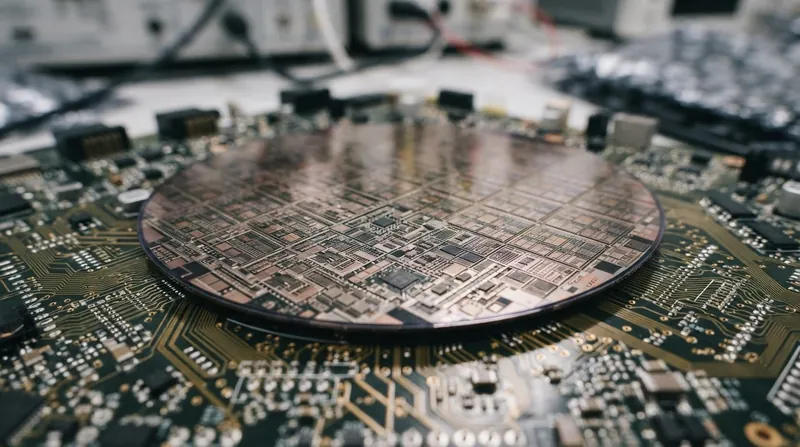
Optical Reticle Limits Cap AI Dies at 858 Square Millimeters, Forcing Multi-Die Packaging
6 sources
AI Inference
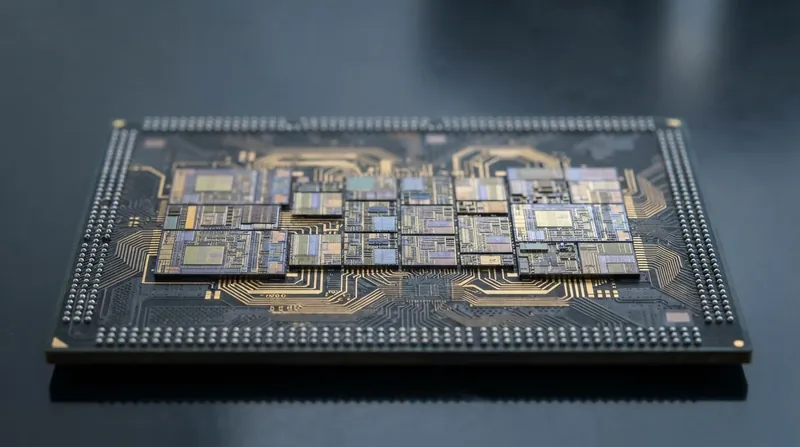
Intel Unveils GPU D-Series AI Inference Accelerator With 480GB Memory in Air-Cooled PCIe Design
7 sources
Custom Silicon
Microsoft Unveils Maia 300 AI Chip to Power Cloud Inference Across Multi-Gigawatt Fleet
5 sources
AI Hardware
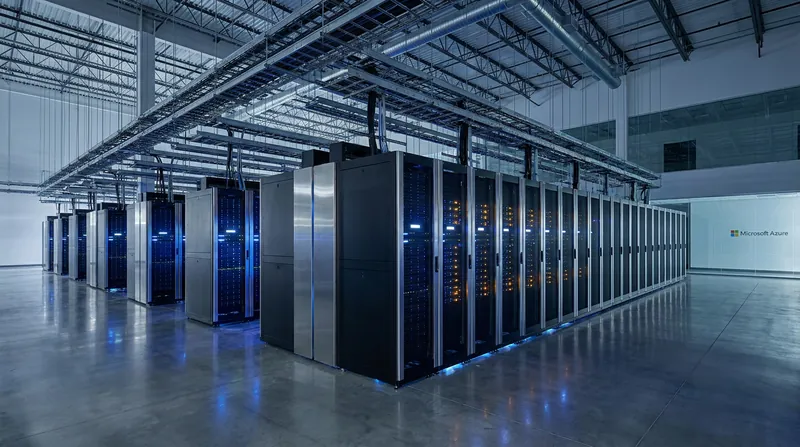
Single-Token Autoregressive Decoding Operates at One FLOP per Byte, Trapping Accelerator Tensor Cores Far Below the Roofline Ridge Point
3 sources
Comments
Every angle. Every day.
Get Artificial Intelligence stories with full source coverage and perspective breakdowns, free every day.