
NBA Landscape Shifts as Giannis Antetokounmpo, Kawhi Leonard, and Ja Morant Relocate in Blockbuster Trades
A historic flurry of offseason trades has reshaped the NBA, sending Giannis Antetokounmpo to the Miami Heat, Kawhi Leonard back to the Toronto Raptors, and Ja Morant to the Portland Trail Blazers.
By Omar Haddad

Share this story
The 2026 NBA offseason has completely rewritten the league's geography, delivering a historic sequence of transactions that will be analyzed for years to come. In a frantic span of just a few weeks, three of the sport's most recognizable and impactful superstars—Giannis Antetokounmpo, Kawhi Leonard, and Ja Morant—have been relocated in a series of blockbuster trades that fundamentally alter the championship picture.
Rather than the slow, methodical roster tweaks that typically characterize the summer months, front offices across the league have opted for seismic disruption. This unprecedented player movement reflects a new era of team building, where the restrictive realities of the league's collective bargaining agreement are forcing organizations to make immediate, decisive choices about their competitive windows.[1][7]
The primary domino to fall in this chaotic sequence was Giannis Antetokounmpo. After months of intense speculation regarding his future and the Milwaukee Bucks' aging roster, the two-time MVP was officially dealt to the Miami Heat. The move abruptly ends a defining era for the Bucks, who drafted the "Greek Freak" and built a championship team around him, while instantly elevating Miami from a gritty, dangerous playoff dark horse to a terrifying Eastern Conference juggernaut.
Heat President Pat Riley, long known for his aggressive pursuit of transcendent talent, pushed all his chips into the center of the table, parting with a massive haul of draft capital and young prospects to secure the league's most dominant interior force.[1][6]
For the Heat, acquiring Antetokounmpo is the culmination of a multi-year hunt for a superstar to pair alongside their defensive anchor, Bam Adebayo. The pairing creates arguably the most formidable frontcourt in modern NBA history, combining elite rim protection, switchability, and unstoppable downhill scoring. However, the financial implications of the deal are equally massive.
The Heat are reportedly preparing to sign Antetokounmpo to a lucrative contract extension, a move that will push the franchise deep into the luxury tax and severely limit their flexibility under the NBA's stringent new salary cap aprons. Despite the financial handcuffs, Miami's front office clearly believes that securing a generational talent is worth the administrative headaches.[1][6]
Antetokounmpo's landing in South Beach immediately triggered secondary moves across the league, as rival front offices scrambled to adjust to the new Eastern Conference hierarchy. The Los Angeles Clippers, recognizing the shifting landscape and their own plateauing trajectory, opted to part ways with Kawhi Leonard.
In a move steeped in deep nostalgia, the Clippers sent the two-time Finals MVP back to the Toronto Raptors. The trade officially closes the book on the Clippers' ambitious but injury-plagued Leonard era, which failed to yield the Finals appearance the organization so desperately craved when they signed him in 2019.[3][7]
Leonard's return to Toronto reunites him with the franchise he famously led to a historic, drought-breaking championship during his lone season there in 2018-19. While the emotional resonance of the reunion is undeniable and has energized the Canadian fanbase, the basketball fit will require a careful adjustment period.
Leonard will now share the floor with a fully developed Scottie Barnes, who has emerged as the Raptors' primary playmaker and offensive engine. Head coach Darko Rajaković will be tasked with seamlessly integrating Leonard's methodical, isolation-heavy scoring with Barnes's dynamic, read-and-react style to create a cohesive offensive hierarchy.[2][7]
For the Clippers, moving Leonard signals a broader, pragmatic roster makeover. By shedding his massive salary and acquiring future assets, Los Angeles is pivoting away from an era defined by load management and postseason heartbreak.
The front office is now positioned to retool their roster around younger, more available talent, prioritizing long-term flexibility over the volatile pursuit of an immediate championship. It is a sobering but necessary reset for a franchise that had mortgaged its future to pair Leonard with Paul George years prior, only to see their title hopes repeatedly derailed by poorly timed injuries.[3][5]
Meanwhile, the Western Conference experienced its own seismic shift when the Memphis Grizzlies made the agonizing decision to trade former Rookie of the Year Ja Morant. In a blockbuster deal that stunned the league, Morant was sent to the Portland Trail Blazers in exchange for veteran forward Jerami Grant and promising young wing Kris Murray.
The trade marks the definitive end of the "Grit and Grind" successor era in Memphis, as the organization chose to move on from their electrifying but heavily scrutinized point guard in favor of a more stable, predictable roster construction.[4][5]
Portland views Morant as the undisputed new face of their franchise, a dynamic engine capable of accelerating their ongoing rebuild. By acquiring one of the league's most explosive athletes and gifted playmakers, the Trail Blazers are making a massive bet on Morant's talent and his ability to thrive in a new environment.
The Pacific Northwest offers Morant a fresh start and the keys to an offense that will be tailored entirely to his strengths. If he can remain focused and healthy, Portland believes they have secured a foundational piece capable of leading them back to the upper echelon of the Western Conference.[2][5]
The Grizzlies, conversely, prioritized two-way production and locker room stability in their return package. By adding Jerami Grant, Memphis secures a highly reliable, versatile veteran who can score efficiently and defend multiple positions across the perimeter. Grant's presence immediately raises the team's floor and provides a steadying influence for a young core that is eager to return to playoff contention. Additionally, the inclusion of Kris Murray gives the Grizzlies a cost-controlled, high-IQ forward who fits perfectly into their defensive-minded culture and long-term timeline.[4][5]
These three massive transactions underscore a growing and undeniable trend among NBA front offices: a willingness to execute franchise-altering moves rather than endure slow, agonizing declines. The highly restrictive nature of the new collective bargaining agreement has effectively killed the middle ground in the NBA.
Teams are now forced to be incredibly decisive, either pushing all-in for a title and accepting the severe roster-building penalties, or rapidly liquidating their stars to accumulate draft capital and financial flexibility. The days of patiently waiting for a core to develop over a decade appear to be over.[1][7]
The ripple effects of these trades will be felt in every arena across the league. Defensive schemes will have to be entirely rewritten to account for the Adebayo-Antetokounmpo pairing in Miami, while Western Conference contenders must now prepare for a Portland team armed with one of the most lethal transition threats in basketball.
The sheer volume of superstar movement has completely erased the established scouting reports and power rankings that defined the previous season, leaving analysts and fans alike scrambling to project how these new puzzle pieces will fit together on the hardwood.[2][6]
As training camps approach and the reality of these new rosters sets in, the league's balance of power is virtually unrecognizable from just a year ago.
With Antetokounmpo dominating the paint in South Beach, Leonard returning to his Canadian throne, and Morant bringing his high-flying act to Portland, the 2026-27 NBA season promises to be one of the most unpredictable and highly anticipated campaigns in modern basketball history. The offseason has delivered the drama; now, the newly formed contenders must prove that their massive gambles will actually translate to postseason success.[1][5][7]
The essentials
- Giannis Antetokounmpo was traded from the Milwaukee Bucks to the Miami Heat, instantly reshaping the Eastern Conference.
- Kawhi Leonard returned to the Toronto Raptors, the franchise he led to the 2019 NBA Championship, after being dealt by the LA Clippers.
- The Memphis Grizzlies traded dynamic point guard Ja Morant to the Portland Trail Blazers for Jerami Grant and Kris Murray.
- The flurry of moves highlights how the NBA's new collective bargaining agreement is forcing teams to make decisive, franchise-altering choices.
Timeline
June 2026
The Milwaukee Bucks trade Giannis Antetokounmpo to the Miami Heat, setting off a chain reaction across the league.
Late June 2026
The Memphis Grizzlies deal Ja Morant to the Portland Trail Blazers for Jerami Grant and Kris Murray.
June 30, 2026
The LA Clippers send Kawhi Leonard back to the Toronto Raptors, reuniting him with his 2019 championship franchise.
- Win-Now Buyers
- Franchises like Miami and Toronto that are willing to mortgage their future draft capital and cap flexibility to secure proven, elite talent.
- Strategic Retoolers
- Teams like Memphis and the Clippers prioritizing roster stability, reliable veterans, and financial flexibility over volatile or aging stars.
- High-Upside Gamblers
- Rebuilding teams like Portland betting that a change of scenery can maximize a young superstar's potential and accelerate their timeline.
Perspectives this story doesn't cover
- Small-market fanbases losing homegrown superstars
- Players' union representatives monitoring the impact of the new CBA on star movement
Sources
Source coverage
7 outlets
3 viewpoints surfaced







- [1]The RingerWin-Now Buyers
The NBA's Blockbuster Summer: Giannis, Kawhi, and the New Era of Roster Building
- [2]Athlon SportsHigh-Upside Gamblers
Which Blockbuster Trade Mattered Most for Fantasy Basketball?
- [3]Sports IllustratedStrategic Retoolers
Kawhi Leonard's LA Future Hinges on the Giannis Antetokounmpo Sweepstakes
- [4]RealGMHigh-Upside Gamblers
Kawhi Leonard, Ja Morant Could Be Plan B For Heat
- [5]ESPNStrategic Retoolers
NBA Trade Grades: Evaluating the Giannis, Kawhi, and Morant Blockbusters
- [6]CBS SportsWin-Now Buyers
NBA Offseason Recap: How the East Was Won by Miami
- [7]The AthleticWin-Now Buyers
Inside the Front Office Frenzy That Reshaped the NBA in July 2026
More in Sports
See all →Storyline
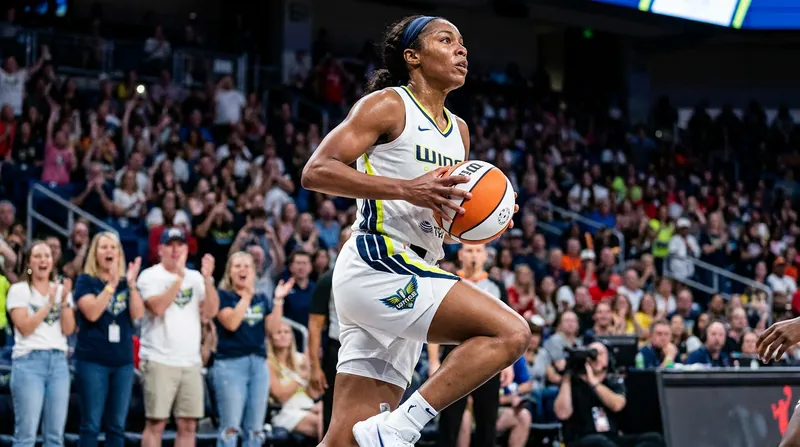
A'ja Wilson Claims 32nd Player of the Week Honor, Closing in on WNBA History
6 sources
Standings
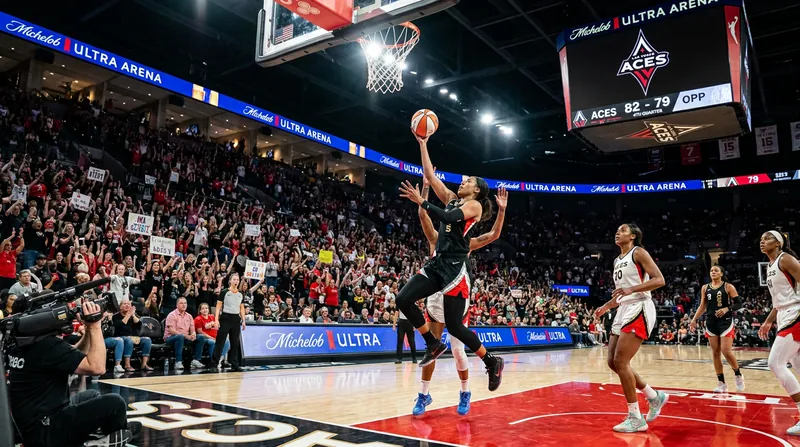
WNBA Playoff Picture Takes Shape: Valkyries and Fever Clinch Berths Ahead of FIBA Break
6 sources
Injury
Global Basketball Injury Report: Hartenstein Out for Germany, Nunn Undergoes Knee Surgery
5 sources
Preview
FIBA Women's Basketball World Cup 2026 Preview: Team USA Chases Fifth Consecutive Title as Field Expands
3 sources
Comments
Every angle. Every day.
Get Sports stories with full source coverage and perspective breakdowns, free every day.