
How Open-Source AI is Helping Indigenous Communities Preserve Endangered Languages
A convergence of offline-capable AI models and new data sovereignty frameworks is empowering indigenous communities to digitize and revitalize hundreds of endangered languages.
By Factlen Editorial Team
- Indigenous Data Sovereignty Advocates
- Argue that communities must retain full legal ownership over their linguistic data to prevent extractive corporate harvesting.
- Open-Source AI Researchers
- Focus on the technical breakthroughs that democratize AI access for low-resource languages.
- Commercial AI Developers
- Emphasize the necessity of massive foundational models to provide the underlying architecture for global translation.
What's not represented
- · Elder native speakers skeptical of digital preservation
- · National governments with official monolingual policies
Why this matters
Nearly half of the world's 7,000 languages are at risk of extinction by 2100, taking unique cultural worldviews and historical knowledge with them. This technological breakthrough shifts AI from a homogenizing force of English dominance into a localized tool for cultural survival, allowing communities to protect their heritage on their own terms.
Key points
- Nearly half of the world's 7,000 languages are at risk of extinction by 2100.
- Commercial AI models currently support only about 100 high-resource languages.
- New morpheme-aware tokenizers and self-supervised models have reduced translation error rates by up to 85%.
- Relational governance frameworks ensure indigenous communities retain legal ownership of their language data.
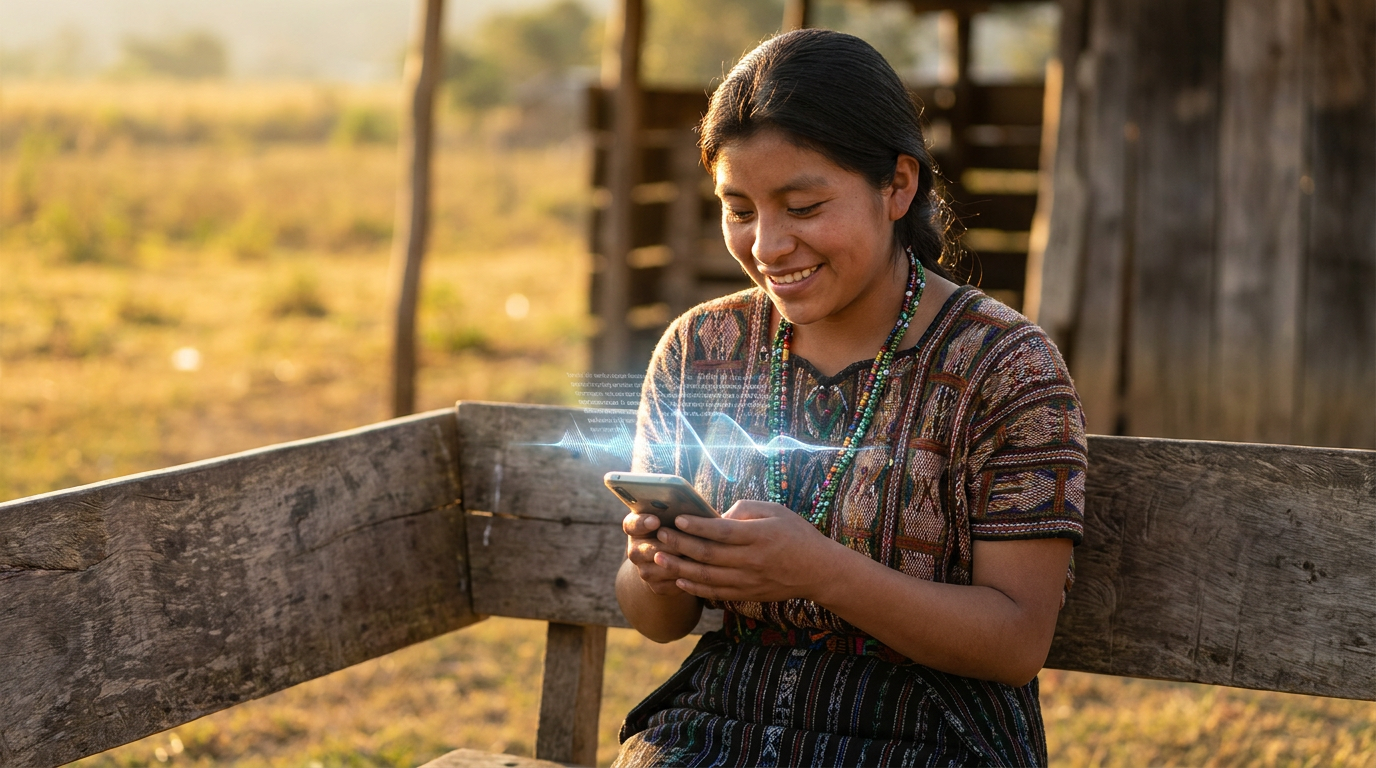
- Highly efficient open-source models can now run entirely offline on mobile devices.
Language extinction is one of the most silent but profound crises of the 21st century. Of the roughly 7,000 languages spoken on Earth today, linguists project that nearly half could vanish by the year 2100. When a language dies, it takes with it unique ecological knowledge, oral histories, and entirely distinct ways of conceptualizing the world. For decades, the digital revolution accelerated this decline, as the internet and early software heavily favored English and a handful of dominant global languages, forcing younger generations to abandon their native tongues to participate in the modern economy. But in a striking reversal, the very technology that once threatened linguistic diversity is now being re-engineered to protect it.[8]
By mid-2026, the landscape of artificial intelligence has reached a critical inflection point for cultural preservation. A powerful synthesis of new open-source machine learning architectures and indigenous-led data governance models has made it operationally viable to document, transcribe, and teach languages that were previously considered too complex or data-scarce for AI to handle. Rather than relying on massive corporate servers, communities are now deploying localized, offline-capable AI tools that serve as digital bridges between fluent elders and younger learners.[1][8]
The scale of the challenge has historically been defined by a massive commercial gap. While the world boasts over 7,000 spoken languages, the vast majority of commercial AI models effectively serve fewer than 100. These "high-resource" languages—like English, Mandarin, Spanish, and French—benefit from billions of pages of digitized text and millions of hours of transcribed audio. For the remaining 6,900 languages, the digital infrastructure has been virtually nonexistent, leaving them locked out of the AI revolution and accelerating their marginalization in an increasingly automated world.[2][3]

The push to close this gap initially came from massive foundational models developed by Silicon Valley giants. Meta's No Language Left Behind (NLLB) project and its subsequent SeamlessM4T model established new baselines in 2025 and 2026, offering real-time multimodal translation across roughly 100 languages without relying on cascaded, intermediate English translations. Similarly, Google's 1,000 Languages Initiative tackled data scarcity by combining technical innovation with active community engagement. These massive models proved that AI could scale across diverse linguistic families, but they still left thousands of the most vulnerable languages untouched.[2][5]
For the thousands of "low-resource" languages outside that commercial umbrella, data scarcity remains an acute, systemic wall. Modern large language models are notoriously data-hungry, requiring vast oceans of text to learn grammatical patterns and semantic meaning. However, most endangered languages are primarily oral, lacking standardized written scripts or extensive digital archives. Researchers estimate that many critically endangered languages have fewer than 1,000 hours of recorded speech available globally, and in some cases, the available data is measured in mere dozens of hours.[1]
Beyond the sheer lack of data, indigenous languages often present a persistent architectural challenge for standard AI systems due to their polysynthetic morphology. In polysynthetic languages—common among indigenous communities in the Americas and Australia—a single, highly complex word can convey the meaning of an entire English sentence by stringing together multiple distinct morphemes. Standard subword tokenizers, which were designed for languages like English, tend to fragment these semantically rich indigenous words into meaningless, arbitrary units, completely disrupting the AI's ability to model the language accurately.[1]
The technical breakthrough that changed the trajectory in 2026 was the widespread adoption of "morpheme-aware" tokenizers and segmentation pipelines. Rather than blindly slicing words based on character frequency, these new open-source tools are designed in collaboration with linguists to respect the actual structural boundaries of indigenous languages. By teaching the AI to recognize the foundational building blocks of a polysynthetic language, researchers have dramatically improved the model's ability to understand and generate accurate translations, even when trained on highly limited datasets.[1][8]

The technical breakthrough that changed the trajectory in 2026 was the widespread adoption of "morpheme-aware" tokenizers and segmentation pipelines.
This architectural shift was supercharged by the maturation of self-supervised speech models, such as advanced iterations of wav2vec and Whisper. Unlike older AI systems that required thousands of hours of painstakingly transcribed audio—where every spoken word had to be manually matched to text—self-supervised models can learn the phonetic structure of a language simply by listening to raw, untranscribed audio. Once the AI understands the acoustic patterns, it only requires a tiny fraction of labeled data to fine-tune its translation capabilities.[1]
The results of combining self-supervised learning with morpheme-aware tokenization have been staggering. Between 2024 and early 2026, pilot projects across various indigenous language families reported massive leaps in accuracy. In several operational deployments, these combined techniques produced reductions in word error rates (WER) in the 75% to 85% range relative to older baselines. For the first time, AI transcription and translation tools became reliable enough to be used for actual pedagogical delivery and public service announcements in severely endangered languages.[1]
These technical capabilities are already driving real-world revitalization efforts. In Brazil, IBM Research partnered with the University of São Paulo and local indigenous communities to develop AI-powered writing tools for Nheengatu, a severely endangered language with roots in Old Tupi. Once the lingua franca of the Amazon, Nheengatu is now spoken by only about 20,000 people. By building an AI writing assistant and pledging to open-source the tools for other communities, the project aims to bring Nheengatu into the digital realm, making it easier for younger generations to learn and use the language daily.[4]
Similar grassroots momentum is transforming the African AI landscape. In early 2026, the Masakhane African Languages Hub—a pioneering open-source research cooperative—issued massive calls for proposals to fund the creation of high-quality, community-owned datasets for 50 different African languages. Their explicit goal is to ensure that the African continent can fully participate in the AI-driven global economy using indigenous languages, rather than being forced to adopt English or French to interface with modern digital infrastructure. This community-first approach guarantees that the resulting models reflect local dialects and cultural contexts accurately.[2][7]

However, the rapid advancement of language AI has also triggered profound ethical concerns regarding extractive data harvesting. As tech companies scramble to train ever-larger models, indigenous communities have raised alarms about their cultural heritage being scraped, commodified, and locked behind corporate paywalls without their consent. For many communities, language is not just data; it is a sacred sovereign asset. The fear is that external AI models could misrepresent cultural nuances or sever the community's ownership over their own ancestral knowledge.[1][6]
In response, 2026 saw a definitive policy shift toward "relational governance." Highlighted in the UN Permanent Forum on Indigenous Issues (UNPFII) 2026 policy briefs, relational governance demands that any language AI initiative must be built on long-term partnership models with explicit co-ownership and community control over datasets. This framework has quickly become the de facto standard for fundable projects, ensuring that indigenous communities retain the legal rights to their linguistic data and have the final say on how, where, and by whom their language models are used.[1][6]
This governance shift has given rise to hybrid consortiums that blend public research compute power with strict indigenous legal protections. Models like the Adi Vaani initiative and the FLAIR cooperatives demonstrate how community-controlled organizations can leverage advanced AI while embedding data-trust contracts. These cooperatives prioritize cultural fidelity and ensure that the resulting AI tools are deployed in ways that directly benefit the speaker communities, rather than simply serving as academic novelties or corporate training fodder.[1]

Ultimately, the 2026 landscape of endangered language AI represents a powerful democratization of technology. Furthermore, because modern open-source models have become highly efficient, many of these translation and educational tools can now run entirely offline on standard smartphones. This offline capability is crucial for remote indigenous communities lacking reliable internet access. By putting sovereign, offline AI directly into the hands of the people fighting to save their heritage, technology is finally helping to ensure that the world's oldest voices will continue to be heard long into the future.[8]
How we got here
2002
The Rosetta Project launches early digital archiving efforts for endangered languages.
2022
The UN declares the International Decade of Indigenous Languages (2022-2032) to spur global action.
Late 2022
Google introduces its 1,000 Languages Initiative to build foundational models for underrepresented languages.
2024
IBM Research and the University of São Paulo launch an AI writing assistant for the endangered Nheengatu language.
2025
Meta open-sources SeamlessM4T, establishing a new baseline for multimodal translation across 100 languages.
Early 2026
The UNPFII issues policy briefs cementing "relational governance" and data sovereignty as standards for indigenous AI.
Viewpoints in depth
Indigenous Data Sovereignty Advocates
Argue that communities must retain full legal ownership over their linguistic data to prevent extractive corporate harvesting.
This camp emphasizes that language is a sacred, sovereign asset rather than mere training data for Silicon Valley. They point to historical patterns of cultural extraction, warning that without strict "relational governance" contracts, big tech companies could commodify indigenous languages or misrepresent cultural nuances. They advocate for community-controlled data trusts and demand that funding agencies require explicit indigenous leadership on all AI preservation projects.
Open-Source AI Researchers
Focus on the technical breakthroughs that democratize AI access for low-resource languages.
Researchers in this camp celebrate the architectural shifts—such as morpheme-aware tokenizers and self-supervised learning—that have finally cracked the code on polysynthetic languages and data scarcity. They argue that open-sourcing these highly efficient models allows local developers to build offline-capable tools tailored to their own communities. For them, the priority is lowering the barrier to entry so that anyone with a smartphone can contribute to language revitalization.
Commercial AI Developers
Emphasize the necessity of massive foundational models to provide the underlying architecture for global translation.
Representatives from major tech labs argue that grassroots efforts, while vital, rely heavily on the foundational architectures (like transformers and self-supervised speech models) pioneered by corporate research. They point out that projects like Meta's NLLB and Google's 1,000 Languages Initiative provide the massive compute power and baseline multilingual capabilities that smaller cooperatives can then fine-tune. They view commercial and grassroots efforts as a symbiotic ecosystem rather than a conflict.
What we don't know
- Whether international legal frameworks will successfully enforce data sovereignty protections against unauthorized AI scraping.
- How effectively these digital tools will translate into actual conversational fluency among younger generations.
Key terms
- Polysynthetic language
- A type of language where highly complex words are formed by stringing together multiple smaller units of meaning, often expressing what would be an entire sentence in English.
- Morpheme-aware tokenizer
- An AI tool that breaks down words into their actual structural and meaningful building blocks (morphemes) rather than arbitrary chunks, crucial for understanding indigenous languages.
- Self-supervised learning
- An AI training method where the model learns patterns from raw, unlabeled data (like listening to hours of untranscribed speech) without needing human annotations.
- Relational governance
- A data management framework that prioritizes long-term partnerships, mutual respect, and community ownership over datasets.
- Word Error Rate (WER)
- A standard metric used to measure the accuracy of speech recognition systems, calculated by comparing the AI's transcription to the actual spoken words.
Frequently asked
What makes a language "low-resource" in AI?
A low-resource language lacks large amounts of digitized text and transcribed audio. Because modern AI models require massive datasets to learn patterns, these languages are often excluded from commercial translation tools.
How does AI learn a language without written text?
New "self-supervised" speech models can listen to raw, untranscribed audio and learn the acoustic patterns of a language. This allows the AI to build a foundational understanding of the spoken language before needing any written translations.
What is relational governance?
Relational governance is a framework where indigenous communities retain legal ownership and control over their language data. It ensures that AI projects are built through long-term partnerships rather than extractive data harvesting by outside companies.
Can these AI translation tools work without the internet?
Yes. Recent advances in model efficiency allow these specialized translation and educational AI tools to run locally on standard smartphones, which is critical for remote communities with limited connectivity.
Sources
Source coverage
8 outlets
3 viewpoints surfaced








[1]KARP ResearchIndigenous Data Sovereignty Advocates
AI and Endangered Language Infrastructure: 2026 Report
Read on KARP Research →[2]AI ViewerCommercial AI Developers
The State of Commercial AI Translation in 2026
Read on AI Viewer →[3]HistoricaOpen-Source AI Researchers
Successful AI Projects in Preserving Endangered Languages
Read on Historica →[4]IBM ResearchCommercial AI Developers
Using AI to preserve Brazil's endangered indigenous languages
Read on IBM Research →[5]Meta AICommercial AI Developers
No Language Left Behind (NLLB)
Read on Meta AI →[6]UN Permanent Forum on Indigenous IssuesIndigenous Data Sovereignty Advocates
2026 Policy Briefs: Data Sovereignty and Indigenous AI
Read on UN Permanent Forum on Indigenous Issues →[7]Masakhane NLPOpen-Source AI Researchers
2026 Call for Proposals: Community-Owned Datasets
Read on Masakhane NLP →[8]Factlen Editorial TeamOpen-Source AI Researchers
Synthesis by Factlen editorial team
Read on Factlen Editorial Team →

More in ai
See all 7 stories →Edge AI
How On-Device AI and Quantization Are Moving LLMs Out of the Cloud
6 sources

Agentic AI
Agentic AI: How Large Action Models Are Automating Digital Chores
7 sources

Global AI Governance
EU Delays Key AI Act Enforcement as 'Brussels Effect' Fractures Under US Deregulation
8 sources

Drug Discovery
New AI Model Accelerates Molecular Simulations 10,000-Fold, Promising Faster Drug Discovery
6 sources

Every angle. Every day.
Get ai stories with full source coverage and perspective breakdowns delivered to your inbox.