
How Non-Contact Boxing is Rewiring the Brains of Parkinson's Patients
High-intensity boxing programs are proving to be a powerful tool for managing Parkinson's disease, utilizing neuroplasticity to improve balance, mobility, and mental health.
By Factlen Editorial Team
- Neurologists & Researchers
- Focus on the underlying mechanisms of neuroplasticity and the need for rigorous clinical data.
- Physical Therapists
- Focus on biomechanical symptom management, fall prevention, and patient safety.
- Patient Advocates
- Focus on the psychological empowerment, community support, and immediate quality of life improvements.
What's not represented
- · Insurance Providers
- · Caregivers of Advanced-Stage Patients
Why this matters
With Parkinson's diagnoses rising globally, discovering accessible, non-pharmacological therapies is crucial. Boxing offers a scientifically backed method for patients to actively combat their symptoms, regain physical autonomy, and find a supportive community.
Key points
- Non-contact boxing has emerged as a highly effective physical therapy for managing Parkinson's disease symptoms.
- The high-intensity nature of the sport promotes neuroplasticity, potentially slowing the progression of the disease.
- Boxing's biomechanical demands directly counter Parkinson's-induced rigidity and stooped posture.
- Beyond physical benefits, participants report significant improvements in social life, depression, and anxiety.
- Medical professionals emphasize the need for credentialed instructors to ensure safety and manage fall risks during training.
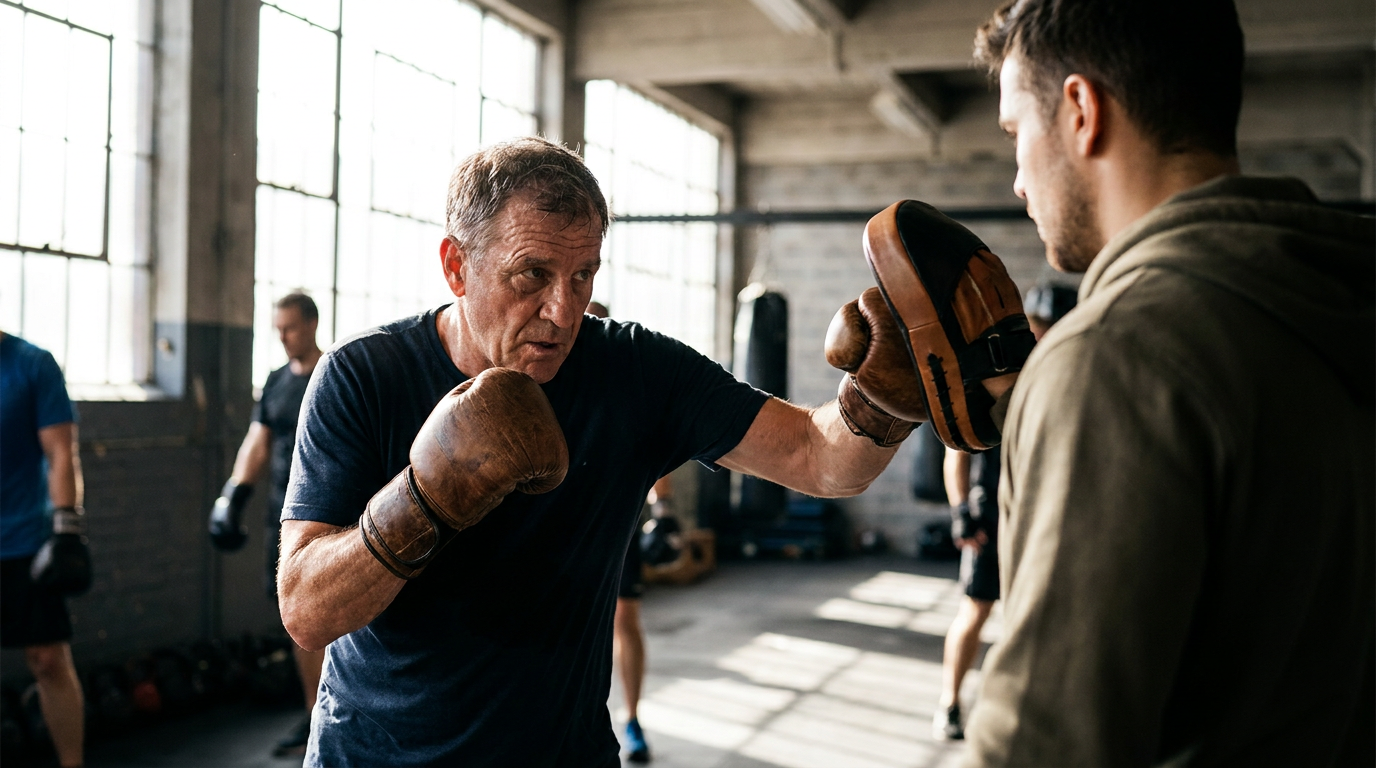
The rhythmic thud of leather against focus mitts is a familiar sound in any boxing gym, typically associated with young athletes training for their next bout. But at hundreds of specialized facilities worldwide, the individuals stepping onto the mats are fighting a very different kind of opponent: a progressive neurodegenerative disorder. Non-contact boxing has emerged as one of the most popular and rapidly growing alternative therapies for Parkinson's disease. Pioneered by organizations like Rock Steady Boxing, the regimen swaps sparring for high-intensity interval training, heavy bag work, and complex footwork drills. For a disease characterized by tremors, rigidity, and a progressive loss of motor control, boxing might seem like a counterintuitive prescription. Yet, a growing body of clinical evidence suggests that the specific biomechanical and cognitive demands of the sport directly counteract the physical decline associated with Parkinson's, offering patients a powerful tool to reclaim their autonomy.[5][6]
The core mechanism driving these therapeutic benefits is neuroplasticity—the brain's remarkable ability to rewire and strengthen its neural networks in response to new challenges. Parkinson's disease is caused by the progressive death of dopamine-producing neurons in the substantia nigra, a region of the brain critical for coordinating movement. While medications can temporarily replace lost dopamine, they do not halt the underlying neurodegeneration. Neurologists and researchers note that high-intensity aerobic exercise can significantly increase the production of brain-derived neurotrophic factor (BDNF). This crucial protein not only protects existing neurons from further degradation but also encourages the growth of new synapses, essentially acting as a fertilizer for the nervous system.[3][6]
"Any neuromotor activity that involves skillful motor learning combined with exercise can be helpful for the motor and non-motor symptoms of persons with Parkinson's," notes brain health coach Ryan Glatt in a recent analysis of the therapy. By forcing the brain to continuously adapt to new physical demands, boxing leverages this neuroplasticity to potentially slow the overall progression of the disease. The high-intensity intervals characteristic of a boxing workout elevate the heart rate significantly, which maximizes blood flow to the brain and creates the optimal physiological environment for these neuroprotective factors to be released.[3][6]

From a purely biomechanical standpoint, boxing is particularly effective because it forces patients to move in ways that directly oppose the disease's natural physical progression. Parkinson's typically induces a stooped posture, shortened strides, and small, restricted arm movements—a phenomenon known clinically as bradykinesia. In stark contrast, throwing a proper punch requires an upright stance, full extension of the arms, and rotational flexibility in the torso. The footwork demands a wide base of support and rapid, multi-directional weight transfers. Practicing these movements helps retrain the body's postural reflexes, which is critical for maintaining balance and preventing the dangerous falls that frequently plague individuals in the later stages of the disease.[3][6]
Recent clinical studies have begun to quantify these physical improvements, moving boxing therapy from the realm of anecdotal success into evidence-based medicine. A study evaluated individuals with early-stage Parkinson's who participated in a 15-week non-contact boxing program. The researchers found that nine out of ten participants demonstrated significant improvements in balance, gait speed, and overall quality of life. The structured nature of the classes ensures that participants are consistently pushing their physical boundaries in a safe, controlled environment, leading to measurable gains in functional mobility that translate directly to their daily lives.[8]
Recent clinical studies have begun to quantify these physical improvements, moving boxing therapy from the realm of anecdotal success into evidence-based medicine.
Beyond the physical mechanics, boxing requires intense cognitive engagement. Participants must memorize complex punch sequences—such as a "jab, cross, hook, uppercut" combination—and react instantly to a trainer's unpredictable commands. This dual-tasking challenges the brain's executive function, which often deteriorates as the disease advances. When a patient is forced to simultaneously manage their footwork, maintain their balance, and recall a specific punching pattern, they are actively strengthening the cognitive-motor pathways that Parkinson's attempts to dismantle. This bridges the gap between physical exertion and cognitive rehabilitation, offering a holistic approach to symptom management.[3][8]
The benefits of boxing therapy extend significantly into the psychological and emotional realms, addressing aspects of the disease that medication often fails to reach. Parkinson's disease frequently brings a host of non-motor symptoms, including severe depression, anxiety, apathy, and social isolation. A comprehensive survey published by Taylor & Francis analyzed data from over 1,700 participants in Rock Steady Boxing programs. The results were striking: 70% of current participants reported an improved social life, while roughly 60% noted meaningful reductions in both depression and anxiety. Researchers attribute this psychological boost to the inherently empowering nature of the sport. Hitting a heavy bag provides a visceral, safe release of frustration, transforming patients from passive recipients of medical care into active fighters.[2][6]

Furthermore, the group class environment fosters a deep sense of community among individuals facing the same daunting diagnosis. Navigating a chronic illness can be an incredibly isolating experience, but the boxing gym provides a space where symptoms like tremors or freezing of gait are understood and normalized, rather than stigmatized. Participants often refer to their classmates as their "corner," providing emotional support and accountability that keeps them returning to the gym week after week. This social integration is a critical component of the therapy's success, as strong social ties are consistently linked to better health outcomes and increased longevity in older adults managing chronic conditions.[2][5]
Despite the overwhelming anecdotal support and positive preliminary data, the scientific community emphasizes the need for cautious optimism and further rigorous study. Systematic reviews published in medical journals point out that much of the existing research relies on small sample sizes and lacks long-term randomized controlled trials. Methodological inconsistencies—such as varying class intensities, durations, and outcome measures—make it difficult for clinicians to prescribe a standardized "dose" of boxing therapy. Furthermore, researchers note that intensive exercise can temporarily fatigue patients. One study highlighted that some individuals experience a short-term deterioration in postural stability immediately after a strenuous workout, underscoring the need for careful monitoring and individualized pacing.[1][4]

Because of these inherent risks, physical therapists stress that boxing programs must be carefully tailored to the individual's specific disease stage and physical capabilities. Classes must be led by credentialed professionals who understand the unique safety requirements, fall risks, and physiological limitations associated with Parkinson's. Today, the movement continues to scale globally with these safety protocols in mind. The Rock Steady Boxing curriculum is now recognized by the Parkinson's Foundation as an Accredited Exercise Education Program, boasting an estimated 43,500 participants across 900 locations worldwide. As researchers work to standardize protocols and launch larger clinical trials, the consensus is clear: targeted, high-intensity exercise is no longer viewed merely as a supplementary activity, but as a fundamental pillar of Parkinson's disease management.[4][6][7]

How we got here
2006
Rock Steady Boxing is founded in Indianapolis, pioneering the concept of non-contact boxing therapy for Parkinson's.
2011
Early clinical case studies begin to document measurable improvements in gait, balance, and quality of life among boxing participants.
2019
Systematic reviews highlight the rapid global growth of the therapy while calling for more rigorous, standardized clinical trials.
2021
Large-scale surveys confirm widespread participant satisfaction, particularly regarding improvements in non-motor symptoms like depression and social isolation.
2026
Boxing therapy is widely recognized by major Parkinson's foundations as an accredited and highly effective exercise intervention.
Viewpoints in depth
Neurologists & Researchers
Focus on the underlying mechanisms of neuroplasticity and the need for rigorous clinical data.
Medical researchers emphasize that high-intensity exercise like boxing can increase brain-derived neurotrophic factor (BDNF), potentially slowing disease progression. However, they caution that current studies often suffer from small sample sizes and methodological inconsistencies. This camp advocates for large-scale, randomized controlled trials to establish standardized 'dosing' for boxing therapy and to definitively prove long-term neuroprotective benefits.
Physical Therapists
Focus on biomechanical symptom management, fall prevention, and patient safety.
Rehabilitation professionals view boxing as a highly effective tool for countering the specific physical deficits of Parkinson's, such as stooped posture and shortened gait. They stress the importance of proper technique and individualized modifications. Because intense exercise can temporarily fatigue patients and increase fall risk immediately post-workout, therapists advocate for credentialed supervision and carefully structured class environments.
Patient Advocates
Focus on the psychological empowerment, community support, and immediate quality of life improvements.
For those living with the disease, the primary value of boxing lies in its impact on daily life and mental health. Patient advocates highlight how the sport combats the depression and social isolation that frequently accompany a Parkinson's diagnosis. The gym environment provides a supportive community of peers, transforming patients from passive recipients of medical care into active fighters reclaiming their physical autonomy.
What we don't know
- The exact 'dose'—frequency, intensity, and duration—of boxing required to achieve optimal neuroprotective benefits remains unstandardized.
- Long-term data from large-scale randomized controlled trials is still needed to definitively prove that boxing slows disease progression compared to other forms of exercise.
- It is not yet fully understood why some patients experience temporary deteriorations in postural stability immediately following a boxing workout.
Key terms
- Neuroplasticity
- The brain's ability to reorganize itself by forming new neural connections, allowing it to adapt and compensate for injury or disease.
- Brain-Derived Neurotrophic Factor (BDNF)
- A protein produced in the brain that promotes the survival of nerve cells and encourages the growth of new neurons and synapses.
- High-Intensity Interval Training (HIIT)
- A cardiovascular exercise strategy alternating short periods of intense anaerobic exercise with less intense recovery periods.
- Non-Motor Symptoms
- Symptoms of Parkinson's disease that do not affect movement, such as depression, anxiety, fatigue, and cognitive changes.
- Bradykinesia
- A common symptom of Parkinson's characterized by a slowness of movement and a gradual loss of spontaneous activity.
Frequently asked
Is boxing safe for someone with Parkinson's disease?
Yes, when conducted as a non-contact program led by credentialed professionals. The training focuses on hitting heavy bags and focus mitts, not other people, eliminating the risk of head trauma.
How does boxing help with balance and fall prevention?
Boxing requires a wide stance, rapid weight transfers, and multi-directional footwork. Practicing these movements helps retrain the body's postural reflexes, reducing the fear and likelihood of falling.
Can exercise actually slow the progression of Parkinson's?
Emerging research suggests that high-intensity aerobic exercise can promote neuroplasticity and increase neurotrophic factors in the brain, which may help protect existing neurons and slow symptom progression.
Do I need prior boxing experience to participate?
No prior experience is necessary. Programs like Rock Steady Boxing are specifically designed for individuals with Parkinson's and are adaptable to all ability levels and disease stages.
Sources
Source coverage
8 outlets
3 viewpoints surfaced








[1]MDPINeurologists & Researchers
Short-Term Effects of Rock Steady Boxing Exercise on the Balance Ability of People with Parkinson's Disease
Read on MDPI →[2]Taylor & FrancisNeurologists & Researchers
High satisfaction and improved quality of life with Rock Steady Boxing in Parkinson's disease
Read on Taylor & Francis →[3]Medical News TodayPhysical Therapists
How no-contact boxing may help combat Parkinson's disease
Read on Medical News Today →[4]FrontiersNeurologists & Researchers
Boxing for Parkinson's Disease: Has Implementation Accelerated Beyond Current Evidence?
Read on Frontiers →[5]AARPPatient Advocates
Roll With the Punches: Boxing With Parkinson's Disease
Read on AARP →[6]Rock Steady BoxingPatient Advocates
Research and Clinical Results
Read on Rock Steady Boxing →[7]Factlen Editorial TeamPhysical Therapists
Synthesis by Factlen editorial team
Read on Factlen Editorial Team →[8]Simply NeurosciencePhysical Therapists
Boxing Exercise: A Therapy for Parkinson's Disease
Read on Simply Neuroscience →
Every angle. Every day.
Get sports stories with full source coverage and perspective breakdowns delivered to your inbox.