
How Fractional Real Estate Investing Works in 2026
Fractional real estate platforms are lowering the barrier to property investing from tens of thousands of dollars to as little as $10. Here is how the model works, the platforms leading the charge, and the risks investors face.
By Factlen Editorial Team

- Retail Investors & Platform Advocates
- View fractional ownership as a democratizing force for wealth building.
- Institutional & Blockchain Innovators
- Focus on tokenization as the ultimate solution to real estate illiquidity.
- Traditional Real Estate Purists
- Argue that direct ownership and leverage are the true engines of real estate wealth.
- Market Analysts & Regulators
- Emphasize the need for structured oversight and investor protection in a rapidly growing asset class.
What's not represented
- · Local housing advocates concerned about platforms buying up single-family homes
- · First-time homebuyers competing against fractional investment capital
Why this matters
With elevated interest rates and record-high home prices locking millions out of traditional homeownership, fractional investing offers a viable alternative to build wealth. Understanding how these platforms work—and their inherent risks—is crucial for anyone looking to generate passive income without taking on massive mortgage debt.
Key points
- Fractional investing allows multiple people to buy shares of a single property, lowering the entry barrier to $10–$100.
- Investors earn returns through proportional rental income (dividends) and long-term property appreciation.
- The global market for tokenized real estate is projected to grow from $3.8 billion in 2025 to $26.4 billion by 2034.
- While the model offers diversification and passive income, it carries risks of illiquidity and platform fees.
- Regulatory frameworks, such as SEC Regulation A+ in the US, are maturing to protect retail investors.
The traditional housing market has hit a structural bottleneck. Between elevated interest rates and an $875 billion commercial real estate maturity wall approaching in 2026, the old model of purchasing property with heavy bank debt is becoming increasingly inaccessible for everyday buyers. For decades, real estate has been touted as the ultimate wealth-building asset, yet the barrier to entry—often requiring tens of thousands of dollars for a down payment—has locked out a generation of potential investors.[5][8]
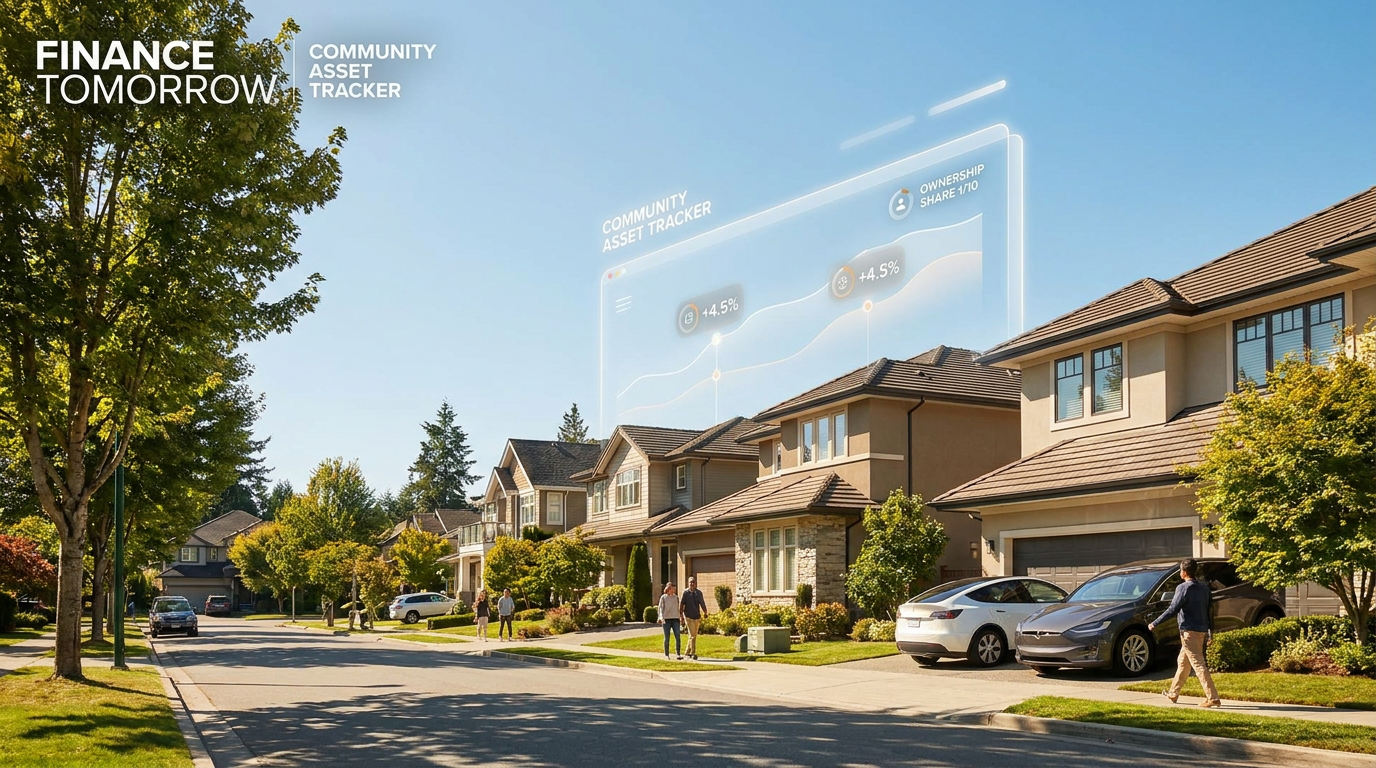
Enter fractional real estate investing. At its core, this model allows multiple investors to collectively purchase shares of an income-producing property rather than buying the entire asset. Instead of a single buyer deploying $500,000 to acquire a home, 5,000 investors can invest $100 each, sharing the economic interest. This approach effectively lowers the barrier to entry from a massive down payment to as little as $10, democratizing access to an asset class historically reserved for the wealthy.[3][5][7][8]
The market for shared property ownership is expanding rapidly, supercharged by the convergence of real estate and blockchain technology. The global real estate tokenization market—where property shares are converted into digital tokens—was valued at $3.8 billion in 2025 and is projected to reach $26.4 billion by 2034. Some industry analysts forecast that the broader tokenized real estate sector could represent up to 15% of all real estate assets under management by the end of the decade.[1][2]

The mechanism behind these platforms relies on a Special Purpose Vehicle (SPV) or a Real Estate Investment Trust (REIT) structure. When investors buy into a platform, their capital is pooled into a legal entity that holds the title to the physical property. Investors then earn returns through two primary channels: proportional rental income, distributed as quarterly or monthly dividends, and capital appreciation, realized when the property is eventually sold or shares are traded.[5][7]
The landscape of fractional platforms has matured significantly by 2026, dividing into distinct strategies. Platforms like Fundrise pool investor capital into diversified eREITs, offering broad exposure across residential and commercial sectors without allowing users to pick specific buildings. Conversely, platforms like Arrived Homes cater to investors who want granular control, allowing them to browse and purchase shares in specific single-family rentals or vacation homes across the United States.[3][4]
A parallel shift is occurring with tokenized platforms, which utilize blockchain technology to digitize ownership. Companies like Lofty and Zoniqx issue tokens representing property shares, aiming to solve one of real estate's oldest problems: illiquidity. By placing shares on a digital ledger, these platforms facilitate peer-to-peer secondary markets where investors can theoretically trade their fractions in minutes, rather than waiting years for a property to sell.[2][3][4][8]

A parallel shift is occurring with tokenized platforms, which utilize blockchain technology to digitize ownership.
The primary allure of fractional investing is the ability to achieve diversification with limited capital. An investor with $1,000 can spread their risk across ten different properties in multiple geographic markets, insulating their portfolio against localized downturns. Furthermore, the model generates passive income without the traditional headaches of being a landlord; platform management teams handle tenant disputes, leaky roofs, and property taxes.[6][8]
However, the model carries distinct risks, chief among them being liquidity constraints. Unlike publicly traded stocks, fractional real estate shares cannot always be sold instantly. On non-tokenized platforms, investors are often locked in for holding periods ranging from one to five years. Even on platforms with secondary markets, an investor looking to exit must find a willing buyer for their specific share, meaning capital can remain trapped during market downturns.[3][4][6][8]
Investors must also weigh the cost of convenience. Fractional platforms charge a layer of fees—including sourcing fees, annual management fees, and exit fees—that eat into overall returns. Furthermore, fractional owners surrender all operational control. Decisions regarding when to renovate, how much to charge for rent, and the optimal time to sell the asset are entirely dictated by the platform's management team.[6][8]

Tax treatment is another critical factor for prospective investors. In most jurisdictions, fractional owners receive the same proportional tax benefits as traditional real estate owners, including deductions for depreciation and property expenses. However, the administrative burden is shifted; instead of managing complex property tax filings themselves, investors typically receive a consolidated tax form, such as a Schedule K-1 or 1099-DIV, from the platform at the end of the year.[6][7][8]
Yields in the fractional space reflect a stabilizing market. In early 2026, dividend yields on single-family fractional rentals averaged around 3.6%, while short-term vacation rentals yielded closer to 2.4%. While these figures may lag behind high-yield savings accounts in a high-rate environment, proponents argue that the true value lies in the combined total return—factoring in long-term property appreciation alongside the steady dividend payouts.[4][8]

Regulatory frameworks are finally catching up to the technology, providing much-needed guardrails for retail investors. In the United States, platforms operate under SEC Regulation A+, which allows non-accredited investors to participate legally. Internationally, jurisdictions like Dubai have established clear rules through the Dubai Financial Services Authority (DFSA), while India's SEBI has introduced specific regulations for Small and Medium REITs to govern fractional ownership platforms.[3][4][7]
Despite the regulatory progress, uncertainties remain. The fractional real estate model has flourished during periods of relative housing stability, but it has yet to be fully stress-tested by a severe, prolonged crash in residential property values. Questions linger about how secondary markets for tokenized shares will behave if a mass exodus of retail investors occurs simultaneously.[8]
Ultimately, fractional real estate investing represents a structural shift in how the public interacts with property markets. It is not a get-rich-quick scheme, nor does it replace the absolute control of traditional homeownership. Instead, it serves as a bridge, transforming an historically illiquid, capital-intensive asset class into an accessible, divisible financial product for the modern portfolio.[1][8]
How we got here
2012
The JOBS Act passes in the US, paving the way for real estate crowdfunding.
2015
Fundrise launches the first eREIT, allowing non-accredited investors to pool capital.
2021
Arrived Homes launches, allowing retail investors to buy shares of specific single-family homes.
2024
Tokenized real-world assets (RWAs) gain mainstream traction, bridging real estate and blockchain.
2026
Fractional platforms mature globally, with clear regulatory frameworks established in the US, EU, and Dubai.
Viewpoints in depth
Retail Investors & Platform Advocates
View fractional ownership as a democratizing force for wealth building.
This camp argues that the traditional real estate market is fundamentally broken for the average earner. By lowering the barrier to entry to $100, fractional platforms allow retail investors to build diversified portfolios of income-producing assets without taking on crushing mortgage debt. They view the platform fees as a fair trade-off for the passive nature of the investment, emphasizing that true wealth generation requires escaping the daily grind of property management.
Traditional Real Estate Purists
Argue that direct ownership and leverage are the true engines of real estate wealth.
Traditionalists caution that fractional investing strips away the most powerful tools of real estate: leverage and control. When you buy a home with a 20% down payment, you keep 100% of the appreciation on the total asset value. In fractional investing, you only earn appreciation on your exact cash contribution. Furthermore, purists warn that relying on third-party platforms introduces counterparty risk and strips the investor of the ability to force appreciation through sweat equity or strategic renovations.
Institutional & Blockchain Innovators
Focus on tokenization as the ultimate solution to real estate illiquidity.
For technologists and institutional players, the current iteration of fractional platforms is merely a stepping stone. The end goal is full tokenization of real-world assets on the blockchain. This camp envisions a future where real estate shares trade 24/7 on global secondary markets with instant settlement, completely eliminating the illiquidity premium that has historically discounted property values. They argue that regulatory clarity will soon unlock trillions of dollars in institutional capital for tokenized assets.
What we don't know
- How secondary markets for fractional shares will hold up during a severe, prolonged housing crash.
- Whether tokenized real estate will fully replace traditional fractional platforms or remain a niche alternative.
Key terms
- Fractional Ownership
- An investment model where multiple people buy shares of a single asset, splitting the costs and returns.
- Tokenization
- The process of converting ownership rights of an asset into digital tokens on a blockchain to increase liquidity.
- SPV (Special Purpose Vehicle)
- A legal entity created specifically to hold and manage a single real estate asset on behalf of investors.
- eREIT
- An electronic Real Estate Investment Trust that allows retail investors to buy into a diversified pool of properties online.
- Liquidity
- How quickly and easily an investment can be sold and converted into cash without losing value.
Frequently asked
Do I have to manage the tenants or repairs?
No. The fractional platform or a designated property management company handles all landlord responsibilities, including maintenance, tenant placement, and rent collection.
Can I sell my fractional shares whenever I want?
It depends on the platform. Some require a lock-up period of several years, while others offer secondary markets where you can sell shares to other investors, provided there is a willing buyer.
Do I get to use the property I invest in?
Generally, no. Most fractional investment platforms are strictly for financial returns. However, some specialized vacation-home platforms do offer usage rights proportional to your ownership.
What happens if the platform goes bankrupt?
Properties are typically held in separate legal entities (like an LLC or SPV). If the platform fails, the underlying asset remains owned by the shareholders, though a new manager would need to be appointed.
Sources
Source coverage
8 outlets
4 viewpoints surfaced








[1]ScienceSoftInstitutional & Blockchain Innovators
Real Estate Tokenization in 2026: Facts and Trends
Read on ScienceSoft →[2]DatainteloInstitutional & Blockchain Innovators
Real Estate Tokenization Market Research Report 2034
Read on Dataintelo →[3]BinaryxRetail Investors & Platform Advocates
Fundrise Alternatives 2026: 10 Platforms Ranked
Read on Binaryx →[4]Lofty.aiRetail Investors & Platform Advocates
Arrived vs. Fundrise 2026 Real Estate Investing Comparison
Read on Lofty.ai →[5]RealbricksRetail Investors & Platform Advocates
Fractional Real Estate Investing Explained
Read on Realbricks →[6]RentilaTraditional Real Estate Purists
The pros and cons of fractional real estate ownership
Read on Rentila →[7]JiraafMarket Analysts & Regulators
What is Fractional Real Estate Investing? Explained for Beginners
Read on Jiraaf →[8]Factlen Editorial TeamMarket Analysts & Regulators
Synthesis by Factlen editorial team
Read on Factlen Editorial Team →
More in real estate
See all 42 stories →Adaptive Reuse
The Evidence Pack: How Empty Offices Are Solving the Housing Crisis
8 sources

Office Conversions
The Evidence Pack: How Empty Offices Are Becoming Affordable Housing in 2026
8 sources

Assumable Loans
Assumable Mortgages: How Homebuyers Are Bypassing 6.5% Rates
7 sources

Alternative Credit
How Renters Are Finally Building Credit: The Rise of Rent Reporting
7 sources

Every angle. Every day.
Get real estate stories with full source coverage and perspective breakdowns delivered to your inbox.