
How Citizens' Assemblies Are Bypassing Political Polarization
As partisan gridlock stalls traditional legislatures, democracies worldwide are turning to 'democratic lotteries' and citizens' assemblies to solve intractable policy disputes.
By Factlen Editorial Team
- Academic Researchers
- Scholars focus on the empirical data proving that deliberation reduces extreme polarization.
- International Policy Organizations
- Global NGOs view assemblies as a necessary structural reform to save backsliding democracies.
- Civic Implementers & Analysts
- Practitioners focus on the friction of integrating assembly recommendations into existing legal frameworks.
What's not represented
- · Voters who prefer direct referendums without the intermediary of a selected assembly
- · Lobbying groups whose influence is bypassed by the sortition process
Why this matters
As traditional legislatures become increasingly paralyzed by partisan gridlock, citizens' assemblies offer a proven, structural bypass to solve intractable issues. Understanding this model reveals how everyday people—when given time and facts—can find the pragmatic consensus that career politicians often cannot.
Key points
- Citizens' assemblies use a 'democratic lottery' to select a representative cross-section of the public.
- Participants spend months learning from experts before deliberating on complex policy issues.
- Research shows that deliberation consistently shifts public opinion away from partisan extremes toward pragmatic solutions.
- Ireland successfully used assemblies to break political deadlocks on abortion and climate change.
- The primary challenge remains convincing elected legislatures to implement the citizens' recommendations.
The modern democratic paradox is defined by a deep, pervasive frustration with political gridlock, even as elections consistently produce highly polarized legislatures. Across the globe, voters express exhaustion with the performative outrage that dominates traditional politics, yet the incentive structures of modern campaigning continue to reward extremes. Politicians, bound by the necessity of fundraising and the constant pressure of the next election cycle, often find themselves playing to their most vocal partisan bases. This dynamic leaves complex, long-term policy challenges—from climate change to healthcare reform—stalled in a perpetual state of legislative paralysis. In response to this systemic dysfunction, a growing movement of political scientists and civic innovators is pushing for a structural bypass. They are looking past the ballot box and reviving an ancient democratic tool, updated for the complexities of the twenty-first century, to find the pragmatic center that elections so often miss.[6]
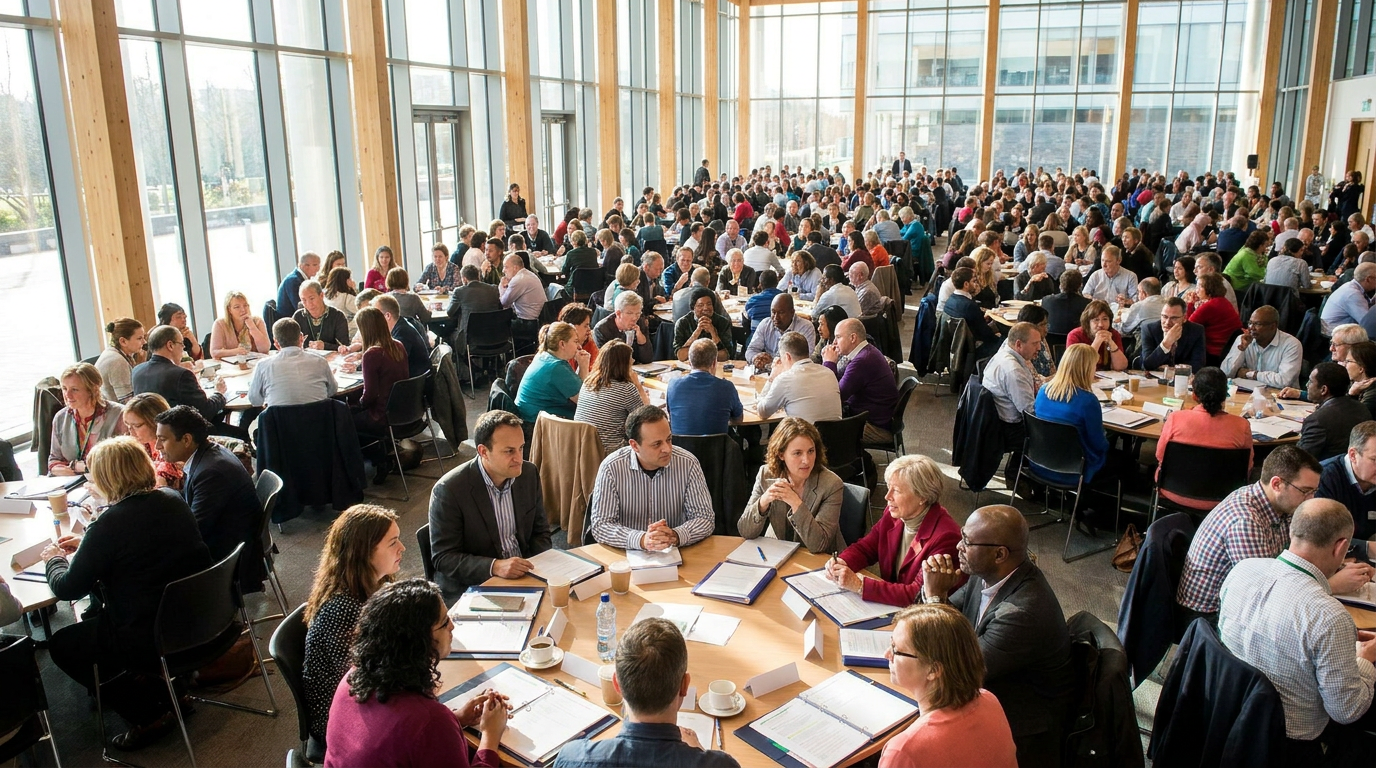
Enter the "mini-public," most commonly known today as a Citizens' Assembly. Rooted in the ancient Athenian practice of sortition—the selection of political officials by lottery—the modern assembly is built on a deceptively simple premise. If a government takes a truly representative cross-section of everyday people, provides them with unbiased expert information, and gives them the time and space to solve a problem, they will find consensus where career politicians find only conflict. Unlike traditional town halls, which tend to attract only the most passionate or aggrieved voices, a citizens' assembly is engineered to capture the quiet majority. It is an exercise in collective intelligence, designed to strip away the partisan branding that usually prevents opposing sides from negotiating in good faith.[2][6]
The foundation of this process is the "democratic lottery." Rather than asking people to volunteer, organizers send out thousands of randomized invitations across a jurisdiction. From the pool of positive responses, a final assembly—usually consisting of 36 to 100 people—is carefully stratified. Algorithms ensure that the final group perfectly mirrors the broader population in terms of age, gender, geographic location, educational attainment, and socio-economic status. The result is a room that looks exactly like the country, state, or city it represents. This demographic precision is crucial; it grants the assembly a unique form of moral legitimacy, proving that the participants are not special interest lobbyists or political insiders, but genuine representatives of the public.[4][6]
Once the assembly is seated, the process diverges sharply from the snap judgments of traditional opinion polling. The first major phase is dedicated entirely to learning. Participants are not expected to arrive with solutions; instead, they spend several weekends over the course of months listening to balanced expert testimony. They review carefully vetted briefing materials that outline the facts, the history of the problem, and the various proposed solutions. Crucially, the citizens have the power to interrogate the experts, request additional data, and demand clarity on complex jargon. This educational foundation ensures that when the debate finally begins, it is grounded in shared reality rather than competing misinformation.[2][4]

The core of the assembly is the deliberation phase, which takes place in facilitated small groups. Trained, neutral moderators guide the conversations to ensure that every voice is heard and that the loudest individuals do not dominate the room. The objective is not to "win" a debate or score political points, but to weigh the inevitable trade-offs of any policy decision. Participants are encouraged to share their lived experiences and listen actively to neighbors they might never interact with in their daily lives. Through this structured, respectful dialogue, participants slowly begin to bridge ideological divides, often discovering that their underlying values are far more aligned than their political affiliations would suggest.[1][4]
The pioneer of measuring this specific phenomenon is Professor James Fishkin at Stanford University’s Center for Deliberative Democracy. In 1988, Fishkin developed "Deliberative Polling," a methodology designed to measure what the public would think if they actually had the time and resources to deeply study an issue. Over decades of research spanning dozens of countries, the Center has gathered empirical evidence showing that deliberation fundamentally changes minds. When citizens are forced to confront the actual costs and trade-offs of public policy, their opinions reliably shift away from partisan extremes and move toward pragmatic, centrist solutions. The data proves that polarization is not an inherent trait of the voting public, but a byproduct of a low-information, high-emotion media environment.[1]
The most famous and consequential real-world application of this model has unfolded in Ireland. Facing deeply entrenched, culturally explosive issues that politicians were terrified to touch, the Irish government decided to outsource the initial policy work to the people. Beginning with a pilot project in 2011 and formalizing into a national Citizens' Assembly in 2016, Ireland tasked 100 randomly selected citizens with navigating the country's most polarizing debates. The assembly was given a mandate to study issues ranging from the aging population and climate change to the highly contentious Eighth Amendment, which effectively banned abortion in the country.[5]
The most famous and consequential real-world application of this model has unfolded in Ireland.
Because the Irish citizens were not worried about fundraising, media spin, or winning re-election, they were able to navigate the profound moral and legal nuances of the abortion debate with remarkable grace. They listened to medical professionals, legal scholars, and women with direct lived experience. After months of careful deliberation, the assembly produced a clear, consensus-driven recommendation to repeal the constitutional ban and legalize abortion access. The assembly broke a decades-long political deadlock by proving to the legislature that the public was capable of handling the nuance, and more importantly, that the electorate was ready for a change that politicians had assumed was politically impossible.[5]

The success of the Irish model was cemented when the government put the assembly's recommendations to a national vote. In 2018, the Irish public voted to repeal the Eighth Amendment by a margin of 66.4 percent—a figure that closely mirrored the final consensus vote of the Citizens' Assembly itself. This alignment demonstrated that the assembly was not an outlier, but a highly accurate predictor of an informed public's will. The Irish success story sent shockwaves through the global democratic community, proving that deliberative mini-publics could be used to defuse the most explosive culture-war issues and provide political cover for necessary, systemic reforms.[5]
Following Ireland's lead, the adoption of deliberative democracy has accelerated dramatically. The Organisation for Economic Co-operation and Development (OECD) reports that there have been over 300 such deliberative processes globally in recent years. In France, a national climate assembly was convened to break the stalemate over carbon pricing and environmental regulation. In Canada and the United States, municipal and provincial governments are increasingly using sortition to solve localized disputes over land use, zoning, and transit infrastructure. The model is proving highly adaptable, capable of scaling from neighborhood disputes to national constitutional crises.[3]
For advocates of the political center, the appeal of the citizens' assembly is obvious: it structurally mandates compromise. In a traditional legislature, compromising with the opposing party is often framed as a betrayal of the base, leading to primary challenges and loss of funding. In a citizens' assembly, compromise is the explicit goal. Participants quickly realize that no single ideological framework can solve a complex problem without creating unacceptable collateral damage. By forcing everyday people to balance the budget, weigh the environmental impacts, and consider the legal constraints, the process naturally filters out the purity tests that paralyze modern governance.[6]
However, the deliberative democracy movement is not without its significant hurdles, the most glaring of which is the friction of implementation. While citizens can draft brilliant, highly nuanced policy recommendations, they lack the statutory authority to enact them into law. Assemblies remain advisory bodies, entirely dependent on the goodwill of the elected officials who convened them. When an assembly proposes a solution that is politically inconvenient, expensive, or opposed by powerful lobbying interests, traditional legislatures often balk. This dynamic creates a precarious tension between the collective intelligence of the mini-public and the entrenched power of the political establishment.[3][6]

This tension was acutely visible in the aftermath of the French Citizens' Convention for Climate. While the randomly selected citizens produced 149 ambitious recommendations to reduce greenhouse gas emissions, the French government ultimately watered down, delayed, or outright rejected many of the most impactful proposals. Critics of the model point to these moments as evidence that citizens' assemblies can sometimes serve as "democracy theater"—a way for politicians to look like they are taking action while quietly maintaining the status quo. When participants dedicate months of their lives to finding a solution, only to see it ignored, it can breed a new, deeper form of civic cynicism.[3]
Skeptics also raise valid concerns regarding democratic accountability. Elected officials, for all their flaws, can be voted out of office if a policy fails or causes unintended harm. Randomly selected citizens, by contrast, simply return to their private lives once the final report is published. They bear no long-term responsibility for the consequences of their recommendations. Furthermore, organizing a rigorous, mathematically representative assembly is a highly expensive and time-consuming endeavor. Paying for venues, expert stipends, participant compensation, and professional facilitation requires a significant investment of public funds, leading some to question whether the model can ever truly replace the efficiency of traditional legislative debate.[6]
Despite these growing pains and structural limitations, the rise of deliberative democracy represents one of the most genuinely uplifting trends in modern civic life. It offers a powerful counter-narrative to the prevailing doom surrounding the future of democratic governance. The success of these assemblies proves that polarization is not an inevitable, permanent state of nature, but rather a byproduct of how we currently run our elections and consume our media. When the structural incentives are changed—when people are given time, facts, and a mandate to cooperate—they consistently rise to the occasion.[4][6]
By trusting everyday people with the heaviest burdens of governance, citizens' assemblies are quietly rebuilding the civic muscle that decades of partisan warfare have atrophied. They provide a blueprint for a more functional, consensus-driven future, demonstrating that the wisdom to solve our most intractable problems does not reside exclusively in the halls of power, but in the collective, considered judgment of the people themselves. As democracies continue to search for ways to heal their divides, the democratic lottery stands as a beacon of pragmatic hope.[6]
How we got here
1988
Professor James Fishkin originates the concept of Deliberative Polling to measure informed public opinion.
2011
Ireland launches 'We the Citizens', a pilot project that proves the viability of deliberative democracy in the country.
2016
The Irish government officially convenes a national Citizens' Assembly to tackle deeply polarizing issues, including abortion.
2018
Following the assembly's recommendations, Ireland holds a historic referendum to repeal the Eighth Amendment.
2020
The OECD publishes a major report tracking over 300 deliberative processes globally, signaling a mainstream shift in democratic innovation.
Viewpoints in depth
Academic Researchers
Scholars focus on the empirical data proving that deliberation reduces extreme polarization.
Researchers at institutions like Stanford emphasize the measurable psychological and political shifts that occur during deliberation. By tracking participants' opinions before and after an assembly, academics have built a robust dataset proving that when everyday people are given balanced briefing materials and time to deliberate, their final recommendations are consistently more pragmatic and nuanced than traditional opinion polls suggest.
International Policy Organizations
Global NGOs view assemblies as a necessary structural reform to save backsliding democracies.
Organizations like the OECD and International IDEA track the macro-trends of democratic decline and view sortition as a critical intervention. They argue that traditional elections are failing to translate the public will into policy, leading to dangerous levels of civic alienation. For these groups, citizens' assemblies are not just an interesting experiment, but a necessary evolution of democratic infrastructure required to rebuild public trust in state institutions.
Civic Implementers & Analysts
Practitioners focus on the friction of integrating assembly recommendations into existing legal frameworks.
Those who actually run and analyze these assemblies, including government bodies and editorial observers, highlight the practical challenges of the model. While the internal process of an assembly is highly effective, the external handoff to traditional politicians remains fraught. Implementers warn that if legislatures continue to convene assemblies only to ignore their most ambitious recommendations, the process risks becoming a form of 'democracy theater' that could ultimately deepen public cynicism.
What we don't know
- Whether large nations like the US can successfully scale the citizens' assembly model to the federal level.
- How to legally bind legislatures to act on assembly recommendations without violating constitutional norms.
- The long-term impact on the political engagement of citizens after they return to their normal lives.
Key terms
- Sortition
- The use of a random lottery to select citizens for political office or a deliberative assembly, ensuring a representative cross-section of the public.
- Mini-public
- A small group of citizens randomly selected to perfectly reflect the demographic makeup of the larger population.
- Deliberative Democracy
- A form of government where thoughtful, facilitated discussion and consensus-building are central to decision-making, rather than just voting.
- Democratic Lottery
- The specific mechanism of randomly contacting citizens and stratifying the respondents to form an assembly.
Frequently asked
What is a Citizens' Assembly?
A democratic process where a randomly selected, representative group of everyday people is brought together to learn about, discuss, and make policy recommendations on a specific issue.
How are participants chosen?
They are selected through a 'democratic lottery' or sortition, carefully stratified by age, gender, income, and geography to ensure the group accurately mirrors the broader population.
Do governments have to follow their recommendations?
Usually, no. Most citizens' assemblies are advisory. However, in places like Ireland, their recommendations have directly led to binding national referendums.
What is Deliberative Polling?
Developed at Stanford University, it is a technique that measures what the public would think if they had the time and resources to deeply study an issue, rather than capturing their snap judgments.
Sources
Source coverage
6 outlets
3 viewpoints surfaced






[1]Stanford Center for Deliberative DemocracyAcademic Researchers
What is Deliberative Polling®?
Read on Stanford Center for Deliberative Democracy →[2]ParticipediaAcademic Researchers
Citizens' Assembly
Read on Participedia →[3]OECDInternational Policy Organizations
Innovative Citizen Participation and New Democratic Institutions
Read on OECD →[4]International IDEAInternational Policy Organizations
Citizens' Assemblies: A Guide to Deliberative Democracy
Read on International IDEA →[5]The Irish Citizens' AssemblyCivic Implementers & Analysts
The Citizens' Assembly of Ireland: Reports and Outcomes
Read on The Irish Citizens' Assembly →[6]Factlen Editorial TeamCivic Implementers & Analysts
Synthesis by Factlen editorial team
Read on Factlen Editorial Team →

Every angle. Every day.
Get perspectives stories with full source coverage and perspective breakdowns delivered to your inbox.