
How Atmospheric Pressure and Flow Separation Tear Vacuum Rocket Nozzles Apart at Sea Level
When a vacuum-optimized rocket engine fires in Earth's thick lower atmosphere, the ambient air crushes its exhaust plume. This triggers violent, asymmetrical lateral forces that can snap heavy gimbal bolts and rupture coolant lines.
By Hunter Cole

In short
- Vacuum-optimized rocket engines cannot be safely fired at sea level without physical reinforcement, as the thick atmosphere crushes their exhaust plumes.
- When nozzle pressure drops below 40 percent of ambient pressure, the exhaust detaches asymmetrically, generating massive lateral forces called side loads.
- During historical hot-fire tests, these transient side loads have reached 38,000 pounds of force, snapping heavy gimbal bolts and rupturing coolant lines.
Aerospace engineers designing upper-stage rocket engines face a strict physical limit when testing their hardware on the ground. They can fire a vacuum-optimized nozzle at sea level, but only if they artificially reinforce the bell or throttle the chamber pressure to specific margins.[7]
When a vacuum engine fires in Earth's thick lower atmosphere, the ambient air crushes the exhaust plume. This triggers violent structural forces that can tear the nozzle apart before the vehicle ever leaves the launch pad. The phenomenon dictates how every orbital rocket is built and tested.[7]
The core issue is flow separation, a fluid dynamics problem that occurs when the pressure inside the nozzle drops too far below the pressure outside it. A rocket nozzle accelerates hot gas by expanding it, trading pressure for velocity. In the vacuum of space, that expansion can continue indefinitely.[1]
At sea level, however, the atmosphere pushes back with nearly 14.7 pounds per square inch of pressure. If the nozzle expands the exhaust so much that its internal pressure drops below roughly 40 percent of that ambient atmospheric pressure, the exhaust flow physically detaches from the nozzle wall.[1]
The Summerfield Criterion
This 40 percent threshold is known in aerospace engineering as the Summerfield Criterion. It serves as a conservative design rule of thumb for predicting when a rocket exhaust plume will separate from the metal bell. Once the flow detaches, the empty space between the exhaust and the wall fills with turbulent, recirculating ambient air.[1]
The separation does not happen perfectly evenly around the circumference of the nozzle. Instead, the detachment point fluctuates, creating an asymmetrical pressure distribution inside the bell. One side of the nozzle experiences a different internal pressure than the opposite side, generating a massive lateral force.[2][3]
These lateral forces are called side loads, and they are highly destructive. During a 1990 hot-fire test of the Space Shuttle Main Engine, side loads reached an estimated 38,000 pounds of lateral force at a chamber pressure of 1,750 psi. That sudden sideways jolt ruptured three coolant feed lines running down the outside of the nozzle.[2][3]
Similar failures plagued the Apollo era. During ground testing of the Saturn V's J-2 engine, massive side loads caused the heavy gimbal bolts to fail entirely in tension. The engine essentially tried to rip itself off its own test stand because the atmospheric pressure forced the exhaust to separate unevenly.[2]
The Vacuum Optimization Trade-Off
To understand why engineers build nozzles that are vulnerable to this, one must look at orbital mechanics. A rocket's efficiency is measured in specific impulse, which relies heavily on the nozzle's expansion ratio. A larger bell extracts more momentum from the exhaust gas, delivering more thrust per pound of propellant.[5]
Vacuum-optimized engines, like the SpaceX Raptor Vacuum, feature massive nozzle extensions. The vacuum Raptor utilizes a bell measuring 2.4 meters across, designed to expand the exhaust into the near-zero pressure of orbit. At sea level, that massive expansion ratio guarantees severe flow separation.[6]
"At sea level, it destroys itself," notes a SpaceX engineering overview regarding the vacuum Raptor.[6]
To survive static fire testing on the ground, crews must install heavy steel stiffeners around the nozzle extension. Without these temporary braces, the asymmetric shockwaves would buckle and crack the thin metal bell.[6]
First-stage engines avoid this fate by using smaller expansion ratios. Their nozzles are designed so that the exit pressure roughly matches sea-level atmospheric pressure, keeping the flow firmly attached to the walls. However, this compromise leaves performance on the table once the rocket climbs above the thick lower atmosphere.[5]
Transients During Ignition
Even sea-level engines are not entirely immune to flow separation. During the brief moments of engine ignition and shutdown, the combustion chamber pressure ramps up or down. For a fraction of a second, the internal pressure is too low to keep the flow attached, creating transient side loads.[3]
According to 1973 test measurements from the J-2 program, random flow separation occurs when the wall pressure sits at exactly one-third of the ambient pressure. NASA analysis of the Space Shuttle Main Engine estimated the separation location consistently between 28 and 38 percent of ambient pressure.[2][3]
As the engine throttles up, the separation point travels down the length of the nozzle, dragging a violent shockwave along the metal surface. Engineers must account for these transient loads when designing the engine mountings and gimbal actuators.[3]
The structure must be rigid enough to absorb the lateral shaking during startup, yet flexible enough to steer the rocket during flight. It is a delicate mechanical balance dictated entirely by fluid dynamics.[3]
Engineering Around the Atmosphere
To test high-expansion nozzles without destroying them, propulsion laboratories use specialized altitude simulation chambers. Facilities like the German Aerospace Center's P8 test stand fire the engine into a sealed vacuum tube. A massive steam ejector system actively pumps the exhaust out, artificially lowering the ambient pressure around the nozzle.[4]
This allows engineers to measure the engine's true vacuum performance without triggering the Summerfield Criterion. However, altitude chambers are expensive and limited in size. Full-scale engines often must be tested in open air, forcing teams to rely on structural stiffeners or truncated nozzles.[4]
Researchers are actively developing alternative nozzle geometries to solve the altitude problem permanently. The dual-bell nozzle features a distinct inflection point halfway down the contour. This sharp angle forces the flow to separate cleanly and symmetrically at sea level, eliminating the destructive lateral side loads.[5]
As the rocket ascends and ambient pressure drops, the exhaust plume naturally expands past the inflection point to fill the entire dual-bell extension. In a detailed analysis, the German Aerospace Center calculated that implementing a dual-bell design on the Ariane 5 could increase its geostationary payload capacity by up to 219 kilograms.[5]
Until such designs become standard, the 40 percent pressure threshold remains a hard physical boundary. Aerospace engineers must continue to balance the desire for maximum vacuum efficiency against the crushing reality of Earth's atmosphere. Every orbital launch begins with a brute-force fight against flow separation.[7]
The Physics of the Shock Diamond
The visual signature of this pressure battle is the shock diamond, frequently seen in the exhaust plumes of ascending rockets. When the exhaust exits the nozzle at a lower pressure than the surrounding air, the atmosphere squeezes the plume inward. This compression creates a series of oblique shockwaves.[1]
The visual signature of this pressure battle is the shock diamond, frequently seen in the exhaust plumes of ascending rockets.
These shockwaves bounce back and forth within the exhaust stream, glowing brightly as they compress and heat the gas. While shock diamonds are beautiful, they represent lost energy. The engine is spending thrust fighting the atmosphere rather than pushing the vehicle upward.[1]
In the vacuum of space, the exhaust plume behaves entirely differently. With no atmospheric pressure to confine it, the gas expands wildly outward from the nozzle lip, sometimes at angles exceeding 90 degrees. The plume becomes a wide, diffuse fan, completely devoid of shock diamonds.[1]
The design of a rocket engine remains a strict concession to the planet it launches from. The 40 percent separation threshold dictates the shape of the bell, the strength of the gimbals, and the logistics of ground testing. It acts as a fluid dynamic speed limit on the road to orbit.[7]
How we did this
- Method
- A comparison across historical hot-fire test data and theoretical criteria to establish the actual pressure ratio where asymmetric separation triggers.
- What we found
- While the Summerfield Criterion sets a conservative 40 percent threshold for design, historical hot-fire data from the J-2 and SSME programs demonstrate that catastrophic asymmetric separation actually triggers slightly lower, consistently between 28 and 33 percent of ambient pressure, making the 40 percent mark a necessary safety margin rather than the exact physical separation point.
- What we worked from
- Summerfield Criterion design value: 40 percent of ambient pressure — Embry-Riddle Aeronautical University
- J-2s test measurement separation point: 33.3 percent of ambient pressure — NASA
- SSME estimated separation location: 28 to 38 percent of ambient pressure — NASA
- Limits of this analysis
- This analysis relies on historical test data from specific engine architectures and does not account for modern active flow control or dual-bell nozzle designs.
Key terms
- Flow separation
- The physical detachment of a fluid from a surface, occurring in rocket nozzles when atmospheric pressure forces its way inside the bell.
- Side load
- A destructive, asymmetrical lateral force generated when exhaust flow separates unevenly around the circumference of a rocket nozzle.
- Expansion ratio
- The mathematical ratio between the area of a rocket nozzle's exit and the area of its narrowest throat, dictating its efficiency in a vacuum.
- Summerfield Criterion
- An aerospace engineering rule of thumb stating that nozzle flow will separate when its internal pressure drops to 40 percent of the ambient atmosphere.
- Dual-bell nozzle
- An experimental engine design featuring a sharp inflection point that forces symmetrical flow separation, allowing safe operation at sea level.
Reader questions
Why do vacuum engines have such large nozzles?
A larger nozzle expansion ratio extracts more momentum from the exhaust gas, delivering higher specific impulse and greater efficiency in the vacuum of space.
Can a vacuum engine launch a rocket from the ground?
No. The massive flow separation would destroy the nozzle before the rocket left the pad, which is why first-stage engines use smaller, sea-level-optimized bells.
How do engineers test vacuum engines on Earth?
They either install heavy steel stiffeners around the nozzle to absorb the side loads, or they fire the engine inside a sealed altitude simulation chamber that actively pumps out the exhaust.
Where opinion splits
Aerospace Propulsion Engineers
Focused on maximizing specific impulse and payload capacity through larger expansion ratios.
For propulsion engineers, the atmosphere is an obstacle to efficiency. Their primary goal is to extract every possible second of specific impulse from the propellant, which requires massive nozzle extensions. They view flow separation as a structural nuisance that forces them to compromise on expansion ratios, leaving valuable payload capacity on the table to ensure the engine survives its brief transit through the lower atmosphere.
Structural Dynamics Analysts
Focused on ensuring the engine survives the violent transient forces of ignition and ascent.
Structural analysts view the nozzle not as a thrust-generating tool, but as a massive acoustic and mechanical liability. They must design gimbals, actuators, and coolant lines capable of surviving 38,000-pound lateral shocks during the fraction of a second when the flow separates. From their perspective, pushing the expansion ratio too far risks catastrophic vehicle loss, making conservative design margins an absolute necessity.
Test Facility Operators
Focused on safely simulating high-altitude conditions on the ground without destroying hardware.
Facility operators bear the logistical burden of the Summerfield Criterion. To test a vacuum engine safely, they must either build massive, steam-driven altitude simulation chambers to artificially lower the ambient pressure, or bolt heavy steel stiffeners onto the flight hardware. They advocate for extensive subscale cold-gas testing to map the separation behavior before risking multi-million-dollar full-scale engines on the stand.
- Aerospace Propulsion Engineers
- Advocate for maximizing expansion ratios to increase specific impulse and payload capacity.
- Structural Dynamics Analysts
- Prioritize conservative design margins to ensure the engine survives violent transient side loads.
- Test Facility Operators
- Focus on the logistical challenges of safely simulating high-altitude conditions on ground test stands.
Perspectives this story doesn't cover
- Materials Scientists
- Launch Vehicle Aerodynamicists
Sources
Source coverage
7 outlets
3 viewpoints surfaced





- [1]Embry-Riddle Aeronautical UniversityAerospace Propulsion Engineers
Flow Separation and Side-Loads in Rocket Nozzles
Read on Embry-Riddle Aeronautical University → - [2]NASAStructural Dynamics Analysts
Flow Separation Induced Side Loads in Rocket Nozzles
Read on NASA → - [3]NASAStructural Dynamics Analysts
Prediction of the shock environments and the dynamic loads for new engine systems
Read on NASA → - [4]German Aerospace Center (DLR)Test Facility Operators
Flow separation in rocket nozzles
Read on German Aerospace Center (DLR) → - [5]German Aerospace Center (DLR)Test Facility Operators
Sea-Level Transitioning Dual Bell Nozzles
Read on German Aerospace Center (DLR) → - [6]SpaceX Engineering (via Facebook)Aerospace Propulsion Engineers
The vacuum Raptor's nozzle is 2.4 metres wide. At sea level, it destroys itself.
Read on SpaceX Engineering (via Facebook) → - [7]Factlen Editorial TeamTest Facility Operators
Synthesis by Factlen editorial team
Read on Factlen Editorial Team →
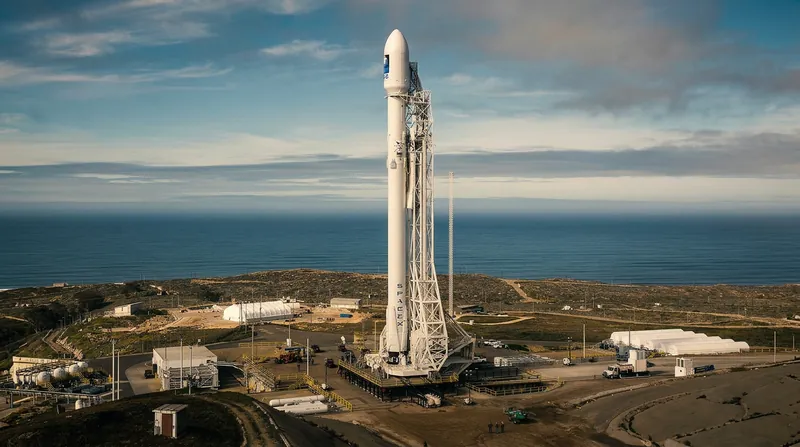
More in Transportation
See all →Orbital Mechanics
Auxiliary Ullage Motors Fire Before Upper-Stage Restarts to Settle Free-Floating Propellant and Prevent Turbopump Cavitation
3 sources
Orbital Mechanics
Graveyard Orbits Require Just 11 m/s of Delta-V Compared With the 1,500 m/s Needed to Deorbit From Geostationary Altitude
4 sources
Orbital Mechanics
Why Orbital Rockets Must Achieve 7.8 km/s Horizontal Velocity and Execute Zero-Lift Gravity Turns
4 sources
Space Boundary
The 100-Kilometer Altitude Where Aerodynamic Lift Becomes Impractical for Sustained Flight
5 sources
Comments
Every angle. Every day.
Get Transportation stories with full source coverage and perspective breakdowns, free every day.