
Rocket Lab Unveils GHOST: A Globally Deployable, Containerized Launch System
Rocket Lab has introduced a modular launch architecture that packages its Electron and HASTE rockets into standard shipping containers. The system aims to decouple orbital access from fixed spaceports, enabling rapid site activation for national security and commercial missions.

The conventional wisdom in aerospace assumes that orbital launch requires a sprawling, permanent footprint. For decades, reaching orbit meant relying on acres of poured concrete, fixed integration towers, and static range control centers that take years to construct and billions to maintain. But the infrastructure of space access is rapidly decoupling from fixed geography. The evidence lies in Rocket Lab's newly unveiled Global Hypersonic & Orbital Spaceport Technology (GHOST), a system that compresses an entire orbital launch complex into standard intermodal shipping containers.[1][4]
By packaging the launch vehicle alongside its required ground support, telemetry tracking, and range control systems, the architecture allows operators to establish a functional spaceport almost anywhere in the world. This represents a structural shift in how nations and defense sectors approach responsive space operations.
Instead of relying exclusively on vulnerable, centralized launch hubs like Cape Canaveral in Florida or Vandenberg Space Force Base in California, military planners can now envision distributed, modular networks that can be activated on demand in response to emerging geopolitical crises. The ability to launch from anywhere fundamentally alters the strategic calculus of space deterrence.[4][6]
The mechanism behind GHOST relies on standardizing the interface between the launch vehicle and the ground. Because Rocket Lab’s orbital Electron rocket and its suborbital hypersonic test vehicle, HASTE, utilize identical ground infrastructure, a single modular setup can support both mission profiles without requiring hardware modifications.
Everything required to integrate the payload, fuel the vehicle, and control the launch sequence is housed within standard shipping containers. These modular units can be transported by commercial truck, rail, or cargo ship, blending seamlessly into existing global logistics networks and avoiding the need for specialized oversized transport.[1][6]
This containerized approach eliminates the need for purpose-built facilities, which have historically acted as a massive barrier to entry for emerging space programs. Traditionally, establishing a new launch site requires massive capital expenditure, extensive environmental reviews, and years of specialized construction to pour flame trenches and erect integration towers.
With GHOST, allied nations can acquire sovereign launch capabilities without building a permanent spaceport from scratch. The system effectively transforms any suitably reinforced flat concrete pad into a fully operational launch site in a fraction of the time required for traditional construction, drastically lowering the threshold for independent space access.[4][5]
The strategic implications for national security are substantial and immediately apparent to defense analysts. In modern conflict scenarios, fixed spaceports are highly visible and easily targeted nodes, creating a critical vulnerability for space-reliant militaries.
If a primary launch facility is disabled by a kinetic strike or cyberattack, a nation's ability to replace destroyed satellites or launch defensive assets is severely compromised. A containerized system directly addresses this fragility by enabling rapid site activation from non-traditional geographic locations, ensuring that launch capabilities can survive an initial strike and remain operational even in contested environments.[4][5]
As Rocket Lab founder Peter Beck noted during the system's unveiling, the architecture is designed to serve missile defense, deterrence, and sovereign launch needs "from wherever those missions need." This flexibility allows military planners to replace degraded satellite constellations or conduct hypersonic tests on demand, rather than waiting for availability at congested legacy ranges.
By decoupling the launch capability from a specific zip code, the architecture provides a layer of operational resilience that static facilities cannot match. It shifts the paradigm from bringing the payload to the spaceport, to bringing the spaceport to the payload.[2][6]
The operational debut of the GHOST architecture is scheduled for 2027 at the Pacific Spaceport Complex in Kodiak, Alaska. Designated as Rocket Lab Launch Complex 4, the site will feature two pads specifically optimized for high-frequency flight campaigns.
Kodiak's high-latitude location makes it ideal for launching payloads into polar and sun-synchronous orbits, which are highly sought after for Earth observation, weather monitoring, and military reconnaissance satellites. By deploying the containerized system here first, Rocket Lab can test the hardware in a harsh, austere environment before offering it globally to allied defense partners.[1][4]
This Alaskan deployment will complement the company’s existing permanent infrastructure, creating a highly resilient launch network. Rocket Lab currently operates Launch Complex 1 on the Mahia Peninsula in New Zealand, and Launch Complexes 2 and 3 at the Mid-Atlantic Regional Spaceport in Virginia.
The addition of the Kodiak pads will bring the company's total operational footprint to six pads distributed across two hemispheres. This provides unmatched geographic flexibility for a commercial launch provider, allowing them to route around weather delays or airspace closures at any single facility to maintain a high cadence of operations.[4][5]
While Kodiak serves as the initial proving ground, the underlying technology is designed to be entirely portable and exportable. The Alaskan deployment will validate the containerized concept, serving as a template for future deployments in allied nations. Countries that currently rely on the United States or European partners for space access could theoretically purchase or lease a GHOST system to establish their own domestic launch capability. This model fundamentally democratizes access to orbit, allowing smaller nations to host sovereign launch operations without committing to a multi-decade, multi-billion-dollar infrastructure project.[1][6]
The introduction of highly mobile vertical launch systems also shifts the broader aerospace market dynamics, particularly regarding the debate over how to achieve responsive space access. Historically, the primary argument for horizontal launch—where a rocket is carried to high altitude and dropped from a carrier aircraft—was geographic flexibility. Companies like the now-defunct Virgin Orbit argued that flying a rocket to the launch point was the only viable way to bypass congested spaceports, avoid weather delays, and achieve true launch-on-demand capability from any runway in the world.[3]
However, horizontal launch systems face severe payload constraints and complex aerodynamic integration challenges that limit their utility. Dropping a rocket from a modified Boeing 747 restricts the size, weight, and structural design of the vehicle, severely limiting the types of payloads it can carry to orbit. By making vertical launch infrastructure globally deployable, systems like GHOST effectively neutralize the main selling point of air-launched alternatives, proving that ground-based systems can be highly mobile without sacrificing the structural efficiency of a traditional vertical ascent.[3][7]
A containerized vertical system provides the superior payload capacity, structural simplicity, and reliability of a traditional rocket while matching the mobility of an aircraft-based system. This development is viewed by industry analysts as a decisive blow to the horizontal launch market.
It demonstrates that the ground segment can be just as agile as an airborne platform without forcing engineers to make the severe aerodynamic compromises required to drop a fully fueled rocket from a plane. The market is increasingly recognizing that modular ground infrastructure offers a more practical path to responsive launch.[3][7]
Despite the promise of modular spaceports, significant uncertainties remain regarding regulatory and logistical execution. Launching a rocket involves far more than just physical infrastructure; it requires clearing commercial airspace, securing maritime drop zones for spent stages, and navigating complex international export controls. The hardware can be moved easily on a truck or ship, but the bureaucracy required to authorize a launch from a new jurisdiction cannot be accelerated quite as simply. Regulatory frameworks are still built around the assumption of fixed, permanent spaceports.[4][5]
Moving a containerized spaceport across borders involves transferring highly sensitive dual-use missile technology. These transfers are strictly governed by international non-proliferation frameworks like the Missile Technology Control Regime (MTCR) and U.S. International Traffic in Arms Regulations (ITAR). While the physical containers can fit on a standard cargo ship, securing the legal permissions required from the State Department and foreign governments to activate a site in a new country remains a formidable bottleneck that could slow rapid deployment and complicate international sales.[5]
Furthermore, while the ground systems are mobile, the rockets themselves still require specialized propellant handling and storage. Orbital launch vehicles rely on highly refined aerospace-grade kerosene (RP-1) and super-chilled liquid oxygen, which may not be readily available at remote deployment sites.
Establishing a reliable supply chain for these volatile commodities in austere environments presents a distinct logistical challenge that must be solved alongside the hardware deployment to make the system truly independent of existing aerospace hubs. Without local propellant production or secure transport lines, a mobile spaceport remains tethered to traditional supply chains.[4][6]
Without local propellant production or secure transport lines, a mobile spaceport remains tethered to traditional supply chains.
The broader context of this development is Rocket Lab's ongoing transition from a boutique small-launch provider into a comprehensive space systems prime contractor. The GHOST announcement coincided with the company reporting record quarterly revenue of $234 million and a $2.36 billion backlog, driven heavily by defense contracts and spacecraft manufacturing.
As the aerospace sector increasingly prioritizes resilience, the ability to decouple launch operations from fixed geography will likely become a baseline requirement for future infrastructure. By proving that a spaceport can be shipped in a box, the industry is moving closer to a future where orbital access is treated less like a monumental civil engineering project and more like a deployable logistics node.[2][7]
Key points
- Rocket Lab has introduced GHOST, a system that packages complete orbital and suborbital launch infrastructure into standard shipping containers.
- The modular architecture allows operators to establish functional spaceports globally without the massive capital expenditure of permanent concrete facilities.
- The system supports both the Electron orbital rocket and the HASTE hypersonic test vehicle using identical ground equipment.
- The first operational deployment is slated for 2027 at the Pacific Spaceport Complex in Kodiak, Alaska.
What we don’t know
- How quickly international regulatory bodies will adapt to approve launches from temporary, non-traditional locations.
- Whether the logistical challenges of sourcing specialized propellants like liquid oxygen in remote areas will limit the system's true mobility.
- The exact cost structure for allied nations looking to purchase or lease a GHOST system compared to traditional launch contracts.
How we got here
2017
Rocket Lab debuts its expendable Electron orbital rocket with a test flight from New Zealand.
June 2023
The HASTE suborbital test vehicle completes its first flight, expanding the company's capabilities into hypersonic testing.
August 2026
Rocket Lab unveils the GHOST containerized launch system and announces its first deployment site in Kodiak, Alaska.
2027 (Planned)
The GHOST system is scheduled to make its operational debut with a suborbital launch from Alaska.
- National Security & Defense
- Focuses on the strategic value of decoupling launch from fixed sites to enable rapid reconstitution of degraded satellite networks.
- Aerospace Market Analysts
- Highlights the market implications, particularly how containerized vertical launch undermines the business case for horizontal systems.
- Space Exploration & Tech
- Emphasizes the engineering achievement of packaging complex orbital infrastructure into standard shipping containers.
Perspectives this story doesn't cover
- Local communities near potential remote launch sites
- International non-proliferation advocates monitoring dual-use technology transfers
Sources
Source coverage
7 outlets
3 viewpoints surfaced







- [1]Space.comSpace Exploration & Tech
‘Launching anywhere, anytime and without compromise’: Rocket Lab unveils new ‘GHOST’ portable spaceport system
Read on Space.com → - [2]Payload SpaceAerospace Market Analysts
Rocket Lab Unveils GHOST on a Record Quarter
Read on Payload Space → - [3]SpaceWatch.GlobalAerospace Market Analysts
With GHOST, Rocket Lab Sounds the Death Knell for Horizontal Launch
Read on SpaceWatch.Global → - [4]Aero-Defence.TechNational Security & Defense
Rocket Lab Unveils GHOST Deployable Launch System
Read on Aero-Defence.Tech → - [5]Space ConnectNational Security & Defense
Rocket Lab unveils globally deployable launch system
Read on Space Connect → - [6]Rocket LabNational Security & Defense
Rocket Lab Unveils GHOST Deployable Launch System to Enable Responsive Space Missions Worldwide
Read on Rocket Lab → - [7]Hype.aeroAerospace Market Analysts
Rocket Lab unveils deployable GHOST launch system as Neutron debut risks slipping to 2027
Read on Hype.aero →
More in Transportation
See all →Space Infrastructure
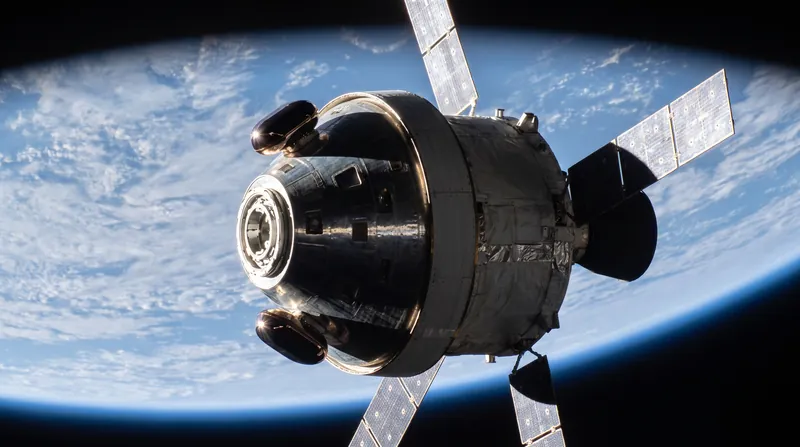
NASA Expands $100 Million Spacecraft Processing Contract to Four New Commercial Vendors
5 sources
Space Infrastructure
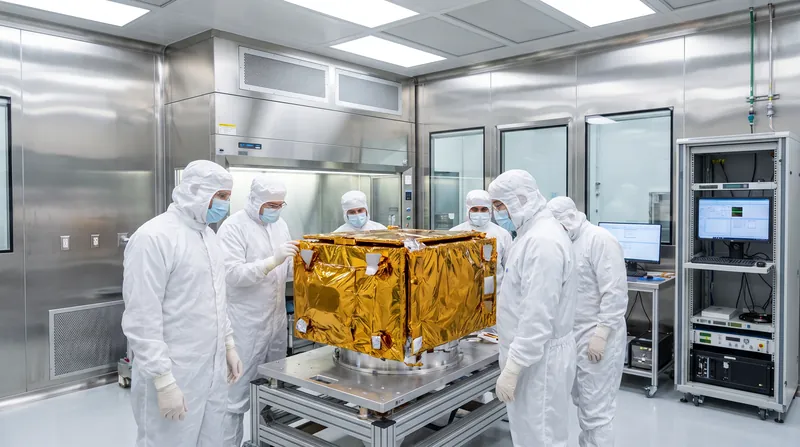
Blue Origin Traces New Glenn Explosion to BE-4 Oxygen Valve, Announces Dual-Pad Recovery Plan for Super-Heavy Variant
6 sources
Space Infrastructure
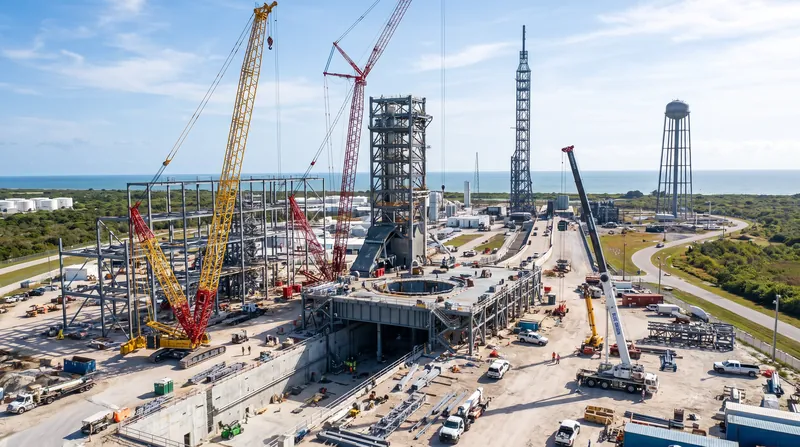
The Architecture of Ariane 6: How Europe Restored Its Independent Access to Space
5 sources
Space Infrastructure
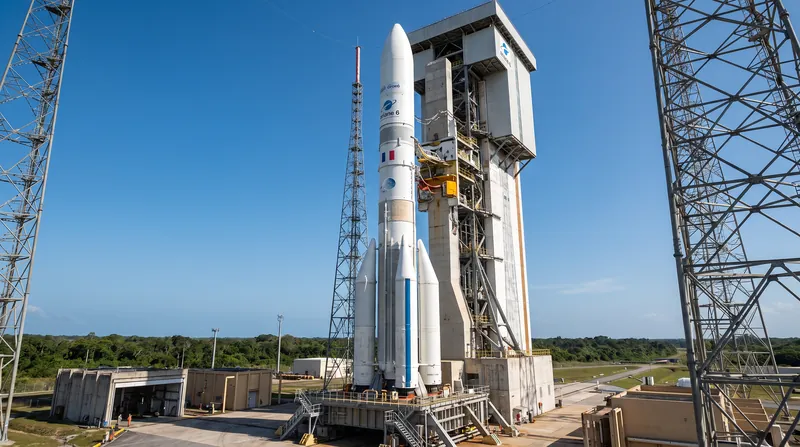
SpaceX Starship Achieves Soft Splashdown and Deploys First Starlink V3 Satellites
4 sources
Comments
Every angle. Every day.
Get Transportation stories with full source coverage and perspective breakdowns, free every day.