
Blue Origin Traces New Glenn Explosion to BE-4 Oxygen Valve, Announces Dual-Pad Recovery Plan for Super-Heavy Variant
Following a catastrophic pad explosion in May, Blue Origin has isolated the failure to a single engine valve and is using the setback to accelerate a dual-pad launch infrastructure for its upcoming super-heavy rocket.
By Marina Lopez

When a launch vehicle erupts in a spectacular fireball on the pad, the immediate assumption is that the program will face years of delays and scrapped ambitions. That was the prevailing sentiment when Blue Origin's New Glenn rocket exploded during a static fire test at Cape Canaveral's Launch Complex 36 in May 2026. The blast destroyed the 320-foot-tall vehicle and severely damaged the company's only operational orbital launch site.
Yet, rather than retreating into a prolonged holding pattern, the Jeff Bezos-led aerospace company is using the setback to fundamentally overhaul its ground infrastructure. Evidence from the ongoing recovery effort reveals that Blue Origin is not just rebuilding the damaged pad, but aggressively accelerating a dual-pad strategy designed to support a new "super-heavy" variant of the New Glenn rocket.[1][5]
The pivot from disaster recovery to expansion hinges on the swift identification of the explosion's root cause. In early August, Blue Origin Chief Executive Officer Dave Limp announced that investigators had traced the anomaly to a specific component: the main oxygen valve on one of the rocket's seven BE-4 engines.
Extensive component-level inspections and engine hotfire tests confirmed the failure mode, allowing engineers to isolate the problem without requiring a fundamental redesign of the engine architecture. Limp stated that the path forward is clear, with the company manufacturing small modifications to the valve that can be quickly retrofitted to existing engines by the end of the month.[1][2][3]
Resolving the BE-4 valve issue carries stakes that extend far beyond Blue Origin's internal timelines. The BE-4 engine is a critical piece of the broader United States space architecture, as it also powers the first stage of United Launch Alliance's (ULA) Vulcan rocket.
Because ULA relies on these engines for national security missions and commercial satellite deployments, the investigation has been closely monitored by the Pentagon and the aerospace sector. ULA is actively collaborating with Blue Origin to implement the necessary valve modifications at its manufacturing plant in Decatur, Alabama, and its facilities at Cape Canaveral, ensuring that cross-platform reliability is maintained across the constrained U.S. launch market.[3][4]
While the engine hardware is being retrofitted, the most significant changes are occurring on the ground at Cape Canaveral. Instead of merely restoring Launch Complex 36 to its pre-explosion state, Blue Origin has unveiled an ambitious strategy to transform the site into a dual-pad facility. The redesigned complex will feature two distinct operational hubs.
The rebuilt LC-36A will serve the current New Glenn 7x2 variant—named for its seven first-stage and two upper-stage engines. Meanwhile, a newly announced LC-36B is being developed specifically to host the upgraded New Glenn 9x4 rocket, a super-heavy variant that the company confirmed is moving rapidly through development.[6]
The New Glenn 9x4 represents a massive leap in orbital lifting power, designed to compete directly with the heaviest launch vehicles in the industry. By utilizing nine BE-4 engines on its first stage and four BE-3U engines on its upper stage, the super-heavy variant will be capable of hauling more than 70 metric tons to low-Earth orbit.
Furthermore, it is engineered to deliver over 20 metric tons on a translunar injection trajectory—the propulsive maneuver required to send spacecraft to the Moon. This upgraded capacity, paired with a larger 8.7-meter payload fairing, is tailored for deploying mega-constellations, deep-space exploration habitats, and heavy national security payloads.[6]
To support the simultaneous operation of two massive rocket variants, Blue Origin is shifting its concept of operations to a horizontal-vertical hybrid model. Previously, the entire rocket was integrated horizontally before being rolled out and erected on the pad. Under the new approach, only the first stage will be transported horizontally to the launch mount and raised vertically.
The upper stage and the payload will be transported separately and installed using a heavy-lift crane. This streamlined integration process reduces the reliance on a single, massive transporter-erector—the piece of equipment that was destroyed in the May explosion—and increases the overall resiliency of the launch cadence.[5]
Despite the catastrophic loss of hardware in May, Blue Origin maintains an aggressive timeline, aiming to return the standard New Glenn to flight by the end of 2026. The urgency is driven in part by NASA's Artemis program, which is relying on the New Glenn to launch Blue Origin's Blue Moon Mark 1 lunar lander for an uncrewed test flight.
By addressing the BE-4 valve failure decisively and expanding its launch infrastructure to accommodate the super-heavy 9x4 variant, Blue Origin is attempting to turn a high-profile failure into a catalyst for scaling its orbital operations.[1][2][3]
The performance upgrades driving the super-heavy variant are heavily dependent on pushing the BE-4 engines beyond their original specifications. Blue Origin has been testing the engines with subcooled propellants—chilling the liquid oxygen and liquefied natural gas to increase their density. This allows more fuel to be packed into the same tank volume and increases the mass flow rate into the combustion chamber.
As a result, the total thrust from the first stage is expected to rise significantly, providing the necessary power to lift the heavier 9x4 configuration off the pad. The targeted valve modifications currently underway must withstand these extreme cryogenic temperatures and higher operating pressures.[6]
Ultimately, the dual-pad recovery plan illustrates a maturation in commercial spaceflight strategy: building redundancy into the physical infrastructure rather than relying on a single point of failure. The loss of Launch Complex 36 temporarily paralyzed Blue Origin's orbital ambitions, highlighting the fragility of operating a single heavy-lift pad.
By constructing LC-36B and standardizing the vertical integration process across both sites, the company is ensuring that a future anomaly on one pad will not ground the entire New Glenn fleet. As the aerospace industry watches the repairs unfold, the successful execution of this dual-pad, super-heavy architecture will determine whether Blue Origin can fulfill its promise of building a reliable road to space.[3]
Key points
- Blue Origin traced the May 2026 New Glenn rocket explosion to a faulty main oxygen valve on a BE-4 engine.
- The company is retrofitting existing engines with modified valves, sharing the fix with partner United Launch Alliance.
- Launch Complex 36 is being redesigned into a dual-pad facility to increase operational resiliency.
- A new LC-36B pad will host the upcoming New Glenn 9x4, a super-heavy variant capable of lifting 70 metric tons to orbit.
What we don’t know
- The exact timeline for when the new LC-36B pad will be fully operational for the super-heavy variant.
- Whether the valve modifications will require additional, extensive hotfire testing that could push the return-to-flight into 2027.
- The total financial cost of the pad destruction and the subsequent dual-pad infrastructure expansion.
How we got here
November 2025
Blue Origin announces development of the New Glenn 9x4 super-heavy variant.
May 28, 2026
A New Glenn rocket explodes during a static fire test, severely damaging Launch Complex 36.
Early August 2026
CEO Dave Limp confirms the explosion was caused by a faulty BE-4 oxygen valve.
August 2026
Blue Origin unveils plans to transform LC-36 into a dual-pad facility for both rocket variants.
- Blue Origin Leadership
- Views the anomaly as a solvable hardware issue and an opportunity to upgrade infrastructure.
- Aerospace Partners
- Prioritizes cross-platform reliability and rigorous testing of shared components.
- Space Policy Analysts
- Focuses on the broader implications for the U.S. launch market and NASA's lunar timeline.
Perspectives this story doesn't cover
- Local Cape Canaveral Residents
- Environmental Regulators
Sources
Source coverage
6 outlets
3 viewpoints surfaced






- [1]Space.comBlue Origin Leadership
Blue Origin traces origin of huge New Glenn rocket explosion to oxygen valve, CEO says
Read on Space.com → - [2]Spaceflight NowAerospace Partners
Blue Origin identifies engine issue behind New Glenn explosion
Read on Spaceflight Now → - [3]ReutersAerospace Partners
Blue Origin CEO says New Glenn explosion caused by engine valve
Read on Reuters → - [4]Central Florida Public MediaAerospace Partners
Blue Origin identifies cause of New Glenn explosion
Read on Central Florida Public Media → - [5]WikipediaSpace Policy Analysts
2026 New Glenn rocket explosion
Read on Wikipedia → - [6]Space ConnectSpace Policy Analysts
Blue Origin unveils major upgrades, super heavy variant for New Glenn
Read on Space Connect →
More in Transportation
See all →Space Infrastructure
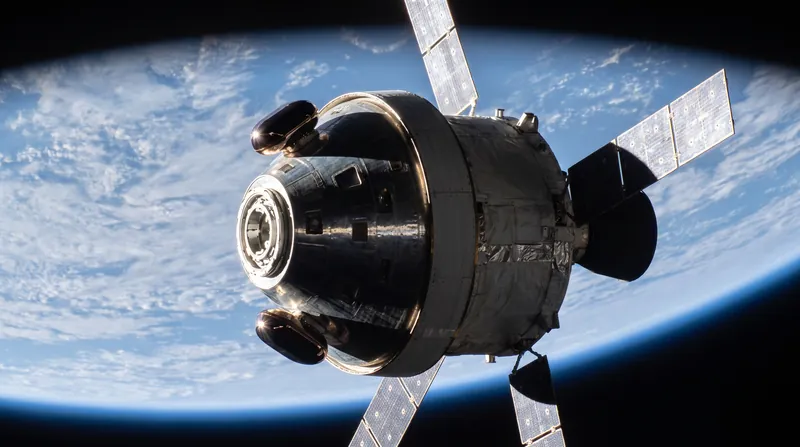
NASA Expands $100 Million Spacecraft Processing Contract to Four New Commercial Vendors
5 sources
Space Infrastructure
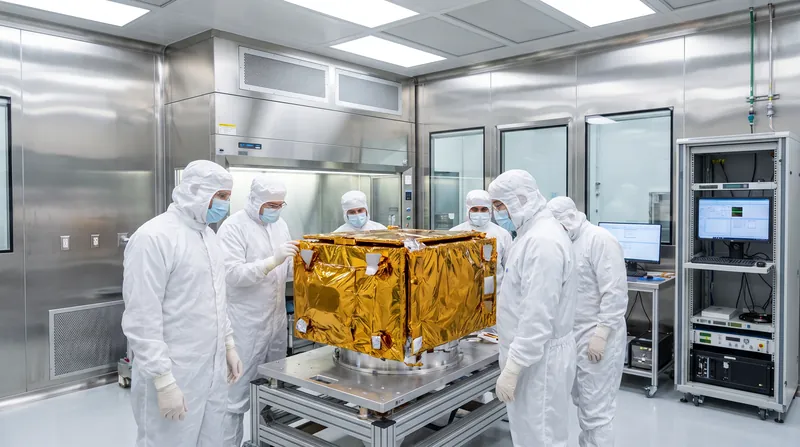
The Architecture of Ariane 6: How Europe Restored Its Independent Access to Space
5 sources
Space Infrastructure
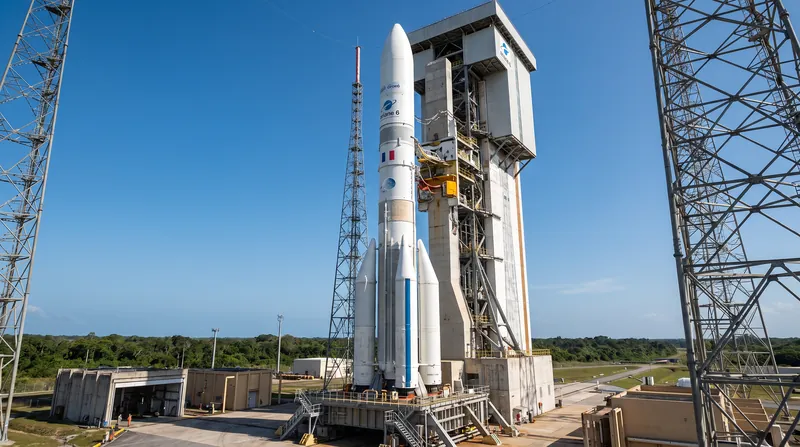
Rocket Lab Unveils GHOST: A Globally Deployable, Containerized Launch System
7 sources
Space Infrastructure
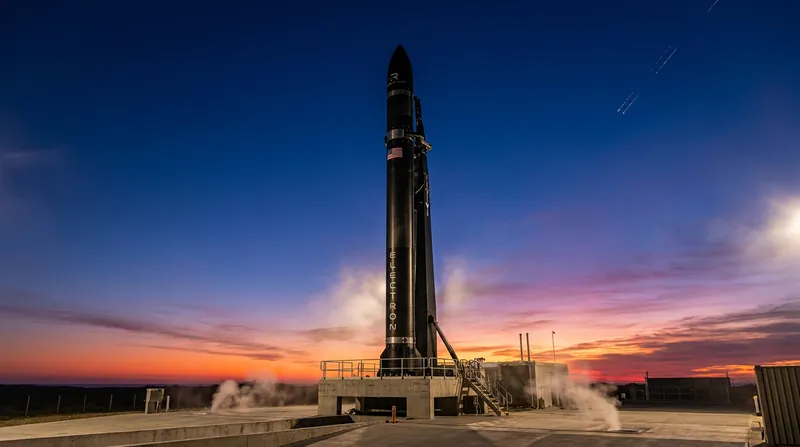
SpaceX Starship Achieves Soft Splashdown and Deploys First Starlink V3 Satellites
4 sources

Comments
Every angle. Every day.
Get Transportation stories with full source coverage and perspective breakdowns, free every day.