
How Angular Momentum Storage and Conservation Maintain Spacecraft Orientation
Spacecraft maneuver in a vacuum by trading rotational energy with internal spinning masses, relying on the conservation of angular momentum to precisely control their attitude without expending limited chemical propellant.
By Hao Li

- Deep Space Mission Planners
- Prioritize reaction wheels for their mechanical simplicity and low mass on long-duration interplanetary missions.
- Low Earth Orbit Operators
- Favor control moment gyroscopes and magnetic torquers to manage rapid tracking and continuous atmospheric drag.
- Attitude Control Theorists
- Focus on the complex mathematical control laws required to prevent gyroscopic singularities during multi-axis maneuvers.
Perspectives this story doesn't cover
- Commercial satellite constellation operators
- Deep-space probe manufacturers
The short answer
- Spacecraft orient themselves by spinning internal wheels, relying on the conservation of angular momentum.
- Reaction wheels provide highly precise, low-torque control ideal for space telescopes.
- Control Moment Gyroscopes (CMGs) tilt a constantly spinning rotor to generate massive torque for heavy vehicles like the ISS.
- Wheels eventually reach a maximum speed and must be 'desaturated' using magnetic torquers or chemical thrusters.
Spacecraft maintain their orientation in the frictionless vacuum of space not by pushing against an external atmosphere, but by trading angular momentum with heavy, internal spinning wheels. By accelerating a motor-driven rotor in one direction, the spacecraft body is physically forced to rotate in the exact opposite direction to conserve the system's total momentum. This closed-loop exchange of rotational energy is the foundational mechanism of modern spacecraft attitude control. Without it, satellites would be forced to rely entirely on chemical thrusters to point their antennas at Earth or their solar panels at the sun. Because thrusters consume finite propellant, relying on them for continuous microscopic adjustments would limit a mission's lifespan to a matter of months.
Instead of burning fuel, engineers utilize solar-powered momentum exchange devices. As outlined in a 2003 NASA Technical Reports Server analysis of attitude dynamics, these systems allow a spacecraft to manage its orientation indefinitely, provided its solar arrays continue to generate electricity. The architecture generally divides into two distinct technologies: reaction wheels and control moment gyroscopes. Reaction wheels are the most common solution for precision pointing. A reaction wheel is essentially a heavy flywheel attached to an electric motor. When the spacecraft needs to turn left, the motor accelerates the wheel to the right. The torque applied to the wheel generates an equal and opposite reaction torque on the spacecraft chassis, rotating the entire vehicle with extreme precision.[1]
The Smithsonian Institution notes that this method provides exceptionally fine control, making it the standard for space telescopes that require microscopic stability to observe distant galaxies. A typical reaction wheel might weigh between 5 and 10 kilograms and spin at speeds up to 6,000 revolutions per minute, generating a modest torque of 0.1 to 1.0 Newton-meters. However, reaction wheels have a strict physical limit. If a spacecraft is subjected to a continuous external force—such as the microscopic but relentless pressure of sunlight hitting its solar panels or the drag of the tenuous upper atmosphere—the wheel must spin faster and faster to counteract it. Eventually, the wheel reaches its maximum safe structural speed, a state known as saturation.[4]
Once saturated, the wheel can no longer absorb any more momentum in that direction. To restore control, the spacecraft must perform a momentum dump or desaturation maneuver. According to the European Space Agency's documentation for the MetOp meteorological missions, this is achieved by firing chemical thrusters or activating magnetic torquers to hold the spacecraft steady while the wheels are deliberately braked back to a lower speed. Magnetic torquers are particularly elegant because they consume no fuel. By running an electrical current through heavy copper coils, the spacecraft generates a magnetic field that pushes against the Earth's own magnetosphere. This external torque absorbs the momentum shed by the decelerating wheels, effectively transferring the spacecraft's excess rotational energy into the planet's magnetic field.[3]
Once saturated, the wheel can no longer absorb any more momentum in that direction.
While reaction wheels are ideal for the slow, precise movements of a telescope, they lack the raw power required to rapidly pivot massive structures. For heavy vehicles like the International Space Station or large military reconnaissance satellites, engineers employ Control Moment Gyroscopes. A CMG operates on a fundamentally different gyroscopic principle. Instead of varying the speed of a rotor, a CMG keeps a massive rotor spinning at a constant, high velocity. To generate torque, motorized gimbals physically tilt the spinning rotor's axis of rotation. Forcing a high-speed gyroscope to tilt produces a massive, perpendicular gyroscopic reaction torque, allowing the spacecraft to execute rapid maneuvers that would stall a standard reaction wheel.[7]
As detailed in a foundational 1971 NASA study on fine attitude control systems, CMGs can produce output torques exceeding 100 Newton-meters—orders of magnitude higher than a standard reaction wheel of similar mass. This mechanical leverage allows the 420-ton International Space Station to maintain its orientation without burning through its precious orbital replacement propellant. The station utilizes four massive CMGs, each containing a 100-kilogram steel wheel spinning at exactly 6,600 RPM, to counteract the aerodynamic drag of the upper atmosphere and the gravity gradient torque exerted by Earth. The sheer scale of these devices makes them mandatory for human-rated orbital infrastructure.[2]
The mathematical complexity of managing these systems is immense. A 2012 paper published by the American Astronautical Society on the stable design of attitude control highlights the intricate control laws required to prevent CMGs from entering singularities—mathematical dead zones where the gimbals align in a way that prevents them from generating torque in a specific direction. To maintain full three-axis control across pitch, roll, and yaw, a spacecraft technically requires only three wheels. However, virtually all orbital architectures include at least four to provide redundancy. If one wheel fails due to the intense friction and wear on mechanical bearings in a vacuum, the flight computer can mathematically distribute the required momentum across the surviving three.[5]
The upcoming Nancy Grace Roman Space Telescope relies heavily on this redundant architecture to ensure mission success. As explained in a NASA Goddard transcript detailing the mission's hardware, "Reaction wheels are used to turn the spacecraft and keep it stable," ensuring the observatory can lock onto target stars with sub-arcsecond precision despite the harsh thermal environment of deep space. The choice between reaction wheels and control moment gyroscopes dictates the fundamental capabilities of a spacecraft. By mastering the conservation of angular momentum, aerospace engineers have decoupled attitude control from the tyranny of the rocket equation, allowing observation platforms to silently pivot and point for decades in the dark.[6]
Jargon, explained
- Angular Momentum
- The rotational equivalent of linear momentum, calculated as the product of a body's moment of inertia and its angular velocity.
- Reaction Wheel
- A motor-driven flywheel that controls spacecraft attitude by varying its spin rate to generate an equal and opposite reaction torque.
- Control Moment Gyroscope (CMG)
- A spinning rotor mounted on a gimbal that generates large torques by tilting its axis of rotation rather than changing its speed.
- Momentum Desaturation
- The process of using external forces, like magnetic torquers or thrusters, to bleed off excess stored momentum from saturated wheels.
Sources
Source coverage
7 outlets
3 viewpoints surfaced





- [1]NASA Technical Reports Server (NTRS)Low Earth Orbit Operators
Dynamics and Control of Attitude, Power, and Momentum for a Spacecraft Using Flywheels and Control Moment Gyroscopes
Read on NASA Technical Reports Server (NTRS) → - [2]NASA Technical Reports Server (NTRS)Low Earth Orbit Operators
A CONTROL MOMENT GYRO FINE ATTITUDE CONTROL SYSTEM
Read on NASA Technical Reports Server (NTRS) → - [3]European Space AgencyLow Earth Orbit Operators
ESA - Attitude and orbit control
Read on European Space Agency → - [4]Smithsonian InstitutionDeep Space Mission Planners
Thrusters and Spinning Wheels - for How Things Fly
Read on Smithsonian Institution → - [5]IAA-AAS-DyCoSS1-07-11Attitude Control Theorists
STABLE DESIGN OF ATTITUDE CONTROL FOR A SPACECRAFT
Read on IAA-AAS-DyCoSS1-07-11 → - [6]Tensor TechDeep Space Mission Planners
What Is a Control Moment Gyroscope (CMG)? A Powerful Solution for Satellite Attitude Control
Read on Tensor Tech → - [7]Factlen Editorial TeamAttitude Control Theorists
Synthesis by Factlen editorial team
Read on Factlen Editorial Team →
Comments
More in Transportation
See all →Port Infrastructure
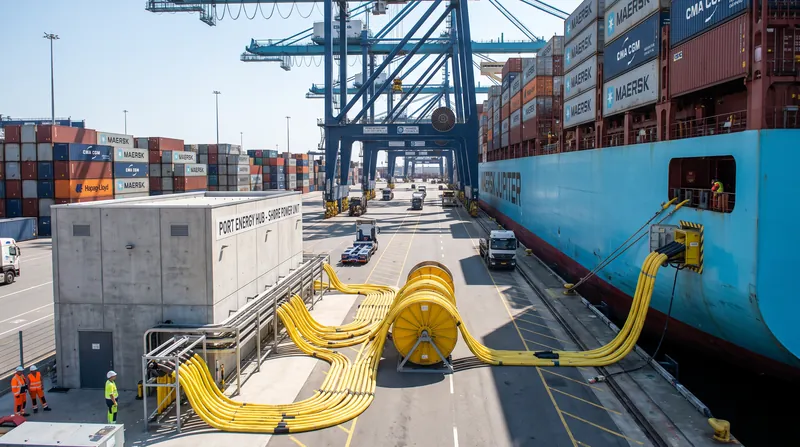
How High-Voltage Shore Connection Decouples Ship Hotel Loads from Auxiliary Diesel Engines
3 sources
EV Architecture
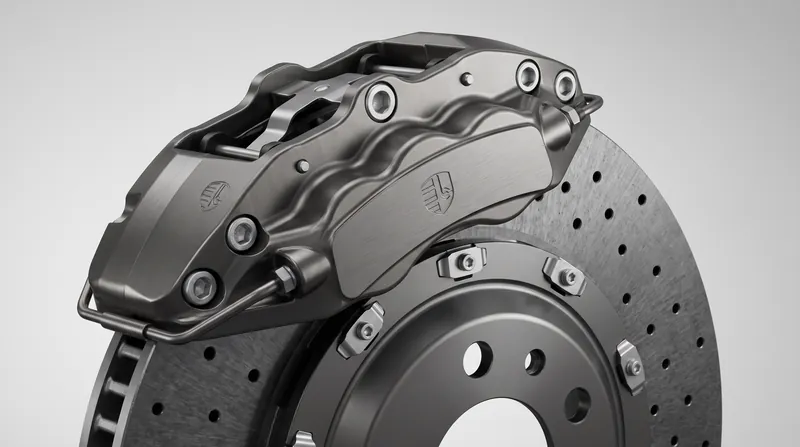
How Brake-by-Wire Systems Decouple Pedal Feel from Deceleration in Electric Vehicles
6 sources
Space Law
The 15-Minute Threshold: How the Karman Line Defines the Boundary Between Airspace and Outer Space
6 sources

Maya Train
Tren Maya Train Derails Near Campeche Station, 123 Passengers Evacuated
5 sources

Every angle. Every day.
Get Transportation stories with full source coverage and perspective breakdowns delivered to your inbox.