
How AI and 7 Million Digitized Plants Are Unlocking Centuries of Climate Data
Kew Gardens has completed the digitization of 7.4 million botanical specimens, fueling a new era where artificial intelligence transforms centuries-old archives into a roadmap for global conservation.

In short
- Kew Gardens has completed a four-year project to digitize 7.4 million herbarium and fungarium specimens.
- Artificial intelligence is being used to analyze these massive image datasets at unprecedented speeds.
- AI analysis of 8 million global specimens revealed that plant flowering times have shifted by 2.5 days per decade.
For centuries, the world's botanical history has been locked away in the quiet, climate-controlled cabinets of natural history museums. These vast archives of pressed leaves, dried flowers, and delicate fungi represent the foundational baseline of life on Earth. But this week, a monumental effort to bring these hidden records into the light reached a major milestone. The Royal Botanic Gardens, Kew, announced the completion of a four-year project to digitize its entire collection of 7.4 million herbarium and fungarium specimens.[1]
The sheer scale of the achievement is staggering. If Kew's newly digitized specimen sheets were laid end-to-end, they would stretch for nearly 3,000 kilometers—roughly the distance from London to the fringes of eastern Canada. By running up to 40 imaging stations simultaneously, teams captured high-resolution photographs of everything from mosses collected by Charles Darwin to fungi gathered by soldiers during the First World War.[1]
Yet, Kew's milestone is just one piece of a much larger, global puzzle. Worldwide, natural history collections hold an estimated 1.1 billion objects. Historically, accessing this data required researchers to travel thousands of miles to physically inspect delicate, degrading materials. Now, institutions are racing to create a decentralized, globally accessible digital replica of the planet's biodiversity.[2][5]
This transition is being called "Digitization 2.0." While the first wave of digitization simply involved taking photographs of specimens, this new era focuses on making those images machine-readable. By feeding millions of high-resolution scans into artificial intelligence systems, researchers are extracting insights at a speed and scale that human botanists could never match manually.[2][3][5]
Computer vision models, specifically deep convolutional neural networks, are being trained to recognize the morphological traits of dried, flattened plants. At the New York Botanical Garden and the Smithsonian Institution, AI tools are already excelling at basic curatorial tasks, such as distinguishing between visually identical plant families or automatically flagging Victorian-era specimens that were preserved using hazardous mercury.[3][4]
But the true power of this AI-driven biodiversity revolution lies in its ability to track the impacts of climate change across centuries. Because each herbarium sheet includes the exact date and location a plant was collected, the digital archive serves as a time machine.[1][5]
In the first comprehensive global study of its kind, researchers used AI to analyze eight million digitized herbarium specimens to track phenology—the timing of seasonal biological events. The algorithms revealed that over the past century, plant flowering times have shifted by an average of 2.5 days per decade, a direct response to a warming climate.[1]
This shift is not merely an academic curiosity; it has profound ecological consequences. When plants flower earlier or later than their historical norms, they risk falling out of sync with the life cycles of the insects and birds that pollinate them, threatening the stability of entire ecosystems.[5]
Beyond tracking ecological damage, the digitized data is actively guiding modern conservation and agriculture. By analyzing 8,000 digitized specimens of wheat and its wild relatives—some dating back 300 years—researchers at London's Natural History Museum are identifying lost genetic traits that could make future crops resistant to saltwater flooding or extreme heat.
Similarly, in Costa Rica, researchers were able to increase the country's known fungal diversity by nearly 20 percent simply by combining modern field observations with newly digitized historical collections. These discoveries help conservation planners identify "blind spots" and redraw the boundaries of protected areas to encompass highly diverse, previously overlooked habitats.[1]
Despite these breakthroughs, a massive data gap threatens to limit the potential of the digital herbarium. Currently, fewer than 16 percent of the world's 1.1 billion natural history specimens have been imaged and made available online.[1]
This shortfall is particularly acute in the Global South. Countries with the highest levels of biodiversity often remain largely invisible to global science because their historical flora was extracted during colonial eras and now resides in European and North American vaults.[1][2]
Addressing this inequity is the next major frontier for the digitization movement. Experts argue that linking herbaria digitally is not just about scientific convenience; it is a form of digital repatriation. By providing free, open access to these archives, institutions in the Global North can empower local scientists in Madagascar, Brazil, and Indonesia to lead their own conservation efforts.[1][2][5]
As the climate crisis accelerates, the margin for error in conservation planning is shrinking. The fusion of centuries-old botanical preservation with cutting-edge artificial intelligence offers a rare bright spot—a tool that honors the meticulous work of past naturalists while providing a vital roadmap for the future.[5]
Key terms
- Herbarium
- A library of dried and pressed plant specimens, carefully labeled and stored for scientific research.
- Fungarium
- A collection similar to a herbarium, but specifically dedicated to preserved fungi and mushrooms.
- Digitization 2.0
- The modern phase of natural history archiving that uses AI and global data-linking to extract insights, rather than just capturing static images.
- Computer Vision
- A field of artificial intelligence that trains computers to interpret visual information, such as identifying plant species from photos.
- Phenology
- The study of cyclic seasonal natural phenomena, such as plant flowering times, and how they are influenced by climate.
Frequently asked
What is a herbarium specimen?
It is a physical plant that has been pressed, dried, and mounted on archival paper alongside a label detailing where and when it was collected.
How does AI help botanists?
AI can rapidly analyze millions of digitized images to identify species, read handwritten historical labels, and detect subtle changes in plant structures over time.
Why do shifts in flowering times matter?
When plants flower earlier or later due to climate change, they can fall out of sync with the insects that pollinate them, threatening entire ecosystems.
Why is the Global South underrepresented?
Historically, many specimens from highly diverse tropical regions were extracted during colonial eras and are now housed in European and North American museums.
Viewpoints in depth
Digital Biodiversity Advocates
Arguing that AI and mass digitization are the only ways to process data fast enough to combat the extinction crisis.
For institutions like Kew and the New York Botanical Garden, the sheer volume of unanalyzed data represents an unacceptable bottleneck in the fight against climate change. They argue that human botanists alone cannot process 1.1 billion physical objects in time to inform urgent conservation decisions. By deploying AI to handle basic identification and trait-mapping, researchers are freed up to focus on high-level ecological analysis, turning static archives into dynamic, real-time tools for planetary management.
Global Equity Advocates
Emphasizing that digital repatriation of botanical data is crucial for conservation in the Global South.
Many researchers point out a glaring historical inequity: the countries with the richest biodiversity often have the least access to their own botanical history, as colonial-era expeditions transported millions of specimens to Western museums. For these advocates, digitization is not just a technological upgrade; it is an act of digital repatriation. By making high-resolution images and AI tools freely available online, institutions in the Global North can return data sovereignty to local scientists, empowering them to manage their own ecosystems without needing to travel to London or Washington.
Traditional Taxonomists
Warning against over-reliance on AI without human botanical expertise.
While acknowledging the utility of machine learning, traditional taxonomists caution that AI models are only as good as the data they are trained on. They emphasize that computer vision struggles with the three-dimensional complexities of plants that have been flattened and dried for centuries. From this perspective, physical specimens and the nuanced expertise of human botanists remain the essential ground truth, and AI should be viewed strictly as an assistive tool rather than a replacement for foundational taxonomy.
- Digital Biodiversity Advocates
- Championing the rapid scanning and AI analysis of collections to democratize access and accelerate climate research.
- Conservation Planners
- Focused on using the resulting data to identify extinction risks, map protected areas, and find climate-resilient crops.
- Global Equity Advocates
- Stressing that digital repatriation of botanical data is crucial for conservation in the Global South.
- Traditional Taxonomists
- Maintaining that while AI is powerful, physical specimens and human botanical expertise remain the essential ground truth.
Perspectives this story doesn't cover
- Indigenous communities whose traditional ecological knowledge corresponds to the digitized specimens
- Local policymakers in the Global South tasked with funding their own digitization efforts
Sources
Source coverage
5 outlets
4 viewpoints surfaced





- [1]Kew Botanic GardensDigital Biodiversity Advocates
State of the World's Plants and Fungi
Read on Kew Botanic Gardens → - [2]BioScienceGlobal Equity Advocates
Digitization and the Future of Natural History Collections
Read on BioScience → - [3]New York Botanical GardenDigital Biodiversity Advocates
Accelerating Species Discovery with AI
Read on New York Botanical Garden → - [4]Smithsonian InstitutionTraditional Taxonomists
Using digitized Botany specimens, AI excels in simple curatorial tasks
Read on Smithsonian Institution → - [5]Factlen Editorial TeamGlobal Equity Advocates
Synthesis by Factlen editorial team
Read on Factlen Editorial Team →

More in Science
See all →Chemical Innovation
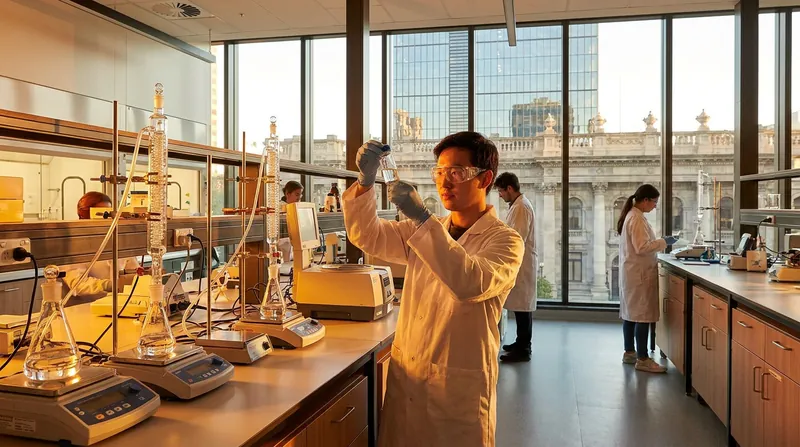
Chemists Discover Spontaneous Sulfur-Bond Reaction, Unlocking Fully Recyclable Plastics
4 sources
Ocean Carbon Sink
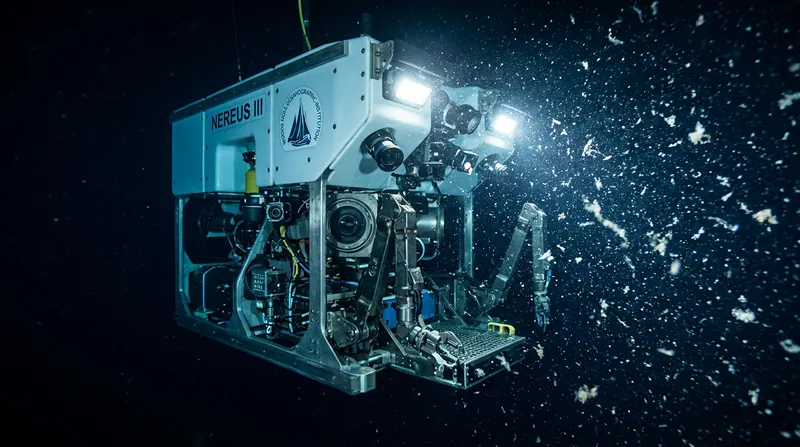
Deep-Sea Pressure 'Juices' Nutrients from Marine Snow, Rewriting Global Carbon Cycle Models
4 sources
Martian Organics
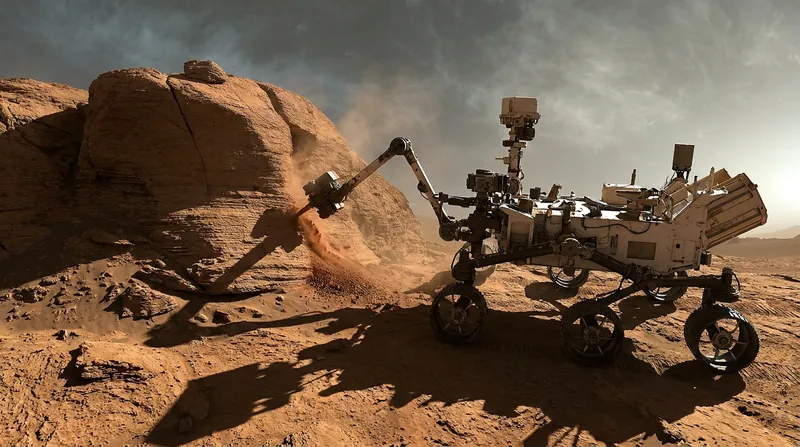
Curiosity Rover Discovers Seven New Organic Molecules on Mars, Deepening Search for Past Life
4 sources
Bioelectronics
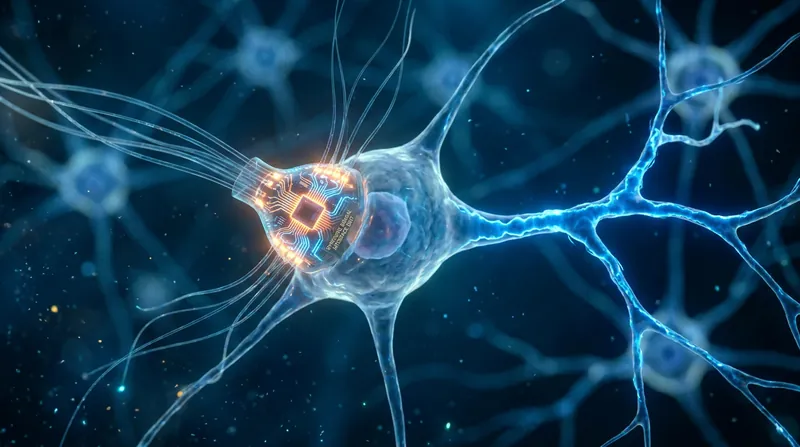
Artificial Neurons Successfully Interact with Real Brain Cells, Signaling New Era for Bio-Electronics
2 sources
Comments
Every angle. Every day.
Get Science stories with full source coverage and perspective breakdowns, free every day.