
How 'Agentic Workflows' Are Turning AI From Chatbots Into Autonomous Digital Coworkers
In 2026, the AI landscape has shifted from conversational chatbots to autonomous agents capable of planning and executing multi-step tasks across your apps.
By Factlen Editorial Team

- Productivity Optimizers
- Focuses on the massive time-saving potential of delegating routine digital chores to autonomous systems.
- Enterprise Automation Leaders
- Views AI agents as a scalable digital workforce capable of handling complex business operations and customer service.
- Privacy & Local AI Advocates
- Emphasizes the importance of on-device processing to keep personal data secure and out of the cloud.
What's not represented
- · Creative professionals concerned about AI agents automating design and writing workflows
- · Cybersecurity experts warning about the risks of autonomous agents executing malicious code
Why this matters
As AI transitions from answering questions to executing tasks, everyday users can now delegate routine digital chores—saving hundreds of hours a year—while on-device processing ensures personal data never leaves their hardware.
Key points
- AI has shifted from conversational chatbots to autonomous agents that execute multi-step tasks.
- Agents use reasoning, acting, observing, and planning to achieve user-defined goals.
- On-device AI processing ensures personal data remains private and reduces response latency.
- Enterprise platforms are using agents to automate complex customer service and back-office workflows.
- Human-in-the-loop guardrails remain essential for high-stakes automated actions.
For the past few years, interacting with artificial intelligence felt like consulting a highly knowledgeable, but entirely stationary, oracle. You asked a question, it generated an answer, and the transaction ended. But in 2026, the AI landscape has undergone a fundamental shift. The era of the passive chatbot is giving way to "agentic workflows"—systems designed not just to converse, but to act.[1][7]
The distinction between a traditional AI assistant and an AI agent lies in autonomy and execution. While a standard chatbot requires a human to prompt every single step of a process, an AI agent operates on overarching goals. If you tell a chatbot to help you write an email, it drafts the text. If you give the same goal to an AI agent, it drafts the text, searches your contacts for the right recipient, schedules the message based on their time zone, and sets a reminder to follow up if they do not reply.[1][3]
This capability is built on four core cognitive pillars: reasoning, acting, observing, and planning. When handed a complex objective, an agentic system first breaks the goal down into a strategic plan. It then observes its digital environment—reading screen context, checking API endpoints, or scanning a database—before taking action. Crucially, it can evaluate the outcome of its actions and adjust its approach if it encounters an error, mimicking human problem-solving.[3][6]

"The agentic AI age is already here," notes Sinan Aral, a professor of management and IT at MIT Sloan. Rather than existing in isolated browser tabs, this new breed of AI integrates directly with other software systems to complete tasks independently or with minimal human supervision, fundamentally changing how digital work is accomplished.[2]
For everyday users, the most visible manifestation of this shift is the deep integration of agents into the operating systems and workspaces they already use. The AI tools winning mass adoption in 2026 are those woven into the fabric of daily digital life, such as Apple Intelligence, Google Workspace's Gemini, and Microsoft Copilot. These systems possess a unified context layer, allowing them to understand a user's calendar, emails, and documents simultaneously without requiring constant copy-pasting.[1][7]
For everyday users, the most visible manifestation of this shift is the deep integration of agents into the operating systems and workspaces they already use.
A major catalyst for the mainstream adoption of personal AI agents in 2026 is the rapid advancement of "on-device" processing. Historically, complex AI reasoning required sending user data to massive cloud servers, raising significant privacy concerns. Today, optimized models run directly on personal hardware—from smartphones to laptops—without ever transmitting sensitive information over the internet.[5][7]
This local execution solves two of the biggest hurdles to AI adoption: privacy and latency. Because the data never leaves the device, users can confidently allow their AI agents to access highly personal context, such as financial records or private messages. Furthermore, bypassing cloud API calls reduces response latency from hundreds of milliseconds to under 20 milliseconds, making interactions feel instantaneous and fluid.[5]

The enterprise sector is also aggressively adopting agentic workflows to streamline operations. Customer service platforms now deploy AI agents that do far more than offer predefined FAQ answers. Modern agents can authenticate a user, check inventory in a warehouse management system, process a refund, and update a CRM—all autonomously.[4][6]
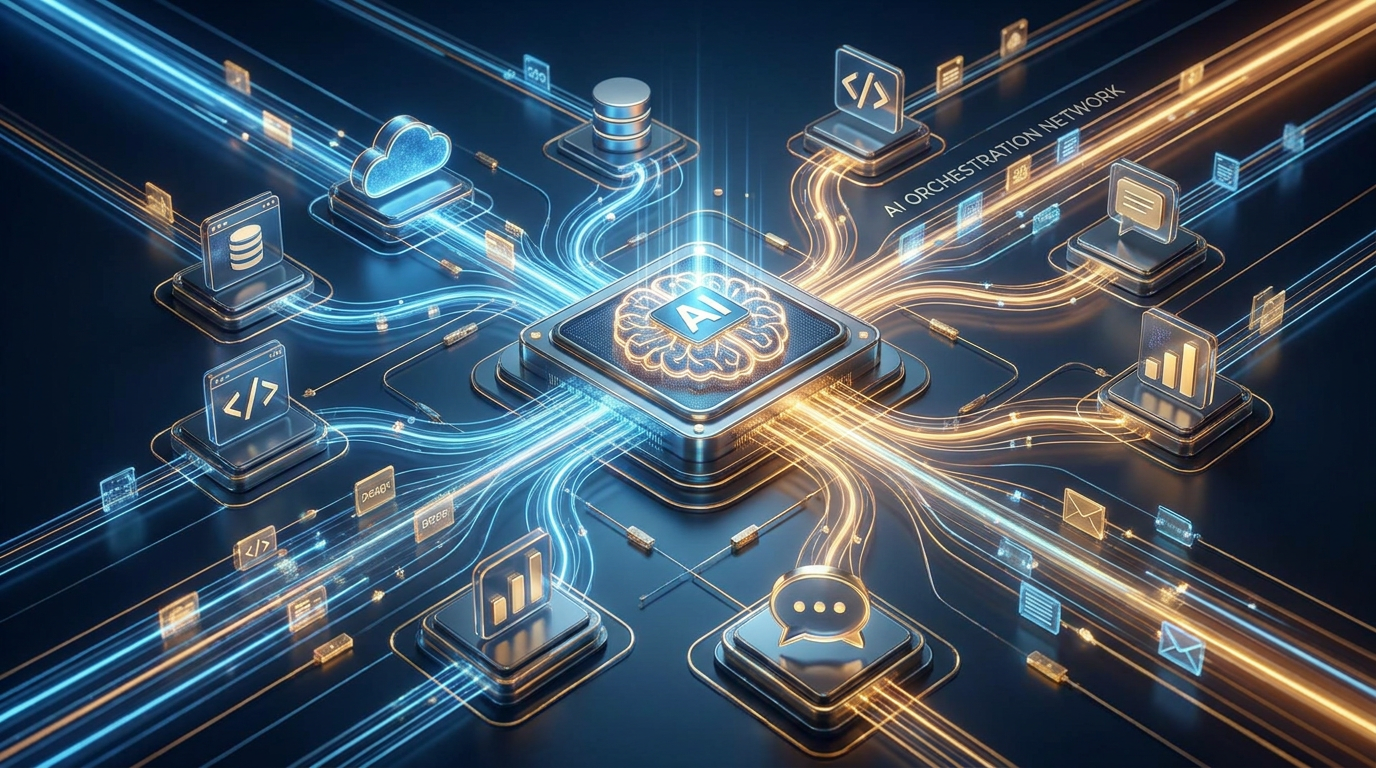
These enterprise agents utilize structured design patterns, such as "reflection" and "tool use." Reflection allows the AI to evaluate its own decision-making process against expected outcomes, while tool use grants the agent permission to trigger third-party services. This orchestration transforms AI from a simple text generator into a scalable digital workforce capable of handling complex, multi-step operations.[4][6]
The economic and productivity implications are substantial. Research indicates that even small, consistent uses of AI agents can yield massive time savings. Offloading just 20 minutes of daily digital chores—like inbox triage, meeting scheduling, or basic research—saves an individual over 120 hours across a single year, freeing up time for deep work or personal pursuits.[1]

However, the rise of autonomous agents is not without friction. Because these systems can take actions—such as sending emails or modifying files—the cost of a "hallucination" or error is much higher than a simple factual mistake in a chat window. Industry experts emphasize the necessity of "human-in-the-loop" guardrails, where the AI prepares the workflow but requires a human click to execute high-stakes actions.[1][4]
Ultimately, the transition to agentic workflows represents a maturation of how humans interact with computers. We are moving from a paradigm of micro-managing digital tools to delegating outcomes to digital coworkers. As these systems become more reliable and deeply integrated, the most valuable skill will no longer be knowing how to prompt an AI, but knowing how to effectively manage one.[1][7]
How we got here
2023
Generative AI chatbots introduce mass-market conversational AI to the public.
2024
The introduction of 'tool use' allows AI models to browse the web and run basic code.
2025
Tech giants announce deep operating system integration for AI, paving the way for cross-app actions.
Early 2026
Agentic workflows become standard, shifting the industry focus from text generation to autonomous task execution.
Viewpoints in depth
Productivity Optimizers
Focuses on the massive time-saving potential of delegating routine digital chores to autonomous systems.
For productivity advocates, the true value of AI lies in its ability to reclaim human time. By delegating micro-tasks—such as scheduling meetings, triaging emails, and conducting preliminary research—users can save hundreds of hours annually. This camp argues that the future of work is not about working faster, but about managing a personalized digital workforce that handles the mundane, allowing humans to focus exclusively on high-level strategy and creative problem-solving.
Privacy & Local AI Advocates
Emphasizes the importance of on-device processing to keep personal data secure and out of the cloud.
Privacy advocates celebrate the shift toward on-device AI agents as a necessary correction to the cloud-heavy models of the early 2020s. By running inference locally on smartphones and laptops, users can grant AI agents deep access to their personal lives—reading private messages to find context, or scanning financial documents—without the risk of data breaches or corporate surveillance. For this group, local execution is the only ethical way to deploy highly capable digital assistants.
Enterprise Automation Leaders
Views AI agents as a scalable digital workforce capable of handling complex business operations and customer service.
In the corporate sphere, leaders view agentic workflows as the next evolution of Robotic Process Automation (RPA). Unlike rigid legacy systems that break when a website updates or a form changes, AI agents can adapt to ambiguity. Enterprise leaders are deploying these systems to handle complex, multi-step customer service inquiries and back-office logistics, arguing that agents provide a level of scalability and operational efficiency that traditional software simply cannot match.
What we don't know
- How effectively AI agents can handle unpredictable edge cases without requiring human intervention.
- Whether the proliferation of autonomous agents will lead to an increase in AI-generated spam and automated cyberattacks.
- How software licensing models will adapt when AI agents, rather than humans, become the primary users of an application.
Key terms
- AI Agent
- A software system that can observe its environment, reason about goals, and execute multi-step tasks autonomously.
- Agentic Workflow
- A sequence of automated tasks managed by AI agents that can adapt to changing conditions rather than following rigid, pre-programmed rules.
- On-Device AI
- Artificial intelligence models that run locally on a user's phone or computer, ensuring data privacy and reducing latency.
- Human-in-the-loop
- A safety protocol where an AI system prepares a workflow or decision but requires a human to review and approve the final action.
Frequently asked
What is the difference between a chatbot and an AI agent?
A chatbot responds to single prompts with text, while an AI agent can break down a goal into steps, interact with other apps, and complete a task autonomously.
Are AI agents safe to use with personal data?
Yes, increasingly so. The 2026 shift toward on-device AI means many agents process data locally on your phone or laptop without sending it to the cloud.
Do I need to know how to code to use agentic workflows?
No. While developers use frameworks to build them, everyday users can access agentic features built directly into consumer tools like Apple Intelligence and Google Workspace.
Sources
Source coverage
7 outlets
3 viewpoints surfaced







[1]MediumProductivity Optimizers
AI Agents Are Becoming Your Digital Coworkers
Read on Medium →[2]MIT SloanEnterprise Automation Leaders
The agentic AI age is already here
Read on MIT Sloan →[3]GoogleEnterprise Automation Leaders
AI agents explained
Read on Google →[4]SlackEnterprise Automation Leaders
What is an agentic platform?
Read on Slack →[5]AIMultiplePrivacy & Local AI Advocates
Local AI agent categorization
Read on AIMultiple →[6]ZendeskEnterprise Automation Leaders
AI agentic workflow design patterns
Read on Zendesk →[7]Factlen Editorial TeamProductivity Optimizers
Synthesis by Factlen editorial team
Read on Factlen Editorial Team →

More in ai
See all 7 stories →Edge AI
How On-Device AI and Quantization Are Moving LLMs Out of the Cloud
6 sources

Agentic AI
Agentic AI: How Large Action Models Are Automating Digital Chores
7 sources
Global AI Governance
EU Delays Key AI Act Enforcement as 'Brussels Effect' Fractures Under US Deregulation
8 sources

Drug Discovery
New AI Model Accelerates Molecular Simulations 10,000-Fold, Promising Faster Drug Discovery
6 sources
Every angle. Every day.
Get ai stories with full source coverage and perspective breakdowns delivered to your inbox.