
How Accurate Are Consumer Sleep Trackers? The Evidence Behind Oura, Apple Watch, and Fitbit
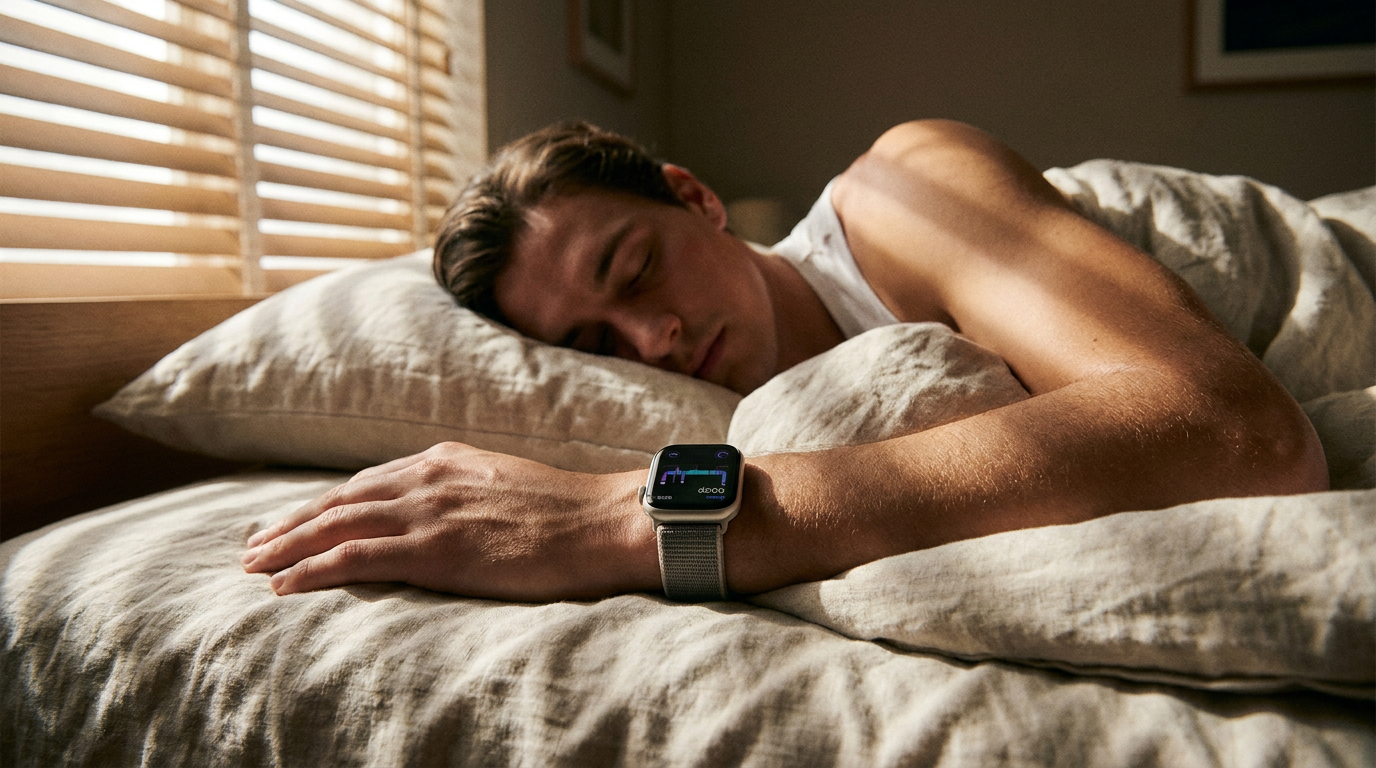
Consumer sleep trackers are highly accurate at measuring total sleep time, but peer-reviewed validation studies show they struggle to reliably identify specific sleep stages like REM and deep sleep.
By Factlen Editorial Team
- Clinical Sleep Specialists
- Medical professionals who prioritize diagnostic accuracy and warn against data-induced sleep anxiety.
- Device Researchers
- Scientists focused on validating and improving wearable sensor technology against clinical benchmarks.
- Consumer Advocates
- Evaluate devices based on practical utility, comfort, and behavioral impact for the average user.
What's not represented
- · Individuals with diagnosed sleep disorders who rely on consumer devices for daily management.
- · Algorithm developers and data scientists building the proprietary machine-learning models for wearable companies.
Why this matters
Millions of consumers base their daily routines, workout intensity, and bedtime habits on the 'sleep scores' generated by their wearables. Understanding which metrics are clinically validated—and which are educated guesses—prevents data-induced anxiety and helps buyers choose the right device for their actual needs.
Key points
- Consumer sleep trackers are highly accurate at detecting total sleep time, achieving over 95 percent sensitivity in clinical comparisons.
- Devices struggle with sleep stage classification, relying on proxy signals like heart rate rather than direct brainwave measurements.
- Smart rings often provide slightly cleaner cardiovascular signals than wrist-worn devices due to the anatomy of finger blood vessels.
- An estimated 14 percent of wearable users experience 'orthosomnia,' a condition where fixating on sleep data causes anxiety and worsens sleep.
- Experts recommend using trackers to monitor long-term behavioral trends rather than obsessing over nightly deep sleep percentages.
The modern nightstand has been replaced by the charging cable, as millions of consumers strap on Apple Watches, Whoop bands, and Oura rings before bed. The promise of these devices is intoxicating: a quantified, actionable breakdown of the one-third of our lives spent unconscious. Shoppers are increasingly basing their daily routines, workout intensity, and even their mood on the "sleep scores" greeting them each morning. But as the wearable market expands, a critical question remains for buyers: how much of this data is clinical reality, and how much is algorithmic guesswork?[6]
To understand what consumer trackers actually measure, it is necessary to look at the clinical gold standard: polysomnography (PSG). In a medical sleep lab, technicians attach dozens of electrodes to a patient to directly monitor brainwaves via electroencephalography (EEG). They also track eye movement to identify REM cycles and measure muscle paralysis to confirm deep sleep. These direct neurological and physiological signals are the only definitive way to observe the brain transitioning between distinct sleep stages.[1][4]
Consumer wearables, by contrast, cannot read brainwaves. They rely entirely on proxy signals to guess what the brain is doing. The primary sensors in a modern smartwatch or smart ring are optical heart rate monitors (photoplethysmography, or PPG), skin temperature sensors, and motion-tracking accelerometers. The device's software feeds this cardiovascular and movement data into proprietary machine-learning algorithms, which then attempt to infer the user's neurological state based on their physical stillness and heart rate variability.[1][2][6]
When it comes to the fundamental question of whether a user is asleep or awake, the evidence supporting consumer wearables is remarkably strong. A 2024 multicenter validation study analyzing 11 different consumer devices against PSG found that modern wearables consistently achieve greater than 95 percent sensitivity in detecting sleep states. For shoppers looking to track their total sleep duration, establish consistent bedtimes, or measure how long it takes them to fall asleep, devices from Apple, Fitbit, and Oura are highly reliable tools.[2][4]

However, the evidence significantly weakens when devices attempt to classify specific sleep architecture. Wearables heavily market their ability to track the exact minutes spent in Light, Deep, and REM sleep, but peer-reviewed validation studies reveal a wide margin of error. Because they lack EEG data, wearables must infer sleep stages, leading to a drop in accuracy. In a recent clinical trial at Brigham and Women's Hospital, four-stage sleep classification accuracy across top-tier devices ranged from 50 to 86 percent.[1][4]
However, the evidence significantly weakens when devices attempt to classify specific sleep architecture.
Deep sleep and REM sleep prove particularly difficult for wrist-based sensors to accurately isolate. During REM sleep, heart rate variability can become erratic, mimicking the cardiovascular patterns of wakefulness, which often confuses the algorithms. Consequently, validation studies frequently show that consumer devices either overestimate total sleep time by misclassifying quiet wakefulness as light sleep, or miscalculate the precise ratio of deep sleep to REM.[1][2][4]
The physical form factor of the device also plays a measurable role in its accuracy. Smart rings, such as the Oura Ring, have demonstrated a slight edge in published validation studies, frequently achieving higher sensitivity for sleep staging than wrist-worn counterparts. This advantage stems from human anatomy: the blood vessels in the finger are closer to the surface than those in the wrist, providing the optical sensors with a cleaner, more reliable cardiovascular signal throughout the night.[1][2]

Beyond wearables, the market has expanded to include "nearables" (under-mattress sensors like the Withings Sleep Tracking Mat) and "airables" (contactless bedside radar devices). While these options offer superior comfort for users who dislike wearing jewelry to bed, their clinical validation is mixed. The 2024 multicenter study found that while under-mattress sensors perform adequately for tracking total sleep time and detecting major movement, their ability to accurately classify intricate sleep stages lags behind the top-tier wearable devices.[2]
The gap between marketing claims and clinical accuracy has birthed a new, unintended consequence in behavioral sleep medicine: "orthosomnia." Coined by sleep researchers in 2017, the term describes an unhealthy preoccupation with achieving perfect sleep metrics. In these cases, the user's quest to optimize their digital sleep score creates a hyper-aroused state of performance anxiety, which ironically makes it harder for them to fall asleep and stay asleep.[5]
The prevalence of orthosomnia is becoming a measurable public health metric. A 2024 cross-sectional study published in Brain Sciences found that up to 14 percent of wearable users exhibit signs of orthosomnia, with younger adults aged 18 to 35 being significantly more susceptible than older demographics. For these individuals, waking up to a notification that they only achieved "12 minutes of deep sleep" triggers a stress response that actively degrades their well-being, even if the device's measurement was algorithmically flawed.[3][5]

For consumers navigating the crowded sleep tracker market, clinical experts recommend a shift in perspective. Shoppers should prioritize devices that offer comfortable form factors and long battery life, ensuring the tracker can be worn consistently without requiring nightly charging. The ultimate utility of the device is not in its nightly precision, but in its ability to seamlessly gather data over long periods, allowing the user to observe macro-level lifestyle impacts.[4][6]
Ultimately, the evidence suggests that consumer sleep trackers are powerful behavioral compasses, not medical diagnostic tools. A wearable can definitively prove that a late-night meal or an evening glass of alcohol elevates resting heart rate and fragments sleep. By focusing on these actionable, week-over-week trends rather than obsessing over the exact percentage of REM sleep on a given Tuesday, users can harness the technology to genuinely improve their rest without falling into the trap of data-induced anxiety.[5][6]
How we got here
2012
Fitbit introduces basic movement-based sleep tracking to consumer wearables.
2015
The launch of the Apple Watch accelerates the mainstream adoption of wrist-based health monitoring.
2017
Sleep researchers officially coin the term 'orthosomnia' to describe tracker-induced sleep anxiety.
2021
Consumer devices begin widely integrating optical blood oxygen (SpO2) sensors to estimate breathing disturbances.
2024
Large-scale multicenter validation studies confirm wearables excel at sleep detection but struggle with exact stage classification.
Viewpoints in depth
Clinical Sleep Specialists
Medical professionals who prioritize diagnostic accuracy and patient well-being.
Clinical sleep specialists emphasize that polysomnography remains the only definitive way to measure sleep architecture. They caution that consumer wearables, while useful for encouraging consistent bedtimes, often provide a false sense of precision regarding REM and deep sleep. This camp is particularly concerned about the rise of orthosomnia, noting that patients frequently arrive at clinics with severe anxiety driven entirely by algorithmic miscalculations rather than actual physiological sleep deficits.
Device Researchers
Scientists focused on validating and improving wearable sensor technology.
Researchers in this camp focus on the rapid year-over-year improvements in photoplethysmography and machine learning algorithms. They acknowledge the current limitations in four-stage sleep classification but argue that the gap between consumer devices and clinical equipment is steadily closing. By conducting multicenter validation studies, these researchers aim to establish standardized benchmarks, pushing manufacturers to refine their proxy-signal interpretations and improve overall device reliability.
Quantified-Self Advocates
Consumers and technologists who believe continuous data tracking drives positive behavioral change.
Advocates for the quantified-self movement argue that the behavioral benefits of sleep trackers far outweigh their technical inaccuracies. Even if a device miscalculates deep sleep by twenty minutes, the daily act of monitoring encourages users to prioritize their rest, reduce late-night alcohol consumption, and maintain consistent schedules. From this perspective, the tracker serves as a powerful accountability tool, making invisible lifestyle consequences visible and actionable for the average consumer.
What we don't know
- Whether next-generation algorithms can ever achieve clinical-grade sleep staging without direct brainwave (EEG) measurements.
- The long-term psychological impact of daily sleep tracking on pediatric and adolescent users, as current orthosomnia research primarily focuses on adults.
- How accurately consumer trackers perform on individuals with severe, pre-existing sleep disorders, as most validation studies are conducted on healthy sleepers.
Key terms
- Polysomnography (PSG)
- The clinical gold standard for sleep studies, using electrodes to measure brainwaves, eye movement, and muscle activity.
- Electroencephalography (EEG)
- A medical test that detects electrical activity in the brain, essential for accurately identifying sleep stages.
- Photoplethysmography (PPG)
- An optical sensor technology used in wearables to measure heart rate by illuminating the skin and detecting changes in light absorption.
- Orthosomnia
- An unhealthy obsession with achieving perfect sleep metrics, often leading to increased anxiety and worsened sleep quality.
- Accelerometer
- A sensor in wearable devices that detects physical movement and orientation to infer periods of wakefulness or restlessness.
- Sleep Architecture
- The cyclical pattern of sleep as it shifts between different stages, including light, deep, and REM sleep, throughout the night.
Frequently asked
Can a consumer sleep tracker diagnose sleep apnea?
No. While some devices can detect breathing disturbances or blood oxygen drops that suggest sleep apnea, they cannot formally diagnose the condition. A clinical sleep study is required for a medical diagnosis.
Are smart rings more accurate than smartwatches for sleep?
Evidence suggests smart rings often have a slight edge in heart rate accuracy because finger blood vessels are closer to the skin, providing a cleaner signal than the wrist.
Should I worry if my tracker says I get very little deep sleep?
Not necessarily. Validation studies show consumer devices frequently misclassify sleep stages. If you feel rested, you should trust your body over the device's algorithmic estimate.
What is the most accurate metric a sleep tracker provides?
Total sleep time and sleep schedule consistency. Wearables are highly accurate at detecting when you fall asleep and when you wake up.
Sources
Source coverage
6 outlets
3 viewpoints surfaced




[1]SensorsDevice Researchers
Accuracy of Three Commercial Wearable Devices for Sleep Tracking in Healthy Adults
Read on Sensors →[2]Journal of Medical Internet ResearchDevice Researchers
Accuracy of 11 Wearable, Nearable, and Airable Consumer Sleep Trackers: Prospective Multicenter Validation Study
Read on Journal of Medical Internet Research →Prevalence of Orthosomnia in a General Population Sample: A Cross-Sectional Study
Read on Brain Sciences →[4]Sleep Medicine ReviewsDevice Researchers
Accuracy of consumer sleep trackers compared to polysomnography
Read on Sleep Medicine Reviews →[5]Journal of Clinical Sleep MedicineClinical Sleep Specialists
Orthosomnia: Are Some Patients Taking the Quantified Self Too Far?
Read on Journal of Clinical Sleep Medicine →[6]Factlen Editorial TeamConsumer Advocates
Synthesis by Factlen editorial team
Read on Factlen Editorial Team →

Every angle. Every day.
Get shopping stories with full source coverage and perspective breakdowns delivered to your inbox.