
How a Case Reaches the Supreme Court: The Certiorari Process Explained
The Supreme Court receives roughly 8,000 appeals a year but agrees to hear fewer than 100. Here is how the justices use the 'cert pool' and the 'Rule of Four' to decide which cases shape American law.
By Factlen Editorial Team
- Efficiency Advocates
- Argue that pooling clerk resources is the only practical way to handle 8,000 annual petitions without paralyzing the Court.
- Independent Reviewers
- Argue that relying on a single clerk's memo delegates too much gatekeeping power; prefer chamber-specific review.
- Transparency Critics
- Argue the 'shadow' nature of the cert process and unexplained denials leave lower courts without sufficient guidance.
What's not represented
- · State Supreme Court Justices
- · Pro Se Litigants
Why this matters
Understanding how the Supreme Court selects its cases demystifies the judicial system, revealing that the Court's power lies just as much in what it chooses to ignore as in what it decides to hear.
Key points
- The Supreme Court receives roughly 8,000 petitions for review each year but agrees to hear fewer than 100.
- Most justices use a 'cert pool,' where law clerks divide the labor of reading petitions and writing summary memos.
- Under the 'Rule of Four,' only four of the nine justices need to vote in favor of a petition to grant a writ of certiorari.
- A denial of certiorari does not mean the Supreme Court agrees with the lower court's ruling; it simply means the case did not receive four votes.
- The most common reason the Court grants review is to resolve a 'circuit split' where lower courts have disagreed on federal law.
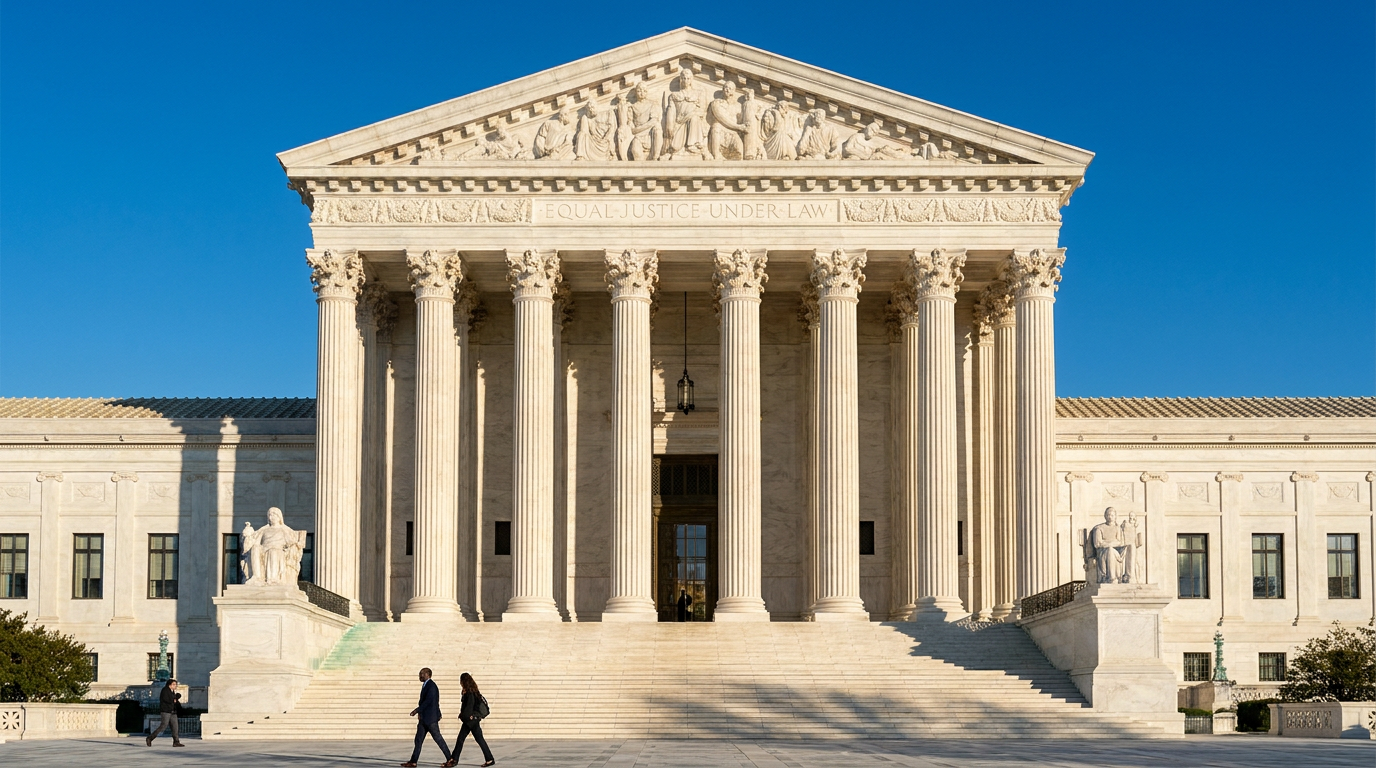
The U.S. Supreme Court is defined in the public imagination by its blockbuster rulings—decisions that reshape American law, culture, and governance. Yet, long before the justices take the bench to hear oral arguments, a quiet, rigorous, and largely invisible filtering process dictates what the Court will even consider.[7]
Every year, the Supreme Court receives between 7,000 and 8,000 requests to review lower court decisions. Of these, the justices agree to hear only about 80 to 100 cases—roughly one percent. Understanding how the Court sifts through this mountain of appeals requires looking past the marble columns and into the mechanics of the "certiorari" process.[4]
The journey begins with a "petition for a writ of certiorari." Certiorari is a Latin term meaning "to be more fully informed." Because the Supreme Court is not required to hear most appeals as a matter of right, a losing party in a federal appeals court or a state supreme court must formally ask the justices to take up their case.[1][3]
These petitions are printed in booklet format, and 40 copies are filed with the Court. The petitioner must clearly articulate why the case deserves national attention. The most compelling reason is usually a "circuit split"—a scenario where different federal appeals courts have interpreted the same federal law in conflicting ways, creating a patchwork of justice across the country.[1][4]

Once the petitions arrive, the sheer volume presents a logistical nightmare. If every justice read every petition, the workload would be paralyzing. To solve this, the Court relies on the "cert pool." Instituted in 1973 by Chief Justice Warren E. Burger, at the suggestion of Justice Lewis F. Powell Jr., the cert pool is a labor-saving mechanism that divides the reading among the justices' law clerks.[2][7]
In the cert pool, a single petition is randomly assigned to one law clerk from the participating chambers. That clerk reads the petition, the lower court rulings, and the opposing party's brief, and then writes a confidential memorandum summarizing the facts and recommending whether the Court should grant or deny review. This single memo is then circulated to all the justices participating in the pool.[1][3]
Currently, seven of the nine justices participate in the cert pool. Justices Samuel Alito and Neil Gorsuch have opted out. Instead of relying on the pooled memos, they have their own clerks review the petitions directly. This split reflects an ongoing debate over whether the pool delegates too much gatekeeping power to a single, recently graduated law clerk, or whether it is simply a necessary administrative survival tool.[1][7]
Currently, seven of the nine justices participate in the cert pool.
After the memos are circulated, the Chief Justice compiles a "discuss list." This list includes the cases the Chief Justice believes warrant a conversation at the justices' private conference. Any other justice can add a case to the discuss list, but no justice can remove one. Petitions that do not make the discuss list are automatically denied without further debate.[7]
For the cases that do make the list, the justices debate them in a closed-door conference. Here, the Court employs one of its most fascinating and unique procedural traditions: the "Rule of Four."[5]
To grant a writ of certiorari, only four of the nine justices need to vote in favor of hearing the case. This submajority rule is a deliberate design choice. It ensures that a minority of the Court can force the institution to address an issue, preventing a five-justice majority from simply ignoring legal questions they would rather avoid.[2][5]

The Rule of Four serves as a vital safeguard for minority viewpoints and ensures the Court maintains its role as a check on the other branches of government. Even if five justices are perfectly content to let a lower court ruling stand, the four dissenting voices can pull the case onto the national stage for full briefing and oral argument.[2][5]
When the Court denies certiorari—which happens 99% of the time—it is often misinterpreted by the public and the media as an endorsement of the lower court's ruling. Legal scholars and the Court itself frequently emphasize that this is a misunderstanding. As the Court explained in the precedent-setting Missouri v. Jenkins, a denial "imports no expression of opinion upon the merits of the case."[3][7]
A denial simply means that there were not four votes to hear the case at that specific moment. The justices might believe the case is a poor vehicle for deciding the legal issue, that the issue needs more time to "percolate" in the lower courts, or that the specific facts are too messy to establish a clear national precedent.[1][3]

The Court's orders granting or denying certiorari are usually issued as simple, one-line statements without any explanation. While some critics argue this lack of transparency leaves lower courts guessing, the justices maintain that explaining thousands of denials would consume the time needed to actually decide the cases they do accept.[3][6]
How we got here
1891
Congress passes the Judiciary Act of 1891, creating permanent courts of appeals and beginning the shift away from the Supreme Court hearing every appeal.
1925
The Judiciary Act of 1925 (the 'Judges' Bill') grants the Supreme Court broad discretion over its docket, making certiorari the primary path to review.
1973
Chief Justice Warren E. Burger institutes the 'cert pool' to help the Court manage a rapidly growing influx of petitions.
2008
Justice Samuel Alito withdraws from the cert pool, choosing to have his own clerks review all incoming petitions.
Viewpoints in depth
The Efficiency Advocates
Supporters of the current system argue that the cert pool and discretionary docket are essential survival tools for the modern Court.
With the Supreme Court receiving up to 8,000 petitions annually, institutionalists argue that the Court would collapse under its own weight without the cert pool. By allowing law clerks to divide the massive reading load, the justices can focus their intellectual energy on the 80 to 100 cases that genuinely require national resolution. This camp views the high denial rate not as a failure of justice, but as a necessary triage mechanism that allows the federal judiciary to function efficiently.
The Independent Reviewers
Critics of the cert pool argue that delegating the initial review to a single law clerk gives too much power to recent graduates.
Justices who opt out of the cert pool, along with some legal scholars, express concern about the 'bureaucratization' of the certiorari process. Because a single clerk's memo is circulated to multiple chambers, this camp argues that a 25-year-old law school graduate effectively acts as a gatekeeper for the nation's highest court. They advocate for independent, chamber-specific review of petitions to ensure that diverse judicial philosophies are applied to the screening process from the very first read.
The Transparency Critics
Legal transparency advocates argue that the Court's practice of issuing unexplained denials leaves the public and lower courts in the dark.
When the Supreme Court denies certiorari, it almost never explains why. Transparency advocates argue that this silence creates confusion in the lower courts, especially when a petition involves a pressing national issue. While the Court maintains that explaining thousands of denials is logistically impossible, critics suggest that even brief, standardized explanations could provide valuable guidance to appellate judges and future litigants about what the Court is looking for.
What we don't know
- The specific reasons why the Supreme Court denies any individual petition, as the justices rarely provide explanations for their denials.
- The exact nature of the debates that occur during the justices' private conferences when voting on the 'discuss list'.
- Whether future justices will continue to participate in the cert pool or follow the independent review model favored by Justices Alito and Gorsuch.
Key terms
- Writ of Certiorari
- A formal request for the Supreme Court to order a lower court to send up the record of a case for review.
- Cert Pool
- A labor-saving system where law clerks divide the task of reading thousands of petitions and writing summary memos for the justices.
- Rule of Four
- The Supreme Court practice that requires only four of the nine justices to vote to grant a petition for review.
- Circuit Split
- A situation where different federal appeals courts have issued contradictory rulings on the same legal issue.
- Discuss List
- A list compiled by the Chief Justice of cases deemed worthy of debate at the justices' private conference.
Frequently asked
Does denying certiorari mean the Supreme Court agrees with the lower court?
No. A denial simply means the case did not receive the four votes necessary for review. It sets no national precedent and does not endorse the lower court's reasoning.
Why do only four justices need to agree to hear a case?
The 'Rule of Four' protects minority viewpoints on the Court, ensuring that a five-justice majority cannot suppress cases or avoid difficult legal questions.
Do all the justices read every petition?
No. Due to the massive volume of petitions, most justices rely on the 'cert pool,' where law clerks read the petitions and provide summary memos.
Sources
Source coverage
7 outlets
3 viewpoints surfaced







[1]Brennan Center for JusticeTransparency Critics
How the Supreme Court's 'Shadow' Docket and Cert Process Work
Read on Brennan Center for Justice →[2]JustiaEfficiency Advocates
Supreme Court Procedures: From Petition to Opinion
Read on Justia →[3]Cornell Law School LIIIndependent Reviewers
Certiorari and the Supreme Court
Read on Cornell Law School LII →[4]United States CourtsEfficiency Advocates
Supreme Court Procedures
Read on United States Courts →[5]Federal Judicial CenterTransparency Critics
The History of the Rule of Four
Read on Federal Judicial Center →[6]Brookings InstitutionIndependent Reviewers
Understanding Supreme Court Consensus and Splits
Read on Brookings Institution →[7]Factlen Editorial TeamEfficiency Advocates
Synthesis by Factlen editorial team
Read on Factlen Editorial Team →

Every angle. Every day.
Get law justice stories with full source coverage and perspective breakdowns delivered to your inbox.